
Tag: software

  • Profits on the cloud

    Profits on the cloud

    One of the things that cloud computing has changed for the software industry are the fat profits – the shift to Software as a Service (SaaS) has seen the margins collapse as the rental model doesn’t offer the same big lumps of cash that the old way of doing business offered.

    That has had terrible consequences for a generation of enterprise IT salespeople who lived well on fat commissions as they sold million dollar packages to large corporations and government agencies.

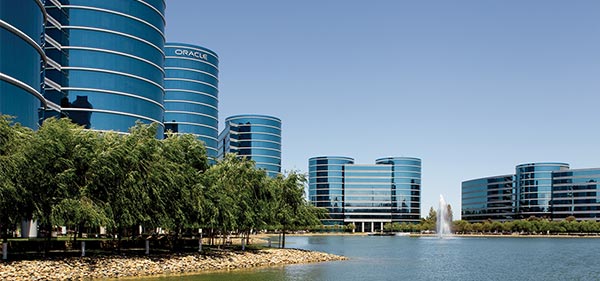
    So it was interesting today to hear Oracle’s CEO, Mark Hurd – a master IT salesman himself – claim at the company’s Open World press conference today that operating margins on cloud services are quite good.

    Certainly Oracle’s results show that with a claimed 61% profit margin there is money to be made in cloud services however their experience is not typical of the industry. For example, Microsoft’s online products only deliver a third of the profits as the company’s more traditional software lines.

    Even with the still fat profit margins, it’s hard to see how a company like Oracle can maintain its old salesman driven model as deals based more on long term service contracts rather than big deals mean there aren’t the lumps of cash for salespeople to grab a slice of.

    Older companies struggle with shifting mindsets in their industries and some, such as the taxi business in the face of Uber, take too long to change. Whether software companies like Oracle are navigating the change is something I’ll look at in tomorrow’s post.

    Similar posts:

    • No Related Posts
  • Oracle and the cloud shift

    Oracle and the cloud shift

    Ahead of next week’s Oracle Open World, which I’m attending, the software giant has announced its quarterly results which illustrate how software has shifted to the cloud.

    The company’s cloud revenues jumped 77% on the previous year which is impressive but represents less than a tenth of the company’s sales.

    What would concern Oracle’s shareholders is the stagnation of sales in their main product lines – on premise software makes up 69% of the firm’s revenue but it didn’t grow for the quarter and new license sales dropped eleven percent, which doesn’t bode well for the future.

    Oracle’s big announcement in the last quarter though was the acquisition of cloud ERP provider Netsuite for $9.3 billion.

    That acquisition will test how Oracle pivots into the cloud, it may well be the Netsuite management teach the parent company some tricks.


    Similar posts:

    • No Related Posts
  • Autodesk and the China manufacturing challenge

    Autodesk and the China manufacturing challenge

    At the recend Autodesk University event in Sydney I had the opportunity to talk with Pat Williams, the company’s senior vice president for Asia Pacific.

    Williams’ beat covers all of Asia and he’s based out of Shanghai where he’s been based for the last eight years and prior to that he spent a decade in Japan.

    Having spent so much time in North East Asia, and heading to the PRC the following week myself, it was interesting to hear Williams’ views on how industry is changing in China and ther country’s attitude to American software companies.

    “There’s a lot of noise that gets made in China about their local IP and the local vendors and what I say is ‘the Chinese companies are competing in a global market and they are under the same competitive pressures as everybody else in the world so when they find a better tool they use it. Despite all the noise, business is quite good there.”

    For the Chinese economy, the aging and increasingly expensive workforce presents a problem, something addressed by the China Manufacturing 2025 plan which sees the country increasingly competing in high tech sectors such as aerospace, telecommunications and biotech fields.

    “China’s kind of an anomaly,” says Williams of the country’s immense growth rates. “From a government perspective there’s a lot of horsepower behind the things that they do – China 2025, their manufacturing initiative, you’ve got what they’ve been doing with Building Information Modelling (BIM) and our architectural tools.”

    They’ve really kind of spearheaded what we’ve been talking about on things like 3D printing of houses. China on its own is just this mushroom that’s happening.”

    While the industrial shift in China and the rest of Asia is promising opportunities to companies like Autodesk, that change is affecting their workforce as well with the company announcing plans to lay off ten percent of their workforce earlier this year.

    Those cutbacks are part of the adjustment to a new market reality says Williams, “it was part of right sizing the business.” He observed “we realised our margins were going to be compressed as we move to a subscription model.”

    Autodesk’s shifts illustrate how the opportunities in the new economy don’t come without costs even for the companies that seem to be winners in a shifting marketplace.

    In China, American companies are finding they have to a unique proposition – companies like Apple and Autodesk are good examples – and as the country moves its economy further up the value chain all foreign businesses are going to have to show how they add value.

    Succeeding in a changing economy isn’t without uncertainty. And it certainly isn’t without risks.

    Similar posts:

    • No Related Posts
  • Uber opens its APIs

    Uber opens its APIs

    Ride service Uber has raised the game for logistics and delivery services in opening a group of Application Program Interfaces for third party developers.

    The four functions available in the Uber Rush package cover delivery tracking, quotes and history. They make starting a logistics service or adding functions to a business far easier.

    While there is a downside in the risk of being locked into Uber’s service this move will give a lot of developers the opportunity to develop delivery tracking products, for incumbent postal and courier services, this API is bad news on a number of levels.

    Similar posts:

    • No Related Posts
  • Rethinking cancer research

    Netsuite founder Evan Goldberg hopes the lessons he’s learned from building a software company can help researchers find new ways to treat cancers.

    When Netsuite founder Evan Goldberg was contacted by his birth mother it was not all good news, she revealed to him she had one of the BRAC genetic markers, an hereditary trait that indicates a high risk of breast cancer.

    A day before the official launch of the BRAC Foundation he has founded with a ten million dollar donation, Goldberg spoke to Decoding the New Economy at the Suiteworld conference in San Jose about how he believes he can help improve the treatement of cancers.

    “How I think I can make a difference is applying some of the things we’ve learned at Netsuite,” he explained. “Netsuite has been all about breaking down silos, it’s not a system to run a department, it’s to run a business.”

    “Much research and money is focused on a particular type of cancer – breast cancer, lung cancer, prostate cancer but it turns out from what we’ve learned from genetic research that cancers can be more similar to each other across different cancer types than to those in the same organs.”

    “So in the same way we’re trying to break down silos between parts of a business, trying to break down silos between researchers, different institutions has sort of been a theme of mine.”

    “What’s really interesting this notion of looking at where the cancer started, which is what we’ve been doing for a hundred years, looking at what is the mechanism underneath it is kind of how we’ve looked at business at Netsuite.”

    “We’re supporting research in the BRCA Foundation from numerous different institutions and researchers that are looking at all different types of cancer. So bringing them together and cutting through all sorts of silos, these sort of artificial silos – some of which still have value in some ways – but fostering collaboration where there wasn’t any before.”

    “It’s not a perfect analogy,” Goldberg admits, “but I do think that this notion of looking at cancer across different dimensions is similar to how we’ve been looking at business.”

    “It’s a totally different world, the world of medics, research institutions, hospitals and clinicians, it’s a very different world to the businesses I’m used to deal with. Although there are still similarities in the motivations and the barriers to success.”

    One has to hope BRAC Foundation will be successful however Goldberg is the first to admit the bulk of the work lies with the scientists. “The real hard work is done by the researchers,” he says. “Hopefully we can help them.”

    Similar posts:

    • No Related Posts