Month: November 2013

  • The end of HTML 5?

    The end of HTML 5?

    One of the big debates in web design since the rise of smartphone apps has been the question of ‘going native’ or following web standards.

    In an ideal world, all apps would follow the HTML web standards so designers would only have to create one app that would run on any device — a smartphone, tablet or PC — regardless of what type of software it was running.

    However the HTML 5 standard has proved problematic as developers have found applications written in the language are slow with limited features, so the attraction of writing ‘native’ apps that are designed for each system remains strong as users get a faster, better experience.

    The problem with that approach is that it results in having to design for different operating systems and various devices which is costly and adds complexity.

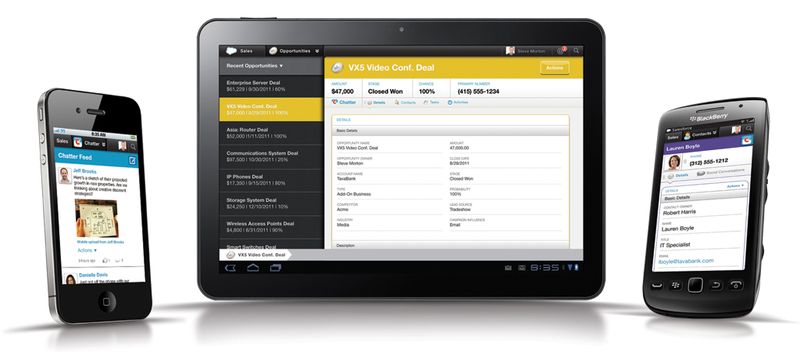
    For the last two years at Dreamforce, Salesforce CEO Marc Benioff has trumpeted the advantages of the company’s HTML5 Touch product.

    This year Benioff unveiled the company’s Salesforce One product — a suite of Application Program Interfaces (APIs) that simplifies building smartphone and web apps. At the media conference after the launch, Benioff even went as far to describe the once lauded Touch product as a “mistake”.

    So Salesforce has abandoned HTML5, which is a blow for standard applications.

    If others follow Salesforce, and it appears that is the trend, then we’ll increasingly see the smartphone industry dominated by iOS and Android as most companies lack the resources or commitment to develop for more than two platforms and their form factors.

    Open standards have been one of the driving factors of the web’s success, it would be a shame if we saw the mobile market split into two warring camps reminiscent of the VHS and Beta video tape days.

    Similar posts:

    • No Related Posts
  • Have we over-consumerised IT?

    Have we over-consumerised IT?

    One of the phenomenons of the modern technology industry is the ‘consumerisation of IT’, but have we taken that trend too far?

    I’ve spent today at the opening of the 2013 Dreamforce conference in San Francisco talking to various people about where the IT industry is going.

    The dominant thing at this year’s conference is the “internet of things” or, as Salesforce are marketing it, “the internet of customers.”

    What’s notable in this view is the marketing and consumer centric view of the IT world, something not surprising given Salesforce’s roots as a sales and marketing service, despite last year showing off the social media connected jet engine at last year’s conference.

    Salesforce aren’t alone in this view, most conversations about the tech industry revolve around marketing and advertising. Last week’s Telstra’s Digital Summit was notable for focusing almost exclusively on brands and social media while missing the point that digital business is far more than just adopting online marketing channels.

    For most industries, the marketing and direct consumer connection is only a small part of how technology, not least the internet of machines, is transforming business with manufacturing and supply chain management two areas that are being totally changed with high stakes and big money involved.

    Cracking the enterprise market is hard, which is why most startup tech businesses focus on the customer market and the relatively easy, albeit cash poor, advertising and premium revenue streams.

    While the focus is often on the consumer and mass-market side of the web and internet of machines, the real money, and change is in the business sector. This is exactly how most of today’s tech giants — Microsoft, IBM, Oracle and Salesforce to name a few — came to be where they are today.

    There’s no doubt the consumerisation of IT was a real phenomenon, but it may be that it’s currently being overplayed. We need to think beyond marketing when considering how technology is changing our businesses.

    Similar posts:

    • No Related Posts
  • The ghost in the internet of machines

    The ghost in the internet of machines

    A funny thing happened two hours out of Auckland, the cabin crew on the Air New Zealand flight to San Francisco announced the inflight entertainment system had to be rebooted.

    In the thirty minutes it took for the system to reset and reload, various in-seat functions such as the cabin call button and light switch froze, it was a basic example of how complex systems interact with each other.

    The benefits of a connected egg tray involve the device telling us when more eggs are needed, but what happens when the thing tries to tell your online shopping service that you need 200 dozen?

    As the internet of things develops and business systems become more automated, complexity is going to become greater and more subtle. Understanding and managing the risks that extend from that is going to be essential for both public safety and the economy.

    “The Internet of Things creates a whole new range of attack surfaces” Cisco Systems’ Enterprise Group Vice President Rod Soderbery told the Internet of Things conference in Barcelona last month.

    One of those many ‘attack surfaces’ identified by Fraser Howard, Principle Researcher of Sophos Labs are the dozens of household devices from smart TVs to internet connected egg holders that are beginning to appear in homes.

    Almost all these devices will have flaws in their firmware and yet almost no vendor has an interest in maintaining or patching the firmware of this equipment.

    “Consumers have no way of managing this problem” says Fraser as it’s almost impossible for householders to upgrade their systems and consumer electronics manufacturers have a poor track security track record.

    “There’s a long history of companies with mass market items which deal with things like important items like credentials where they have not had a single thought about security,” says Fraser.

    Security is one the many challenges facing the internet of things along with to manage rogue devices in grid networks. There’s a lot of work to be done in ensuring systems aren’t disrupted by an outlier sensor or critical information disclosed by a poorly secured or out of date smart device.

    As connected egg trays start talking to the supermarket, we have to be confident that we aren’t going to come home to find our connected device hasn’t delivered a pallet load of fresh eggs or that it hasn’t given away our banking details to an organised crime ring.

    Similar posts:

    • No Related Posts
  • A soonologist’s view of the future

    A soonologist’s view of the future

    “I think my job title is a little bit misleading,” says Nicola Millard of her role as BT’s Customer Service Futurologist. “Most people would imagine futurologists have a crystal ball that works and maybe talking about twenty to twenty five years out about a future where intelligent robots have taken over the world.”

    “My horizon tends to be a bit shorter,” Nicola explains. “My time tends to start in about three weeks time and tends to extend to five years, so I’m more of an industrial futurologist and CEOs tend not think beyond the next three weeks.” “I guess more of a ‘soonologist’ than a futurologist.”

    Nicola was talking to the Decoding The New Economy YouTube channel at BT’s London Demonstration centre where the time frame is somewhat more than the next three weeks as the company shows off the technology and product lines it believes are going to change the communication industry.

    For BT and Nicola, much of the near future is focused in how consumer and workplace behaviour is being changed by IT and communications technology.

    Nicola sees an interesting relationship between technology and people – technology can radically change peoples’ behaviour but it also can amplify existing behaviours. “It can certainly influence the way we work, rest and play, in the ways we approach the office and how we consume,” says Nicola.

    “Behaviour changes are really fascinating when we give people people access to technologies that give them more choice and more information than ever before. It untethers us. All of these thing present opportunities to change that way we do stuff.”

    The untethered office

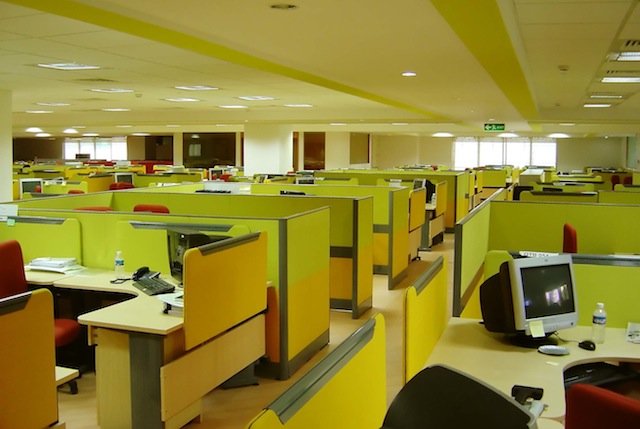
    Technology has also untethered the office, says Nicola. “In the old days we had to go to the office at nine o’clock in the morning and leave at five in the afternoon. We didn’t have any other options – we had a desk, we had big technology and we had masses of paper.”

    “That’s all changed.” Workplaces have always struggled with collaboration and Nicola sees the open plan office as being a 1970s attempt to get workers to talk and work with each other rather than hiding behind closed doors. “By forcing people into open plan we hoped that by breathing the same air they would start to collaborate.”

    “Now we collaborate with people that aren’t necessarily in the same place as us. The office itself has become a collaboration tool,” Nicola says. “We’re seeing the evolution of the office.”

    Today’s technology tools and remote working have changed the role of the workplace with the office becoming a place for workers to collaborate and work together, however that nature of work has changed.

    Working beyond the office

    With improved connectivity the home office and mobile workers have come into their own with BT having around ten percent of their workforce operating from their residences and the company finds they achieve around a twenty percent improvement in productivity from those staff.

    However home working isn’t for everyone. “I’m a terrible home worker,” Nicola says. “I tend to go mad so if I want to collaborate I go to the office but I want to work quietly I go to the coffice’, which is generally a third place outside the office or home.”

    “There’s only four things I need to work; good coffee, good cake – these first two are non-negotiable –  good connectivity and then I need company. Not necessary office type company but just a buzz.“

    The change to retailing

    Today’s buzz extends to shopping, the shops are fuller on a Saturday afternoon than they have ever been before. The showrooming phenomenon – where customers use their smartphones to check prices and proudcts while in the shop – allows retailers to enhance their sales strategy as the same available to shoppers can also be used by sales assistants.

    “Shopping is sometimes a contact sport,” Nicola observes. “the fact we are comparing and contrasting, the fact we are challenging the physical shop. Waving our mobile phone on the shopfloor.” “Retailers for a long time resisted showrooming, they split their online and physical spaces. We’re now seeing those physical lines blurring.”

    Emerging trends

    Nicola sees the biggest challenge facing business in the near future being agility – as cloud services expand, it’s easier for companies to scale which places pressure on many incumbent businesses.

    Big Data also presents opportunities, “there’s always been big data, we’ve always had too much data, the analytics tools have changed.” For great challenge though for business is change and this is what will focus executive attention in the near future. “Businesses tend to be built to last rather than for change.”

    Similar posts:
  • Greetings from the scammers

    Greetings from the scammers

    The notorious “419 scams” have been around since the early days of the consumer internet.

    419 scams are the elaborate internet frauds that try to convince people they unexpectedly come into money. Once a gullible victim takes the bait, they are duped into paying a range of ‘facilitation fees’ and costs that drains their saving.

    The term 419 scam comes from the Nigerian criminal code that covers this crime, which was appropriate as most — although not all — of these emails originated from the country.

    For a while in the early 2000s, internet users became used to receiving a few 419 scam emails every day but by the middle of the decade they largely dried up as the even the most gullible and greedy idiots became wise to the schemes.

    That’s not to say they have completely vanished, this morning quite a distasteful one landed in my inbox.

    Greetings,
    I wish to seek your assistance to execute a business deal. I am Paul Williams a Contract Agent based in London. I require your consent to present you as next of kin to a client of mine, who died along with his wife and Two kids in the Asian Typhoon Haiyan in the Philippines leaving behind a large sum of money without a next of kin. With your co-operation and information available to me you can make a claim on the funds as the next of kin to my deceased client. After release of the funds to you by the financial institution where it is lodged, we can share according to a percentage we agree upon. If you may be of assistance, please reply for further co-operation.
    Best Regards,

    Paul Williams.

    It’s unlikely that Paul Williams exists and even if he did it’s unlikely he’d have anything to do with this unsavory scam that most people would immediate bin when they receive it.

    Binning the message was my reaction as well, but as I was about to, it occurred to me that there are enough venal, stupid people in the world who would agree to be involved in such a deal.

    No doubt if you asked them they’d say defrauding the deceased family’s estate is a victimless crime as the money would only end up with the government anyway, these people would swear blind they are honest, honourable folk and no doubt they would think they are rather clever.

    It’s worth reflecting that dishonest, venal and somewhat dim people do occasionally get their come-uppance in today’s world.

    Similar posts:

    • No Related Posts