Month: November 2013

  • Into the ruins of Bedlam – visiting the industrial revolution’s birthplace

    Into the ruins of Bedlam – visiting the industrial revolution’s birthplace

    Nestled in a quiet wooded valley near the modern town of Telford in the English Midlands is the birthplace of the industrial revolution.

    Today the three quiet villages — Coalbrookdale, Coalport and Ironbridge are quaint little communities but two hundred years ago they were the powerhouse of the Industrial revolution.

    ironbridge-wooded-valley
    The hills around Ironbridge

    Coal and ironstone mining in the district started in medieval times with the locals having a wide range of words to describe different types of coal — Lancashire Ladies, Randle and Clod being just a few terms.

    coalbrookedale-blast-furnace-hearth

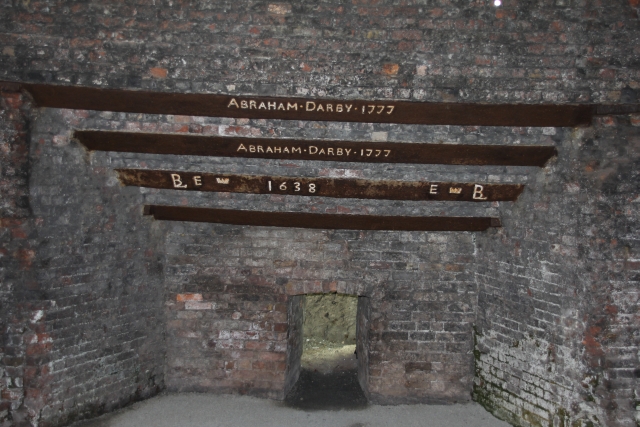
    Iron had been smelted at Coalbrookdale from the late 16th Century however the arrival of potmaker Abraham Darby in 1709 that catalysed the industry with his method to reliably use coke for the blast furnaces.

    coalbrookdale-by-night
    Coalbrookdale by night – the Bedlam furnaces at their peak

    Further downstream, the Madeley Wood smelter became infamous as the bedlam furnaces, named after the noise and confusion of London’s notorious asylum.

    With the new reliable way to smelt iron and a string of blast furnaces along the valley, production skyrocketed and the valley’s natural advantages of accessible coal, iron and water meant it became the centre of the industrial revolution.

    Increased production meant more workers and people flocked in from the surrounding agricultural communities — not in a dissimilar way to today’s experience in China.

    quiant-streets-old-slums

    That increased population meant more slums, what is today’s cute village was once sqaulid poverty, albeit an improvement on the life of an agricultural worker. Epidemics were common with 32,000 lives lost in cholera in 1831-2.

    ironbridge-iron-bridge-industrial-revolution

    Despite the squalor of the workers’ quarters, the ironmasters were proud men and Coalbrookdale’s new bridge could only be build of one material — iron.

    ironbridge-cast-iron-coalbrookdale
    “This Bridge was cast at Coalbrookdale”

    Ironmasters like John Wilkinson and Abraham Derby III were also ferocious promotors of their product and the bridge stands as a proud, strong advert for the strength of Coalbrookdale’s iron. Wilkinson himself built the first cast iron barge a few years later and was eventually buried in a cast iron coffin.

    boy-and-black-swan
    Boy and Black Swan cast iron statue

    Eventually though the smelters of Coalbrookdale began to lose their competitive edge as mining and blast furnace technology improved, the ironmasters responded with moving into decorative and intricate cast iron features like the Boy and Swan statue that now graces the gardens of the Coalbrookdale Iron Museum.

    ruins-of-bedlam-at-ironbridge
    The ruins of the bedlam blast furnaces at Coalbrookdale

    Despite their successes, Coalbrookdale’s slide continued, with coal production peaking in 1871 and a steady decline over the following century.

    modern-use-of-ironworks

    Today, there’s not a lot of industry in Coalbrookdale except for one plant that keeps the area’s engineering tradition running.

    For Britain, the question is how the nation’s economy continues it’s engineering traditions, 45 minutes drive away is a relic of Twentieth Century industry — the Austin motor works at Longbridge.

    Today an assembly plant fills a small corner of the formerly sprawling factory site and over it flies the flag of it’s new owners. The People’s Republic of China.

    Birmingham-MG-car-works-PRC-flag

    We live in interesting times.

    Similar posts:

  • Walking Spaghetti Junction’s canals

    Walking Spaghetti Junction’s canals

    One of the most maligned places in Britain is Spaghetti Junction, an interchange on the M6 Motorway just north of Birmingham’s city centre in the centre of the nation.

    Despite its poor reputation, Spaghetti Junction though has a story to tell — a tale of how physical trade routes change slowly with the motorway being the latest of five major junctions in the area.

    Courtesy of Wikipedia
    Courtesy of UK Highways Agency and Wikipedia

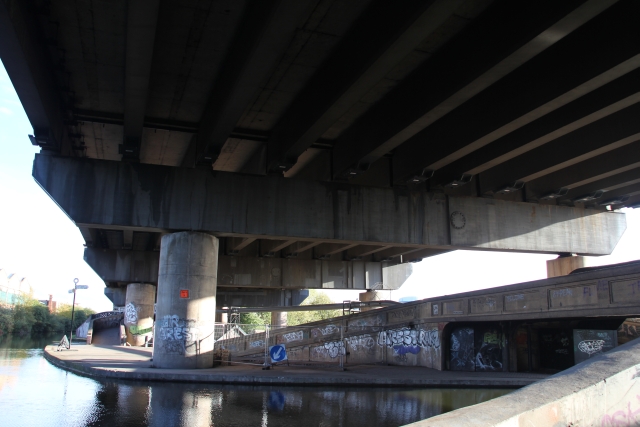
    Immediately below the motorway are the major roads, connecting these and Birmingham were the reason for building Spaghetti Junction in the late 1960s.

    Below those are the canals and it’s notable that just as Birmingham lies at the centre of Britain’s motorway network, it also formed the core of the industrial revolution’s canal network and much of the railway system.

    birmingham_spaghetti_junction_canal_intersection

    Wikipedia describes how critical Spaghetti junction is for the nation’s infrastructure.

    Underneath the motorway junction are the meeting points of local roads, the river Tame‘s confluences with the River Rea and Hockley Brook, electricity lines, gas pipelines, the Cross-City and Walsall railway lines and Salford Junction, where the Grand Union Canal, Birmingham and Fazeley Canal and Tame Valley Canal meet.

    Despite it’s importance the area is dingy and it’s not a good idea to hang around too long, particularly when you have an expensive camera, but it’s worthwhile to linger for a few minutes to appreciate how important these links were to the industrial revolution.

    birmingham-canal-route

    Following the canals away from Spaghetti Junction gives a feeling of the post-industrial nature of Birmingham’s economy something that the city, like most of Britain, is still struggling with.

    Birmingham-gas-basin-canal-junction

    Eventually the canal ends in the city’s convention centre district where a tourist can get a safer, and better, appreciation of Britain’s canal system at the Gas Street Canal Basin.

    While the basin is a bit twee and touristy it does also give a friendly overview of the canal network that replicates closely the railway system that replaced it and today’s roads.

    How these trade routes evolve in the digital economy will be interesting, the recent PayPal survey on the new electronic spice routes illustrates how economies are changing.

    Whether our descendents will wander the abandoned motorways and freeways in two hundred years and wonder at our industrial might is something we might want to ponder. Whether what replaces them is another layer of infrastructure is another question.

    Similar posts:

  • A tour of Google’s London Campus workspace

    A tour of Google’s London Campus workspace

    Google’s London campus is credited by many in the City’s Silicon Roundabout district as being one of the catalysts for the explosion in the local tech centre.

    One of the features of the London facility is the free co-working space the company offers which has become an important landmark for the city’s startup and small business community.

    Getting into the basement co-working space requires pre-registration and, in theory, you’ll be able to pick up an access card when you first arrive.

    In practice the cards are long out of stock, so just showing your registration confirmation with it’s code to the rather rude and brusque receptionists will get you buzzed in.

    The coworking space takes up the entire basement with four distinct coworking spaces – a courtyard, an array of tables, a lounge area and a shared bench.

      Google-campus-london-workbench

    Immediately inside the door is the communal bench that seats around twenty people. These are probably the best if you’re happy to socialise while you work. Even if you don’t it’s worthwhile grabbing a spot here if you see one available during busy times.

    Google-campus-london-device-lab

    Directly beside the workbench area is the Android demonstration station. This is a clever initiative by Google to showcase their mobile platform and encourage their developer community.

    Across from the Android test bench is the lounge area, this will be your best bet to find a place should you arrive when the coworking space is busy. It isn’t the most comfortable and quiet place in the room though as it gets lots of foot traffic and is across from the café.

    Google-campus-london-cafe

    The café serves a standard range of sandwiches, coffees and drinks with specials on certain days. Prices aren’t dissimilar from most of the coffee shops in the neighbourhood although you might find better range and a quieter spot eating elsewhere.

    One of the missed opportunities in the cafes is the opportunity to sell computer accessories like chargers and cables, during each visit this reviewer noticed how there was always someone asking to borrow other users’ accessories to charge their phones or synch their devices.

    Google-campus-london-outdoor-working-area

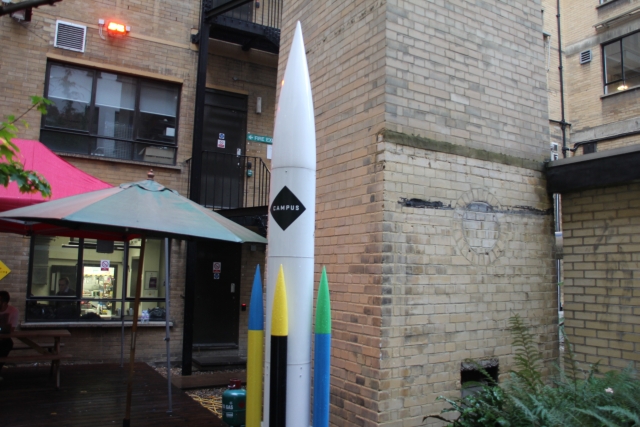
    Alongside the coffee shop is the courtyard; on nice day this would be a good place to work or to enjoy a beer and a chat with fellow geeks in the afternoon. During this visit in November, the weather was dark and dank with the outdoor area only being used by people making phone calls.

    Google-campus-london-working-area

    Beside the courtyard is the desk area where the serious workers hunker down. These spaces tend to get taken early and some people seem to arrive shortly after opening at 9am and don’t leave until the room closes at 6pm. Get there before ten if you want a spot.

    Google-campus-london-powerboard

    One of the problems in the room is the fight for power sockets. By mid-morning it’s almost impossible to find a spare plug so if you’re looking to recharge a device you may want to consider a local café.

    Another problem with the coworking space is it gets very crowded and some of the regulars have a habit of spreading out or hogging power sockets. It may be necessary to be quite pushy to get a seat or power socket when someone is taking up too much space.

    Overall, Google’s London Campus is a good facility that many other cities could use. However with its congestion mobile workers may find it easier to set up in one of the many geek friendly cafes in the neighbourhood like the nearby Ozone or Shoreditch Grind right on the Silicon Roundabout itself.

    Similar posts:

  • London’s quest to be the next Silicon Valley

    London’s quest to be the next Silicon Valley

    In November 2010 British Prime Minister David Cameron set out his vision for London becoming the centre of Europe’s digital economy.

    “We’re not just going to back the big businesses of today, we’re going to back the businesses of tomorrow.” Cameron said. “We are firmly on the side of the high-growth, highly innovative companies of the future.

    Three years later London’s tech scene is booming with more than fifty incubators across the city and over three thousand digitally connected businesses in the Shoreditch district.

    Building London’s resurgence

    Gordon Innes, the CEO of the city’s economic development agency London and Partners, puts this down to a combination of factors including a young and diverse population coupled with being a global media and finance centre.

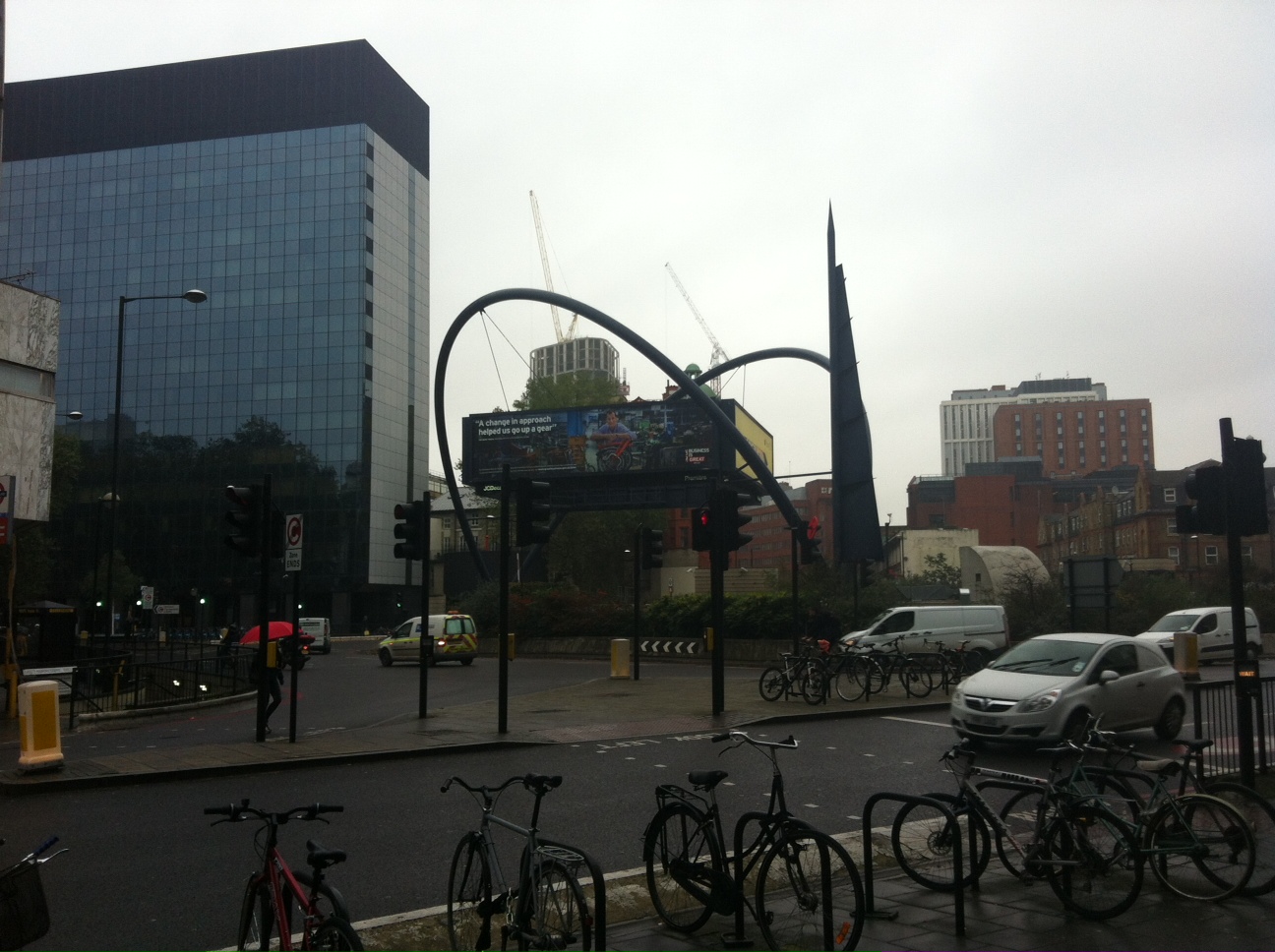
    At the time of Cameron’s speech the cluster of tech startups around Shoreditch’s Silicon Roundabout area was already firmly established and the British government was acknowledging the industry’s successes.

    “What we did, what the mayor did, what the government did,” Innes said, was to make sure that we removed as many barriers as possible to let the sector grow as rapidly as possible.”

    The value of teamwork

    Part of that effort involved business leaders, London & Partners, the mayor’s and Prime Minister’s advisers meeting on a regular basis to thrash out what the tech sector needed for the UK’s tech sector to thrive.

    “There were changes to the tax credits for R&D and an important one was the Enterprise Incentive Scheme,” says Innes.

    “Linked to that was a recognition of the need to link angels and high net worth individuals to be educated about the sector. It’s not just enough to balance the risk through the tax code.”

    Another success for the UK startup sector was the British government introducing an entrepreneur’s visa that makes the country more attractive to foreign founders of startups.

    Having built an community of tech startups, the city is now looking at how to grow the sector. “The big priority over the next few years is growing your business in London.” Innes says.

    “Making sure you’ve not only have access to angel finance but also to stage one and stage two venture fund capital, you’ve got access to capital markets through new groups on the stock exchange and the AIM market.”

    One of London’s big challenges is linking the city’s strong financial sector to the tech industry with a range of organisations like London Angels and City Meets Tech.

    Sharing the vision

    A notable point about the successes of London & Partners and Tech City UK is the co-operation between the levels of government along with having a shared vision of where the city should sit in the global economy.

    Having a unified, strong and consistent vision is probably the best thing governments can offer a growing entrepreneurial or industry hub.

    “Government can’t create that but government can certainly support it or, if it’s not careful, can destroy it,” says Innes.

    London is showing how to support a growing sector of their business community, other cities need to be taking note how they can compete in a tough global market.

    Similar posts:

  • Building smart cities

    Building smart cities

    What will the connected cities of the 21st Century look like and how will they provide service for even their most disadvantaged residents?

    The latest Decoding the New Economy Video features an interview with Antoni Vives, Deputy Mayor of Barcelona, about his community’s journey to become a smart city.

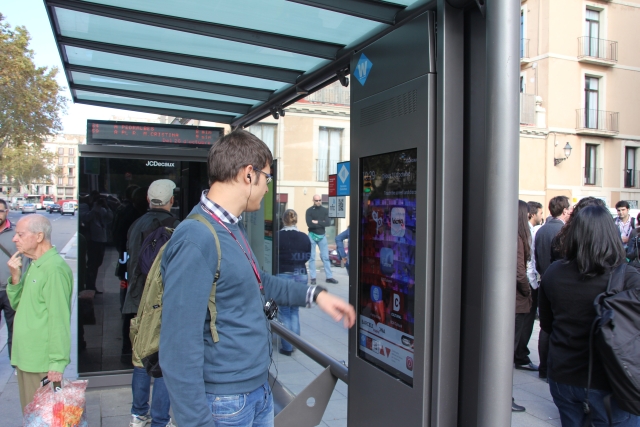
    What’s striking about talking with Antoni is how passionate he is about Barcelona’s future and the importance of the city building new industries around the digital economy.

    Particularly notable is the administration’s vision for the city which combines Barcelona’s traditional industries, such as the port, with future technologies.

    “Barcelona has to become a city of culture, creativity, knowledge but mainly fairness and well being,” says Antoni when asked on where he sees his city as being in ten years time. “I would love to see my city as a place where people live near where they work, I would love to see the city self sufficient in energy and it should be zero emission city.”

    “Rather than having a pattern of PITO –  ‘Product In, Trash Out’ we should move to what we call the DIDO model – ‘Data In Data Out’.”

    It’s a broad view for the future which many other city and state governments will be watching closely.

    Similar posts:

    • No Related Posts