Author: Paul Wallbank

  • Business as a commodity

    Business as a commodity

    What happens when your hot startup turns out to be in a commodity market?

    According to Danny Crichton at TechCrunch two of the hottest startups of the last five years, Box and Square may be finding out.

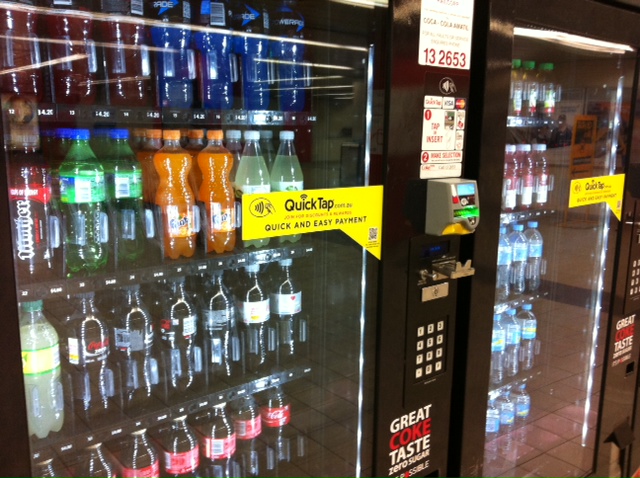
    You can make good profits out of a commodity operation – supermarkets around the world have shown you can earn good money from 2c profit on every can of baked beans you sell – but it’s hard work and it’s definitely not glamorous.

    It’s also not particularly attractive for investors looking for the next big thing and commodity businesses struggle to justify the massive burn rates

    The truth for most startup businesses is this is as good as it gets; no billion dollar buyout, no adulation from the tech press and no buying a yacht to rival Larry Ellison’s. Just a decent return from hard work.

    While many of us blinded by the billion dollar success stories of Facebook, Google and Amazon, it’s worthwhile considering that most successful businesses are far more modest ventures.

    Similar posts:

  • Leading the disruptive wave

    Leading the disruptive wave

    I’ve a story up on Technology Spectator that pulls together Uber’s fight with taxi regulators around the world with the Australian government’s Commission of Audit.

    While the story is written in an Australian context, the key message about business disruption is universal; as barriers to entry fall, no incumbent can assume they are immune from having their business upended.

    For Australia, this is a particularly important message as the affluent economy is kept afloat by consumer spending underpinned by a favoured and protected housing market.

    The economy though is nowhere near as untouchable as it looks; along with being way over invested in property, Australia’s industries are hopeless uncompetitive and have a cost base similar to Germany’s.

    It’s an entire country ripe for disruption, it will be interesting to see if the Lucky Country’s luck holds in the 21st Century.

    Similar posts:

  • Microsoft and the Internet of Your Things

    Microsoft and the Internet of Your Things

    Microsoft has come late to the Internet of Things party, but it is has a good angle with it’s ‘Internet of Your Things’ tagline.

    General Manager of Microsoft’s embedded systems division, Barb Edson, spoke with Decoding The New Economy about the company’s strategy with the Internet of Things.

    For Microsoft, the emphasis is on the enterprise side of the business with Edson describing their strategy of “B2B2C” where the value in the IoT lies in managing the data for the businesses providing consumer services.

    Most notable is the company’s IoT tagline, as Edson says; “from Microsoft’s perspective we view the Internet of Things as ‘the internet of your things.”

    “Lots of companies out there talking about the Internet of Everything that there’s 212 billion devices, why do you care as business executive. You care about your things.”

    Microsoft’s strategy is based on leveraging their own assets such as Azure cloud services, SQL Server and Dynamics along their customers’ existing infrastructure.

    This retrofitting the internet of things to existing infrastructure is illustrated by Microsoft’s using the London Underground as its main reference site.

    Connecting all 270 stations of London’s 150 year old Tube network to the IoT is a massive undertaking and one that can only be done by retrofitting existing monitoring and SCADA systems.

    Interestingly the case study only look at Phase One of what appears to be pilot project in selected locations, the Microsoft spokespeople were a little unclear on this when asked.

    The London Underground is only one example of millions of organisations that will grapple with adding existing equipment to the internet of things in coming years; it’s an opportunity that Microsoft has been smart to identify.

    Edson however is clear on how Microsoft intends to help companies deal with the information overload facing managers, “I think the most exciting thing is we’re seeing real business problems being solved.”

    Similar posts:

  • 4D printing and the quest for elegance

    4D printing and the quest for elegance

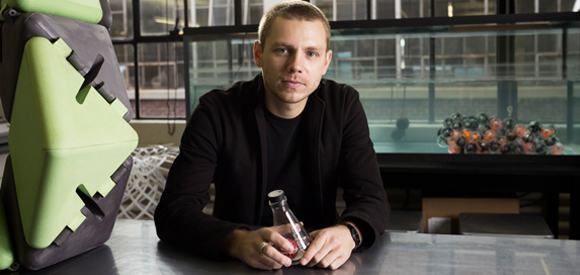
    Many of us are still getting comfortable with the idea of 3D printing, but MIT’s Skylar Tibbits is working on a fourth dimension that he hopes will move us into a more elegant era of design.

    Ahead of Skylar’s visit to Sydney for the Vivid Festival in June, Decoding the New Economy had the opportunity to interview him about what 4D printing is and his quest to create materials that can build themselves.

    What is 4D printing

    “We called it 4D printing because we wanted to add the ability for things to change and transform over time,” explains Skylar. “Time is the fourth dimension.”

    Skylar’s mission at MIT’s Self Assembly Lab is to create materials that assemble themselves. In a TED presentation he demonstrates how these materials may work and the philosophy behind them.

    Part of that search involves developing techniques for building large and complex structures from small components. “People know and utilise this in biology, chemistry and material science domains and we’re trying to translate that into larger scale applications.”

    Avoiding big machines

    “We don’t want to build bigger machines than the things we want to build, we want to build distributed systems,” Skylar continues. “If you want to build a skyscraper, you don’t want to build a skyscraper sized machine.”

    Not only does this philosphy offer benefits for manufacturing and building but it may also save energy, transport and labour costs as things can automatically build themselves once they’re delivered to a customer.

    “Materials should be able to assemble themselves or at least error correct or respond to active energy. There’s a whole application of packaging and minimising volume after manufacturing and transforming on site.”

    Over time they could also adapt to changed conditions Skylar believes: “There’s also how products themselves can transform and be smarter adapt to my demands or adapt to the environment as it’s fluctuating around.”

    Redefining the makers’ movement

    Worldwide we’ve seen the rise of the makers’ movement as affordable 3D printing and cheap electronics has made it possible to build new things; Skylar sees the Self Assembly Lab as being part of, but slightly apart from this group.

    “We make machines that make things, we’re integrated into that theme. We’re arguing that people can collaborate with materials and materials can be collaborative. It’s not just us making stuff and forcing materials into place, it’s materials making themselves.

    “A lot of methods are top down, big machines force materials into place and we’re trying to argue you can have bottom up applications in manufacturing.”

    So more than just simply printing components, Skylar sees the opportunity for embedding the intelligence into components so they can assemble themselves; the real task lies in programming the materials.

     The internet of elegant solutions

    Similarly, Skylar sees the internet of things as being a far more passive, perhaps even friendlier, field than that dominated by machines and plastics.

    “It’s not about the number of sensors and electronics and motor and things so that we can make these smart devices, we’re interested in how materials and fundamentally elegant solutions responding to external energy can have the same capabilities.”

    “We certainly believe in a connected internet of things, but it’s more a material based internet of things.”

    “I think that any solution in the beginning you throw a lot of money, technology and motors at it but over time you find more elegant solutions where materials can do more for you.”

    “The wearable space is a good example where people don’t want to wear electronics all over their bodies, they don’t want bulky things that are expensive and hard to assemble and clunky to wear.”

    “You want materials that you want your skin to touch, so we’re trying to find elegance in the solutions with smart devices.”

    Seeding the forest

    The challenge for Skylar, the Self Assembly Lab and those looking at changing the worlds of design and manufacturing is – like many other fields – funding.

    Material sciences, particularly those being explored at the MIT, have long lead times that aren’t suited to the current Silicon Valley led model of innovation and Skylar believes we need a different model.

    “We need to invest in super, long term radical innovation, to seed the economy and global technology development. We gained substantially in the Silicon Valley model with short term wins – with apps and simple technologies with incremental progress.”

    “It’s sort of like we need to seed the forest, we can’t just keep taking all these things from the top like low hanging fruit we need to create a forest effect so that we create many new technologies.”

    What comes out that forest of 4D printing and smart materials is anyone’s guess; but if Skylar Tibbits has his way, it will certainly be elegant.

    Similar posts:

    • No Related Posts
  • Microsoft’s not like everybody else

    Microsoft’s not like everybody else

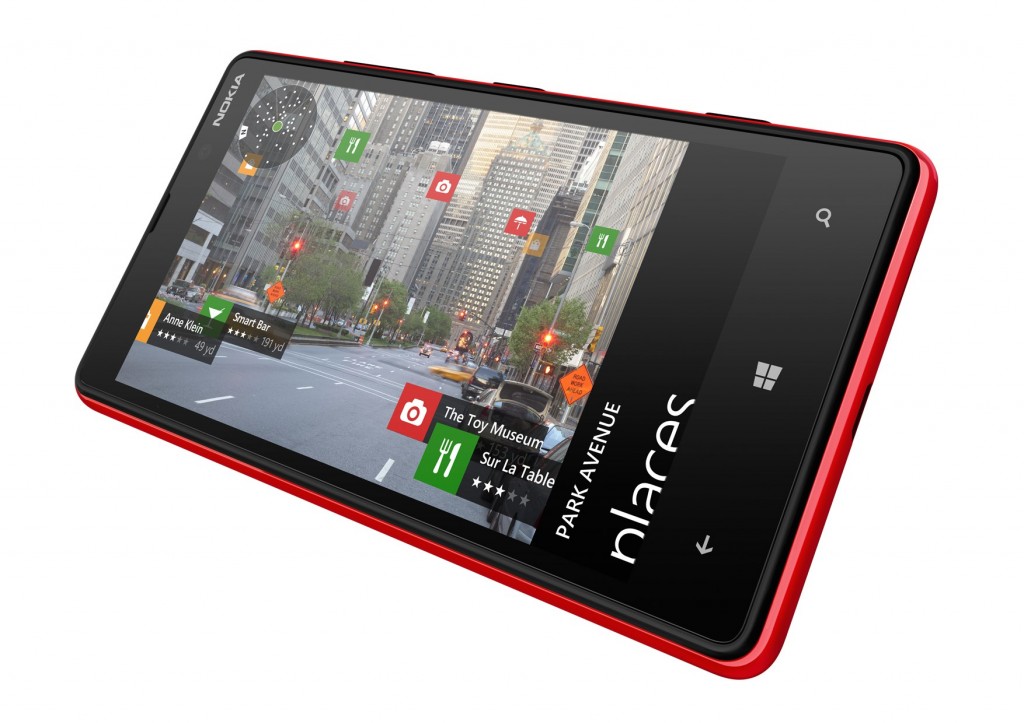
    “Not like everybody else” proclaims Microsoft’s first ad for its newly acquired Nokia phone division.

    In what way the Microsoft-Nokia product isn’t like its Apple and Android competitors isn’t clear from the ad, but hopefully they’ll tell us.

    The real concern with the Microsoft ad is that it again appears the business is being left behind in a marketplace shift as Google, Samsung, Apple and all the other smartphone leaders move to integrate their phones with smarthomes, fridges and even football stadiums.

    Sadly it might turn out that, once again, Microsoft isn’t like everybody else.

    Similar posts:

    • No Related Posts