
Author: Paul Wallbank

  • Counting the cost of investors

    Counting the cost of investors

    Israeli tech startup Waze was always an interesting business; the idea of combining crowdsourcing and social media to provide traffic reports was fascinating concept that seemed to work well.

    When Google bought the company two years ago, it was seen as one of the success stories for Israel’s vibrant tech startup scene, but a LinkedIn post by Waze’s founder Noam Bardin suggests the acquisition was not what the founders wanted.

    One of Waze’s mistakes was the valuation of its A round which significantly diluted the founders. Perhaps, had we held control of the company, as the Founders of Facebook, Google, Oracle or Microsoft had, Waze might still be an independent company today.

    Not being an independent company is also a weakness for Waze, as Google have shown in the past they are ruthless in shutting down businesses they’ve acquired and there’s no guarantee that Bardin’s creation won’t meet the same fate.

    Google though are not alone in this, Yahoo! is notorious for neglecting companies they’ve acquired and today Microsoft announced it’s closing the Farecast travel price prediction service it bought for $115 million six years ago.

    Oren Etzioni who founded Farecast in 2004 isn’t happy about this according to Geekwire, however that’s the downside of selling your baby to another business – its destiny is now in the buyer’s hands and their vision may not be the same as the founders’.

    A good example of a company controlling its destiny is Atlassian, the Australian founded collaboration tool service, which the Wall Street Journal describes as being “one of the world’s most valuable venture-backed companies.”

    In many respects Atlassian is the opposite of the Silicon Valley business model with an emphasis on engineering and product development over sales and marketing. Atlassian’s founders aren’t focused on hyping the business with the aim of selling to a deep pocketed greater fool.

    For founders, the tricky balance in raising enough money to achieve their objectives while not giving away a controlling interest. Get it wrong and a founder ends up being forced into a course of action they didn’t want to do, as Noam Bardin found.

    Bardin’s post on the Israeli business community and startup scene is an interesting perspective into the strengths and weaknesses of the country’s entrepreneurial culture, much of which would be familiar to many outside of Silicon Valley.

    One big lesson though for founders, Israeli or otherwise, is don’t give away too much equity too early, or the investors make take you to places you didn’t want to got to.

    Similar posts:

  • Building modern manufacturing

    Building modern manufacturing

    Around the world manufacturers are wondering how they adapt to the rise of 3D printing nod the continued challenge of China’s low costs of production.

    In Singapore, Reuters reports, the government is putting its hopes on new technology boosting the country’s manufacturing industry in one of the world’s highest cost centers.

    “The future of manufacturing for us is about disruptive technologies, areas like 3D printing, automation and robotics,” EDB Managing Director Yeoh Keat Chuan told Reuters.

    Britain too is experimenting with modern technologies as the BBC’s World of Business reports about how the country is reinventing its manufacturing industry.

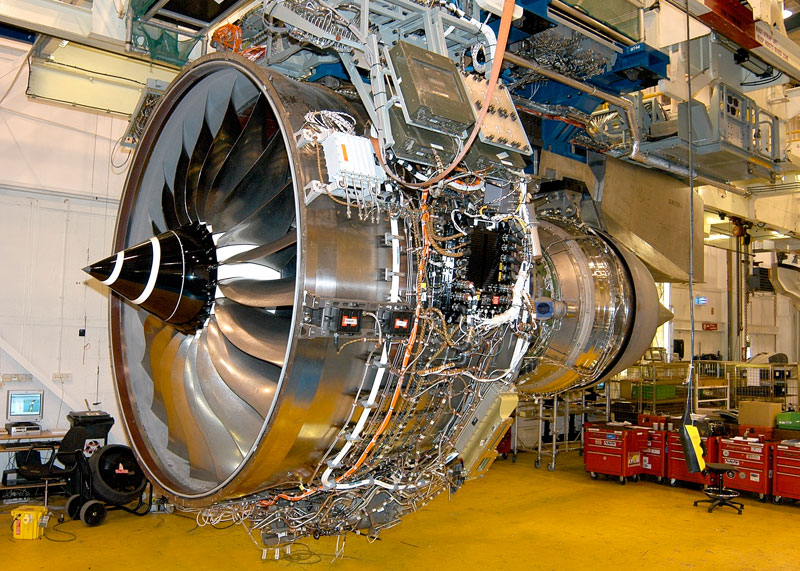
    Tim Chapman of the University of Sheffield’s Advanced Manufacturing Research Centre describes how the economics of manufacturing changes in a high cost economy with an simple advance in machining rotor disks for Rolls-Royce Trent jet engines.

    “These quite complex shaped grooves were taking 54 minutes of machining to make each of these slots. Rolls-Royce came to us and said can ‘can you improve the efficiency of this? Can you cut these slots faster.”

    “We reduced the cutting time from 54 minutes to 90 seconds.”

    “That’s the kind of process improvement that companies need to achieve to manufacture in the UK.”

    Interestingly many of those British engineers interviewed by Peter Day in the BBC report focus on China’s cheap labor as being the driver for moving up the value chain and automating

    Dismissing China as purely a low cost producer a risk as Chinese manufacturers are working hard to move up the value chain as their aging populating erodes their labor advantage.

    The last word though for Britain’s engineering sector has to go to Hugh Facey, founder of wire tool company, Gripple.

    “Are you a rich man?”
    “No”
    “Do you mind?”
    “I’m from Yorkshire.”

    Both Singapore and the UK are working on establishing their positions in the 21st Century economy; both business owners and individuals have to give some thought on where they want to be.

    For manufacturing, the rollout of new technologies means the industry is going to look very different in the next decade. It won’t be the only industry radically changed.

    Similar posts:

  • Holy wars and internet empires

    Holy wars and internet empires

    A regular topic of this blog has been the rise of the internet empires that want to lock users into their kingdoms.

    On the edges of these empires things can get ugly as the competing groups fight for supremacy and to capture users.

    In these wars, no-one was capable of getting uglier that Steve Jobs.

    Which makes Steve Jobs’ declaration that 2011 would be a year of Holy War with Google unsurprising.

    The statement typical Jobsian hyperbole, but we should under estimate just how serious Apple’s staff would take such a statement.

    Apple’s intention to wage ‘holy war’ illustrates just how high the stakes as the online empires try to capture users.

    Those Holy Wars and the reason they are being fought is something all of us should keep in mind when we’re asked to choose between Apple, Google or Microsoft.

    Similar posts:

    • No Related Posts
  • Digital natives and iPads

    Digital natives and iPads

    I’m writing up a review of  the Emergency Services Integrated Communications Vehicle that was showcased at the Melbourne Cisco Live event a few weeks back.

    An comment by one of the National Safety Agency people during the tour was notable; “we need to have modern technology if we want to attract young people.”

    The spokesperson was talking about offering iPad and Android apps for the emergency services workers, particularly in the context of firefighting volunteers having an average age approaching 50.

    Needing the latest technology to attract younger volunteers or workers is an interesting view which I’m not wholly convinced about.

    Do we really need the latest technology do attract younger workers and volunteers or are is this another example of trying to apply tech to a more fundamental problem?

    Similar posts:

    • No Related Posts
  • Shoehorning the advertising model

    Shoehorning the advertising model

    According to AdAge, Instagram has no advertising rate card but if you have a spare million hanging around the photo sharing service will speak to you.

    Dropping a million dollars on a social media campaign isn’t a massive amount for a global brand, but is it a worthwhile investment?

    As Vintank’s founder Paul Mabray told Decoding the New Economy earlier this week, the social media services were never invented to be business to consumer advertising platforms.

    “I think that every social media platform that’s been developed had such a strong emphasis on consumer to consumer interaction that they’ve left the business behind, despite thinking that business will pay the bills.”

    “As a result almost every single business application that’s come from these social media companies has met with hiccups. That’s because it wasn’t part of the original plan.”

    With Instagram it’s not clear exactly what those companies are getting for their million dollars a month with its consumer focus, it could well be its the cost of experimenting with the new medium.

    In the early days of radio it took nearly two decades to figure out how to make money from the broadcast model — it may take a similar period to understand how to make social media pay.

    Similar posts:

    • No Related Posts