We learned a lot from the Global Financial crisis.
Radio Rentals tells us “your credit history is history”

We learned a lot from the Global Financial crisis.
Radio Rentals tells us “your credit history is history”

The unseemly media scrum around alleged Bitcoin inventor Dorian Nakamoto has not been the press’ finest hour.
What’s more worrying though is a Business Insider interview with Sharon Sargent a ‘forensics analyst’ who was part of the Newsweek investigative team.
A systems engineer by training with experience in computing security, military protocol analysis, and artificial intelligence, Sergeant said everything she found converged on an individual with a background apparently similar to hers — and who ended up sharing a name with Bitcoin’s creator.
“I said, ‘I think I know this guy — he wears a pocket protector, he has a slide rule, he comes from that genre,’ which was very different from other characterizations,” she told BI by phone Friday.
He wears a pocket protector and uses a slide rule? Hell yeah, not only did he create Bitcoin but he’s probably a witch as well.
One hopes Newsweek have found the right man.
Picture courtesy of forwardcom through sxc.hu
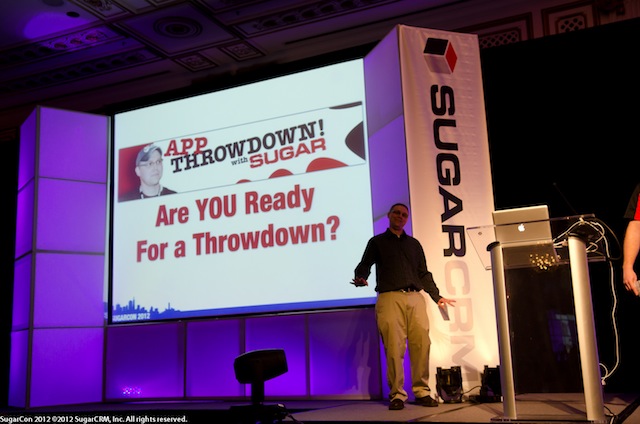
“Tell me something I didn’t know about my customer;” is what Clint Oram demands of his software.
“If you think about legacy of Customer Relationship Management tools it’s really been about entering something I already knew about by customer so my manager can keep track of me.”
Oram sees that changing with Sugar CRM, the open source Customer Relationship Management software company he co-founded in 2004 at a time when the software industry was coming out of the post dot com bust depression.
“There was a huge backlash by customers to the enterprise software market,” Oram remembers. “There were a lot of hopes and promises made of all this fantastic software that would change the world. The reality was a lot of it didn’t do anything.”
In Oram’s view, that disillusionment formed the basis of today’s cloud based software businesses with the market’s demand that software be delivered as a service, reducing up front commitments to any one product, commercial open source that gave customers a stake in development and annual subscription licensing.
That last factor – a radical change to the traditional software model that saw small businesses buy boxed programs and larger enterprises negotiate complex agreements with expensive implementation projects – is the biggest change to the modern software industry.
Oram sees that as challenging those established giants like SAP, Oracle and Microsoft; “in the past it was ‘here’s my software, goodbye and good luck. Maybe we’ll see you next year.”
“If you look at those names, the competitors we see on a day-to-day basis, several of them are very much challenged in making the shift from perpetual software licensing. It’s been a challenge that I don’t think all of them will work their way through, their business models are too entrenched.”
“Software companies really have to stay focused on continuous innovation to their customers.”
From his ten years in business, Oram learned the freemium model is a difficult way to run a business, “we learned that the freemium model is challenging and you gotta really focus on differentiation across your software editions and deliver clear value to each customer segment.”
While the Freemium business model remains a challenge, Oram sees mobile and the cloud as driving the CRM industry with the sector focusing on delivering more customer insights as software increasingly goes mobile and gets better at predicting behaviour.
“We’re taking these cloud, mobile based platforms that can be delivered anywhere and anytime,” says Clint “and now work on collecting that data about your customers and telling you what you should do next.”
“How do you help your customer to get the fullest value out of working with you.”
Delivering value to customers is a challenge not just for the software industry; in an era where business is far more competitive, it’s a question facing all industries.
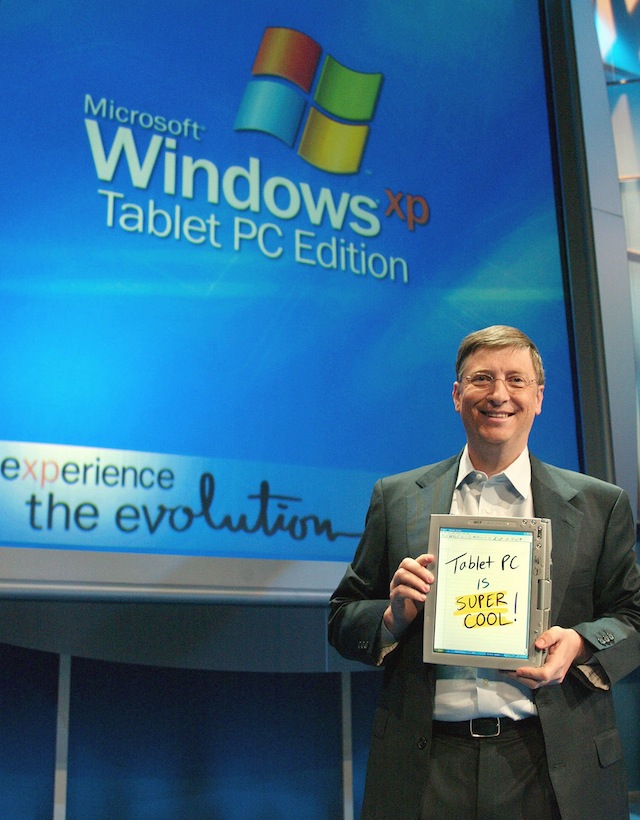
Microsoft’s task of securing its software was a huge undertaking, one that isn’t over yet.
One of the great, and possibly under recognised, business achievements of the computer age was Bill Gates’ recognition that Microsoft’s online strategy was flawed shortly after releasing Windows 95. A few years later he had to repeat the task when the company found its products were almost dangerously insecure.
In a sprawling account of the company’s response to the security problems at the turn of the century, Life In The Digital Crosshairs, describes how Microsoft’s engineers responded to their then CEO’s call for Trustworthy Computing.
The problems at the time were vast, compounded by Microsoft’s failure to take security seriously – the first version of Windows XP came out without a firewall which ensured thousands of users were quickly infected by the computer worms rampant on many ISPs networks at the time.
As the story tells, it was a long difficult task for Microsoft to change complex and interdependent computer code involving 8,500 of the company’s engineers.
One suspects the cultural challenges were even greater in getting the managers supervising the army of engineers to understand just how serious the security threat was to Microsoft’s users.
The biggest challenge though was Microsoft’s own product line; because the company hadn’t ‘baked’ security into its software, key products like Microsoft Office relied on lax security practices to work properly.
Office and Windows also had the problem of legacy code and applications; one of Microsoft’s selling points over Apple and other competitor systems was that the company took pride in supporting older hardware and software, this in itself creates security risks when programs designed in the MS-DOS days still want to write to the system kernel.
For Microsoft the journey isn’t over, although the shift to cloud computing has changed – and simplified – the company’s security quest by making legacy issues in Office and Windows less important.
Microsoft and Gates’ success in seeing off the threats posed by the internet gave the company another decade of computer industry dominance, however dealing with security issues was nowhere near successful.
In the end however it wasn’t security issues that saw Microsoft lose its dominance; the internet eventually prevailed as Apple revolutionised mobile computing while Amazon and Google improved cloud services.
With Bill Gates reportedly finding himself getting more involved in the company he founded, the challenges of both the internet and security are two that he’s going to be very familiar with. It will be interesting to see what we write about Microsoft in 2022.

Madrid have renamed a subway station to Vodafone Sol and plan to rename an entire metro line as part of a corporate sponsorship deal.
Personally I think renaming places changes the culture of place; something well understood by dictators but possibly not so well by corporate marketing people.
Do you think this is a good idea?
Picture of Madrid Sol station courtesy of Zaqarbal through Wikimedia