Author: Paul Wallbank

  • Finding the smart money

    Finding the smart money

    Around the world startup communities are working to connect with local investors, in Sydney and London two groups are showing how it is done.

    “We’re looking at turning idle money into start money,” is the aim of Sydney AngelEd says one of its founders, Ian Gardner.

    Fitting startup companies’ capital needs into the established criteria of investment managers is an ongoing problem that AngelEd’s founders want to resolve. “We see startups becoming an asset class,” says Gardiner.

    AngelEd, to be held on November 7, aims to educate high wealth investors and asset managers on understand the risk, benefits and hype around angel investment, particularly in tech companies.

    The global search for funds

    Startups around the world are struggling to engage with investors – in London, the local tech community has set up City Meets Tech to introduce British investors to high growth companies.

    London should have an advantage in this field given its leading role in the global finance industry, however the challenge for the tech community is to find financiers who are prepared to accept higher levels of risk than mainstream investments.

    “The City is generally risk adverse and doesn’t understand tech and tech start-ups,” says the City Meets Tech website, “though really it’s about understanding the business and managing risk though unfortunately innovation requires at least some risk.”

    Australia’s trillion dollar superannuation system should similarly give Sydney an opportunity that to become a global centre however it suffers from a similar, if not worse, conservative investment culture to London’s.

    Turning Sydney into a global finance centre has been an objective successive state and Federal governments for twenty years but the sleepy, comfortable and risk averse culture of Australian fund managers offers little to attract foreign investors or companies.

    Much of Australia’s is problem is the insular nature of local fund managers with all but a tiny part of the nation’s retirement savings being put into the top local stocks, listed property funds or domestic infrastructure projects that are notable for their lousy returns and extortionate management fees.

    Breaking that mentality is going to be the key to both AngelEd and the Sydney’s success as a financial centre.’

    Competing with the world

    While London and Sydney are struggling with the challenges of encouraging investors into the high growth sectors, cities like Singapore and New York are developing investor communities that are attracting entrepreneurs to their cities.

    Many governments dream of being the next Silicon Valley and while it isn’t likely anyone can recreate the circumstances that led to Northern California becoming the computer industry’s world centre , a vibrant and accessible capital market will be necessary for any place hoping to be a global cnetre.

    For Sydney and London, the success of initiatives like AngelEd and City Meets Tech may be critical for both centres’ future in the global digital economy.

    Similar posts:

  • A clean, well lighted place

    A clean, well lighted place

    A clean well lighted place was all a waiter wanted in Hemmingway’s famous short story.

    It’s all a computer wants too.

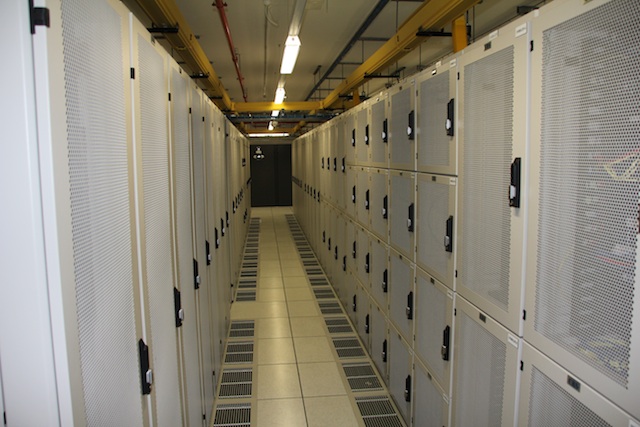
    At a media tour of PacNet’s Sydney city data centre earlier today Atul Thapar, Managing Director of integrator E-Bit Systems, gave a brief talk on the pros and cons of cloud computing.

    Much of Atul’s presentation covered the same territory as the Business in the Cloud presentation in making the argument for why businesses should use cloud computing services.

    A stand out point in Atul’s presentation was that computers like clean, well lit places.

    “Dust-prone unstable environments will age hardware,” said Atul. “And the result is system failures and downtime.”

    This is a good point – most businesses treat their servers terribly and at best they are kept in a stuffy, dusty closet where they get clogged up and neglected.

    While running PC Rescue I encountered one cat loving real estate agent who kept her office server in an operational kitty litter tray. Needless to say she wasn’t a client ten minutes after I discovered that.

    Just the fact that data centre operators look after their computers is a compelling argument for businesses moving onto the cloud, or at least putting their servers in a colocation facilities where professionals can look after the environment.

    Like us, computers work best when they’re comfortable. If you can’t look after them, then it’s time to consider giving the work to someone who can.

    Similar posts:

    • No Related Posts
  • Where next for the NBN – ABC Nightlife technology

    Where next for the NBN – ABC Nightlife technology

    The National Broadband Network has always been a hot political issue in Australian politics and with the election of the new Federal government the often delayed project is being reviewed.

    What does this mean for communities and businesses struggling with inadequate internet connections? Join Tony Delroy and Paul Wallbank from 10pm, October 17 on ABC Local Radio across Australia.

    If you missed the program, you can listen to it as a podcast through the ABC Tony Delroy’s Nightlife page.

    Some of the questions Tony and Paul be covering include;

    • Why did we need the NBN in the first place?
    • What’s happened to the NBN since the new government was elected?
    • Why are we are we having political arguments about an infrastructure upgrade?
    • What are the differences between fibre to the node versus fibre to premises?
    • Why is the NBN running so late?
    • How will the coalition’s change the slow rollout?
    • Australia’s come in around 40th on an international survey on Internet use. Is this because of the NBN?

    We’ll also be looking at some other topics such a Google’s new advertising plan and how to drop out of it.

    We’d love to hear your views so join the conversation with your on-air questions, ideas or comments; phone in on the night on 1300 800 222 within Australia or +61 2 8333 1000 from outside Australia. If you’re outside the broadcasting area, you can stream the program through the ABC website.

    Similar posts:

    • No Related Posts
  • Venture capital investors as mentors

    Venture capital investors as mentors

    LinkedIn founder Reid Hoffman has a wonderful post on his blog detailing what he wished he knew when he first pitched his business to investors.

    His seven myths of pitching are well worth reading whether you’re seeking capital from Silicon Valley venture capital firms, a sceptical bank manager or your mum and dad.

    The first point is the most pertinent — a successful financing process results in a partnership that delivers benefits beyond just money.

    Raising investor funds is only a step in the journey of creating a successful business, it is by no means the end point.

    Hoffman’s point is something every business founder needs to keep in mind, those early investors are important mentors and their advice could prove to be more valuable than the money they bring to a venture.

    Similar posts:

  • What if you built a broadband network and nobody used it?

    What if you built a broadband network and nobody used it?

    The assertion that internet connectivity drives economic growth is largely taken for granted although getting the maximum benefit from a broadband network investment may require more than stringing fibre cables or building wireless base stations.

    A key document that supports the link between economic growth and broadband penetration is the International Telecommunication Union’s 2012 Impact of Broadband on the Economy report.

    While the reports authors aren’t wholly convinced of the direct links between economic growth and broadband penetration, they do see a clear correlation between the two factors.

    ITU Impact of broadband on the economy report 2012
    ITU Impact of broadband on the economy report 2012

    One of the areas that disturbed the ITU report editors were the business, government and cultural attitudes towards innovation.

    The economic impact of broadband is higher when promotion of the technology is combined with stimulus of innovative businesses that are tied to new applications. In other words, the impact of broadband is neither automatic nor homogeneous across the economic system.

    For South Korea, internet innovation is a problem as the New York Times reports. Restrictions on mapping technologies, curfews on school age children and the requirement for all South Koreans to use their real names on the net are all cited as factors in stifling local innovation.

    In reading the New York Times article, it’s hard not to suspect the South Korean government is engaging in some digital protectionism, which is ironic seeing the benefits the country has reaped from globalised manufacturing over the last thirty years.

    The problem for South Korea is that rolling out high speed broadband networks are of little use if local laws, culture or business practices impede adoption of the services. It’s as if the US or Germany built their high speed roads but insisted that cars have a flag waver walking in front of them.

    Indeed it may well be that South Korea’s broadband networks are as useful to economic growth as Pyongyang’s broad boulevards just over the border.

    Similar problems face other countries with Google’s high speed broadband network in the US so far not attracting the expected business take up and innovation, although it is early days yet and there are some encouraging signs among the Kansas City startup community.

    In Australia, the troubled National Broadband Network has struggled to articulate the business uses for the service beyond 1990s mantras about remote workplaces and telehealth – much of the reason for that has been the failure of Australian businesses to think about how broadband can change their industries.

    Like Japan’s bridges to nowhere, big infrastructure projects look good but the poorly planned ones – particularly those no-one knows how to use – are a spectacular waste of money.

    Hopefully the fibre networks being rolled out won’t be a waste of money, but unless industries start using the web properly then much of the investment will be wasted.

    Similar posts:

    • No Related Posts