Author: Paul Wallbank

  • On the internet, the Feds know what breed of dog you are

    On the internet, the Feds know what breed of dog you are

    The arrest of alleged Silk Road founder Ross Ulbricht – also known as the Dread Pirate Roberts – has attracted plenty of media attention.

    What’s particularly notable is the FBI is claiming Ulbricht made a basic mistake in posting to a website under his real name that gave his identity away.

    If true, Ulbricht’s trivial mistake illustrates how easy it is for any determined investigator to find someone’s identity online from the trillion points of data we all create in the connected world.

    Anyone who wants to be truly anonymous on the web has to work extremely hard to protect their identity. Most of us aren’t prepared to trade convenience for security, particularly given the massive effort required.

    Even if we could protect our online habits, the use of credit cards, loyalty plans and even driving our cars still it almost impossible to escape the watch of a determined investigator.

    In the early days of the web, it was said “on the internet, no-one knows you’re a dog.” Today the feds can figure out not only what breed of dog you are, but what your name is and your favourite brand of dog food.

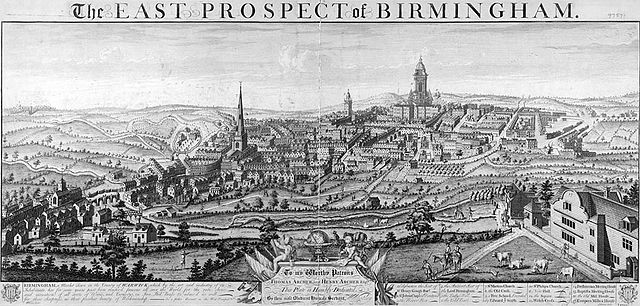
    The modern panopticon we live in is a very efficient machine and it’s difficult to hide from society’s gaze. It’s why we need to rethink privacy and information security.

    Image of Presidio Modelo by Friman through Wikimedia.

    Similar posts:

    • No Related Posts
  • Globalisation with Chinese Characteristics

    Globalisation with Chinese Characteristics

    “eBay is a shark in ocean, Alibaba is a crocodile in the Yangtze” film maker Porter Erisman quotes the founder of Alibaba, Jack Ma, in comparing the two online trading sites.

    In promoting his film Crocodile in the Yangtze, Porter spoke to Decoding the New Economy about the rise of the global Chinese internet giant.

    A key part in Alibaba’s success is taking on eBay on it’s own turf, “if you’re David fighting Goliath you can’t play by the big guy’s rules,” Porter says.

    This is exactly what the Chinese company did when eBay entered their market and today Alibaba and it’s subsidiary Taobao have sales exceeding eBay’s and Amazon’s.

    “Back in about 2003 Jack Ma came to me and told me about a secret project to overtake eBay,” Porter says. “When we looked at them they looked like a Goliath, they’d never really been beaten in a market they’d entered first and they had a huge war chest with a $150 million committed to the China market.”

    It turned out that eBay weren’t as powerful as they appeared, something other entrepreneurs have discovered when giants like Google have entered their markets.

    The Chinese Leapfrog

    Like many rapidly developing countries, China is leapfrogging various stages of development that Western economies went through with the retail industry and e-commerce being two examples.

    “Some people say cellphones will leapfrog landlines, actually the same is due with entire systems,” says Porter. “In China coming from so many years of a command economy there wasn’t a very developed retail culture or even a consumer culture.”

    “Taobao came along at a time when all of that was still in the early phases of development and the company basically leapfrogged that whole phase of building out shopfronts and building logistics.”

    “E-commerce in China is revolutionary while in the US, or Australia, it is evolutionary.” Porter says.

    Porter quotes Jack Ma as saying “e-commerce in the US would be a dessert, in China it is the main course.”

    China’s Global Challenge

    As companies like Lenovo computers, Hauwei telecommunications or Haier whitegoods have discovered, Chinese businesses face challenges when expanding overseas. Porter sees this as a matter of time and scale.

    “Like Japan in the 1970s and 80s there’s a whole wave of companies that have started going global. China’s such a big market that there’s a lot of companies that get big and develop scale before going international.”

    “I’d say the biggest challenge in the beginning is cultural,” states Porter. “China’s at a disadvantage because information and the media are so controlled that’s sometimes a rude awaking when a company goes global like a Hauwei and then faces a bunch of political issues it doesn’t understand.”

    “One of the reasons I made the film,” Porter says. “I wanted entrepreneurs in China to see it and understand these are the issues Alibaba faced when they went global and hopefully you can learn from some of those successes and mistakes.”

    Going to China

    Porter’s advice to westerners going into China is to shut up, listen and learn, “don’t assume that just because things are done a certain way in the US or Australia that it’s superior.” The country’s culture and ways of doing business are different to those of North America, Europe or Australia.

    “If you look at the way traffic moves in Shanghai it looks crazy. If you drove like that in Sydney it would be a disaster but there’s just different ways of through traffic, getting point A to B.”

    “It’s better not to judge, but just step back.”

    Regardless of our judgements, China’s move up the value chain means we will see more PRC founded companies going global.

    Over the next decade we’re going to see the globalised economy start to take on some recognisably Chinese characteristics.

    Similar posts:

    • No Related Posts
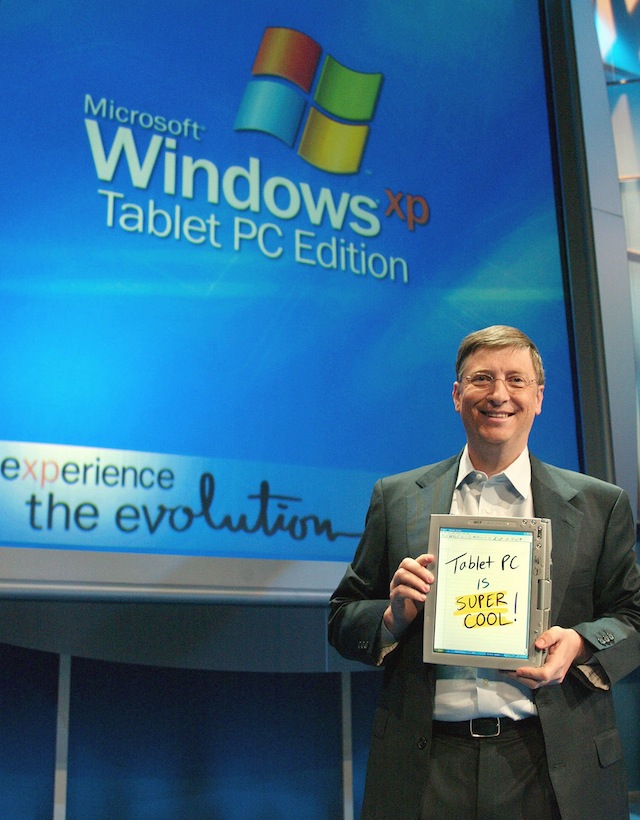
  • Does Bill Gates leaving Microsoft mark the end of the PC era?

    Does Bill Gates leaving Microsoft mark the end of the PC era?

    After Steve Ballmer’s announced retirement from Microsoft it was clear that the changing of guard was going to happen at Microsoft as Bill Gate’s last trusted lieutenant left a management position.

    Now Reuters reports that some of Microsoft’s shareholders are lobbying for Gates himself to leave the board.

    If that happens it would probably be the formal end of the PC era as Gates is the last of the pioneers of the desktop computer industry to still have a major role following Ballmer’s retirement and Steve Jobs’ passing.

    Similar posts:

    • No Related Posts
  • Are industrial hubs a thing of the past?

    Are industrial hubs a thing of the past?

    Since the beginning of civilisation, industry hubs have formed the basis of cities and regions, but is the internet removing the need for like minded businesses to group together?

    Tomorrow I’m at a breakfast featuring Porter Erisman whose film Crocodile in the Yangtze tells of the rise of China’s Alibaba and the adventures of its founder, Jack Ma.

    Jack Ma’s Alibaba is the eBay of manufacturing, connecting factories and buyers around the world. A visitor to the site can buy anything from childrens’ clothing to tractor gaskets, all cheaper by the container load.

    The rise of Alibaba tracks the development of sites like oDesk which bring skilled workers together. It’s becoming easier for businesses of all sizes to tap global workforces and supply chains.

    In the past, industrial hubs and cities have developed due to the proximity of workers, suppliers and materials. Today, it may well that with all the resources being a mouse click and a credit card away from an entrepreneur it’s no longer necessary for these hubs to develop.

    Whether industrial hubs do develop in the future will depends on individual sector’s needs for natural resources, face to face contact and short supply chains, but it’s worthwhile thinking whether location remains important for modern economic development.

    Similar posts:

  • Crumbling cookies

    Crumbling cookies

    On the last ABC radio spot we looked at how our data is being tracked, in the following 702 Sydney program with Linda Mottram we looked at the role of Internet cookies and online privacy.

    Cookies – tiny text files that store visitors’ details on websites – have long been the mainstay of online commerce as they track the behaviour of web surfers.

    For media companies, Cookies have become a key way of identifying and understanding their readers making these web tracking tools an essential part of an already revenue challenged online news model.

    Cookies also present security and privacy risks as, like all Big Data, the information held within them can be cross-referenced with other sources to create a picture of and often identify an internet users.

    These online data crumbs often follow us around the web as advertising platforms and other services, particularly social media sites, monitor our behaviour and the European Union’s Directive on Privacy and Electronic Communications is the first step by regulators to crack down on the use of cookies.

    Similar moves are afoot in the US as regulators start to formulate rules around the use of Cookies, in an Australian context, the National Privacy Principles apply however they are of limited protection as most cookies are not considered to be ‘identifiable data’, the same get out used by US government agencies to monitor citizens’ communications.

    Generally these rules promise to be so cumbersome for online services Google is looking at getting rid of cookies altogether .

    Ditching cookies gives Google a great deal of power with its existing ways of tracking users and ties into Eric Scmidt’s stated aim of making the company’s Google Plus service an identity service that verifies we are who we say we are online.

    Whether Google does succeed in becoming the web’s definitive identity service remains to be seen, we are though in a time where the questions of what is acceptable in tracking our online behaviour are being examined.

    For the media companies and advertising, putting the control of online analytics in the hands of one or two companies may also add another level of middle man in a market where margins are already thin if not non-existent.

    It may well be that we look back on the time when we were worried about  internet cookies tracking us as being a more innocent time.

    Similar posts:

    • No Related Posts