Author: Paul Wallbank

  • A question of incentives at Microsoft and Apple

    A question of incentives at Microsoft and Apple

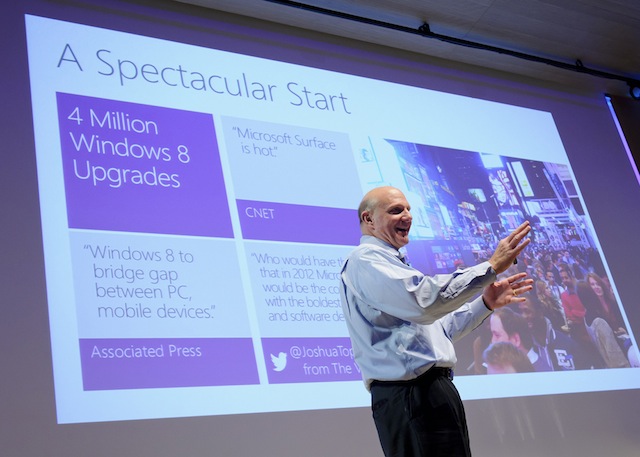
    Ben Thompson on his Stratechery blog speculates what Apple would be like were Steve Ballmer running the company.

    Thompson makes an excellent point – that Ballmer has been very good in building a company driven by incentives like salaries, bonuses and titles. It describes Microsoft very well and highlights the companies strengths and weaknesses.

    Were Ballmer to run Apple, Thompson concludes, it would be a far more profitable company than it is today but it would be fading into irrelevance just as Microsoft is.

    That makes sense as Microsoft under Ballmer has been able to profit from the dominant market position it built up in the late 1990s, but the company has struggled against innovative competitors or the big market shifts following the arrival of smartphones and tablet computers.

    Where Thompson is on more shaky territory is citing Amazon as another example of where profit is less important than innovation;

    Amazon famously makes minimal profits; Microsoft made more money last year than Amazon has made ever, yet Amazon too is far more relevant in the consumer market today than is Microsoft.

    Amazon may well be more relevant to the consumer market today than Microsoft, but that’s largely on the back of a business model built on shareholders subsiding customers – something that Apple has never done.

    It may well be that when investors get sick of propping Amazon up, the company’s business model will have to change. Should Amazon have a Microsoft like dominance of the online retail or cloud computing markets then customers might be in for a nasty dose of sticker shock as profits are maximised.

    Ultimately incentives are what shapes a company’s culture – whether the incentives are built around stack ranking, commissions or currying favour with the founder, they will determine how the business behaves.

    Similar posts:

  • On running late

    On running late

    Business Insider’s unathorised biography of Yahoo CEO Marissa Mayer is both enlightening and scary while giving some insight into the psyche of the tech industry.

    Nicholas Carlson’s story tells the warts and all tale to date of a gifted, focused and difficult to work with lady who’s been given the opportunity to lead one of the Dot Com era’s great successes back into relevance. It’s a very good read.

    Two things jump out in the story; Mayer’s desire to surround herself with talented people and her chronic lateness.

    When asked why she decided to work at a scrappy startup called Google, which see saw as only having a two percent chance of success, Mayer tells her ‘Laura Beckman story’ of her school friend who chose to spend a season on the bench of her school varsity volleyball team rather than play in the juniors.

    Just as Laura became a better volleyball player by training with the best team, Mayer figured she’d learn so much more from the smart folk at Google. It was a bet that paid off spectacularly.

    Chronic lateness is something else Mayer picked up from Google. Anyone whose dealt with the company is used to spending time sitting around their funky reception areas or meeting rooms waiting for a way behind schedule Googler.

    To be fair to Google, chronic lateness is a trait common in the tech industry – it’s a sector that struggles with the concept of sticking to a schedule.

    One of the worst examples I came across was at IBM where I arrived quarter of an hour before a conference was due to start. There was no-one there.

    At the appointed time, a couple of people wandered in. Twenty minutes later I was about to leave when the organiser showed up, “no problem – a few people are running late,” he said.

    The conference kicked off 45 minutes late to a full room. As people casually strolled in I realised that starting nearly an hour late was normal.

    It would drive me nuts. Which is one reason among many that I’ll never get a job working with Marissa Mayer, Google or IBM.

    A few weeks ago, I had to explain the chronic lateness of techies to an event organiser who was planning on using a technical speaker for closing keynote.

    “Don’t do it,” I begged and went on to describe how they were likely to take 45 minutes to deliver a twenty minute locknote – assuming they showed up on time.

    The event organiser decided to look for a motivational speaker instead.

    Recently I had exactly this situation with a telco executive who managed to blow through their alloted twenty minutes, a ten minute Q&A and the closing thanks.

    After two days the audience was gasping for a beer and keeping them from the bar for nearly an hour past the scheduled finish time on a Friday afternoon was a cruel and unusual punishment.

    This was by no means the first time I’d encountered a telco executive running chronically over time having even seen one dragged from the stage by an MC when it became apparent their 15 minute presentation was going to take at least an hour.

    It’s something I personally can’t understand as time is our greatest, and most precious, asset and wasting other people’s is a sign of arrogance and disrespect.

    Whether Marissa Mayer can deliver returns to Yahoo!’s long suffering investors and board members remains to be seen, one hopes they haven’t set a timetable for those results.

    Similar posts:

  • Mr Ballmer regrets

    Mr Ballmer regrets

    Following the announcement of his pending retirement, Microsoft CEO Ballmer held his first interview for twenty years with ZD Net’s Mary-Jo Foley.

    During the ZD Net interview, Ballmer and Foley ranged over subjects ranging from his possible replacement, reasons for retirement and his greatest highlight during his thirteen year tenure as CEO.

    Foley’s asked Ballmer what was his greatest disappointment as Microsoft CEO and, not surprisingly, he nominated the development of Microsoft Vista.

    I would say probably the thing I regret most is the, what shall I call it, the loopedy-loo that we did that was sort of Longhorn to Vista. I would say that’s probably the thing I regret most. And, you know, there are side effects of that when you tie up a big team to do something that doesn’t prove out to be as valuable.

    Those side effects of Vista’s botched development were felt across the PC industry as the operating system’s overlong development and disappointing performance broke the three year upgrade cycle that underpinned the sector’s business model.

    Unlike the similar debacle eight years earlier with Windows ME where Microsoft’s market position was unchallenged, Vista came along at the time the computer industry itself was being disrupted by smartphones leaving the entire PC industry exposed to a major shift.

    Now Ballmer’s successor will have to deal with the industry’s broken upgrade model along with the post-PC era where desktop and server operating systems are no longer the key to controlling the market. Every option is a challenge to Microsoft’s existing businesses.

    As discussed in Ballmer’s interview with Mary-Jo Foley, Microsoft still sees its future in consumer IT, whether that includes continuing the company’s three screen strategy of supplying Windows on the desktop, tablet and smartphone will be one of the early and critical decisions the next CEO will have to make.

    While Microsoft Vista might have been Steve Ballmer’s biggest mistake as Microsoft CEO, the challenges ahead for the company’s board and management are great, it’s going to take strong leadership for the once dominant software giant to maintain its place in a radically changed market.

    Song of the day – Ms Otis regrets by Kirsty McColl and The Pogues.

    Similar posts:

  • Keeping sane in business

    Keeping sane in business

    Last night some of Australia’s best small and medium businesses were celebrated at the 2013 Telstra Business Awards. There were lots of happy winners, particularly Tasmania’s Bruny Island Cheese Company who won the overall prize.

    Speaking at the business awards, previous winner Jason Wyatt of Sydney’s Bike Exchange mentioned some the “stumbles on the way” and keynote speaker Mark Bouris described some of those ups and downs.

    “Accept the downside and dream of the rewards on the upside” advised Bouris.

    Sometimes though those upsides are hard to find, behind the glamour and glitz of having a successful enterprise the toll on proprietors’ mental health can be tough and this month’s Inc magazine looked at the psychological downside of running your own business.

    Running your own business – whether it’s a plumbing service, cheese company or a tech start up – is hard work and risky with not everybody suited to the often demanding lifestyle.

    If you aren’t suited to running a business, or you’re unprepared, then those mental health costs can be high.

    My own experience is instructive, in fact it’s a case study of what not do as a business founder covering everything from being undercapitalised to choosing bad business partners.


    Find good business partners

    Running a business alone is a mistake, partly because few have the full range of skills required to successful run an enterprise and mainly for the fact being a sole trader or boss is a lonely, isolated experience.

    A business partnership though is like a marriage and it’s just as important to choose those co-founders as carefully as you would a spouse.

    Good business partners have the skills that complement yours – if you’re good at sales or the technical side of the business then you’ll probably need someone good at the administrative or accounts side. Business is a team effort.

    What’s very important is that all the partners in the business respect each others’ strengths and understand their own weaknesses. This makes a powerful team.

    Probably the most therapeutic thing about having trusted business partners is that you have a sympathetic sounding board. At the very least you kick back on a Friday afternoon and have a bitch about your customers, staff and the government. That in itself is very important in keeping sane.

    Watch the money

    One of the biggest problems in business, and one I’ve encountered many times, is that many people don’t understand the difference between cash flow and profit. They see the money in the bank and they spend it.

    If your business partner has blown the company’s working capital on a flash car and an overseas ski trip for the family, you can bet the clients, staff and creditors won’t be expecting them to clean up the financial mess.

    Should you find yourself in that situation with your partners, get out of the business early before it wrecks your relationships and sanity.

    Have sufficient capital

    Stories abound of the successful business that was founded in a garage by a couple of penniless college grads and bootstrapped from nothing but they are the exception, not the rule.

    While it is possible to bootstrap a successful business – I did it with PC Rescue – it’s a tough, hard road and having insufficient capital exponentially increases the chance of failure. Get some money from family, friends or fools.

    Don’t hold out though for the million dollar capital raising though, the Silicon Valley investment model is only suitable for a tiny subset of business and it is possible to be over capitalised as we saw in the dot com boom of the early 2000s.

    Stressing about money is one of the greatest problems for business owners and founders, having a little bit of capital makes commercial life a lot more enjoyable.

    Watch your business plan

    It’s fashionable to say business plans are useless – that is bunk. A business plan gives you some idea of how you expect to spend your money and where the revenue will come from. It’s a good reality check.

    However, the 19th Century German general Helmuth von Moltke said “no battle plan survives first contact with the enemy” and it’s true that even the best business plan won’t survive first contact with the customer.

    That’s fine because tweaking your business plan in the early days will give you more understanding and control over your business. More control means less stress.

    Pivot when necessary

    Some of the world’s most successful businesses were started as something completely different, Microsoft being one of the best examples. When it turns out the market doesn’t like your original idea but there’s a similar but different opportunity, grab it.

    Executing a business pivot can be time consuming and stressful, but it’s far better for your finances and mental health than riding a failed business plan into oblivion. If you’re the type that enjoys building businesses, then you’ll probably find a business pivot is fun.

    Take a holiday

    I cannot emphasise this enough. In PC Rescue I went ten years without a holiday. It was a stupid mistake and both my family and my own health suffered for this.

    Create limits

    Micheal McQueen points out that Baby Boomers are poor at creating limits to their worklives, for many it’s a matter of pride in working punishing long hours.  In small or startup businesses there’s no shortage of opportunities to work twenty-two hour days.

    The difference with working 90 hour weeks for the law firm or bank is that managers have a nice salary, sick leave and workers compensation. As a proprietor you don’t and in doing so you’re putting undue on yourself, your business partners and your family by working too hard.

    Delegate

    One key to success is finding good employees – this is something I totally suck at. While I’ve had the privilege of hiring a few good people, I’m spectacular at finding duds.

    Being able to delegate is one of the key skills to business survival, it allows you leave work at a decent hour, take that holiday and – most importantly – get time to think strategically. If the owners, founders or managers can’t delegate then the business potential is limited and the risk of burn out is far higher.

    Sack the troublemakers

    Something that always bemuses me is how small business owners constantly moan about staff. While it’s true one dud staff member can cause untold damage to a business, bad customers are far, far worse.

    Pareto’s law – otherwise known as the 80/20 rule – comes into play here. 80% of your troubles will come from 20% of your customers and rarely will the slow playing, demanding troublemakers be your most profitable clients.

    If you’re in business long enough you’ll eventually encounter the psychopaths who actually enjoy stringing out invoices or creating commercial disputes. It’s your duty to your own sanity to get these people out of your life as quickly as possible.

    So sack them, write off their debts and get them out of your business. Your time on this earth is too short to be dealing with bad payers, the crazies or the one percenters who get their kicks from screwing other people around.

    Watch the warning signs

    “Five years in tech support will turn you into an axe murdered, I did twelve” is a joke I often make.

    There’s a strong element of truth in that line though as IT support in particular is a stressful, thankless trade and running a business in that sector exposes you to a lot of negativity.

    While I genuinely enjoy customer service, tech support and running a business I hadn’t realised just how that negativity and stress was affecting me.

    It was only when I noticed the signs of stress in a couple of my good contractors that I started researching depression in the IT industry and did the Beyond Blue K-10 anxiety and depression checklist. The results weren’t pretty.

    The exit from PC Rescue and IT support in general started shortly afterwards.

    In retrospect I’d stopped enjoying the business and dealing with customers about five years earlier and that should have been the warning sign to get out.

    “Love what you’re doing” was Jason Wyatt’s advice at the Telstra Business Awards and he’s absolutely right – the moment you stop loving your business is when it’s time to start looking for something else.

    Similar posts:
  • How Google Glass can change business and industries

    How Google Glass can change business and industries

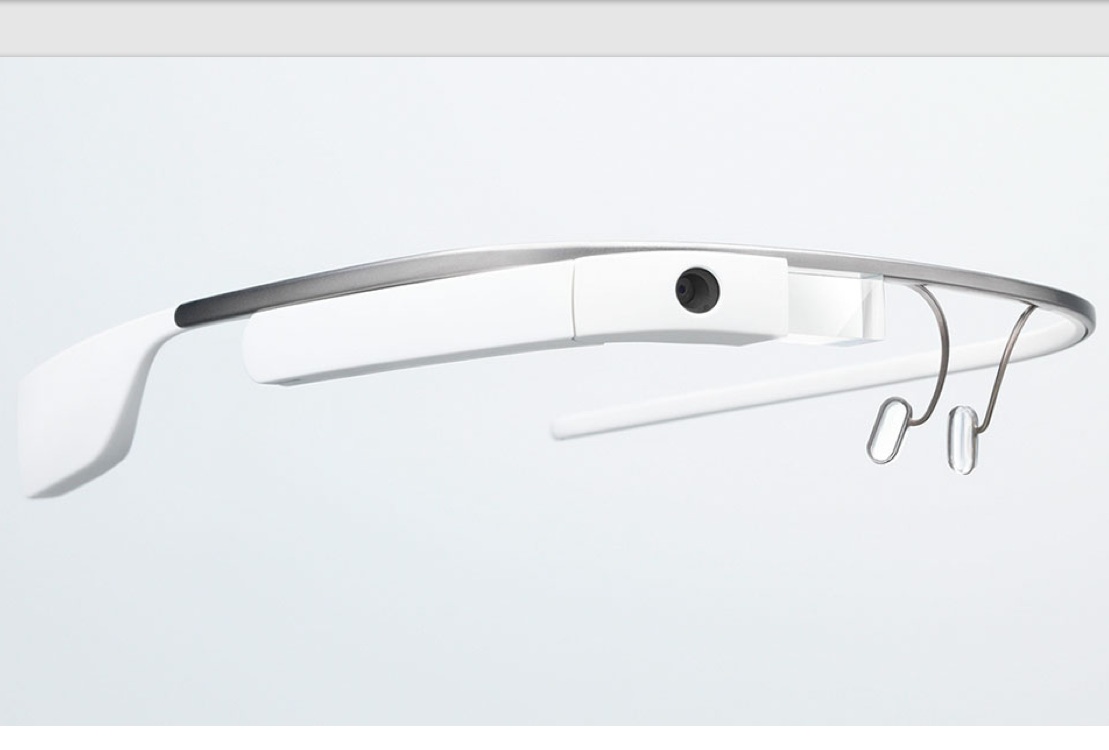
    When we talk about new technologies we often focus on the consumer aspects, in many ways the business and industrial applications are far more exciting with a potential to save lives and change workplaces.

    This week on my regular tech spot with Ed Cowlishaw on ABC Riverland we explained Google Glass and speculated on what some of the applications for listeners could be.

    During the discussion we ranged across the uses we might see for wearable technologies like glasses watches, jeans or even embeddable, vibrating tattoos. With electronics smaller and cheaper than ever, we’re at the stage where putting computers into almost anything is feasible.

    Most of the focus around these technologies has been on the consumer aspects, but wearable technologies like Google Glass probably have more immediate uses in industrial applications ranging from transport and medicine across to farming and emergency services.

    Emergency services

    For emergency services devices like Google glass can be the difference between life and death, first responders at a road accident can quickly evaluate damage and the best course of action for rescuing survivors.

    In firefighting, these technologies become incredibly valuable with protective suits being able to warn when conditions are becoming dangerous or the presence of hazardous materials and heads-up displays – which could be a Google Glass type device or a projection onto a firefighters visor –  can be monitoring weather conditions, the safety of buildings or the state of supplies.

    Police forces are already some way down the path of using these technologies with patrol cars and roadside detectors already monitoring number plates for unregistered and uninsured vehicles. Devices like Google Glass are going to help law enforcement use those technologies, particularly when coupled with facial and voice recognition.

    Medicine

    The use of wearable technologies in the medical industry is fascinating. We’re already seeing smart dressings that alert nurses and doctors to critical conditions and the increased network of devices is making it easier to monitor patients.

    With a Google Glass type device, surgeons and physicians can be receiving real time information on their patients while carrying out procedures and recognition software can help doctors identify the nature of a symptom such as a rash or swelling much earlier. At a hospital triage this can help nurses make quick, life saving decisions as people arrive.

    Farming

    One of the big frontiers of the internet of machines is the agriculture industry. With projects like Tasmania’s Sense-T monitoring natural resources and smart farm equipment reporting the state of soil and crops, a Google Glass type device gives farmers much more information about the paddock or cattle they are looking at.

    Farming is also a hazardous occupation and wearable technologies can also warn agricultural workers of hazards as well as alert family, colleagues or emergency services when a farm worker is in trouble. Occupational health and safety is going to be one of the driving forces for the adoption of these devices.

    Transport

    Safety is one of the key factors of technology adoption in the transport industry and it’s interesting how quickly transportation agencies and police forces have started discussing banning Google Glass.

    While checking your twitter feed or surfing for LOLCats while driving is undoubtedly dangerous, having a heads up display could actually improve the safety of truckers, taxi operators and other professional drivers as they aren’t being distracted from the road by dispatch messages, GPS directions and vehicle warnings.

    As monitoring devices, wearable technologies could also help warn drivers or their employer about looming fatigue or illness.

    In the logistics field, it’s not hard to see warehouse workers using wearable devices to warn them where robots are or to find stock items deep in the shelves.

    Like the tablet computer, it’s easy just to think of Google Glass and other wearable technologies as being solely consumer devices without considering how these devices will change the workplace.

    As the internet of everything and easily accessible broadband – both wireless and wired – becomes pervasive we’ll see most industries adopting these technologies making business more efficient and the workplace safer for the workers.


    Similar posts: