Author: Paul Wallbank

  • Fighting in the sandbox

    Fighting in the sandbox

    The current spat between Microsoft and Google over the Windows Phone YouTube app illustrates the value, and hindrance, of the internet’s walled gardens.

    Google’s locking Microsoft Phone users out of YouTube shows the strength of these online empires and when coupled with control of the mobile phone platforms, as Google has with Android, it makes it hard for outsiders to compete.

    In one respect, this is corporate karma coming back to bite Microsoft who ruthessly exploited their market position with Windows, MS-DOS and Office through the 1990s and early 2000s.

    That doesn’t change the problems facing Microsoft Windows Phone users who want the same access to internet services enjoyed by Android and iPhone owners.

    Being locked out of a service because of the product you choose to use is in many ways the antithesis of the internet and challenges the underpinnings of the online economy.

    All internet and mobile phone users need to watch how this spat between Microsoft and Google develops, captive markets aren’t good for anyone.

    Similar posts:

  • Cutting the middle management fat

    Cutting the middle management fat

    No-one can say life is comfortable at Cisco when every two years the company engages on a round of job cutting that tends to keep employees on their toes.

    While this year’s job cuts are relatively mild – only 4,000 as opposed to nearly 13,000 in 2011 – it’s notable the focus on culling middle management positions.

    “We just have too much in the middle of the organization,”  the Wall Street Journal reports Cisco CEO John Chambers as saying.

    One of the challenges for businesses is become more flexible when markets are rapidly changing. Having ranks of middle managers makes it harder for organisations to respond.

    John Chambers and Cisco are reducing their middle management head count to respond to that need. Many other companies are going to have to do the same.

    Similar posts:

  • Ships flags and twitter – how communications evolve with technology

    Ships flags and twitter – how communications evolve with technology

    An innocuous, short 1917 message between Admiral Jackie Fisher and Windows Churchill, then British Minister of Munitions, tells us much about how language and communications evolve around the technology of the day.

    The focus on the page linked is the World War I use of OMG – Oh My God – which became common with SMS text messaging, and it illustrates how our language evolves around the limitations of the era’s technologies.

    Fisher’s message short, sharp and succinct message is good example of this – a legacy of spending a career communicating between ships by flag. By necessity, messages had to be brief, accurate and work within the limitations of the medium.

    At the time Fisher wrote that note, ships’ officers were adapting from flags to the radio telegraph where morse code created a whole new argot to take advantage of the medium and its limitations.

    Which brings us to today, where similar economies of communications have evolved around the SMS text message, Twitter post or social media update where OMG, LOL, BRB are part of the common dialect.

    Jackie Fisher’s message to Winston Churchill is a good reminder of how we’re all creatures of our time.

    Image of nautical flags courtesy of c_makow on sxc.hu

    Similar posts:

  • Could advertising have saved Blackberry?

    Could advertising have saved Blackberry?

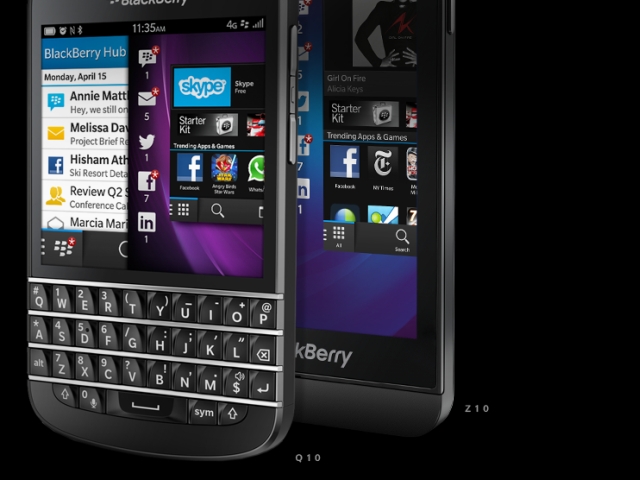
    Could advertising have saved Blackberry wonders Joyce Yip on the Marketing Interactive site.

    Yip cites Samsung’s blanket advertising as one of the reason’s for the Korean brand’s success while Blackberry could only afford a token presence for the new Z10 phone.

    While there’s no doubt Samsung and Apple’s marketing muscle has helped them dominate the smartphone market, advertising alone doesn’t explain the dominant brands’ success.

    Blackberry was doomed from the moment a business friendly smartphone was released, no-one expected it at the time but it turned out to be the iPhone.

    Compared to the iPhone, the Blackberry was woefully underfeatured and once corporate users discovered email wasn’t the only use for a smartphone, the Canadian company’s fate was sealed.

    While the Z10 and Q10 phones were well featured devices, they are way too late for a market where Apple and Samsung have most of the sales and take all the profit.

    It’s tempting to think advertising and marketing may have saved Blackberry, but the company was overtaken by a fundamental market change which left it stranded.

    For a while in the late 2000s Blackberry looked untouchable in the corporate market and no-one would have expected Samsung and Apple to disrupt their position. That’s the real lesson Blackberry teaches us.

    Similar posts:

  • Reducing the road toll through the internet of everything

    Reducing the road toll through the internet of everything

    How can modern computer technology cut the road toll?

    Transport for NSW’s John Wall spoke last week at Cisco’s Internet of Everything presentation in Sydney about some of the ways the connected motor car can reduce accidents.

    John’s presentation comes from personal experience, having being a volunteer for nearly thirty years at his local State Emergency Service brigade where he was often among the first responders to local vehicle accidents.

    Some of the improvements in technology see the road toll falling as people travel less because of remote working, teleconference and business automation. Many of the applications though are built into the vehicles, street signs and the roads themselves.

    Finding the safest route

    John’s first suggestion for improving driver safety is having navigation systems sourcing traffic, weather and other information to suggest the best route for the driver. An intelligent system may also modify the recommended journey based on the experience of the driver and state of the vehicle, such as the tyre conditions.

    Watching the eyes

    Fatigue kills and all of us have driven when we were really too tired to be behind the wheel.

    The first in car technology John discussed is facial recognition technology that detects when drivers are fatigued. Tying this feature into the vehicle’s entertainment system with a stern aviation style “PULL OVER – YOU ARE TIRED” warning could well save hundreds of lives a year on his own.

    Connected road signs

    One of the underpinning factors of the internet of everything is cheap computers and transmitters embedded into almost anything. Road signs and sensors talking to cars could help reduce driver errors such as entering curves too fast.

    Those signs can also be plugged into weather conditions so if there’s ice, fog or rain then the car can be told of the hazards ahead.

    Going on the grid

    Signs are not the only devices that could be talking to each other, vehicles themselves could be talking to each other. Should one car hit a slippery or soft patch on the road, it could tell following vehicles that there’s a problem ahead and respond accordingly.

    That technology too could help traffic planners and road authorities, as data on traffic speeds and road conditions feed into their databases it becomes easier to identify black spots or road design problems before lives are lost.

    Helping the first responders

    A wrecked car or roadside sensor can also help those first responders attending an accident. The vehicle itself could transmit the damage and give rescuers valuable, time saving information, on the state of the occupants.

    Similarly, the system could also warn emergency services such as hospitals and ambulances of the injuries likely and what’s needed to treat the injuries on site, in transit and at the casualty ward.

    Importantly, a smart vehicle can also warn those first responders of potential risks such as live air bag gas cylinders, car body reinforcements or high voltage cables as they attempt to free trapped occupant from a wreck.

    The rescuers themselves may be wearing technologies like Google Glass that help them see this information in real time.

    Bringing together the technology

    As Kate Carruthers points out, the internet of everything is the bringing together of many different technologies – wireless internet, cloud computing, grid networks and embedded devices all come together to create a virtual safety net for drivers.

    By the end of this decade that we will all be relying on these technologies to help us drive. Which means we might find our licenses start to be endorsed for the level of technology in our vehicles, just as we used to have to get qualified to drive a car with a manual transmission.

    Concluding his presentation, John Wall told the story of Jason, a cyclist from his town who was killed in a road accident and left a young family. In his slide he showed Harry, Jason’s young son, playing with the flowers on his father’s memorial.

    “I hope for Harry is that when Harry learns to drive that things will be different on our roads and things will be different because we are all connected,” said John.

    It’s a strong reminder of the real human opportunities and costs when we adopt new technologies.

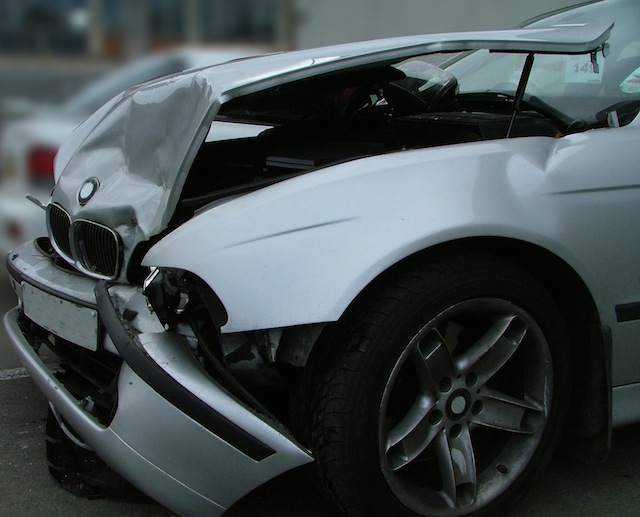
    Car crash image courtesy of jazz111 through SXC.HU

    Similar posts: