Author: Paul Wallbank

  • Our hackable lives – why IT security matters.

    Our hackable lives – why IT security matters.

    Two stories this week illustrate the security risks of having a connected lifestyle. Forbes magazine tells in separate pieces how modern car systems can be overriden and how smarthomes can be hacked.

    Smarthome system security is a particular interest of mine, for a while I was involved in a home automation business but I found the industry’s cavalier attitude towards keeping clients’ systems secure was unacceptable.

    The real concern with all of these stories is how designers and suppliers aren’t taking security seriously. In trading customer safety for convenience, they create serious safety risks for those using these system. It’s as if nothing has been learned from the Stuxnet worm.

    A decade ago, a joke went around about what if General Motors made cars like Microsoft designed Windows. Like all good stories, it had a lot of truth to it. Basically, the software industry doesn’t do security particularly well; there are developers and vendors who treat security as a basic foundation for their work, but they are the exception rather than the rule.

    That may well be a generational thing as today’s young developers and future managers are more aware of the risks of substandard security in the age of the internet.

    Rather than seeing security as something that is bolted on to a product when problems arise, this generation of coders are having to treat security as one of the fundamental foundations of a new system.

    What is clear though is that the builders of critical systems are going to have take security far more seriously as embedded computers connected to the internet of machines become commonplace in our lives.

    Similar posts:

  • Blocking the bad guys – listeners’ questions from ABC Nightlife

    Blocking the bad guys – listeners’ questions from ABC Nightlife

    Last night’s ABC Nightlife looked at how email is evolving but most of our callers were concerned with configuring their email, anti-virus programs and blocking adverts on the web.

    The audio of the program is available through the ABC website.

    As usual, it’s tough to answer all the questions on live radio so here’s the ones from listeners Tony and I said we’d get back to.

    Ad blockers

    Website owners are desperately trying to find ways to make money from their sites, unfortunately its proving difficult so we’re seeing increasingly intrusive ads trying to distract us while we surf the web.

    A number of Tony’s callers asked about adblocking programs to get rid of these irritating ads and there’s a few paid and free solutions available for computer users.

    The most popular solution is Adblock, a plug in available for Firefox, Chrome, Opera and Android. The developers have a handy video guide to installing and configuring their product.

    For Internet Explorer users, Simple Adblock is a plug in that should work with their browser.

    Be aware with ad blocking programs that they may change the layout of the sites you visit so be prepared for some strange looking pages.

    Also keep in mind that website owners are desperately trying to find ways to pay the bills, so you won’t stop the more cunning ads or sponsored content that pretends to be real news. You might also put a few online media sites out of business.

    Anti-Virus programs

    One common question from Nightlife listeners are what anti virus programs should they use.

    Probably the simplest for Windows users is Microsoft Security Essentials or the free AVG Anti-Virus. For OSX Users, Clam AV and Sophos’ Free Anti Virus for Mac will do the job.

    If you have Norton or McAfee anti virus programs on your Windows PC, then getting rid of the software is not straightforward. After uninstalling the software, you’ll have to run their removal tools which are available from the Symantec (Norton) or McAfee websites. Read the instructions carefully.

    Switching to Hotmail

    A curious thing about Microsoft is how they like to irritate loyal customers with interface changes that leave everyone confused. Hotmail users are among the latest victims after the company migrated them to the Outlook.com platform.

    Deborah called in to ask how she could switch back to Hotmail from Outlook.com – sadly the official line from Microsoft is “you can’t”. It appears that all of the work arounds to get Hotmail back have also been closed down and the old service is no more.

    For Deborah, the choice is to either get used to Outlook.com or investigate other online mail services like Gmail or Yahoo!.

    The next ABC Nightlife will be on in around five weeks. Hope you can join us then.

    Similar posts:

  • Understanding the social media whispers

    Understanding the social media whispers

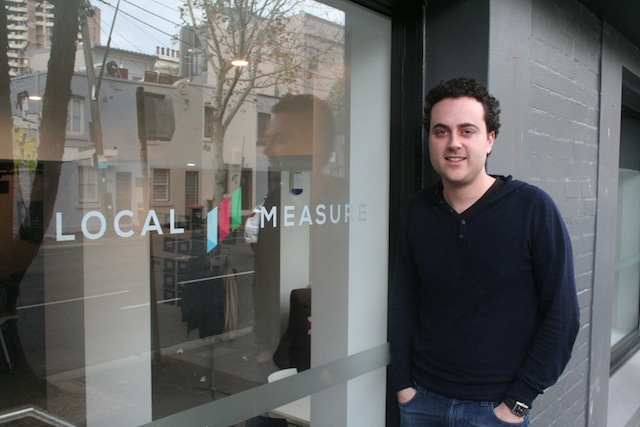
    What do you do when paying customers tell you they would rather your product be different to what you were offering? This is the predicament that faced Jonathan Barouch when he discovered the real market for his Roamz service was in social media business intelligence.

    How Jonathan dealt with this was the classic business pivot, where the original idea of Roamz evolved into Local Measure.

    Originally Roamz was set up to consolidate social services like Twitter, Foursquare and Facebook. If you wanted to find a restaurant, bar or hotel in your neighbourhood, Roamz would pick the most relevant reviews from the various services to show you what was in your neighbourhood.

    The idea for Roamz came from when Jonathan was looking for places to take his new baby, jugging several different location services to find local cafes, shops or playground is hard work when you have a little one to deal with.

    A notable feature of Roamz was the use of geotags to determine relevance. Even if the social media user doesn’t mention the business, Roamz would use the attached location information to determine what outlet was being discussed.

    Enter Local Measure

    While Roamz was doing well it wasn’t making money and, in Jonathan’s words, it was a “slower burn, longer term play”. On the other hand businesses were telling him and his sales team that they would pay immediately to use the service to monitor what people were saying about them on social media.

    “People said, ‘hey this is cool, we want to pay for this.” Jonathan said of the decision to pivot Roamz into Local Measure.

    “I want to say it was a really difficult decision but it wasn’t because we had people saying ‘we want to pay you if you continue with this product.’”

    Local Measure is built on the Roamz platform but instead of helping consumers find local venues, the service now gives businesses a tool to monitor what people are saying about them on social media services.

    The difference with the larger social media monitoring tools like Radian6 is Local Measure gives an intimate view of individual posts and users. The idea being a business can directly monitor what people are saying are saying about a store or a product.

    For dispersed companies, particularly franchise chains and service businesses, it gives local managers and franchisees the ability to know what’s happening with their outlet rather than having to rely on a social media team at head office.

    The most immediate benefit of Local Measure is in identifying loyal users and influencers. Managers can see who is tweeting, checking in or updating their status in their store.

    Armed with that intelligence, the local store owner, franchisee or manager can engage with the shop’s most enthusiastic customers.

    Customer service is one of the big undervalued areas of social media and Jonathan believes Local Measure can help businesses improve how they help customers.

    “It makes invisible customers visibile to management,” says Jonathan.

    An example Jonathan gives is of a cinema where the concession’s frozen drink machine wasn’t set currently. While the staff were oblivious to the issue, customers were complaining on various social media channels. Once the theatre manager saw the feedback he was able to quickly fix the problem.

    Employee behaviour online is also an important concern for modern managers, if employees are posting inappropriate material on social media then the risks to a business are substantial.

    “From an operational point perspective we’ve picked up really weird and wonderful things that the business doesn’t know,” says Jonathon. “Staff putting things in the public domain that is really damaging to brands.”

    “We’ve had two or three cases of behaviour that you shudder at. I’ve been presenting and it has popped up and the clients have said ‘delete that, we don’t want that up’ and I say ‘that’s the whole point – it’s out there.’”

    That’s a lesson that Domino’s Pizza learned in the US when staff posted YouTube videos of each other putting toppings up their noses. Once unruly employees post these things, it’s hard work undoing the brand damage and for smaller businesses or franchise outlets the bad publicity could be fatal.

    Local Measure is a good example of a business pivot, it’s also shows how concepts like Big Data, social media and geolocation come together to help businesses.

    Being able to listen to customers also shows how marketing and customer service are merging in an age where the punters are no longer happy to be seen and not heard.

    It’s the business who grab tools like Local Measure who are going to be the success stories of the next decade, the older businesses who ignore the changes in customer service, marketing and communications are going to be a memory.

    Similar posts:

  • Facebook as the family newsletter

    Facebook as the family newsletter

    This week’s Royal birth was a curious mix of the old and modern – a cringing fawning by the media over the family and baby which wouldn’t have been out of place of place in a black and white 1950s newsreel  coupled with a modern frenzy on social media.

    In the social media world, the Washington Post reports there were almost one million mentions of the royal birth on Facebook in the hour following the news. It’s an interesting reflection of how communications have evolved.

    Where once we shared news of life events by letter, then telegraph and later the phone; we now broadcast our own news over social media services, particularly Facebook.

    Increasingly for families, Facebook has been the main way people keep in touch with their more distant friends and relatives. Your cousin in Brazil, aunty in Germany or former workmate in Thailand can all keep up with the news in your life through social networks.

    The Royal family itself is an example of this, having set up their own Facebook page for the new arrival and it shows of how ‘weak ties’ are strengthened by the social media connections.

    Another aspect of social media is the ability to filter out noise. If you’re like me, the royal baby is about as interesting as origami classes but  I was spared most of the hype by not looking at broadcast media and sticking to my online services where it was just another story.

    While being able to filter out what you consider ‘noise’ risks creating écho chambers’ it also means the online channels are becoming more useful for both relevant news and family events.

    That’s an important change in personal communications we need to consider. We also have to remember those baby photos we post to Facebook, Twitter or Pinterest are now licensed to those services as well.

    One of the great challenges for this decade is balancing the privacy and security aspects of these new communications channels with the usefulness of the services.

    In the meantime though they are a great substitute for a family newsletter.

    Image courtesy of Hortongrou through sxc.hu

    Similar posts:

  • ABC Nightlife – killing email

    ABC Nightlife – killing email

    For the July 2013 Nightlife spot Tony Delroy and I be looking at email – reduce the volume of email we receive or should we abolish it altogether. Join us from 10pm, July 25 on ABC Local Radio across Australia.

    Should you have missed the spot, it’s available for download at the ABC Nightlife website and listener’s questions are answered on our follow up post.

    In the United States, the Major League Baseball Commissioner Bud Selig claims he’s never sent an email in his life. While Bud is an older worker with plenty of staff to print out his electronic messages, many of us are looking for ways of getting out from under the daily deluge of messages.

    While executives of major sports may be able to get away without using email, most people working in modern organisations can’t. So different companies have introduced different ways of reducing the amount of email flowing around their organisations.

    French company Atos is moving to completely ban internal email with CEO Thierry Breton claiming he hasn’t sent an email since 2008. In Australia, Telstra head David Thodey is winning acclaim for his use of enterprise social media service Yammer.

    Tony and I will be looking at how all of us can reduce our email load with filters, social media and business collaboration tools. Some of the questions we’ll be covering include;

    On the topic of social media and collaboration tools, Salesforce claim some major business benefits from their Chatter app, including thirty one percent of users claiming few meetings which in itself is a major productivity improvement.

    We’d love to hear your views so join the conversation with your on-air questions, ideas or comments; phone in on the night on 1300 800 222 within Australia or +61 2 8333 1000 from outside Australia.

    Tune in on your local ABC radio station or listen online at www.abc.net.au/nightlife.

    You can SMS Nightlife’s talkback on 19922702, or through twitter to @paulwallbank using the #abcnightlife hashtag or visit the Nightlife Facebook page.

    Similar posts: