Author: Paul Wallbank

  • And your message is? How Silicon Valley wrote its own history

    And your message is? How Silicon Valley wrote its own history

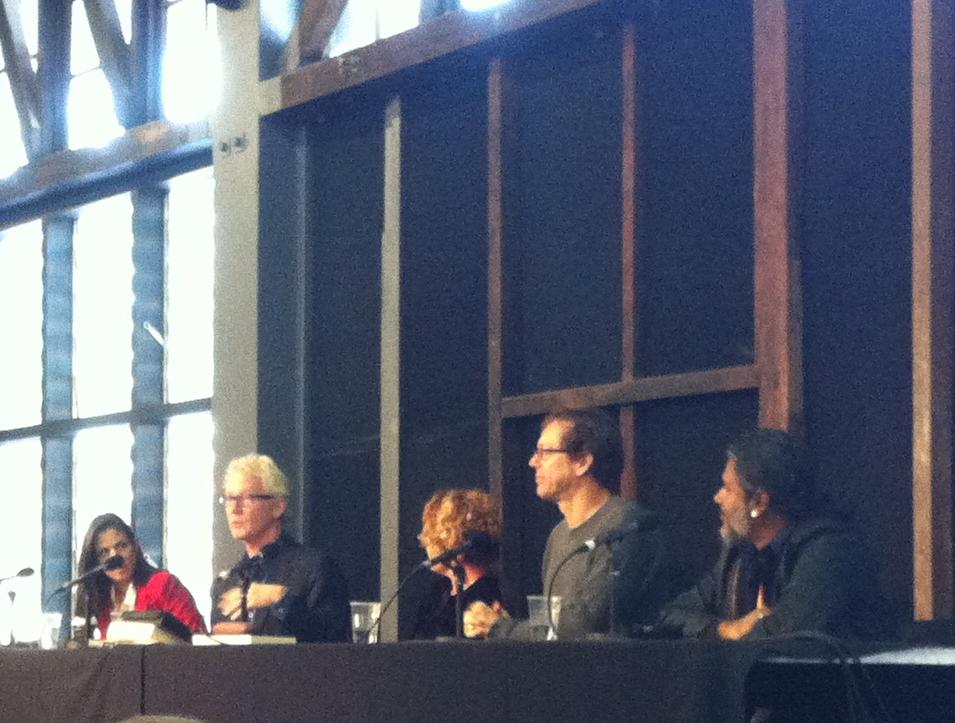
    Sitting in on the Storytelling and Business panel of the Sydney Writers’ Festival it occurred to me how well Silicon Valley and the tech startup community have crafted an image for their times.

    Author of What’s Mine Is Yours, Rachel Botsman focused on the need of businesses to articulate the organisation’s sense of purpose. While this begs the question of what’s the message if the business’ purpose is to enrich their senior management, it is an a good point.

    What is a business’ purpose and how do you articulate it? More so, what is the purpose of your industry?

    One group of businesses that has done very well in articulating their message is the Silicon Valley tech community who’ve portrayed themselves – regardless of the reality – as being driven by the altruistic aim of changing the world.

    Steve Jobs was one of the leaders of this and, while we shouldn’t overlook his talents, he was a ruthless, driven businessman.

    On the panel advertising industry elder Neil Lawrence raised Jobs’ ability to articulate Apple’s mission, telling the story of when the Apple CEO was challenged on the ‘Thing Different’ slogan not being good English, he replied “it’s Californian.”

    Apple’s success in branding itself as a visionary, creative company – and Google’s image of ‘Don’t Do Evil’ – show how it’s possible to create an image for an organisation, an industry or even an entire industry.

    In reality, Silicon Valley and the tech industry are as full of snake oil salesmen, mercanaries and paper clip counting corporate bureaucrats as any other sector, but legends have been built, and continue to be built, on the myth of  selfless entrepreneurs sacrifice all to make the world a better place.

    Contrasting Silicon Valley’s success with the Australian experience was interesting, Botsman was scathing about the ability of Aussie managers in telling the story about their businesses finding most of them have lost her by the second slide of their Powerpoint presentation.

    We shouldn’t get too hung up though about the nobility of telling a business’ story, Shehan Karunatilaka, former copy writer and author made the major point about business communications “story telling in business is about shifting product.”

    He went on to describe the tragic career path of the advertising copy writer who comes into the ad industry believing they are a world changing artist and ends up being burned out.

    “you are not an artist – you are a mouthpiece for businesses” said Shehan.

    The truth is most of us in business are not artists, some parts of our work may involve creative skills – like copy writing, design or financial engineering – in reality most of us are there to make a decent living, if not a fortune.

    Silicon Valley’s mythmaking shows how you can cover the mundane truth with a noble, a constant narrative which has  allowed ruthless businessmen like Steve Jobs and Mark Zuckerberg to portray themselves as selfless visionaries rather than the modern equivalents of  John Rockerfeller, Cornelius Vanderbilt and other 19th Century robber barons.

    This is possibly the greatest message of all in business communications – history is written by the victors.

    When you’re winning in your industry, you get to write the story.

    Similar posts:

  • Skills, data scientists and the decade’s big IT trends

    Skills, data scientists and the decade’s big IT trends

    As we all get buried under a tsunami of data, the challenge is managing it. The MIT Technology Review this week looks at the rise of the data scientist, a job title unknown a few years ago.

    The problem for industry is the skill sets required to become a data scientist are fairly esoteric.

    Data scientist has become a popular job title partly because it has helped pull together a growing number of haphazardly defined and overlapping job roles, says Jake Klamka, who runs a six-week fellowship to place PhDs from fields like math, astrophysics, and even neuroscience in such jobs. “We have anyone who works with a lot of data in their research,” Klamka says. “They need to know how to program, but they also have to have strong communications skills and curiosity.”

    Over the last twenty years we’ve done a pretty poor job teaching maths and statistics which is going to create a skills shortage as industry struggles to find people qualified to figure out what all of this data means.

    While Big Data might be to this decade what plastics were to the 1960s, it’s not the only technology change that’s affecting business as the McKinsey Quarterly describes the ten IT trends for the decade ahead.

    The thing that really stands out with McKinsey’s predictions is the degree of reskilling the workforce is going to need, today’s workers are going to need an understanding of programming, logic and statistics as much the kids currently at school.

    If you’re planning on being in the workforce at the end of this decade right now may be the time to consider getting some of these skills.

    Just as businesses will be separated by how they use Big Data, workers may too find those skills divide the winners from the losers.

    As the amount of data flooding into our lives explodes, we’ll all need to think about how we can get the skills to manage and understand data.

    Similar posts:

  • Ending the motor industry’s 1950s delusions

    Ending the motor industry’s 1950s delusions

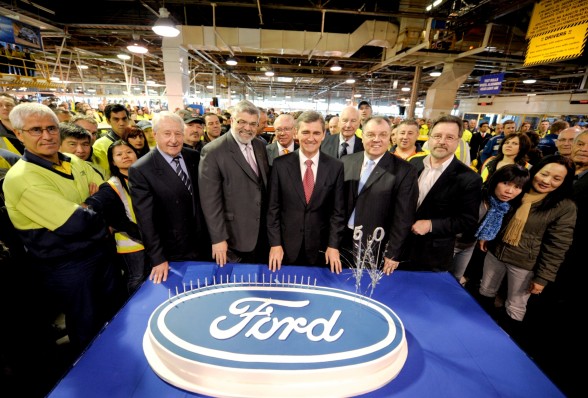
    Today Ford announced the pending closure of its Australian manufacturing operations, bringing to an end ninety years of the company building automobiles down under.

    Ford’s announcement is small on a global scale – the Broadmeadows factory built 40,000 cars out of a worldwide supply of sixty-three million – it does illustrate some major structural issues facing both the global automobile industry and the Australian economy.

    An Automotive Depression

    Over capacity has been the curse of the automobile industry for decades as governments have propped out producers around the world.

    KPMG’s 2012 Global Automotive Survey forecast the global industry would be 20 to 30 percent over capacity in 2016.

    This doesn’t seem to worry industry executives or their government supporters, as KPMG reported;

    Alarmingly, most auto executives still seem to regard the risk of overcapacity and excess production as a necessary evil to remain competitive. As the rapid growth of recent years eventually slows down, manufacturers that fail to address overcapacity could face some tough decisions.

    Ford’s Australian executives could at least be credited with facing some of those tough decisions.

    Many governments though are still in denial as they continue to subsidise motor manufacturers in an effort to copy the industry model that worked for the US Midwest during the 1950s.

    Indeed, the Australian government in 2008 committed 5.2 billion dollars to support their domestic industry through to the end of this decade. Ford’s announcement today coupled with General Motor’s cutbacks last year show that policy is in ruins.

    At the Ford and government press conferences, journalists pressed the Prime Minister and the Ford Australia’s CEO about repaying some of the millions of corporate welfare doled out to the multinational over the last decade. Naturally little was to be said about that.

    In a stark comparison to Ford Australia’s announcement, US electric car manufacturer Tesla Motors repaid a $465 million US government loan.

    While no-one can say Tesla’s future is certain, at least US investors are putting their money on 21st Century technologies instead of propping up declining industries of the last century.

    Australia’s predicament

    The car industry is just one sector that faces global overcapacity – ship building, real estate and mining are just three with similar excess production.

    For Australia, the mining industry is winding down investment as worldwide production capacity expands. At the same time, the blue sky projections of China’s resources demand are being challenged.

    While the mining boom comes to an end, Australia now has to face the consequences of the nation’s economic decision to focus on resources and property speculation in the 1990s and early 2000s.

    As the Thais and Indonesians found in 1997, and the Irish and Icelanders a decade later, economies based on unsustainable foundations seem to work fine until suddenly they don’t.

    It may well be that Australia is about find out what happens when the economic tide suddenly changes.

    One bright side is that the government has the best part of five billion dollars to invest in new industry – assuming Australia’s politicians can wean themselves off their 1950s view of the world economy.

    Image of Ford Australia celebrating 50 years of Falcon Production courtesy of Ogilvy Communications.

    Similar posts:

  • Airtasker’s crazy idea

    Airtasker’s crazy idea

    “Anyone who says something is crazy these days is crazy themselves,” says Jonathan Lui, the founder of Sydney based startup Airtasker.

    The crazy idea Jonathan shares with co-founder Tim Fung is to create a global marketplace for small tasks.

    If you need someone to walk your dog, do some gardening or be an extra in elaborate marriage proposal then Airtasker is a site to find the right person.

    Since launching last year Airtasker has advertised more than 54,000 tasks with users looking for everything from dog walkers to computer repairers and actors.

    Tim and Jonathan came upon the idea of a site for small tasks when moving house with the various hassles of cleaning, moving and packing. Instead of relying on friends and relatives to help out, they saw the opportunity for connecting willing workers with small tasks.

    The site turns around how traditional classified advertisements work by paying on results rather than advertising. Lui sees it as “de-centralised social commerce.”

    It’s not just small household tasks either, Jonathan sees Airtasker helping out larger companies with tasks like market research, mystery shopping or even local council inspections of street signs.

    Unlike many of the crowdsourcing sites, the Airtasker team want to keep away from commoditising labour, instead seeing their ‘runners’ providing valuable local services.

    One of the interesting aspects about the internet is how two opposite forces are working against each other – while the internet creates globalised marketplaces it also gives people new channels to discover local services.

    Jonathan sees Airtasker as being at the forefront of hyperlocal marketplaces, with a global website enabling small traders and microbusinesses to deliver services locally.

    That may be a crazy idea – but we live in crazy times.

    Similar posts:

  • Black

    Black

    Some days you wake up and it’s black.

    If you are lucky – and sometimes you are really lucky – later in the day you get the opportunity to speak to folk who are really changing the world.

    Those are the folk who can light up a dark world.

    And sometimes you’re lucky enough to speak to them.

    Similar posts: