Author: Paul Wallbank

  • To save the community, we had to destroy it.

    To save the community, we had to destroy it.

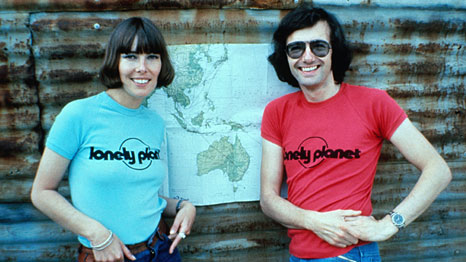
    When the BBC bought a 75% of travel guide publisher Lonely Planet in 2007, many people were puzzled at what the travel guide added to the publicly owned broadcaster’s mandate.

    In 2011 the BBC bought out the rest of the founders’ stakes and just over a year later management mistakes threaten to destroy the brand.

    Lonely Planet is one of the most powerful internet media properties in the English speaking world having become the dominant travel guide in the 1980s and then successfully making the jump into the online world with its website and mobile apps.

    In 2012, the site boasted of four million visitors a month with most under 35 years old.

    Key to Lonely Planet’s online success has been its community. The Thorn Tree forum provided the bulk of the site’s traffic as thousands of members discussed exotic destinations and asked or answered travel questions.

    The Thorn Tree also turns out to be the BBC’s undoing as management struggled to control members’ comments.

    At the end of 2012, inappropriate content was bought to management’s attention, with the Jimmy Savile scandal still reverberating around the corridors of the BBC, the organisation’s management panicked and announced a temporary closure of the Thorn Tree.

    Two months later, the site is back up again with strict pre-moderation of posts which has left many long time users upset and going elsewhere, if they didn’t already do so during the closure.

    Online communities are a strong assets but they are surprisingly fragile, as many popular sites have found in the past.

    For Lonely Planet users, there’s no shortage of other travel sites online and it’s going to be challenging for the site to recover.

    The Thorn Tree saga raises the question of whether risk adverse, public sector organisations like the BBC have the risk appetite to run online forums and build communities.

    By definition successful online communities are diverse and sometimes skate close to the boundaries of good taste for a careerist executive in a managerial organisation like the BBC, such risks are intolerable and have to be eliminated.

    If this means shutting down the Thorn Tree forums or neutering them, then that will be done. Management careers come before the good of the organisation.

    Time will tell whether Lonely Planet will continue to thrive under the BBC and its management, but the portents aren’t good.

    Similar posts:

  • Twenty trends for 2020

    Twenty trends for 2020

    I’m speaking at the Ovations Speaker Showcase next week on the Twenty Trends for 2020. A big ask for twenty minutes.

    Despite the time limits, it’s doable. Here’s the list of trends I think are going to define the rest of this decade, along with some  related links.

    1. Accelerated rate of business
    2. China moving up the value chain
    3. Dealing with a society at retirement age
    4. Rising incomes in South Asia and Africa
    5. Robotics and Automation
    6. The internet of machines
    7. Reinventing entertainment
    8. The fall and rise of social media
    9. The continued rise of the DIY economy
    10. Newspapers cease to exist
    11. 3D printing
    12. nano-technology
    13. The new education revolution
    14. Reskilling the workforce
    15. Older workers re-entering the workforce
    16. The fight for control of the mobile payments system
    17. Mobile apps redefining service industries
    18. Taming the Big Data tsunami
    19. The fight for data rights
    20. Flatter organisations
    21. The great deleveraging

    Apart from the fact there’s 21, the twenty minutes I have allocated isn’t going to be enough to cover these. So which topics do I skate over?

    Of course there might be more topics that I’ve missed. I’m open to suggestions.

    Similar posts:

  • Australia’s software disadvantage

    Australia’s software disadvantage

    This morning ABC Radio 702 asked me to comment on Adobe, Apple and Microsoft being summonsed to appear before the Federal Parliament’s IT Pricing enquiry.

    As has been widely reported, the committee has asked the software giants to explain why there are such price differentials between Australian and overseas prices.

    By way of example, Adobe Creative Suite 6 is available on the company website for $1299 US which is AUD 1263 on today’s exchange rate. The listed Australian price is AUD 1974 – a mark up of 56%.

    This is not new

    Australia has long been an expensive place to buy things, I remember my parents in the 1970s asking relatives to send over Marks and Spencer underwear as prices in Melbourne were so expensive.

    Books and music have long been overpriced, the publishing industry openly printed the price of books in various countries and the Australian price has always been substantially higher than UK and US charges given prevailing exchange rates.

    The high exchange rate has focused attention on the high prices, while the Aussie dollar was low consumers were tolerant of the rip-off. With the Aussie dollar high, consumers are wondering why the prices of many imported goods, particularly software, has remained so high.

    A lack of competition

    One of the biggest reasons for Australians being overcharged for many items is the lack of competition in the domestic marketplace. Most distribution channels are dominated by one or two players which lends itself to price gouging in areas ranging from technology to food.

    A good example of this is the brewing industry, a revealing Fairfax article examined the Australian beer sector and exposed the failings and lack of competition in the market which results in the multinational duopoly extracting five times the profits of local retailers.

    The conservative nature of Australian consumers is their own worst enemy as locals, including corporations and governments, prefer to buy major brands rather than experiment with local or lesser known providers.

    Where alternatives exist, the price differentials rapidly fall. The price differential for an iPad is far less than the software apps that run on it. The reason for this are the range of alternatives available to the Apple product.

    If Australian buyers were to explore open source alternatives, smaller suppliers or locally developed products then the prices of imported goods would fall.

    Structural weaknesses

    The pricing inquiry illustrates  the structural weakness in the Australian economy where the nation has become a price taker both in the domestic consumer sector and bulk export industries.

    Where Australia finds itself is an expected consequence of a generation of economic policies which favours debt driven consumer spending underpinned by selling assets and raw commodities.

    Hopefully Australians are realising the price of software is just one of the consequences of current policies and start demanding the nation’s political and business leaders have a clear vision for what the country’s role will be in the 21st Century.

    If that vision for Australia is a quarry with a few retirement homes clinging to the edge, then we’re well on the way to achieving that. At least software prices will be the least of anyone’s worries.

    Similar posts:

  • Smelling digital garbage

    Smelling digital garbage

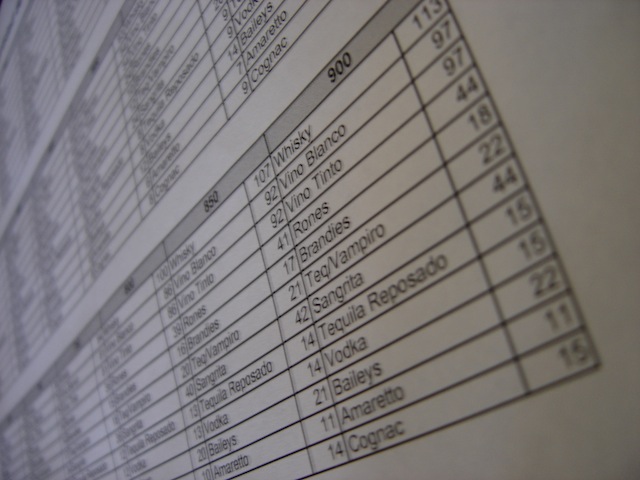
    Excel spreadsheets lie at the core of business computing, but what happens when they go wrong?

    James Kwak writing in the Baseline Scenario blog describes how Excel spreadsheets have an important role in the banking industry and their key role in one of the industry’s most embarrassing recent scandals.

    In the early days of the personal computer spreadsheets; it was company accountants and bookkeeping clerks who bought the early PCs into offices to help them do their jobs in the late 1980s .

    From the accounts department, desktop computers spread through the businesses world and the PC industry took off.

    Over time, Microsoft Excel displaced competitors like Excel 1-2-3 and the earliest spreadsheet of all, VisiCalc, and became the industry standard.

    With the widespread adoption of Excel and millions of people creating spreadsheets to help do their jobs came a new set of unique business risks.

    The weakness with Excel isn’t with the program itself, it’s that the formulas in many spreadsheets aren’t properly tested and often incorrect data is put into the wrong fields.

    In his story Kwak cites the JP Morgan spreadsheets that miscalculated the firms Value-At-Risk (VAR) calculations for synthetic derivatives. The result was the London Whale debacle where traders were allowed to take positions – some would call them bets – exposing the bank to huge potential losses.

    It turns out that faulty spreadsheets had a key role as traders cut and paste data between various spreadsheets and the formulas that made the calculations had basic errors.

    That a bank would have such slapdash procedures is surprising but not shocking, almost every organisation has a similar setup and it gets worse as a project becomes more complex and bigger numbers become involved. The construction industry is particularly bad for this.

    Often, a spreadsheet will show out a bunch of numbers which simply aren’t correct. Someone made a mistake entering some data or one of the formulas has an error.

    The business risk lies in not picking up those errors, JP Morgan fell for this and probably every business has, thankfully to less disastrous results.

    My own personal experience was with a major construction project in Thailand. One sheet of calculations had been missed and the entire budget for lights – not a trivial amount in a 35 storey five star hotel – hadn’t been included in the contractor’s price.

    This confirmed in my mind that most competitive construction tenders are won by the contractor who made the most costly errors in calculating their price. Little has convinced me otherwise since.

    In the computer industry there’s a saying that “garbage in equals garbage out” which is true. However if the computer program itself is flawed, then good data becomes garbage.

    Excel’s real flaw is that it can make impressive looking garbage that appears credible if it isn’t checked and treated with suspicion. The responsibility lies with us to notice the smell when the computer spits out bad figures.

    Spreadsheet image courtesy of mmagallan through sxc.hu

    Similar posts:

  • Are there any plans to help us?

    Are there any plans to help us?

    Another winter storm descends upon the North Eastern United States and dozens of people get caught in the blizzard.

    The New York Times describes the plight of those stuck on the Long Island Expressway and quotes Lorna Jones who was stuck in her car overnight with nothing but a bottle of Listerene for supplies.

    “It’s terrible. It’s cold. I don’t know how long I’m going to be here,” said Ms. Jones, 62, a nurse who stalled near the town of Brookhaven, less than a mile from her destination. “Are there any plans to help us?”

    One of the conceits of modern society is that we have help at our fingertips, that we only have to dial 911, 112 or whatever emergency code is in use and a helicopter will come to pluck us from whatever predicament we find ourselves in.

    As those stuck on the Long Island Expressway found, when a real emergency hits you will join the queue in the wait for overwhelmed emergency services.

    To the west, Franklin Simson’s, 18-wheeler got stuck on an exit ramp as he tried to deliver corn flour to a tortilla bakery at 3 a.m.

    He said he had called the police every two hours but had received no assistance. He tried several towing companies, but they all said they were overwhelmed, he recalled. He had heat in the truck and had slept for two hours, but had no food or water.

    No doubt Franklin eventually got a feed and was able to deliver his flour, which illustrates a different type of risk in an economy built around just in time logistics, but he and Lorna got off lightly – plenty of people die in these situations.

    It all comes down to our modern inability to identify and evaluate risks.

    Another article in the New York Times from Jared Diamond discusses the little risks in life – the one in a thousand chance events such as slipping in the shower.

    These apparently small risks are actually almost certainties – if you shower once a day, you have a risk of slipping once every three years.

    While it’s understandable we discount those small risks, modern communications and the perceived safety net of government regulations lull us into a false sense of security with bigger risks.

    As a consequence, we invest in financial instruments we don’t understand, we rely on technologies we barely comprehend and, most importantly, we put ourselves into physical danger by venturing out into blizzards, floods or fires when anybody sensible stays at home or bunks down at the office.

    Ultimately the plans to help us don’t work when dozens, hundreds or thousands of people are affected. The best we can do is to evaluate and manage risks as best as we can.

    We have the tools to do this, the tragedy is we are far better informed about the risks around us than our forebears, which makes our modern inability to judge the risks we take so much more of a paradox.

    Image courtesy of ColinBroug through sxc.hu

    Similar posts: