Author: Paul Wallbank

  • Social media and the Gartner hype cycle

    Social media and the Gartner hype cycle

    “Social media has become a tiresome hobby” complained a social media expert over coffee, “my heart is no longer in it.”

    There’s been much hype about social media, if you listen to some people services like Facebook, Twitter and Pinterest were going to revolutionise marketing and fundamentally change business.

    Now the hype seems to be escaping from the social media industry as its practitioners, and the businesses who’ve embraced it, become exhausted with the long, hard grind of fighting a revolution.

    This exuberance followed by exhaustion is fairly typical in the technology industry, consulting company Gartner describes it in their Hype Cycle, which shows how a new product goes a period of excitement, peaks and then tumbles into a trough of disillusionment.

    It could be that social media is approaching that peak.

    That’s not all bad news for social media, after a product falls into the trough of disillusionment, the technology matures and industry figures out how to best use the product.

    Microsoft founder Bill Gates put it well when he said “in the short run we over-estimate the effects of technology, and in the long term we under-estimate the effects.”

    Probably the best example of this process is the World Wide Web itself, the irrational exuberance drove the dot com boom which peaked at the turn of the century and then plummeted into the trough of disillusionment.

    Companies like Amazon and Google who stayed the course through the dark days of 2002 and 2003 were richly rewarded when the market came good.

    For the social media people who can stay the course through that dismal period they may not become as successful as Amazon and Google, but there’s good opportunities for those who survive.

    In some ways, passing the peak of inflated expectations is good news. It means the hard work and adding value is just beginning.

    Image from Gastonmag via sxc.hu

    Similar posts:

  • 15 years of radio and technology

    15 years of radio and technology

    I used to be a cranky radio listener.

    One morning in early 1998 I was listening to my local ABC station, then 2BL, when stand in breakfast host Bob Hughes was interviewing a “Y2K expert” who had the standard spiel designed to scare people into buying expensive consulting services.

    Irritated by the expert’s shoddy advice, I dashed off a quick “with respect” fax to the radio station – the ABC didn’t have publicly facing email addresses at that time – and expected it would be ignored.

    A few weeks later Bob Hughes invited me on his regular Sunday spot to talk about Y2K and computers in general. He didn’t mention we’d spend most of the time taking listeners’ calls.

    After a few minutes of ‘umming’ and ‘aaahing’ with lots of bluffing, Bob finished with “we’ll see you next month Paul.”

    So it began.

    Over time the segments moved from 702 Weekend on Sunday mornings to regional spots and the national Tony Delroy nightlife segment

    Looking at the sadly neglected PC Rescue website, the programs have ranged from the mundane to the mad, bad and ugly.

    At the ugly side, the Windows virus epidemic of the early 2000s looms large. At one stage almost every caller had a virus problem, the only ones that were didn’t were Mac users calling in to crow about their not having this problem.

    We enjoyed the various platform wars as Microsoft consolidated its strength and then saw it ebb away as first Firefox started chipping away at its browser dominance, Google at its Internet strategy and then Apple came roaring back into relevance.

    The radio shows track the rise of the web as we started talking about the various online services that were changing computing.

    One of the critical things, which still hasn’t changed, was billing problems.

    Through the early 2000s Australian telcos had shocking charges for data and mobile services. Calls from listeners distressed at big bills was common and the TIOs contact details would be among our most frequent answer.

    It was Telstra’s decision to stop stunting Australian internet growth and offer reasonably priced plans, albeit with criminally tiny data allowances, that kick started consumer adoption of broadband plans.

    Today the questions revolve around social media, online security and the merits of Android versus Apple smartphones and tablets, it’s quite notable at how Microsoft has moved from dominating the program to being almost irrelevant.

    How the next 15 years will pan out are anyone’s  guess, although one suspects pervasive computing, the cloud and the internet of machines will be among the trends we’ll see.

    Last week Tim Berners-Lee said that innovation is only just beginning, it’s going to be an interesting, wild ride.

    I’m still a cranky radio listener, but these days I have a lot more sympathy for producers and announcers.

    Similar posts:

  • Will going private save Dell?

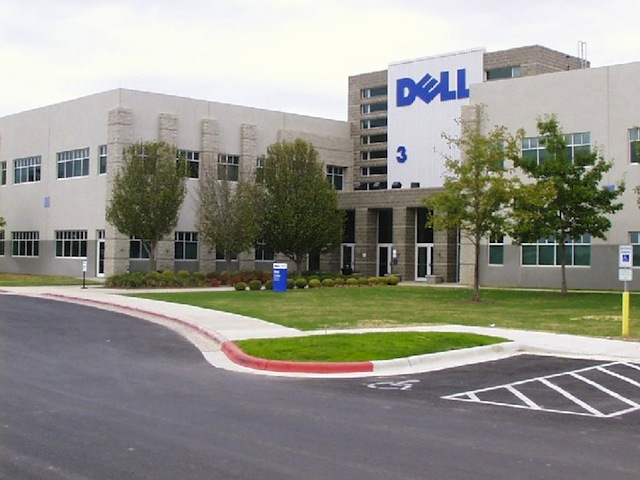
    Will going private save Dell?

    Now Michael Dell and a team of private equity investors are going ahead with taking the company he founded private, the question is will this make any difference to the technology company.

    Turning around Dell is going to be a massive task as the company has lost the advantages that made it the world’s biggest PC manufacturer. At the same time, the industry itself is shrinking as corporate and consumer customers move from personal computers and servers to tablets and cloud services.

    The triumph of logistics

    Dell’s real success lay in logistics. In the early 1990s the company – along with its competitor Gateway – developed a global just-in-time assembly network which took advantage of cheap Asian suppliers, efficient air courier networks and call centres.

    Bringing these together meant Dell and Gateway could deliver a custom made computer to a customer in just over a week without the hassle of holding warehouses of stock, employing sales staff or renting stores.

    Price was the ultimate advantage and these companies could undercut competitors with their efficient networks, lack of inventory and no retail overheads.

    Losing an advantage

    Unfortunately for Dell, competitors caught up and by the early 2000s most PC manufacturers were using similar manufacturing methods and were able to match their price points.

    By 2006, HP overtook Dell as the world’s biggest PC manufacturer.

    Worse yet, Apple adapted Dell’s logistic systems to corner the high end of the PC market and then expand into consumer devices.

    Dell’s reaction was to compete solely on price and to do so they cut component costs and outsourced support to lowest cost providers.

    This backfired horribly and the poor quality products coupled with execrable after sales support deeply damaged Dell’s brand with the Dell Hell debacle being the public face of widespread customer unhappiness.

    Dell in the post PC world

    Making matters worse for Dell is that the market has shifted away from personal computers.

    Dell has a tragic track record of diversifying out of the PC markets, all of its attempts to move into consumer electronics with PDAs, smartphones, tablet computers and entertainment devices have been, at best, embarrassing.

    Enterprise computing has been more successful but even here Dell has shown little innovation and most of their entries into the corporate markets has been through acquiring specialist companies rather than doing anything different.

    Part of this to failure to diversify has been because of Dell’s relationship with Microsoft. The various versions of Windows intended to be used on PDAs and tablet computers turned out to be wholly unsatisfactory and left the market open to Apple with the iPhone and iPad.

    Going private

    That Microsoft is going to have a financial interest in the privatised Dell is not encouraging for the company’s prospects.

    Neither is the continued presence of Michael Dell. His return as the company’s CEO in 2007 has not solved the company’s problems.

    It’s difficult to see where the problem was being a public company, Dell’s woes were not because of troublesome board members or activist shareholders.

    Going private might allow Michael Dell and his team to experiment without the accountability of quarterly reporting, but that barely seems worth 26 billion dollars.

    Dell could surprise us all by reinventing its business and claiming a role in the post-PC world, but right now its hard to see how.

    Similar posts:

  • Exciting but vague

    Exciting but vague

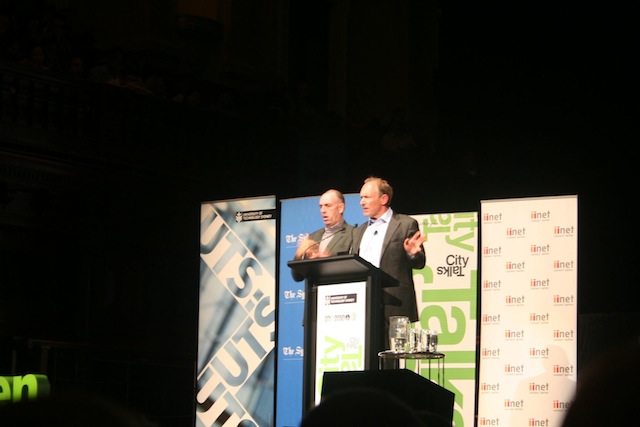
    On Tuesday Tim Berners-Lee rounded off his Australian speaking tour with a City Talks presentation before 2,000 people at a packed Sydney Town Hall.

    After an interminable procession of sponsor speeches, Berners-Lee covered many of the same topics in his presentations at the Sydney CSIRO workshop the previous week and the Melbourne talk the night before.

    These included a call for everyone to learn some computer coding skills – or at least get to know someone who has some, wider technology education opportunities, more women in computing fields and a warning about the perils of government over-surveillance.

    On government monitoring Internet traffic, Berners-Lee has been strident at all his talks and correctly points out most of our web browsing histories allow any outrageous conclusion to be drawn, particularly by suspicious law enforcement agencies and the prurient tabloid media.

    Who owns the ‘off switch’ is also a concern after the Mubarak regime cut Egypt off the Internet during the Arab Spring uprising. The willingness of governments to cut connectivity in times of crisis is something we need to be vigilant against.

    The web’s effect on the media was discussed in depth as well with Sean Aylmer, editor-in-chief of the Sydney Morning Herald, saying in his introduction that Berners-Lee’s invention had been the defining feature of Aylmer’s career.

    While the web has been traumatic for a generation of newspapermen, Berners-Lee sees good news for journalists in the data explosion, “how do we separate the junk from the good stuff?” Asks Tim, “this is the role for journalists and editors”.

    One person’s junk is another’s treasure though and the web presents one of the greatest opportunities for people to “write on their blank sheet of paper.”

    When asked about what he regretted most about the web, Berners-Lee said “I’d drop the two slashes,” repeating the line from Melbourne the night before.

    At each of his Australian speeches Berners-Lee has paid homage to his mentor at CERN, Mike Sendall. After Sendall passed away, his family found the original proposal for the Hyper Text Markup Language (HTML) which formed the basis for the world wide web.

    “Exciting but vague” was the note Sendall made in the margins of Berners-Lee’s proposal.

    Vague and exciting experiments was what drove people like James Watt and Thomas Edison during earlier periods of the industrial revolution. Tomorrow’s industries are today’s vague and strange ideas.

    Similar posts:

  • Who will build the next Barnes and Noble?

    Who will build the next Barnes and Noble?

    As US bookseller Barnes and Noble shrinks its store network, Mark Athitakis has a tribute to the once ubiquitous chain in The New Republic.

    Barnes and Noble was never popular among US independent booksellers because of the perception, probably true, that the chain drove locally owned stores out of business.

    What it offered though was a safe, comfortable place for booklovers to gather in suburban shopping malls. As Mark points out, it created a community.

    Its stores were designed to keep people parked for a while, for children’s story time, for coffee klatches, for sitting around and browsing. That was a business decision—more time spent in the store, more money spent when you left it—but it had a cultural effect. It brought literary culture to pockets of the country that lacked them.

    In recent years that community moved to coffee shops, in the United States B&N’s role was taken by Starbucks, at the same time our reading habits changed and the business of selling books and magazines became tougher.

    Now that community is changing again, as the online societies like blogs, Facebook and Twitter become important, the coffee shops have responded with free wi-fi which is a perfect example of how the online and offline world come together.

    That need to create communities, either physically or online, is a driving human urge.

    Online that role is being catered to with social media platforms and sites like food, mommy or tech blogs where like minded people can gather.

    Down at the mall, Barnes and Noble catered for that need in the 1980s and Starbucks in the 1990s. What will follow them may be the next big success in the retail or hospitality industry.

    Image courtesy of Brenda76 on SXC

    Similar posts: