Author: Paul Wallbank

  • Profits on the cloud

    Profits on the cloud

    One of the things that cloud computing has changed for the software industry are the fat profits – the shift to Software as a Service (SaaS) has seen the margins collapse as the rental model doesn’t offer the same big lumps of cash that the old way of doing business offered.

    That has had terrible consequences for a generation of enterprise IT salespeople who lived well on fat commissions as they sold million dollar packages to large corporations and government agencies.

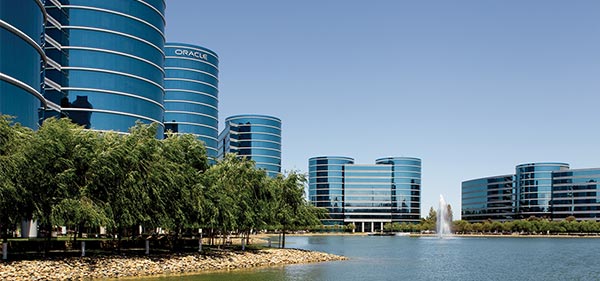
    So it was interesting today to hear Oracle’s CEO, Mark Hurd – a master IT salesman himself – claim at the company’s Open World press conference today that operating margins on cloud services are quite good.

    Certainly Oracle’s results show that with a claimed 61% profit margin there is money to be made in cloud services however their experience is not typical of the industry. For example, Microsoft’s online products only deliver a third of the profits as the company’s more traditional software lines.

    Even with the still fat profit margins, it’s hard to see how a company like Oracle can maintain its old salesman driven model as deals based more on long term service contracts rather than big deals mean there aren’t the lumps of cash for salespeople to grab a slice of.

    Older companies struggle with shifting mindsets in their industries and some, such as the taxi business in the face of Uber, take too long to change. Whether software companies like Oracle are navigating the change is something I’ll look at in tomorrow’s post.

    Similar posts:

    • No Related Posts
  • Freeing business investment

    Freeing business investment

    What would happen if the world’s richest people invested in startup businesses? Bloomberg Business ran an interesting, if flawed, thought experiment looking at how many nascent companies each country’s richest individuals could invest in.

    It’s surprising how low those numbers are and, if anything, the result underscore how the 1980s and 90s banking sector ‘reforms’ caused the world’s financial system to pivot from its historical purpose of funding commercial enterprises into speculation, rent seeking and manipulating markets.

    Apart from a smattering of venture capital not much has replaced the banks in funding the SME and entrepreneurial sectors, if anything it has been those ultra high net wealth individuals who have been financing the investment funds providing capital to entrepreneurs.

    How the finance industry evolves in the face of the fintech boom and a world that’s slowly becoming less indulgent of the industry’s greed will be one of the defining things of next decade’s business environment. For the small business and startup sectors getting the funding right will also be a key factor.

    The biggest question though is job creation, being able to fund new and innovative investments will be one a critical concern for societies dealing with the effects of an increasingly automated economy.

    Similar posts:

  • Oracle and the cloud shift

    Oracle and the cloud shift

    Ahead of next week’s Oracle Open World, which I’m attending, the software giant has announced its quarterly results which illustrate how software has shifted to the cloud.

    The company’s cloud revenues jumped 77% on the previous year which is impressive but represents less than a tenth of the company’s sales.

    What would concern Oracle’s shareholders is the stagnation of sales in their main product lines – on premise software makes up 69% of the firm’s revenue but it didn’t grow for the quarter and new license sales dropped eleven percent, which doesn’t bode well for the future.

    Oracle’s big announcement in the last quarter though was the acquisition of cloud ERP provider Netsuite for $9.3 billion.

    That acquisition will test how Oracle pivots into the cloud, it may well be the Netsuite management teach the parent company some tricks.


    Similar posts:

    • No Related Posts
  • The future is NOW – trends in the modern workplace

    The future is NOW – trends in the modern workplace

    What is changing the modern business? In Flying Solo’s upcoming free webinar, The Future is now – Trends in the Modern Workplace, I’ll be exploring some of the technology trends changing the way we work.

    A few of these trends are already here, like the mobile workplace but others such as artificial intelligence, the internet of thing and augmented reality are on the five year horizon and we can expect those technologies to have a major impact on the business in the medium term.

    One of the industries we’ll be looking at is the automobile industry that’s facing massive changes as electric vehicles, driverless cars and smartcities change the way we use cars and get goods delivered. This sector is looking at both the immediate effects and the longer term effects of the technological change on their industry.

    In preparing the presentation it’s striking how similar todays discussions about AI and and AR are with how we talked about the World Wide Web twenty years ago. At the time we didn’t see how companies like Google and Amazon were going to change they way we work and the way our customers buy from us.

    Equally ten years ago we didn’t see how the mobile internet or social media was going to change the ways we did business or how our customers would buy. Today they are important factors.

    Mobile has changed business

    The recent announcement of the iPhone 7 underscores just how the smartphone has become part of lives. No device has been adopted quicker by the marketplace and its effects on business have been profound and continue to be felt.

    In the nine years since the iPhone was released, the mobile internet has boomed. Now almost all our customers are looking for our services through mobile devices – be they smartphones or table computers.

    One of the things that ‘s worrying however is how few small operators have mobile friendly websites. This year’s Sensis e-business report found sixty percent of small businesses have websites but only forty percent of those were mobile friendly meaning less than a quarter were suitable for smartphones and tablets.

    But it’s not just marketing – the mobile internet, smartphones and cloud computing is changing how workplaces operate. It’s becoming easier for employees to work remotely and for companies to be genuinely distributed and we’re seeing more businesses made up of workers scattered around the world, a good example being the company that created WordPress, Automattic, who are showing how a modern workplace can operate.

    Automattic’s experience shows how companies can use the mobile and web based tools to manage a modern workforce. For solo businesses, being able to harness outside skills and participate in larger projects, is one of the great opportunities presented by the mobile world.

    Everything is connected is connected

    Key to business automation is how things are being networked. Increasingly things are being connected to the internet, whether it’s bees, kettles or tractors. If we can put a chip in something and connect it to the net, then we will.

    Also, as anyone who deals with the supermarkets knows, large customers increasingly want suppliers to be connected into their data exchange platforms. That integration into supply chains is only going to increase.

    This has a number of issues for organisations, first we need the technology to allow us to connect and the systems to efficiently exchange data with our business partners. We also need to know what is being collected by our devices.

    Swimming in data

    ‘Data is the new oil’ is one of the mantras we hear, however that overlooks that dealing with oil is a complex, often dirty and frequently dangerous business.

    While having lots of data is an opportunity to get more understanding of our businesses and the markets they operate in, all of this information also has a number of hazards. Not least in securing it and making sure company’s, its employees and its clients’ data is safe.

    The big challenge for businesses, big or small, is managing the data that threatens to overwhelm everyone. Being able to get value from the information flowing into the organisation while protecting the underlying data is going to be one of the big issues facing businesses of all sizes.

    Automation and robotics

    Much of the work in managing all this data will be done by computers – artificial intelligence, machine learning and automation are all going to be standard features in business.

    For service providers, increasingly ‘bread and butter’ tasks are going to be taken over by robots that deprive them of business and cash flow. Other businesses however will see this shift as an opportunity to reduce costs and improve productivity.

    Accounting service Xero is a good example where founder and CEO Rod Drury sees these technologies as changing the way we work, “Automation and machine learning are improving traditional services by streamlining compliance processes and creating new business opportunities, many of which are either no-touch or limited-touch.”

    Increasingly we’re going to see these technologies built into the software programs we use, not just in accounting packages but also in areas like CRM platforms, email and even word processing,

    Visualising the data

    One of the most exciting technologies of the moment are Augmented Reality (AR), Virtual Reality (VR) and, a combination of the both, Mixed Reality. While games like Pokemon Go! are leading the way it’s actually in industries like logistics, resources and public safety that are leading the applications of these technologies.

    For smaller businesses technologies like AR and VR promise to help us visualise the data we have to deal with along with opening up a range of applications ranging from virtual meetings to prototyping. Coupled with technologies like 3D printing, VR and AR may open up a whole range of new industries.

    Cultural change

    This range of new industries means we’re going to need a whole new set of attitudes and business faces a cultural change as technology changes the workplace. Coupled with major skill shortages in most areas, corporations are going to need to find a new pool of diverse, qualified labour. This is great news for solo businesses.

    Like everything there is also a catch, and small businesses are also going to have to embrace that diversity in looking for commercial partners, suppliers and customers. Increasingly, thinking outside the box to find people who can effectively use new technology is going to be important.

    The good news is that mobile and cloud services coupled with most of the world becoming connected makes it easier for solo operators to find the skills they need. The real barrier lies in ourselves ditching old prejudices and assumptions

    A new business environment

    In conclusion, we’re about to enter the next phase of the computer revolution. We’ve been through the PC period, we’re now in the middle of the smartphone era and the artificial intelligence age is about to begin.

    The ultimate trend though is that business is going to get faster and solo business proprietors are going to face the same challenges as managers and executives in large corporations as a wave of data floods over us all.

    One of the advantages for small businesses is we’re not saddled with legacy systems in the way large organisations and with the tools of the new era being affordable, means solo entrepreneurs can grasp opportunities far quicker than their bigger competitors.

    The opportunities are there for us to take, we just have to seize them when when they appear.

    Similar posts:

  • Lessons from the CIA investment fund

    Lessons from the CIA investment fund

    One of the little discussed reasons for the US tech industry’s success is the role of military and intelligence spending by the government. Not only are various agencies funding research and enthusiastically buy technology, they are also being strategic investors in many companies.

    In Sydney last week Dawn Meyerriecks, the CIA’s Deputy Director for Science and Technology, gave an interesting insight into the agency’s investment philosophies at the SINET61 conference.

    The conference was aimed at drumming up interest in the technology security industry along with showcasing the connections between Australia’s Data61 venture and the US based Security Innovation Network (SINET).

    SINET itself is closely linked to the United States’ security agencies with chairman and founder Robert Rodriguez being a former US Secret Service agent prior to his move into security consulting, venture capitalism and network-building.

    Compounding the organisation’s spook credentials are its support from the US Department of Homeland Security along with the UK’s Government Communications Headquarters (GCHQ), so it was barely surprising the Australian conference was able to attract a senior Central Intelligence Agency officer.

    Investing in flat times

    “Flat is the new up,” says  Meyerriecks in describing the current investment climate of thin returns. In that environment, fund managers are looking for good investments and the imprimatur of the CIA’s investment arm, In-Q-Tel, is proving to be a good indicator that a business is likely to realise good returns.

    “If you can predict a market – and we are good predictors of markets – then the return on investment is huge,” she says.

    “In-Q-Tel really leverages capital funding for good ideas. We get a twelve for one return, for every dollar we put in it’s matched by twelve dollars in venture capital in emerging technologies.”

    Attracting investors

    For the companies In-Q-Tel invests in along with those that supply technology to the organization, the CIA encourages them to seek private sector investors.

    “What we’re telling our supply chains is you go ahead and tap into the capital markets,” Meyerriecks says. “If you can turn that into a commercially viable product then will will ride the way with the rest of the industry because it’s good for us, it’s good for the country and it’s good for the planet.”

    Adding to the CIA’s attractions as a startup investor are the opportunities for lucrative acquisition exits for the founders, she believes. “Not only are we using that venture capital approach for emerging technologies but our big suppliers are sitting on a ton of cash.”

    Diversity as an asset

    Another lesson that Meyerriecks believes will help the planet, and the tech industry, is diversity. “Globalisation has show isolationism doesn’t work,” she says.

    “Back in the day when I was a young engineer the best way to make sure your system was resilient was to harden its perimeters. the best ways to be ‘cyber resilient in the old days was by drawing the barriers to keep the bad guys out.”

    “The best way to be cyber-resilient in the old days was to draw big boundaries around yourself to keep the bad guys out. The latest studies look at other things because you want to be resilient, you want high availability.”

    Now, system diversity is seen as an asset.“Biologically the three factors that contribute to resilience are the ability to adapt, the ability to recovery and diversity,”  Meyerriecks says. “We look to deliver high availability among components that may not themselves have high reliability.”

    The future of investment

    “I think we’ll see commercialisation still driving investment for applied R&D in particular,”Meyerriecks said in a later panel on where the agency is looking at putting its money.

    “The big game changers will be around the edge, taking SDN (Software Defined Networking) to its logical extreme giving everyone their own personal networks, not just in data centres but at the edge of the network.”

    “I think there’s lots of things that the commercial industrialisation of the technology and physical system are going to force us to grapple with on many levels.”

    Risks in managing identity

    An interesting aspect of Meyerriecks’ talks at SINET61 was her take on some of the technology issues facing consumers and citizens, particularly in the idea for individuals having their own personalised network.

    “This opens up a whole range of things, ” she suggests. “Do I eventually not just be an IMSI or EIMI (the mobile telephone identifiers) but do I become an advertising node, does that become my unique ID? Do I a become a gaming avatar?”

    “Then we get into the whole Big Data area. Computational anonymity is a phrase we use. At some point people start saying ‘this is crossing the line’ – it crosses the ‘ooooh’ factor.”

    Changing Cybersecurity

    “I think the definition of cybersecurity will be expanded to much more beyond wheat we’ve classically thought about in the past.”

    Meyerriecks’ presentation and later panel appearance was a fascinating glimpse into the commercial imperatives of the United States’ intelligence community along with flagging some of the areas which concern its members as citizens and technology users.

    The US security community’s role in the development of the nation’s tech sector shouldn’t be understated and Meyerriecks’ observation that private sector investors tend to follow the CIA’s investment path underscores their continued critical role.

    Similar posts: