Author: Paul Wallbank

  • Is Australia missing the Indonesian opportunity?

    Is Australia missing the Indonesian opportunity?

    Mary Meeker’s annual State of the Internet Report looks at the trends driving the online economy. One area that should be of concern is that Australian entrepreneurs are overlooking one of the world’s biggest growth markets that is sitting right on the nation’s doorstep.

    Early in Mary’s overview, on slides 5 and 7, she shows the growth of various markets. Indonesia is the second biggest growth market for internet users – 58% year on year to 55 million – and eighth in the world for smartphone growth with a 36% increase last year taking total users to 27 million.

    Given the penetration of both smartphones and the internet are low with only one quarter of Indonesians connected to the internet and less than one mobile phone in ten currently being a smartphone, there is massive potential for the savvy entrepreneur.

    While there’s a steady stream of stream of Australian app developers and entrepreneurs heading to Silicon Valley, London and a few to Singapore there’s very few looking to their biggest neighbour.

    This ignoring of Indonesia is one of the many omissions in the Australia in the Asian Century report; despite being one of Australia’s closest neighbours with the world’s fourth largest population and an economy growing at over 6% per year, both businesses and governments tend to overlook the nation.

    For Australia, the tragedy is that Indonesia has a lot offer businesses that do more than just dig up coal and iron ore.

    Perhaps now the mining boom is over, entrepreneurs and governments might start to take markets like Indonesia, and other South East Asian countries more seriously. It’s an omission that’s currently costing the country dearly.

    Similar posts:

  • Twenty years of text messages

    Twenty years of text messages

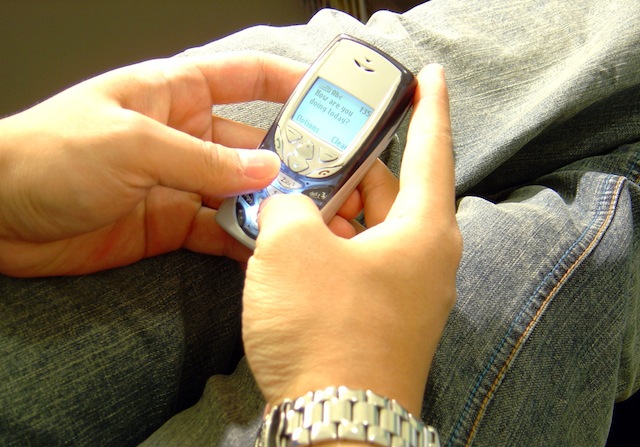
    When the mobile phone arrived we thought that text, particularly those clumsy pagers people used, would be dead.

    Little did we know that an overlooked part of the newer digital cellphone technology would see short messaging become a key part of the phone system and a major income generator for telephone companies.

    Short Messaging Services – or SMS – was an add on to the digital Global System for Mobile communications (GSM) standard which became the second generation (2G) of mobile phones.

    While intended as a control feature on the phone networks, SMS took off as a popular medium in the mid 1990s and soon became a major profit centre for mobile carriers.

    The Twentieth anniversary of the first SMS being sent passed last week and the BBC has a great interview, conducted by text message, with Matti Makkonen who came up with idea.

    One of the notable things in the interview is Matti’s humility – he doesn’t like being called the inventor or founder of text messaging as he explains,

    I did not consider SMS as personal achievement but as result of joint effort to collect ideas and write the specifications of the services based on them.

    We can only imagine what would happen if the idea of SMS messaging was invented today, there’d be an unseemly struggle over patents while hot young Silicon Valley entrepreneurs would pitch venture capital firms with plans for niche services that will make a billion dollars when sold to Yahoo! or HP.

    As it was, SMS services were insanely profitable for the telcos. In the early days, text messages were being charged at over a dollar each – for a service that cost the carrier almost nothing.

    Over time those handsome profits have been eroded as SMS became bundled into all-you-can-eat packages and then the internet introduced new mediums to send short messages.

    While SMS isn’t going away while mobile phones are an important part of our business and personal lives; the service isn’t going to be as critical, or as profitable as it was over the last twenty years.

    Short Messaging Services are a great example of how individual technologies rise, evolve and fade with time. They are also a good lesson on how quickly a premium, highly profitable service can become commodified.

    Similar posts:

  • Repelling the online break and enter merchants

    Repelling the online break and enter merchants

    Last week’s bust of a gang of credit card thieves by the Australian Federal Police is a warning to businesses on the need to take computer security seriously.

    In Australia a Romanian crime gang targeted small retail businesses’ computer system and stole customers’ credit card details. They would then use the data to create fake credit cards.

    A year ago US Authorities broke up a similar gang who had targeted Subway computer franchises which netted the gang over $10 million before they were caught.

    In both cases the gangs used remote access software that was included with their victim’s Point Of Sale (POS) equipment. Once logged into the target’s computers, the bad guys were able to install key logging and monitoring software so they could steal credit card details as they were entered into the system.

    There’s a number of lessons in both the Australian and US experiences for big and small business on securing systems safely.

    Use secure passwords

    It’s almost boring to say this, but you need strong passwords for your systems and networks. Make sure you change all default passwords on the systems so they aren’t easily guessed or broken into.

    Secure your systems

    The Subway hack happened because of sloppy security, you can harden your systems by following good practices such as updating your systems, having malware protection and proper access policies.

    Both the Australian and US incidents happened on Windows computers. The crooks were able to get into the computers and then install software because the victims were running in Administrator mode which allows anybody on the computer to control the system.

    Daily use should be in limited user mode which stops people from installing software or changing system settings andAdministrator accounts should only be used for system maintenance and have very strong passwords which are different to the normal limited user profile.

    Turn off remote access

    Another common factor in the US and Australian incidents is the use of remote access software so technicians can check things and managers can login in from home and other sites.

    Unless these are properly set up they are a serious security risk. Unless you or your supplier knows exactly what they are doing, these can open a door from the public Internet straight into your system.

    Do not use them unless you are 100% confident in yours, or your suppliers’, ability to run these properly.

    Comply with standards

    Another factor in these incidents is that systems haven’t complied with the PCI-DSS security standards for card payments. Again if you don’t understand these – and they are complex – find a POS vendor or payments processor who does.

    Basically, the standard requires that customers’ card details are not stored on your systems and that devices for processing payments are kept separate from other equipment in your shop or office. Following these basic rules would avoid many of the problems.

    Consider cloud services

    Many of the problems businesses confront with security is because they don’t have the skills or resources to deal with the ever evolving security threats.

    Moving POS systems and other business critical functions onto cloud services addresses many of these issues so it is worthwhile considering ditching expensive, unreliable and sometimes insecure server or desktop based systems and move to cloud services that use tablet computers or smartphones.

    Whichever choice you make, it’s important to be engaging suppliers and consultants you can trust because if your customers can’t trust you with their details, then you are out of business.

    Similar posts:

  • Protecting yourself on Facebook

    Protecting yourself on Facebook

    One of the topics we looked at in yesterday’s ABC 702 Morning show was how to protect yourself on Facebook.

    We had a number of callers struggling with controlling spam and scams that seem to be coming from their Facebook details. To fix this, you need to lock your personal details so they can’t be seen by the public.

    The detailed instructions on how to lockdown your Facebook page are available on the Netsmarts website.

    Our next ABC Mornings spot will probably be in late January. We’ll let you know when it’s approaching.

    Similar posts:

  • 702 ABC Mornings – Hacking 102

    702 ABC Mornings – Hacking 102

    A number of callers asked about protecting their Facebook pages and information from hackers and spammers. Details are on the Netsmarts webpage

    On 702 Sydney Mornings with Linda Mottram, we’re revisiting security and how it affects businesses and consumers after some stories of serious security breaches in everything from shops to pacemakers.

    We’re looking at some pretty important issues, including how four million hotel locks are open to hackers and thieves.

    Even more scary is the risk that pacemakers can be hacked. This story is a cautionary tale on good intentions being bought undone by bad security practices.

    For businesses, the risk of having customers’ credit card details hacked is a serious issue. Two years ago the US fast food chain Subway had a major breach when criminals managed to break into franchisees’ Point Of Sales systems.

    Recently the Australian Federal Police broke up a similar crime gang operating out of Romania.

    A misconception about computer security is that all hackers are evil. The reality is most aren’t and a good example of this is Random Hacks of Kindness where geeks get together to find ways of using tech to improve society. We’ll look at last weekend’s Melbourne event.

    Join us on 702 Sydney from shortly after 9.30am. We’d like to hear your views, comments or questions so call in on 1300 222 702 or SMS on 0467 922 702 or tweet with @702Sydney in the message.

    Similar posts: