The history of Salesforce.com tracks the evolution of cloud computing. Founded by Marc Benioff and Parker Harris in a San Francisco apartment at the 1999 peak of the dot com boom, today the company has over 100,000 customers with a market capitalisation of 21 billion dollars.
While founded as a sales Customer Relationship Manager (CRM) service, Salesforce’s range of products has extended across a number of other business functions such as business intelligence and customer support.
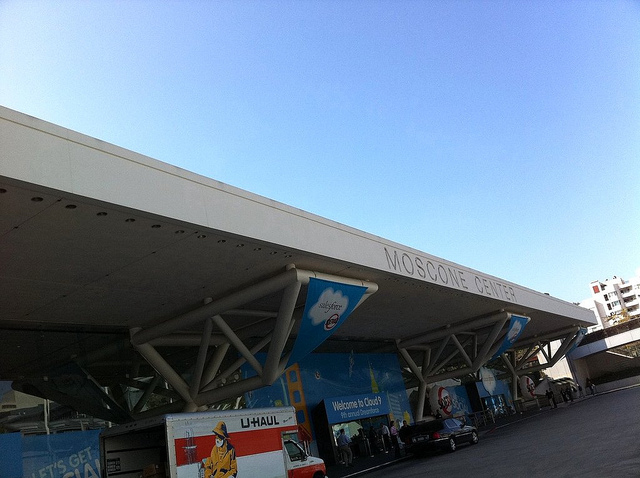
Dreamforce is the company’s international major conference which in 2012 is expected to attract 90,000 attendees to hear what is planned for the platform as they expand into new fields.
Along with Salesforce are 350 partners exhibiting their services that plug into Salesforce’s system. As we saw at the Xero conference, the community of developers and support companies are as important to a software company’s success as its products.
One of the notable things about Salesforce is the company’s hunger for acquisitions having taken over twenty-four companies in the last few years. It will be interesting to see how Salesforce are integrating those startups.
Salesforce are probably the company at the forefront at adopting social media into their products as seen with the acquisitions of companies like Facebook advertising platform Buddy Media and the Rypple social performance review service.
The move to mobile is changing how businesses interacts with customers, this is one of the challenges for Salesforce.
Just as Salesforce has tracked the rise of cloud computing, the company is now tracking the evolution of Big Data and social media.
The Dreamforce 2012 conference should give some insight into how the company, and other industries, are adapting to the challenges presented by the mobile web, big data and the social workplace.
Paul travelled to the Dreamforce conference courtesy of Cloudforce.
We often forget that tablet computers weren’t invented by Steve Jobs. For a decade before Microsoft and their partners like Toshiba or Dell had been selling ‘slate-like’ devices.
The market wanted tablet computers, particularly business users in sectors like logistics and health care, but the Windows products on offer were heavy, clunky and expensive.
It took the iPad to deliver what the market wanted — a lightweight, easy to use and reasonably priced tablet computer. This was the reason Apple were so successful.
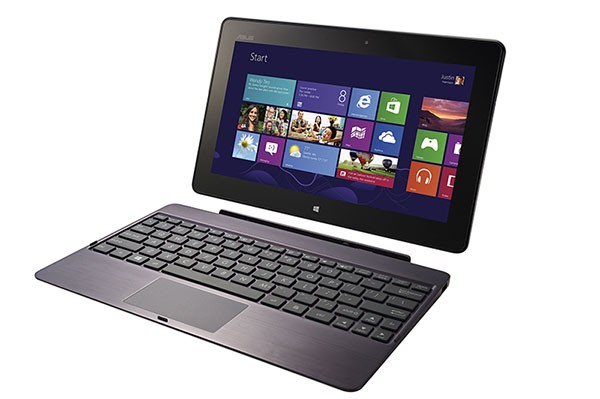
The fundamental thing that will kill Windows tablets is cost and these tablets are too expensive compared to the Apple and Android competitors.
While having Windows compatibility and the opportunity to save to USB drives or corporate networks is handy in a tablet, there seems to be little reason for customers not to buy a mid-priced laptop.
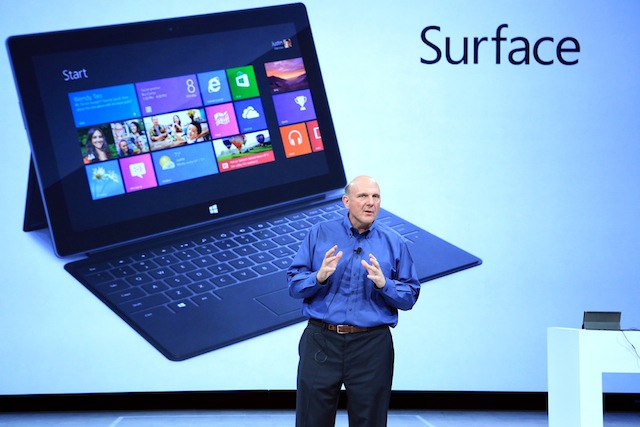
It appears though these price points are part of Microsoft’s strategy. Steve Ballmer hinted at this in his Seattle Times interview last weekend.
Q: The iPad has the largest share of the tablet market, but its soft spot, it seems to me, is the price.With the Surface, are you planning to compete with the iPad on price or on features?
A: We haven’t announced pricing. I think we have a very competitive product from the features perspective. …
I think most people would tell you that the iPad is not a superexpensive device. … (When) people offer cheaper, they do less. They look less good, they’re chintzier, they’re cheaper.
If you say to somebody, would you use one of the 7-inch tablets, would somebody ever use a Kindle (Kindle Fire, $199) to do their homework? The answer is no; you never would. It’s just not a good enough product. It doesn’t mean you might not read a book on it….
If you look at the bulk of the PC market, it would run between, say, probably $300 to about $700 or $800. That’s the sweet spot.
The problem is the tablet computer market isn’t the PC market and those price points have changed.
What’s more, the features that attract users to tablet devices or smartphones are different to that of PCs.
Basically PCs, tablets and smartphones are different products.
Applying PC pricing structures, or marketing models, to the tablet market is a risky strategy.
Steve Jobs didn’t do this and Apple succeeded with the iPhone and iPad without damaging their Mac sales, whether Microsoft can pull of a similar achievement with the opposite strategy remains to be seen.
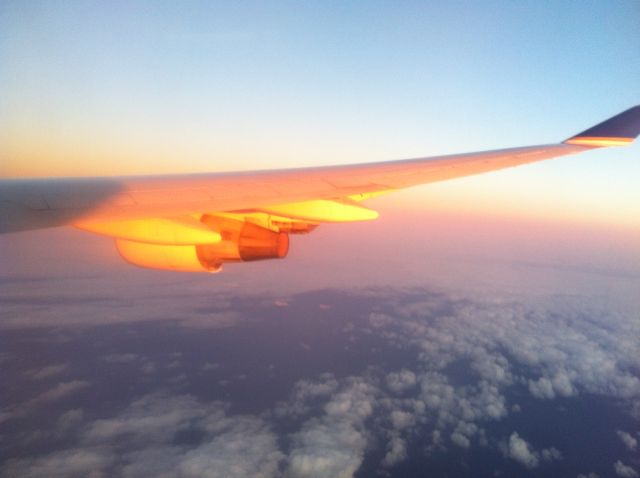
When the CEO of an airline states his product is unacceptable, your expectations of a trip won’t be high. So it was with trepidation I boarded United Airlines’ Flight UA870 from Sydney to San Francisco for an overnight economy class flight.
The 13 hour overnight flight from Sydney to San Francisco is a jet lag nightmare with a 3pm departure and arrival in SFO at 11am the same morning. So getting some sleep on the flight is essential regardless of how cramped the seating is.
Check-in
United’s online check-in is clunky but works and I was lucky to grab a windows seat that’s essential to getting any sort of sleep on an economy flight. The online check in refused to print a boarding pass so it was necessary to check in at the airport.
At the airport check in is efficient but you’ll have to enter most of the information about your accommodation in the US again. Keep these details handy as you’ll be using it for the US immigration form and may be asked about it on arrival.
Don’t expect clean tables at Sydney international airport
One aspect about waiting in Sydney’s international terminal is just how dirty it is. It’s depressing that the Sydney Airport Corporation is too busy clipping the ticket of unfortunate travellers with excessive parking fees and service charges that it can’t be bothered employing cleaners.
The Seats
Tuck in your legs, there’s not a lot of space to go around
When Jeff Simsek says his Airline’s economy class product is unacceptable he’s not joking. The old seats are less comfortable or roomy that those on Australian Jetstar domestic flights.
Leg room is about what’s expected on an oceanic economy flight but when the seat in front of you is reclined it’s difficult to read a magazine or use a laptop.
As far as power for your laptop or iPhone are concerned — forget about it, those things weren’t invented in the 1980s.
The broken headphone socket
The age of the seats shows in the lack of any seat based entertainment system and the socket for the headphones was broken making it necessary to rip off some of the inflight magazine’s back cover to get it working.
Once working, the ‘entertainment’ was restricted to about ten channels, all of them offering some music and it’s suprising there is no news, business or comedy channel.
The 80s channel was eclectic mix including Madness and Frankie Goes To Hollywood’s Relax — maybe it was lucky we didn’t have video screens.
If one area illustrates just how 1980s the interior of United’s cabin is, it’s the centrally mounted video screens. These just don’t cut it and are an embarrassment on a modern aircraft.
Food and beverages
Two meals were served inflight with beverages. Alcoholic drinks were included and the red wine was a perfectly fine Fox Grove Cabernet Sauvignon.
Lunch two hours after departing Sydney and was braised chicken with overcooked vegetables accompanied by a lettuce salad and a very dry chocolate cake.
Choose the fruit
Breakfast two hours before arrival was eggs, baked beans and chicken sausage cooked within an inch of their lives. It was edible but I’d suggest the fruit next time.
One thing to note about the United economy class tables is they are incredibly uncomfortable to rest your arms upon. On more modern airlines these tables fold into two.
Cabin Crew
Overall the cabin crew were efficient and courteous although not really friendly.
A bizarre aspect about the flight were the in-air announcements which were quickly mumbled declarations that were difficult to follow. The sound levels were low and the announcements were crackly, it must have been that 1980s equipment.
Arrival
One of the benefits of the United flight between Sydney and San Francisco is the sensible mid-morning arrival time so the airport and roads aren’t crowded. Getting away from the airport was easy.
1980s zombies
In many ways United Airlines are a vision of the future — zombie businesses staggering on without the money to invest in modern technology.
The US airline industry has ruthlessly used Chapter 11 to keep afloat over the last thirty years and now we have governments doing everything they can to prop up ‘too big to fail’ businesses we’ll see a lot more companies looking like United.
Qantas’ move off the San Francisco route also illustrates the drooling, anti-customer incompetence of Alan Joyce and the rest of his management team. The United flight was packed and they can continue to run aging rust buckets on the route as there’s no competition.
Given there’s no competition on the Sydney-San Francisco route, United is what you’re stuck with. If you have to fly economy on this route get a window seat, bring a bottle of water and take some sleeping pills.
If you were around in the 1980s, then enjoy the experience of what it was like when United’s 747s were new and the pride of the sky.
Paul travelled courtesy of Salesforce on the way to the Dreamforce 2012 conference in San Francisco
Microsoft’s annual Australian TechEd conference on the Gold Coast this week comes at an important time for the software giant as the company launches a range of products to meet the major threats to its tech industry dominance.
With the move away from desktop and laptop computers to smartphones, tablets and cloud computing services Microsoft’s profitable server and office franchises have become less relevant in a rapidly evolving market place.
To counter this move Microsoft are refreshing most of their key product lines this year including launches of Windows 8, Windows Server 2012 and the high stakes Windows Phone 8.
Underlying these releases is Microsoft’s “one consistent platform” offering a seamless experience between traditional in-house servers, the company’s Azure cloud product along with the services of partners, integrators and resellers.
Core to Microsoft’s enterprise strategy is their Hyper-V virtualisation product that allows businesses to reduce costs and business complexity by easily replicating systems onto different servers or networks. At present Microsoft claims 25% of the Australian virtualisation market compared to VMWare’s 50%.
At the home and small business ends of the market Microsoft also have a “one consistent platform” strategy with services like Office365 offering the same look and feel regardless of whether they are using a smartphone, tablet or desktop computer.
Microsoft hopes to replicate the success they had in the 1990s by locking customers into their integrated cloud and server environment. This is consistent with the “own the customer” strategies of other major players like Apple, Amazon, Facebook and Google.
The flaw in trying to own the customer across all devices is the difference in technologies – what works on a desktop computer with a mouse, keyboard and large screen doesn’t necessarily succeed on a smartphone or tablet computer using a smaller touch screen.
Windows 8’s development has illustrated how Microsoft are struggling with their aim delivering a consistent look across all platforms as early users struggle with the now renamed “Metro” touch screen interface and demand they get their start buttons back.
The inconsistency between platforms also appears with the cloud based Office365 productivity suite which lacks many of the advanced features of the desktop Microsoft Office packages that dominate the PC market.
Office’s advanced functions are one of the areas where Microsoft has successfully held off competitors like Google Apps as office workers – and writers – find the richer features in the desktop application actually matter when using word processors or spreadsheets.
Another of the advantages Microsoft has over Google and other cloud based competitors is their army of software partners, integrators and resellers supporting their products.
One of the pillars of the “One Consistent Platform” strategy are the service providers who have built their businesses on supporting Microsoft’s products. With the move to the cloud many of these integrators and resellers have been threatened by the reduced margins offered by online services.
The stakes are high for Microsoft and their partners as the computer industry moves away from the model which has worked well for them over the last twenty years.
Whether customers will stay with the revamped Microsoft services and products is going to depend on how well the “One Consistent Platform” is executed. As Apple, Facebook and Google have shown, customers will stick with one service if their needs are being met.
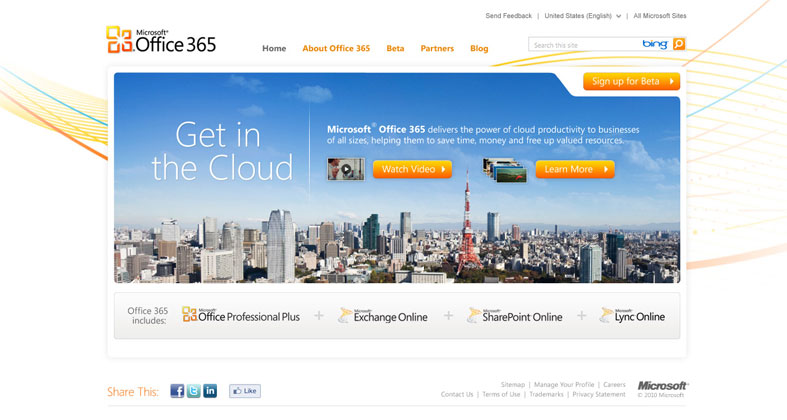
One of the key planks of Microsoft meeting the challenge presented by online services like Google Docs is their cloud based Office365.
The success of Office365 is important as Microsoft Office makes up a large chunk of the 24 billion dollars in sales, and $15 billion dollar profit, the company books from its Business Division.
As part of the Australian TechEd 2012 Conference, Microsoft gave a hands on preview of the Office 365 running on a Windows 8 tablet which was a good opportunity to see how both software packages worked.
Office 365
Office365 is very similar in layout and function to Office 2010 – if you’re using earlier versions of Office, particularly Office 2003, then you may find the ribbon bar and changed menus hard to navigate at first.
Integration with Microsoft’s Skydrive is good and seamless. A nice feature in this is how a user can setup multiple Skydrive accounts as separate drives. How well this works while on the road will have to be tested away from a controlled environment like the one at the TechEd meeting rooms.
The touch screen functions are fairly hard to get used to and they don’t work particularly well with fat fingers which Microsoft attempts to overcome with providing a stylus.
Another complexity is that the menus and touch screen functions aren’t consistent across applications. The handy ‘pinch’ gesture to zoom on Windows 8 doesn’t work on the Office applications on the tablet which is a shame and is also a bit irritating for power users.
Office365 adds a range of other features like web publishing, video editing and IT management tools but the hands on demo didn’t give enough time to properly evaluate these aspects.
Window 8
The first thing that jumps out with Windows 8 is the basic interface isn’t intuitive. The tile based system is difficult to use if you’re used to a keyboard and mouse or mobile systems like Apple iOS and Android.
Another worry is the Windows 8 interface – or “Metro” as it was known – uses different applications to the desktop version. The problem with this was illustrated when trying to run a video on the device as the Internet Explorer in the Windows 8 interface was a different version to that on the desktop so videos would run in one mode, but not on the other.
This confusion between software versions is a recipe for user confusion, lost data and possibly even a security weakness. It’s surprising that having effectively two operating systems running on the device was considered to be a good idea.
Looking under the hood at the Control Panel, the Windows NT heritage of Window 8 becomes apparent. Anybody used to tinkering with the settings on Windows XP, Vista or 7 systems will have no trouble finding their way around the new version.
Overall the performance of Windows 8 was impressive. It’s quite fast and responsive and this is something that Microsoft’s demonstrators are proud of.
Tablet blues
The surprising thing was the Windows 8 system was running on a Samsung tablet with still no ship date for the Windows hardware.
With Christmas approaching, Microsoft are running out of time to compete in the tablet market and it seriously raises questions on whether the Surface tablets were prematurely announced.
The experience with Office365 on the Windows Tablet was satisfactory although the demonstration showed there’s some barriers to adopting tablets as the main work computers.
Office 365 shows the strengths Microsoft have in the market, if Microsoft can get their tablet strategy right then they have a good product to compete with Apple’s iOS and Google’s Android.
Time will tell if they or their hardware partners can get products that customers want onto the market.
Paul travelled to TechEd and stayed at the Gold Coast as a guest of Microsoft Australia.