
Author: Paul Wallbank

  • Being Steve Jobs

    Being Steve Jobs

    Wired Magazine asks is Steve Jobs’ story a cautionary or inspirational tale for entrepreneurs and managers.

    It’s always worrying when any one individual is cited as being the role model for business leaders – over the years we’ve seen Jack Welsh, Warren Buffet, Bill Gates and dozens of others lauded as being the perfect CEO.

    None has probably lauded more than Steve Jobs, in many ways rightly so given the way he way he steered his business back from disaster and by the time of his death had made Apple the leader in a range of technologies that barely existed a decade earlier.

    Despite Steve Jobs’ successes there’s no doubt he was a very difficult man – the stories of his bullying and striking fear into Apple’s staff are legendary and no-one has chosen to contradict them. For many people, he was impossible to work with.

    George Bernard Shaw once wrote “the reasonable man adapts himself to the world; the unreasonable one persists in trying to adapt the world to himself. Therefore all progress depends on the unreasonable man.”

    No-one would have ever claimed Steve Jobs was a reasonable man.

    Steve Jobs was unique – as is Apple, Microsoft, IBM, News Limited, Nestle, Joe’s Pizza Bar and the local plumbing supply shop. Every business is unique and different in it’s own way

    For some of those businesses, a manager being an unreasonable asshole like Steve Jobs could be a recipe for success although disaster is probably more likely.

    Disaster was the result for most manager and businesses in the 1990s who blindly copied the then eulogized Jack Welsh’s Six Sigma strategies or “Chainsaw Al” Dunlap’s slash and burn philosophies without appreciating the subtle differences between their organisations and GE or Scott Paper.

    In business – as in life – there’s no “right way” or “wrong way” and thinking in a “yes” or “no” mindset, doesn’t work in a nuanced, complex world.

    The Wired article on Steve Jobs itself falls into this binary thinking in asking readers if they are an “acolyte” or “rejector” of Steve Jobs’ methods. In reality, few people would totally reject every aspect of Jobs’ behaviour but few of us would be capable of totally imitating his behaviour.

    Perversely, aping Steve Jobs is probably a career limiting move for managers. As Adam Hartung writes in Forbes Magazine, Steve Jobs couldn’t find a job today and someone with his quest for perfection would struggle with the bureaucracy of a corporation or government agency.

    Like our businesses, each of us is unique and here’s a bit of Steve Jobs in all of us – at the same time most of us would also be repelled by many of Steve Jobs’ characteristics.

    Simply copying someone else is neglecting our own strengths and acquiring someone else’s weaknesses. Surely it makes more sense to work to our abilities.

    Similar posts:

  • Building an ecosphere

    Building an ecosphere

    One of the keys to success for a software platform is its ecosphere  the community of developers, consultants and advocates that grow around a service.

    By far the most successful company in building a community around its products is Microsoft, who over the years have attracted hundreds of thousands of developers and partners to support Windows.

    Microsoft’s thousands of partners are the company’s greatest asset in beating back the threat posed by Google, cloud computing and Apple. The sheer size Microsoft’s supporter base gives it a natural buffer against competitors.

    Apple too have that buffer, in the company’s darkest days during the late 1990s it was the true believers who kept the flame burning. The ecosphere that has developed around the iPhone and iPad has now cemented Apple’s iOS as being the dominant mobile platform.

    The same thing happens around various industry software packages, as one company becomes identified as the leader in their sector they develop a following among users in that industry.

    At the Xero conference last weekend, the cloud accounting software company showed how an ecosystem of developers, accountants and bookkeepers are developing around their software platform.

    Companies as diverse as inventory management, point of sale system and document scanning services are plugging into Xero’s accounting data which adds functionality for customers.

    In turn, those third party services makes Xero more attractive to the bookkeepers and accountants looking for ways to make their jobs, and those of their clients, easier.

    Xero’s biggest competitor, MYOB, also has that strength with an army of certified consultants from long being the incumbent in their market.

    The battle between Xero and MYOB for dominance in the business accounting software market will depend upon how well the incumbent can hold onto their existing markets and the effectiveness in the incumbent building a ecosphere that makes the newer product more attractive.

    Disclaimer: Paul travelled to Melbourne and attended the Xero Partner conference courtesy of Xero.

    Similar posts:

  • Travel review – Melbourne to Sydney QF490

    Travel review – Melbourne to Sydney QF490

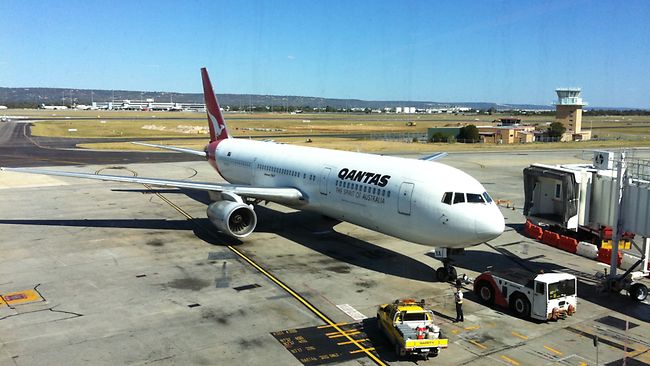
    Returning from Xero’s Australian Partners’ Conference in Melbourne was again on Qantas, an evening flight rounded off a busy couple of days. Alas the free drinks on evening flights are no more for economy passengers.

    Check in

    Once again Qantas’ byzantine seat allocation only made aisle seats towards the back of the plane available.

    This is an irritation if you aren’t a frequent Qantas passenger and for short hop flights, particularly for time and cash sensitive freelancers and the self employed it may be enough to choose the competition.

    Apart from this irritation, web check in was straight forward and quick with only hand held luggage. Queues did not appear to be long at the check in desks for those with checked baggage.

    Boarding

    Evening flights out of Melbourne can be problematic as getting to the airport along the Tullamarine Freeway in peak hour can be slow. On this evening traffic was clear.

    Surprisingly the security queues were massive as the two operating gates struggled with a relatively light load of passengers. Being early, this wasn’t a problem but others on soon to depart flights were being paged from the lines by anxious check in staff.

    An 8pm flight out of Qantas’ domestic Melbourne terminal is a dispiriting affair if you want to grab something to eat as the overpriced food hall is shutting down and the range is dismal to go with the high prices.

    Fortunately Gate One at Qantas domestic has ample power sockets so you can continue working instead of moping around the overpriced and depressing food court.

    Onboard

    Another rattly old 767. While well maintained, it’s still showing its age. Comfortable seats again.

    Service

    Again the cabin crew was delightfully pleasant and friendly belying Qantas’ reputation for surly service.

    This could have been because the flight was nearly empty, which makes the restricted seat availability at check in even more frustrating.

    It didn’t appear that the restricted seats had anything to do with weight distribution as the cabin crew invited us to move wherever we liked after the plane had taken off. This was an opportunity to nab a seat at the front of the economy class cabin.

    Being an evening flight a meal was served – a basic penne pasta topped with tomato sauce and a tiny chocolate bar. The meal was fine although its size was closer to a snack.

    Sadly alcoholic drinks are no longer complimentary on Qantas domestic so a ginger beer followed by a black tea were the accompanying refreshments.

    On time performance

    The flight was slightly late getting away but had a straight flight into Sydney and arrived ten minutes early.

    Arrival

    With an on time arrival and only carrying hand luggage, again there was no need to worry about baggage claim.

    Not worrying about baggage is handy at Sydney Airport as you need all your wits when dealing with the Dantean circle of hell that are the airport’s taxi ranks. For first time visitors to Sydney, the inept management of something as simple as a line for taxis is a taste of the ticket clipping monopolistic incompetence that infests much of the state’s business community.

    For most people it’s easier to get the train out of the airport unless you’re lumbered with luggage or travelling in a group.

    Overall QF490 was a straightforward and easy flight with little hassle apart from the large security queues in Melbourne and messed up taxi rank at Sydney airport.

    QF490 – 21 Jul 12. Dep Melbourin 8.00pm, arrived Sydney 9.35. Economy class ticket $180.

    Paul travelled to Melbourne courtesy of Xero for their Australian developer’s conference.

    Similar posts:

  • Writedowns and triumphalism

    Writedowns and triumphalism

    The contrast between Microsoft’s and Google’s results released on Thursday attracted a lot of interest – for the first time in twenty years Microsoft posted a quarterly loss with Google’s profits continue to grow.

    While there’s no doubt Microsoft are challenged by the effects of their lost decade and bad decisions made in that time, but the business itself is still extremely profitable.

    Microsoft’s posted loss is due writing down 6 billion dollars in their aQuantive investment, an attempt to compete with Google in the online ad placement space.

    Despite a six billion dollar writedown, Microsoft only posted a 500 million dollar loss showing the business is still making over 5 billion dollars profit each quarter.

    Google on the other hand posted a profit of 2.8 billion, up 11% from the same period last year.

    But Google also has some nasty writedowns coming in the future – the purchase of Motorola will see some substantial write downs of that 12 billion dollar deal. It’s conceivable that a very big portion of that investment will have to be written off as well.

    Right now, Google’s seeing some benefit from the Motorola acquisition as the phone company’s cashflow is covering a decline in online advertising revenue, a threat to Google’s core business.

    It’s easy to be triumphant when the headlines proclaim you’re a winner, but it’s often worthwhile looking at the fine print to see the real story.


    Similar posts:

  • Xero and cloud computing

    Xero and cloud computing

    I’m at the Xero Partner Conference in Melbourne this weekend to hear how the cloud accounting service is travelling.

    Talking to the other attendees it’s interesting just how many accountants and bookkeepers are moving clients over because of the cloud benefits.

    Encouraging for Xero, there’s a big turnout of developers as well, one of the reasons for the successes of Microsoft Windows and Apple iOS is the size and diversity of their partners, particularly those writing software.

    The opening session of the conference itself will be interesting as Xero CEO Rod Drury gives his overview of the industry. With competitor MYOB in trouble with its customer base, this should be an entertaining speech.

    While Xero aren’t the only game in town, they are one of the leaders in getting other businesses to adopt cloud services. The conference should be interesting in hearing how the sector is developing and how organisations can use cloud technologies.

    Similar posts: