Author: Paul Wallbank

  • Flight review – Qantas QF427 Sydney to Melbourne

    Flight review – Qantas QF427 Sydney to Melbourne

    The milk run between Sydney and Melbourne is a pretty routine affair and increasingly the service is like catching a fast bus.

    Normally I fly Virgin Australia but as Xero were paying for my flight to attend their Australian convention I was happy to fly Qantas, it’s enough out of my usual routine to warrant a review.

    Check in

    Only having a day bag is an advantage with short hops along Australia’s East Coast and Qantas’ on-line check in is reasonably efficient.

    An irritation with Qantas is the opaque way seats are made available. Depending upon your fare and frequent flier status you may not see all the available seats when checking in online so if grabbing a specific seat is important then it is worthwhile manually checking in at the airport to see what has become available.

    Boarding

    For all of Sydney airport’s sins, getting to the airport and boarding is fairly straightforward and for an 11am flight the security queues are short and efficient.

    Another advantage with flying Qantas out of Sydney is their Heritage Centre in the T3 terminal where you can kill time waiting for a flight while looking at everything from the evolution of cabin crew uniforms to 1920s outback flight schedules. Just watch you don’t get too engrossed.

    Boarding a Qantas flight is fairly clunky compared to Virgin Australia. This is partly due to their 767 craft only boarding from the front and not from both the forward and rear doors on the Virgin 737 aircraft. This also means queues down the aisles.

    Onboard

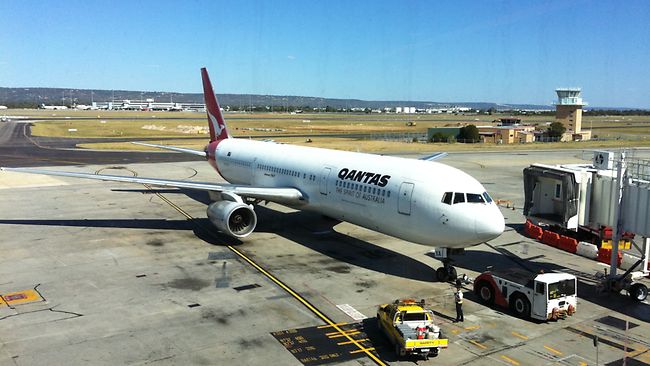
    The 767 aircraft are homely and showing their age. It’s surprising Qantas have kept flying them for as long as they have and the operating costs of these planes must be costing the airline a fortune compared to newer craft.

    A positive with the older aircraft is the 2-4-2 seating is quite wide and comfortable compared to the equivalent JetStar and Virgin craft. Inflight entertainment is lacking although this hardly matters on a 95 minute flight.

    Service

    Qantas has a patchy reputation for cabin service, but the crew on this flight were delightfully friendly and helpful.

    The inflight snack was a raspberry and white chocolate cookie or an apple (I had both) along with tea, coffee and softdrinks. The super-sweet cookie went well with a cup of tea.

    On time performance

    Sydney airport can create hell for passengers if the weather or various traffic restrictions conspire against them. This was not one of those days and the flight was away a few minutes late but arrived on time in Melbourne.

    Arrival

    With an on time arrival and only carrying hand luggage, there was no need to worry about baggage claim.

    An advantage with Melbourne Airport is that cab ranks and bus stops are right outside the terminal although passengers using the Skybus service should note that the city bound buses usually stop at the Virgin terminal first so you may fight to get a seat unless you’re prepared to walk the 200m to earlier bus stop.

    Overall QF427 was a comfortable trip and a good re-acquaintance with the flying kangaroo. The 767 aircraft though are desperately showing their age and while for passengers this doesn’t really matter on a short trips, it can’t be good for the airline’s image or operating costs.

    QF427 – 20 Jul 12. Dep Sydney 11:00am, Arrived Melbourne 12.35. Economy class ticket $120.

    Paul travelled to Melbourne courtesy of Xero for their Australian developer’s conference.

    Similar posts:

  • Distribution is not the problem

    The web is too efficient at information distribution, which is the problem for newspapers whose business model was built out of the difficulty the working man and woman had in finding out what was happening in the world around them.

    In today’s society, there’s no excuse for not knowing what is going on. If you only choose to keep up to date with what the Kardashians are wearing, the weight of Olympic swimmers or who won last night’s reality TV extravaganza then you only have yourself to blame.

    The web’s efficiency means there’s no shortage of ‘stuff’ pouring into our lives – music writer Bob Lefetz puts it well when he says “Kids don’t have a short attention span, anybody who says that is completely ignorant. They’ve got an incredible shit detector”.

    Distribution is not the challenge, that bit is insanely easy. It’s delivering quality and getting the message about our products heard above the Internet’s constant buzz.

    As consumers, and more importantly as citizens, it’s up to us to filter that noise and not accept dross any more.

    Similar posts:

  • Outsourcing’s changing face

    Outsourcing’s changing face

    Outsourcing company freelancer.com regularly releases the fifty fastest moving job descriptions requested by their customers.

    This year’s list shows how the online industry is changing – content creation, social media and SEO job requests are all down substantially as users and gatekeepers like Google adapt to the information flood we all have to deal with.

    Keeping in mind the market that Freelancer.com caters to small businesses and many of the jobs posted are for fairly small – some would say laughingly tiny and insulting – amounts, it’s probably safe to say we’re looking at the low value end of the market.

    Article writing (down 15%), proofreading (5%), blogging (13%) and submission (4%) jobs are probably the cheap and nasty “Demand Media” style of low quality content designed for SEO purposes.

    SEO itself is in trouble with jobs in that sector down 7% indicating Google’s Panda and Penguin search engine changes have achieved their objectives of improving search results and knocking out those gaming the system with low quality content.

    A similar thing has happened with social media. Facebook is too hard for many businesses and they’re not seeing a return on their substantial time investment.

    “Companies in industries from consumer electronics to financial services tell us they’re no longer sure Facebook is the best place to dedicate their social marketing budget—a shocking fact given the site’s dominance among users,” Freelancer quotes Nate Elliott, an analyst at market research firm Forrester.

    A bright part in Freelancer’s list is the rise is in open standards as HTML5 starts moving up the list with 20% growth.

    “The Internet is becoming more interactive, and the technologies that are winning and will continue to win are open standards like HTML5 and jQuery- to the detriment of the incumbents proprietary technology providers like Adobe and Microsoft,” says Freelancer’s CEO Matt Barrie.

    Open standards aren’t winning everywhere though as Apple’s iOS is clearly winning the developer war as iPhone grows by 30% and iPad by 26% compared to Android’s 20%.

    Freelancer’s list is an interesting snapshot at where industry demand is right now, what’s we’re starting to see are some of the transition effects working their way through the system. The rise and fall of the social media and SEO specialists being one of those.

    The full Freelancer list is below;

    Similar posts:

  • Windows 8 to launch on October 26

    Windows 8 to launch on October 26

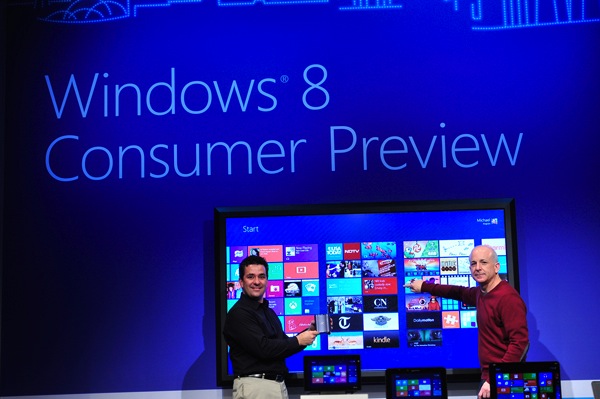
    It’s official, Windows 8 has an October 6, 2012 release date.

    For Microsoft, the pressure is now on. Not only does the desktop version have to be shipped but also the smartphone and tablet versions. Their cloud services are going to have to be flawless on the day Windows 8 goes live.

    The tablet version is doubly important as Microsoft has to convince cynics like me that the Microsoft Surface is not vapourware. With the Surface RT scheduled for release with Windows 8, Microsoft are going to have to announcing pricing and final specifications very soon. Reports are that the Surface is beginning to appear on Amazon sites so release may not be far away.

    Nokia too will now be under a lot of pressure as releasing credible Windows 8 are the only hope for the company’s future. As it is, the current range of Lumia phones are now dead in the water despite massive discounts.

    As we’ve previously discussed, Windows 8 is essential to Microsoft’s market position and will define their future – a failure will almost certainly lock the once dominant software giant to a another lost decade.

    We’ll see a lot advertising and PR hype around Windows over the next few months, the real test will come at the end of October and with the Christmas buying season.

    By the middle of next year we’ll have a good idea of just how successful Windows 8 will be. Steve Ballmer’s future depends upon it.

    Similar posts:

  • Android’s corporate wins

    Android’s corporate wins

    Telstra’s launch of the second iteration of their T-Hub device and the Commonwealth Bank’s Albert tablet Point of Sale device are notable in their choice of operating system.

    For the T-Hub, the first version was a bug plagued and slow proprietary system that which one of the reasons for the device’s market failure. Telstra’s second attempt runs on the Google Android system.

    The Commonwealth Bank didn’t make Telstra’s mistake with the Albert device, instead choosing  the open source system from the beginning.

    Choosing an open platform like Android makes it easier for the developers and company to support the device and develop new products. There’s also the advantage of thousands manufacturers supplying hardware that runs on Android.

    If we compare the costs of developing a proprietary system and sourcing hardware for it to run on, the choice of an open system is almost irresistible.

    For Microsoft, this adoption of Google Android by corporations is another blow to Windows’ dominance of the market, a few years ago all of these devices would have been running a version of Windows but Android is a cheaper, more flexible and better suited to most of the tasks required.

    It could be worse for Microsoft – Apple could be dominating this market. Apple though have had their own victory on consumer devices and increasingly companies have to cater for their customers and staff wanting an iPhone or iPad app.

    Like on smartphones, the battle is now between Android and Apple.

    Similar posts: