Author: Paul Wallbank

  • Is Microsoft’s Surface Tablet Vaporware?

    Is Microsoft’s Surface Tablet Vaporware?

    In the early 1990s the term “vapourware” appeared, it was born out of big software vendors announcing mythical products with a whole new bunch of features which the opposition already had.

    Usually that next great product never appeared; it was just a ploy to stop customers defecting to the competition’s superior product.

    There were a number of ways to spot vapourware – the lack of a working prototype, vague release dates and no firm pricing being just three.

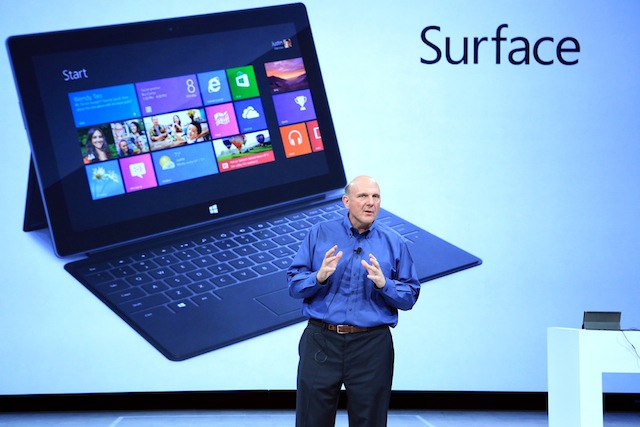
    Earlier this week, Microsoft brought tears to the eyes of grizzled IT industry veterans who missed the days of regular vapourware announcements with the “launch” of their Surface tablet computer.

    After springing the event at short notice on the tech media, forcing the poor petals to travel to Los Angeles rather than their usual haunts of Silicon Valley, Manhattan or Texas and then starting the event late, Microsoft added insult to injury by not even letting the journalists play with a working version of the Surface, let alone take one home to play with.

    One of the impressive things about vapourware are the specifications and this is true with the Microsoft Surface. The specifications of the base model Windows RT are about the same as the base model iPad with the added benefit of a keyboard, USB and Micro SD ports.

    Looking past the hype, it’s clear Microsoft are having trouble with their strategy of a unified operating system across smartphones, tablets and traditional PCs, which has forced them to announce two different versions of the Surface, running different operating systems on different chipsets.

    Having potentially incompatible products makes it even more important for tech journos and early adopters to play with the new devices to see how well they work – that version one of any new product doesn’t work well is another lesson from the 1990s IT industry.

    In the spirit of vapourware, Microsoft hasn’t mentioned what either version of the Surface will cost, which probably indicates they don’t know what the final sticker price will be either.

    Despite being funny, there was a serious side to vapourware – in the 1990s businesses often held off purchasing decisions or upgrades as they waited for promised products or features to arrive.

    While eager customers waited for products that never arrived, their productivity slipped and technologies that should have been adopted earlier ended up coming late to the office desktop.

    For Microsoft investors, the nature of the Surface announcement should be disturbing as the vapourware business tactic only works for incumbents in a strong market position and the software giant is anything but strong in the tablet computer market.

    While it would be good to see a credible competitor to the iPad, it’s going to be difficult to take Microsoft seriously until we see some working versions that we can play with.

    The lessons from the 1990s computer industry are clear – don’t fall for vapourware and buy what works for your business today.

    Similar posts:

  • Can Singapore become a global VC centre?

    Can Singapore become a global VC centre?

    While Silicon Valley grabs most of the headlines about cool new businesses Singapore has been quietly building its own position in the global venture capital industry.

    SingTel, the city state’s main telco operator, setup their own venture capital fund in 2010 with Singtel Innovate investing between S$100,000 and thirty million in various ventures.

    The strategy from SingTel, which is closely aligned with Singapore’s government, is a very canny one – it allows the telco to move beyond being a “dumb pipe” just providing the phone network and fits into the nation state’s aim to be one of the centres in an increasingly Asian centred global finance system.

    Yesterday SingTel launched a new Australian startup venture, the Optus Innov8 Seed fund which offers investments of up to A$250,000 in new start up businesses in return for equity or other stakes.

    To identify the right investments SingTel are partnering with various start up groups and incubators in Sydney and Melbourne which is an interesting way to filter out unsuitable businesses.

    Being funded by a telco, the Optus Innov8 program is naturally focused on the technologies that are going to help their business in an evolving market, the areas they are currently looking at are mobility solutions and digital convergence.

    For Singtel and Optus this is a long term investment as equity stakes in new technologies will position the business well as their industry evolves and margins come under pressure in their core telco market.

    To businesses looking for investments, the Innov8 program is a welcome addition to the funding landscape but Singtel also offer access to Asian markets with operations in India, Indonesia, the Philippines, Thailand, Pakistan and Bangladesh.

    Edgar Hardless, the CEO of SingTel Innov8 says “if you’re looking at going into the Indian market, we can help with introductions. Same with any of our other markets”.

    Those introductions are useful but probably more important is the market intelligence that a partner like SingTel can bring on board. Understanding foreign business conditions is a great advantage for a foreign venture.

    Asian markets can be tough, particularly for Australians who have been bought up with a US centric view of the world, but there are plenty of success stories. There is a successful group of entrepreneurs catering to the massive Indonesian market while companies like Dealize have moved their head office to Hong Kong.

    Dealize was part of the Pollenizer incubator which is one of Innov8’s partners. At the launch, Phil Morle of Pollenizer pointed out that his business has set up a Singapore office to take advantage of the favorable investment conditions there.

    While Innov8’s program is relatively small, it’s a much needed addition to Australia’s start up and venture capital scene and will help some new businesses in the app and mobile space.

    Hopefully a few other corporations are looking at SingTel’s lead and thinking how they can tap into these new industries that may disrupt their own.

    For Singapore, the city state has always had a number of advantages for the finance industry. By expending into new financing new sectors they are securing their own future in the 21st Century.

    Similar posts:

  • Australia – the Noah’s Ark of business

    Australia – the Noah’s Ark of business

    During a week of big business news, the buyout of another boutique brewery by a big corporation was barely noticed, but Lion Nathan’s takeover of the Little Creatures brewery illustrates the duopoly problem that is crippling Australian business.

    A few days after that deal was announced, rumours that Business Spectator – which the above link takes you to – would be taken over by News Limited started circulating. These turned out to be true.

    In both cases, existing duopoly players bought out small competitors, a process that’s been going on since Australia decided industry duopolies were necessary to protect the nation’s managerial classes, and these takeovers kill genuine innovation and stymie new thinking.

    For those duopolies the definition of success is grabbing a few percent of market share off each other while using their market powers to screw down supplier costs.

    A good of example of this is the retail duopoly, the farmers and producers get screwed while the supermarket chains engage in price wars driven by truly awful advertising campaigns.

    Un-imaginative, un-original and plain un-inspiring. Any smart young kid wanting to get ahead in the retail industries knows they have to look overseas for job opportunities or inspiration.

    Therein lies the real problem with Australia’s duopoly business culture – it triggers a brain drain as comfortable managements block any innovative new thinking as being too hard or just unnecessary.

    In the media duopoly, telecoms analyst Paul Budde illustrated the problem in his account on trying to convince Fairfax of where the media industry was heading in a connected economy.

    Fairfax’s management didn’t get it and didn’t care – today they still don’t get but they care deeply as their business model crumbles.

    It’s not just future managers that are looking overseas for opportunity, the customers are well.

    The duopoly model that evolved in Australia over the last thirty years depended upon the tyranny of distance to act as an effective trade wall. The Internet has demolished that wall for most industries.

    Almost every Australian duopoly is living on borrowed time. If, like the proprietors of Business Spectator or Little Creatures, your business plan relies on selling out to a local duopolist then you’d better move quick.

    Similar posts:

  • Managing your digital estate

    Managing your digital estate

    Everyone who goes online leaves “digital footprints“, a trail of the things we’ve done on the web. When you pass away, what happens to those status updates, comments and documents you’ve left on the Internet?

    Dealing with the passing of a loved one is always difficult but today we have an added complexity of dealing with the online problems of social media sites suggesting people still “like” the deceased or valuable documents locked into cloud computing services.

    With more of us storing information into cloud computing services, having important data locked away becomes a real risk and how online storage or software companies deal with deceased estates becomes important.

    Online services don’t have a standard way of dealing with the data of someone who has passed away, here’s a quick sampler of some of the different policies.

    Facebook

    The social media giant has the easiest way to manage a deceased’s profile, simply fill in a form and swear you’re telling the truth. Facebook will then “memorialize” the account.

    “Memorializing” is an interesting way of dealing with user’s passing. Rather than deleting the account, Facebook will lock out everyone but friends who are still able to post to the deceased’s wall. In some aspects, this is quite an elegant solution.

    LinkedIn

    One of the features of LinkedIn is that it gives upfront suggestions of who should be in your network. If you’re a heavy user of the service, you’ve almost certainly encountered a suggested contact that is either inappropriate or distressing so the stakes for LinkedIn in keeping their contacts up to date is high.

    LinkedIn’s process of dealing with a deceased’s passing is an email to customerservice@linkedin.com with the word “deceased” in the subject line. You need to give some details on the user’s passing and their account.

    Google

    With Google offering both social and cloud computing services, they are probably the most important service of all. Google’s requirements for handing over account details are rightly stringent.

    Google’s procedure for deceased accounts involves the person first reporting the user’s passing to identify themselves first. Interestingly this has to be done by post.

    Twitter

    Like Google, Twitter requires anyone reporting a user’s death to mail proof of identity along with a death certificate. Once they are satisfied the user has passed away, they will deactivate the account.

    PayPal

    “When contacted in regards to a deceased estate we move quickly and with respect to close the customer account.  Our policy and process is similar to many large financial institutions including banks  When PayPal is notified that an account holder is deceased immediate steps are taken to suspend the account to prevent any unauthorised transfers from the account. 

    To close the account of someone who has died, PayPal needs to be sent paperwork including; details of the Executor of the Estate and a copy of the death certificate for the account holder. The documentation is reviewed and, once authenticated, the account is closed. If there are funds in the PayPal account, then these will be issued to the Executor of the Estate. 

    With bankrupt estates we refer this directly to our legal team who deal with them on a case-by-case basis and take action according to the instruction provided by the person or company handling the bankruptcy.

    Apple

    No specific policy, the company recommends “customers needing guidance in relation to a deceased estate contact iTunes support at http://www.apple.com/support/itunes/contact/“.

    Amazon

    No clear policy. The company has been approached for comment.

    Digital estate management services

    There’s a number of services which help manage digital identities after someone passes away. Mashable reviews a number of these.

    Sharing passwords

    One simple solution is to share passwords with your next of kin, but that is a horrible security risk which isn’t recommended.

    A slightly different solution is to split passwords in two and give half to different people, that still has risks and can get complex.

    Probably the biggest problem with passwords is they change. Even if you write the password in your will or share it with trusted loved ones there’s a good chance it may have changed in the meantime.

    Central email accounts

    Probably the easiest, albeit still risky solution, is to have all online services pointing to one email address. almost every service has a “recover my password” feature which an executor or loved one with access to the central address will be able to recover most account login details.

    Should everything else fail there are the courts and every major online service will obey a properly executed legal order although anything involving lawyers invariably ends up messy, difficult and expensive so that course should be the last resort.

    As with everything online, balancing security, convenience and privacy is a difficult task for both individuals and companies. It’s not made better by the distress and grief when someone passes away.

    Ideally we’d all plan these things and it would be easy on our loved ones although things often don’t turn out that way. It’s as true online as in any other aspect of life.

    Similar posts:

  • Delivering products

    Delivering products

    Once upon a time the local plumber got to work by bicycle, then he got a jalopy and now he shows up in a van or a hotted up ute. The plumber and his customers don’t care about the way his services are delivered.

    A hundred years ago the retail industry was dominated by corner stores that customers could walk to, they received their deliveries by horse drawn carts and made deliveries on bicycles.

    Then along came the motor car, which changed shopping habits and delivery methods.

    Fifty years later the corner stores were a dying breed as they were replaced by supermarkets which customers could drive to and they took their deliveries by truck.

    Today the retail industry is changing again, as the Internet changes shopping habits and society in ways similar to the motor car.

    A similar pattern of change happened in the media sector; the evening paper died as commuters switched to cars and reading the Tribune on the tram or train home became less relevant.

    Morning papers survived as people took deliveries to read over breakfast before driving to work.

    At the same time radio and television became the dominant way most people got their news.

    Even more the retail, the web has dramatically changed news distribution methods.

    As the effects of Fairfax’s restructure sinks in, there are a group of people who don’t seem to want to accept reality – newsagents.

    Mark Fletcher’s initial post about Fairfax’s restructure on his Australian Newsagency Blog attracted some harsh comments;

    “Whilst the print media is arguably in decline I consider this post to be scare mongering……Fairfax will be here in print for years to come and to say or suggest that some days of the week will be or may be cut is pure conjecture at this point.”

    ” I am in semirural metropolitan Sydney. We have just added another 100 customers to our delivery run. Majority dont like reading their news online – old habits die hard. I hope that Fairfax dont abandon them. They like getting their newspapers in print.”

    “Hi i will not pay to read online why it is all free, but will buy paper”

    Focusing on print condemns those newsagents to the fate of the corner shop.

    What is missed in the discussions about the future of the media is that medium is not message – people want relevant content delivered in the most convenient way.

    This is true in every business. What we do is not really related to how we deliver the product, if we’re tied to one way of getting our services to a customer then we’re in trouble.

    Similar posts: