Author: Paul Wallbank

  • Giving a damn

    Giving a damn

    Twenty years ago a lady unexpectedly passed away leaving her estate to her infant daughter. Included in the estate was a modest apartment in Sydney’s inner western suburbs.

    For years, the unit sat on a local real estate manager’s books quietly gathering rental income and growing in value during Sydney’s great property boom.

    Eventually the owner of the real estate agency tracked down the infant, now grown up and living in Boston. He’d hired lawyers and private detectives to track her down.

    Most of us would have taken the easy course and flicked the property to the public trustee where the property would have quietly languished for years in the tender care of the dusty, but expensive, bureaucrats.

    A few criminally minded ones would have sold the property and pocketed the cash, confident that no-one would ever know or care.

    But Chris Wilkins decided to do the right thing and found the owner, doing anything else would have been a “heartless alternative.”

    Having a heart and giving a damn is what matters.

    Whether its in our work, how we deal with other people or the change we make to our society. This is what matters – big bonuses, a flash car, a ministerial position or invites to “insider” conferences are just trinkets for the egos of vain little people.

    In an era where shareholder value, triple A credit ratings, executive remuneration and personal entitlements seem to stand above everything else, it’s good to be reminded that most people are doing the right thing by others.

    At the end of our lives, we’re judged by our actions. What will you be proud to be judged by?

    Similar posts:

  • Product Review: Australian Financial Review iPad app

    Product Review: Australian Financial Review iPad app

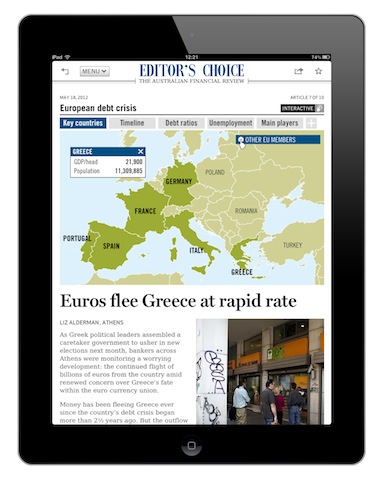
    I really wanted the Australian Financial Review’s iPad application to be great as the country desperately needs good reporting on the platforms people are using. Unfortunately Fairfax’s misguided commercial judgement gets in the way of delivering a killer app.

    Many publishers are putting faith in iPad applications, seeing them as an opportunity to catch a market that is fleeing paper publications for their online equivalents.

    To meet this demand, the Australian Financial Review has released their iPad application with a free fourteen day trial and plans starting from $59 per month for the digital editions.

    It’s telling the subscription plans favour those buying the paper editions as the feeling from using the iPad app is that Fairfax’s management would rather you bought the paper.

    This continued focus on print shows in the news not being updated – a reader of the app in an airport lounge at 6am will find little different logging at lunchtime or in a cab on the way home in the evening.

    Clinging to the old news timetable is admirable but it means the AFR isn’t taking advantage of its marketplace strengths or the talents of its staff.

    One of the reasons the iPad has become so popular as a reading device is the rich, relevant content publishers can display, for instance The New York Times iPad app, their stories on the Syrian massacre in Al-Houla link directly to Youtube clips from local news sources.

    So it is disappointing is that the AFR hasn’t harnessed the multimedia advantages of the iPad. For instance Canberra correspondent Laura Tingle’s political stories don’t even link to Laura’s video page on the service.

    Similarly a story on BHP won’t have any links to the AFR’s profile of BHP, its stock price or financial results. These are features that could make the AFR’s a killer application for anyone wanting to understand the Australian business scene.

    Compounding the issue is Fairfax’s unfortunate policy of reluctantly linking to outside sources – this short sighted view devalues all Fairfax’s online efforts as it detracts from the authority of their broadsheet and business publications. This again is true in the AFR iPad application.

    Overall, the AFR’s iPad app is a missed opportunity which is a shame as the Australian business sector desperately needs good reporting delivered through the tools today’s executives and investors are using. Hopefully the next version will do better.

    The Australian Financial Review online subscription was provided by Fairfax and the AFR. I have free subscriptions available for the best two comments on the blog this week so fire away with your views on this post or others.

    Similar posts:

  • Free Subscription to the AFR Digital Edition

    Free Subscription to the AFR Digital Edition

    As part of the review of the Australian Financial Review’s new iPad application, I have two free one year subscriptions to both the app and the AFR website available.

    To win one, submit a comment to any of the site’s posts over the next week and the best two as judged by myself will win the subscription.

    You don’t have to comment on the AFR iPad’s review, it can be on any of the website’s posts. Feel free to agree, disagree or point out the subtleties and nuances I’ve overlooked.

    I’d like to hear your opinions anyway, but this week there’s an additional reason to comment. Fire away.

    Similar posts:

  • FUD on the Desktop

    FUD on the Desktop

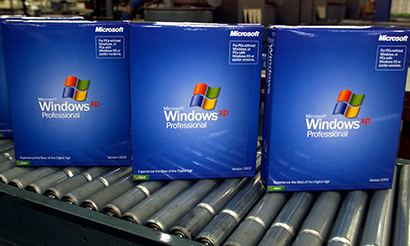
    “User productivity costs jump up a staggering 40 percent“, “return on investment over 130 percent over a three-year period” and an eighty four percent drop in IT support costs are some the latest claims from Microsoft in their campaign to wean users off Windows XP.

    These, undoubtedly true, claims are pretty impressive and compelling for cash strapped IT managers, but do they really matter anymore?

    With the rise of Bring Your Device policies and cloud computing, what operating system employees use is rapidly becoming irrelevant.

    In large organisations that supply workers’ computers, most systems are run on SOEs – Standard Operating Environments – which means users have limited accounts and can’t install rogue software.

    For those organisations wedded to supplying staff with desktop or laptop computers XP is fine and almost all of them are well advanced in their plans to redeploy to Windows 7 or 8 when the XP support period runs out in April 2014.

    We’re seeing fewer organisations locked into the SOE model as the financial sums and business benefits of moving over to an employee Bring Your Own Device – BYOD – model start to look compelling.

    Developing an SOE is a complex, time consuming task for an organisation – the package has to be tested to work on the company’s hardware which might include dozens of different types of printers, laptops and other devices. Then it has to be tested on all the software employees use.

    In a big organisation developing new operating environments is not done lightly. It’s a complex, expensive process.

    With a BYOD policy the company can develop a standard desktop environment that runs on a web browser. Staff can then bring their own device running on Mac OSX, Android, Linux or even Windows XP and, as long as their browser is up to date, they can run on the corporate network.

    The IT department no longer has to care about what the staff member has on their desk and can focus on more important business technology issues – although sadly the password issue doesn’t go away.

    For Microsoft, this evolution in corporate IT is a problem. Increasingly big organisations aren’t placing orders for big fleets of centrally managed desktops. The IT industry has moved to the cloud.

    In a perverse way Microsoft are winning the desktop battle, most of those workers in companies implementing BYOD policies will choose Windows 7 or 8 systems because they are cheap and work well in a business environment. The problem is that’s where the profit no longer lies.

    While we’ll see more FUD – Fear, Uncertainty and Doubt – about cloud computing, BYOD and Windows XP over the next year, the battle has been fought and won.

    Increasingly Microsoft are looking like an exhausted army that has won an irrelevant battle while the real war has moved elsewhere.

    The challenge for Microsoft is to find its way back to relevance in an era where the operating system doesn’t really matter.

    Similar posts:

  • Can Warren Buffett save local news?

    Can Warren Buffett save local news?

    Warren Buffett’s purchase of local newspaper chain General Media Publications last week raised eyebrows and the question about the future of local newspapers.

    Local news has bucked the trend of the big four gatekeepers taking over – most of us expected Google and Facebook with their local business listings, search and community functions to take over the market just as the web has stolen the income streams of the bigger metropolitan mastheads.

    What’s more, us digerati believed social media services like Facebook and Twitter would give us most of the information about what is happening in our communities and make the role of the local newspaper redundant.

    This hasn’t happened and there’s several reasons for this – a key one is current web services are great at connecting disparate communities but don’t do a good job of connecting local groups.

    A bigger failure is both Google and Facebook blew the opportunity to dominate local news.

    Basically, local news isn’t sexy, it’s much more of an ego stroke to be treated like a rock star at a conference or to negotiate a billion dollar purchase of a social media application.

    Late nights reporting goings on at the local council or chamber of commerce isn’t sexy. So Facebook and Google’s executive focused on the shiny things.

    That failure to execute by the big players has largely left the market to the incumbents and their income is largely untouched – Media General’s income is largely static, unlike the declines being seen by big city mastheads.

    A similar phenomenon is at work in other markets, in Australia Fairfax’s regional newspaper division is far more profitable than any other sector while competitor APN makes a good return from their publishing activities in smaller communities.

    Interestingly almost all of the local news incumbents are saddled with debts or poorly thought out ventures that absorb the profits coming in from their core operations.

    Part of the profitability is because local newspapers are established brands. Locals know they will get news about their community that is immediately relevant to them.

    For local businesses, they still have to advertise in the local press as that’s where their market is. Local customers might be reading about Federal politics, Kim Kardashian or Occupy Wall Street on the web, but they are still turning to the district news to find out what’s going on in their immediate community.

    How this pans out for Warren Buffett is going to be interesting, Berkshire Hathaway tends to run a lean management philosophy in its businesses and this might be one of the saving attributes for their local media investments.

    Stripping out the million dollar men who infest the top levels of the newspaper industry and investing in content – both online and in print – may well be the key to success of the local news industry.

    Key to the local news success will be energising the advertising sales teams – there’s little point in skilling up journalists in new technologies or getting editors to “think digital” if the salespeople are stuck in the mentality of display print ads being the only thing that matters. This is the same challenge metro newspapers face.

    Strong local media matters in both country and suburban communities. It’s essential to the spirit of the local town and a healthy local media is always a feature of a prosperous community.

    One of the promises of the Internet is that local groups could seize back the news about their towns and suburbs, this doesn’t appear to be happening. Maybe it’s going to take Warren Buffett to fix it.

    Similar posts: