Author: Paul Wallbank

  • Duly diligent

    Duly diligent

    “Who would have thought our CEO didn’t have the qualifications we thought he had?” wonders the Yahoo! board.

    “It seems we forgot to count the number of beds!” whines the cleaning contractor when challenged about a filthy hospital.

    “We had no idea these people were corrupt,” growls the politician and former trade union official when confronted with proof its factional friends were misusing expenses.

    An interesting phenomenon in the rise of the managerial classes over the last thirty years has been the group’s refusal to take responsibility for their failures.

    Instead we see boards, investors, managers and politicians duck responsibilities that a reasonable observer would have thought is the reason for their healthy salaries, bonuses and perks.

    One of the many conceits of 1980s thinking is the ideology of “personal responsibility” – to low paid workers and those at the bottom of society this mantra is applied ruthlessly.

    The call centre worker who makes a mistake gets counselled or fired while the aboriginal kid who steals a can of coke is denied bail and goes to jail.

    Let’s not mention the fines and sanctions that befall a small business owner who is too slow in submitting paperwork or forgets to pay one of the countless fees that make up today’s hidden taxation.

    In boardrooms and Parliaments those doing the wrong thing rarely face any accountability; politicians caught misclaiming expenses are allowed to pay it back at their convenience while senior executives and captains of industry with a track record of mistakes continue to be employed in positions way beyond their abilities.

    One exception to the that rule is former Tyco Chief Executive Dennis Kozlowski and his cohorts who looted their company through the 1990s. Eventually their excesses became so great that the CEO and his cronies ended up being jailed.

    Not that this has rattled some of his cronies sense of entitlement. Former CFO Mark Swartz is suing the company for $60 million in retirement benefits and other monies.

    I have a personal connection with Messrs Swartz and Kozlowski – I worked for their company in the mid 1990s and lasted nine months in a culture of cronyism and rorts where middle management enthusiastically aped the excesses of their senior executives.

    One can argue I didn’t carry out my due diligence – a little bit of digging and more detailed asking around would have revealed Tyco’s institutionalised corruption and cronyism at the time.

    I paid for this oversight by having my contract terminated in a public and humiliating way which drove me to set up my own business.

    While working for companies like Tyco I saw them drive smaller businesses into the ground through slow, or non payment, of invoices. Strangely they always seemed to pay the corporate hospitality bills on time.

    The weakness in today’s corporatist economy is that boards like that at Yahoo!, executives like Tyco’s in the 1990s and many of our business and political leaders have a sense of entitlement way beyond the value they add to their business, community or society.

    Worse, the main lesson of 2008’s financial crisis is that massive government spending will protect these peoples’ bonuses and privileges regardless of their actions.

    As investors, employees, suppliers and voters we have to do our due diligence on these people and organisations. We have the tools today to check the track record of those who want our vote, skills or products.

    In today’s economy, we can’t afford to squander money or time on those who demand fat fees and salaries without delivering value.

    At the cash register and ballot box, it’s time to do our due diligence.

    Similar posts:

  • Depreciating the future

    Depreciating the future

    When I wrote my first book back in 1998, one of the things my editor and I did was look at the cost of buying and maintaining technology.

    Regardless of how we chopped the costs up, it came up consistently that the purchase cost of a personal computer was around a third of the Total Cost of Ownership (TCO).

    The TCO concept is something forgotten by people – be it a minister announcing a billion dollar purchase of jet fighters, a CEO boasting how he’s opened a hundred new outlets this year, or a family buying an investment property.

    It was bought sharply into focus for me when one of my kids claimed he couldn’t use his government provided school laptop because the IT guy didn’t have the repair software to fix a problem.

    Despite millions being spent on providing these computers, little has been allocated to maintaining them.

    This is typical of the public education sector, early in the adventure of building a computer support business I learned that services to schools and universities were fraught with difficulties as many would infrequently receive a fixed amount for capital expenditure but nothing for ongoing maintenance. You see this in the conditions of buildings on many campuses.

    Forgetting operating and support costs is something we all fall for.

    Strangely motor vehicles are the only area we consistently factor in maintenance and running costs, probably because we get the fuel price shoved in our face every time we take the car for a drive.

    While computers are becoming disposable items just like fridges and TVs were maintenance isn’t so much an issue given most last five to ten years before needing expensive repairs, its still true for many capital items.

    There’s another aspect to forgetting costs – depreciation.

    Depreciation allows us to factor in the declining value of our business assets yet I keep meeting people who treat depreciation as income or even an asset in itself. This is particularly true among real estate investors who prefer to buy newly built apartments for the higher depreciation deductions they can claim against tax.

    Bizarre stuff and true bubble thinking where people think operating losses will be offset in the medium term by capital gains.

    One of the aspects of 1980s thinking is that business costs like training and maintenance can be palmed off elsewhere or infinitely deferred. That isn’t the case.

    In society and business, we’re seeing the effects of pretending these costs don’t exist. Somewhere in there lies opportunity.

    Similar posts:

  • Malware’s third party path

    Malware’s third party path

    One of the few constants with computer security is that threats are constantly evolving.

    Malware – malicious software like computer viruses, worms or Trojan horses – are the most common security threat the ordinary technology home or business users will encounter on their PC, laptop or smartphone.

    During the big computer virus epidemic of the early 2000s the main target were Windows 98 or XP machine running Internet Explorer as these were so easy to infect.

    Today, it’s harder to infect Windows systems and the malware writers have become more sophisticated in the tools and methods they use to catch victims.

    Right now, we’re seeing the malware writers focusing on  weaknesses in third party software such as Java, Flash and Microsoft Office.

    Mac users have been affected by the Flashback worm which used flaws in the Java computer program and now Adobe have released an emergency update to their Flash application to fill a security hole that could affect all operating systems.

    Along with being more sophisticated in their methods, today’s malware writers are also more organised with real criminal objectives as opposed to the earlier generations that were derided as “script kiddies”.

    So there’s real risks in not taking basic steps to protect your computer system.

    Have the latest updates

    When your system asks you if you want to install updates, do so. Both Macs and PCs have an automatic update function which you should enable and pay attention to.

    Individual software packages like Java, Flash and Microsoft Office have their own update reminders which you should also pay attention to.

    Sometimes though the malware writers distribute fake updates to fool people into installing their software so if you are suspicious about an update, check online to see if you have the latest version.

    Run computers in Restricted User mode

    One of the big weaknesses for all systems is there is a tendency to run as an Administrator. In older Windows systems this gives almost complete control over the system and can still create problems in newer systems as well as with Mac or Linux systems.

    Every user should be run as a Restricted User and this can be set up in the Windows Control Panel or Mac Preferences.

    Have an antivirus

    While the antivirus industry loves flogging overpriced and overfeatured software that generally slows your computer down as much as it protects the system, it’s still worthwhile having.

    For Windows users, the free Microsoft Security Essentials is fine for most users. For Mac users, the free ClamAV or Sophos Anti-Virus for Mac are good choices.

    Use a third party browser

    Generally using the built in web browsers – Internet Explorer in Windows and Safari on the Mac – tends to amplify security risks. So use a third party browser like Firefox, Google Chrome or Opera.

    Be careful

    Malware writers, like all crooks and conmen, try to exploit human weaknesses so their tricks often appeal to our greed, fear or lust.

    Try to avoid websites offering pirated software, movies, music or pornography and never click on emails or pop up adverts that claim you’ve won the lottery or been infected with a virus.

    Cybercrime is real and growing although we should keep in the threat in perspective and not fall for the hysterical headlines we often see in the media.

    The risks are going to continue to evolve as the crooks move onto trying to exploit weaknesses in smartphones, social media platforms and cloud computing services.

    Despite this, most people won’t be affected by malware or other computer crime by being careful. Just don’t count on being lucky.

    Similar posts:

  • Monetizing the Masses

    Monetizing the Masses

    Monetization is a horrible word.

    The term is necessary though as many online business models are based upon giving away a service or information for free. For those businesses to survive, they have to find a way to “monetize” their user base.

    When Google were floated in 2003, the question was how could a free search engine “monetize” their users. The answer was in advertising and Google today are the world’s biggest advertising platform.

    Facebook’s Inital Public Offering (IPO) announcement raises the same question; how does a company valued 99 times earnings find a way to justify the faith of its investors?

    Advertising is the obvious answer but that seems to flattening out as the company’s revenue growth is slowing in that space. The AdWords solution tends to favour Google more than publishers as most advertising supported websites have found.

    Partnering with application developers like the game publisher Zynga is another solution. Again though this appears to be limited in revenue and Zynga itself seems to be having trouble growing its Facebook user numbers.

    So the question for Facebook is “where will the profits come from?”

    There’s no doubt the data store Facebook has accumulated is valuable but how the social media service can “monetize” this asset without upsetting their users is open to question.

    For Facebook the stakes are high as the comparisons with Friendster and MySpace are already being drawn.

    We’ll see more partnerships like the Facebook Anti-virus marketplace, but these seem to be marginal at best.

    In the next few months things will get interesting as Facebook’s managers and investors strive to find ways to make a buck out of a billion users who don’t pay for the service.

    While “monetization” is an ugly word, it is one that every online company thinks about.

    Every web based businesses will be watching how Facebook manage their monetization strategy closely as the entire industry struggles with the faulty economics of providing services for free.

    Similar posts:

  • When taxpayers hearts sink

    When taxpayers hearts sink

    Nothing is sadder than a government or business that believes it will gain huge savings through outsourcing.

    Part of the 1980s management mindset is that outsiders can do a job better and cheaper than existing staff. Almost always this is proved to be expensively wrong.

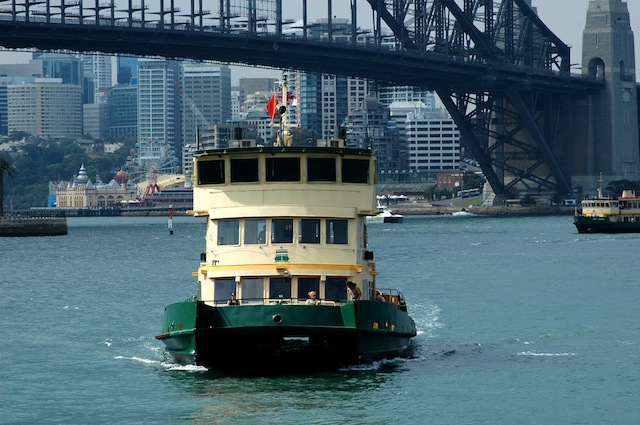
    The announcement the New South Wales Government will outsource Sydney Ferries is a good example of this. Media reports claim the “government is hoping to save hundreds of millions of dollars over the next decade.”

    Good luck with that. As the people of Melbourne found when the Victorian government outsourced operations of suburban trains and trams the levels of service remained poor, subsidies increased and new level of bureaucracy developed to manage the disconnect between a private operator running a service accountable to the public.

    Advocates of outsourcing always overlook the cost, time and skills involved in supervising contractors.

    This is something the banks found in the early days of offshoring services as the claimed massive labour cost savings by moving operations to the developing world were offset by higher supervision costs.

    Governments have a bigger problem with outsourcing as the public service generally lacks the contractual and project management skills to effectively specify and supervise major service outsourcing contracts.

    A good example of this is the Royal North Shore Cleaning contract where the hospital has seen a fall in hygiene levelsas the contractor attempt to meet their KPIs under an agreement that has been designed primarily to save the area health service money.

    Focusing on cost savings when outsourcing is almost always a recipe for failure. In both business and government its rare that a function or operating unit is so badly managed that savings offset the increased management expenses.

    This isn’t to say outsourcing isn’t always appropriate. Sometimes those savings are achievable – albeit not as often as proponents claim – and outsourcing can deliver skills that the parent organisation lacks.

    Which is another concern about the Sydney Ferries outsourcing. The Sydney Morning Herald article referred to above says the following about the CEO of the winning consortium.

    Mr Faurby, who has more than 20 years maritime experience, has never run a passenger service before. But he said he understood what it would take to improve Sydney’s ferries.

    ”It doesn’t really matter very much if it is a towage, tug company, or a container shipping company, or for that matter a ferry company … what matters is that you have the competencies to run it in an efficient, safe and effective manner.”

    Um no. That’s 1980s management school thinking where every business – from airlines to software – can be reduced to selling soap.

    Not having experience in running a passenger service with all the customer service issues that come when you’re dealing with the public is a concern. One hopes, prays even, that Mr Faurby and his employers have the wisdom to support the CEO with managers who do have a customer service ethos.

    Then there’s the black hole of Australian public transport – ticketing.

    While it’s impossible to quantify just how poor Australian governments have proved themselves to be with ticketing systems; Sydney’s convoluted, complex, siloed and passenger unfriendly public transport system adds another layer of complexity that the new management of Sydney Ferries is going to have to deal with.

    There’s no doubt though that Sydney Ferries need reform; its management was incompetent and, beyond the usual cheerful deckhands, the staff were surly with little concept of customer service.

    Done well, outsourcing Sydney Ferries could be for the better; but the emphasis on cost savings and what appears to be naive management expectations should make taxpayers’ hearts sink.

    Similar posts: