Author: Paul Wallbank

  • Finance by the masses

    Finance by the masses

    “Crowd” is one of the hot terms of the moment – the idea that groups of connected, motivated people with the right incentives can deliver great value when their skills and talents are bought together.

    One of application of this idea is crowdfunding where businesses, artists, writer and movie producers can call  on the community to donate or invest small sums into a project in return for a benefit like a copy of the book or being an extra in the movie.

    The biggest success in this space is the New York based Kickstarter which was founded in 2008. Pozible, an Australian equivalent, that provides local creatives with the opportunity to raise funds without dealing with the hassles of US bank accounts or social security numbers.

    Both of these services make money from taking a commission on the money raised, for Pozible users this fee ranges from 5 to 7.5%.

    While the focus of Pozible and Kickstarter is on creative projects like books, music and movies, it’s interesting to consider how this model can work for other businesses.

    Perhaps an IT business can offer a free year of support or food delivery service free shipping in return for a donation. The possibilities are endless.

    It’s not without risks – there’s no doubt the regulators will at best be suspicious of fund raising through these services and anyone participating has to accept the risk of not getting any sort of return.

    Since the 2008 banking crisis, funding for small business has dried up around the world. Many viable enterprises found their lines of credit being withdrawn and some even went under as a result.

    With banks rationing small business credit, there’s a need – we could even argue an economic necessity – for alternative sources of capital. Crowdsourcing could be an option.

    Now the days of easy credit are over; businesses, banks, investors and governments have to adapt. Believing models and regulations that were designed when capital was cheap and abundant won’t work in a very changed economy.

    Crowdsourcing will be one of the issues confronting regulators, it’s going to be interesting to see how they deal with it.

    Similar posts:

  • Scammed

    Scammed

    “Executive-level income without leaving home” claims the Facebook page, a sign at the end of my street promises a six figure wage from your own computer and one of the lead stories in this morning’s news is the tale of retirees being ripped off by ‘boiler rooms’ offering high return ‘investments’.

    We all believe we have the right to be rich so the quick, easy option and the promises of those that say we can be wealthy by simply handing over a modest amount of money or trusting our investments to someone else is a tempting offer.

    Deep down we know we’re being scammed.

    Right now nations are on the verge of collapse because politicians promised easy wealth, corporations skirt bankruptcy because executives were entitled to bonuses regardless of performance and in the suburbs desperate people clinging to the middle class lifestyle they believed was theirs by birthright fall for get rich quick scams.

    Just as the railways opened up opportunities for snake oil merchants in the 1850s and cheap telephone systems gave rise to the boiler room ripoffs of the 1970s and 80s, social media tools open up a whole new range of possibilities for the sneaky to fool the gullible or desperate.

    Naturally we’ll get the nanny goats and nincompoops demanding something be done about Internet scams – maybe a law, perhaps a treaty or a code of conduct – all of which will be as effective as stopping railways, telephones or the postal system in an effort to stamp out fraud.

    Fraud is technologically neutral; fraudsters just use whatever happens to be the most effective tools available at the time.

    The sad thing with the social media based scams is we get to see who among our friends and family have fallen for it. Invariably when we warn them we’re told off because we aren’t believers.

    Again though this is nothing new, the same thing happened when the snake oil merchant came to town or the shaman visited the village.

    In the 19th Century the phrase “there’s a sucker born every minute” was coined. In today’s hyper connected world, there’s one born every second. Don’t be that sucker.

    Similar posts:

  • The high stakes of Lumia

    The high stakes of Lumia

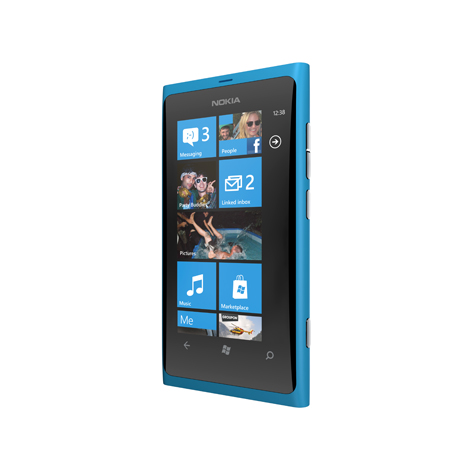
    Yesterday Nokia and Microsoft gave a preview of their upcoming Lumia 710 and 800 phones for the Australian market. It’s make or break time for both companies in the mobile space.

    The phone itself is quite nice – Windows Phone 7.5 runs quite fast with some nice features such as integrated messaging and coupled with good hardware it’s a nice experience. Those I know who use Windows Phones are quite happy with them (I’m an iPhone user myself).

    Whether its enough to displace the iPhone and the dozens of Android based handsets on a market where both Nokia and Microsoft have missed opportunities remains to be seen.

    The battle is going to be on a number of fronts – at the telco level, in the retail stores and, most importantly, with the perceptions of customers.

    Probably the biggest barrier with consumers is the perceived lack of apps, to overcome this Nokia have bundled in their Maps and Drive applications while Microsoft include their Mixed Radio streaming features along with Microsoft Office and XBox integration.

    As well the built in services, both parties are playing up their application partners with services like Pizza Hut, Fox Sports and cab service GoCatch. Although all of these are available on the other platforms.

    While application matter, the real battle for Nokia and Microsoft is going to be in the retail stores where the challenge shouldn’t be underestimated.

    Apple dominate the upper end of the smart phone market and Android is swamping the mid to low end. How Windows Phone devices fit remains to be seen.

    In Australia, if they going to find salvation it will be at the tender hands of the telco companies.

    The iPhone is constant source of irritation for the telcos as not only do Apple grab most of the profit, but they also “own” the customer.

    On the other hand, Android devices are irritating customers who are bewildered by the range of choices and frustrated by inconsistent updates that can leave them stranded with an outdated system.

    So the Windows Phone does have an opportunity in the marketplace although one suspects commissions and rebates will be the big driver in getting sales people at the retail coal face to recommend the Microsoft and Nokia alternatives.

    Overall though, it’s good to see a viable alternative on the market. For both Microsoft and Nokia the stakes are high with the Lumia range – it could be Nokia’s last shot – so they have plenty of incentives to get the product right.

    Microsoft has consistently missed the boat on mobile computing since Windows CE was launched in 1996 while Nokia were blind-sided by the launch of the iPhone in 2007 and have never really recovered.

    To make things worse for Nokia, the market for basic mobile phones where they still dominate is under threat from cheap Android based devices. So even the low margin, high volume market isn’t safe.

    For both, the Lumia range is critical. 2012 is going to be an interesting year in mobile.

    Similar posts:

  • On becoming a Captive Business

    On becoming a Captive Business

    I’ve been writing a lot recently about the risks of businesses aligning their interests too closely with one or another platform, last weekend The China Law Blog discussed the opposite – being a captive customer.

    The term “captive customer” is new to me but it’s a familiar concept; in the IT industry most of us found ourselves hostage to Microsoft’s whims at one time or another and it wasn’t a good place to be.

    Many smaller businesses and consultants fall for the trap of having just one big customer which their income becomes dependent upon.

    While Dan’s point on The China Law Blog is about manufacturing, this risk is becoming even more pressing on the web where there’s a tendency to be captured by one platform or another.

    Sometimes entire industries are captured – the Search Engine Optimisation sector is wholly dependent upon whatever Google chooses to with their search algorithm. To make things worse, no SEO expert knows exactly how Google’s equations actually work.

    We’re seeing the mass media being captured in a number of ways – by granting licenses to Facebook, one suspects unwittingly, or developing content for Apple’s iPad.

    For startups depending upon cloud services or single payment platforms like PayPal there are serious risks as we saw with the co-ordinated takedown of Wikileaks.

    In nature, the animal or plant that depends on one source of food or habitat is at risk from even small changes in their environment. Be careful you aren’t a business dodo.

    Similar posts:

  • The New Soviets

    The New Soviets

    US based investment writer Mike “Mish” Sherlock called Sony’s support line to get a repair for his recently purchased laptop computer.

    What followed was something from the 1970s Soviet Union – a simple request turned into a twelve day, 34 step odyssey of structural incompetence on the part of Sony.

    The tragic thing is Mike’s tale is all the result of mis-matched rewards in Sony’s organisation;

    • Sony’s management wanted to increase profits
    • Extended warranties were identified as a revenue generator
    • A senior manager decided cutting support costs would improve returns
    • The technical support is outsourced
    • Costs are saved by splitting contracts
    • Each outsourcer has a different IT platform
    • The outsourcing contracts have quotas and penalties
    • Individual staff are penalised for escalating problems
    • Support staff have tight performance criteria

    At every level performance indicators were met, despite the whole process costing far more than fixing the problem efficiently would have had – not to mention the loss of Mike as a customer – something that Sony can ill afford.

    Not surprisingly, the computer ended up being fixed by a local IT guy. Richard almost certainly earns a fraction of Sony’s Executive Vice President Group General Managers, or whatever the title they have to match their compensation packages is, yet he gets the job done.

    In Sony we see the Soviet model of management at work – an unaccountable, out of touch cadre of apparatchiks meeting their requirements under The Five Year Plan and are rewarded accordingly.

    Just like today’s Executive Vice President Group General Managers with their KPIs and bonuses.

    As we all know, the Soviet Union failed in 1991. One wonders when we’ll say the same thing about Sony or the dozens of other large corporations that have lost their way.

    Similar posts: