Author: Paul Wallbank

  • ABC Nightlife: Explaining the National Broadband Network

    ABC Nightlife: Explaining the National Broadband Network

    For the February 2012 Nightlife technology spot Tony and Paul looked at Australia’s National Broadband Network, exploring the pros and cons of the project designed to connect all Australians to high speed broadband.

    So what is the NBN and what does it do? Here’s some of the points we discussed along with some of the answers to listeners’ questions.

    What is the NBN?

    The National Broadband Network is intended replace the existing copper wire telephone network that was rolled out across the nation over the Twentieth century.

    Eventually the network will provide fast data access across the country replacing the older network that was designed for telephone calls rather than computer communications.

    Most of the country will be connected to fibre optic cables and areas where this is too expensive then wireless or satellite services will be used.

    Why do we need a government run national network?

    The NBN is the culmination of three decades of bad policy out of Canberra. We should remember that the Howard government struggled with how to provide high speed broadband access to the bush.

    For coalition things became particularly bad once they privatised Telstra and no longer had any power over the company’s policies.

    We’ve had a mix of ideological beliefs and rubbery figures from both sides of politics which have left Australia in the situation where the core telecoms network has had to be re-nationalised.

    What are these different ways of connecting up?

    The biggest part of the network will be fibre optic cable where the connection will run along the street like the existing telephone wires and will connect to a box outside your home or office.

    This box – know as an NTD (Network Terminating Device) is then connected into either the existing household telephone system or into a computer network.

    In areas receiving wireless and satellite subscribers will get dishes or receivers that plug into their existing home telephone or computer network.

    There are different types of wireless

    The different types of wireless networks cause confusion. The NBN is going to use 4G or LTE telephone wireless, which is what Telstra have started to roll out and Optus will be starting in the Hunter Valley around Easter 2012.

    Most of us are using 3G networks on our phones which is what the bulk of the mobile phone networks are.

    Another type of wireless is the Wireless Local Area Network. These are what we connect our home or office computers to. These plug into the existing services like the existing ADSL internet connections or the NBN’s fibre network.

    We shouldn’t confuse Wireless LANs with the mobile phone technologies being used by the NBN or phone companies.

    Who is running the NBN?

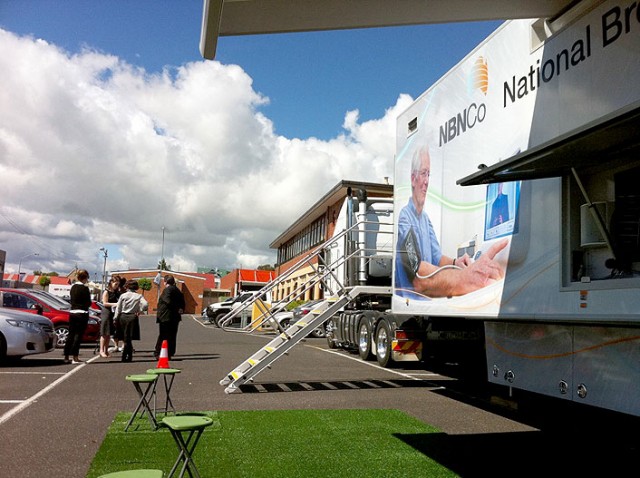
    The organisation set up to build the NBN is NBNCo. They are setting the standards, negotiating access to existing infrastructure and building the network. Their head office is in North Sydney but major operations are also based in Melbourne.

    In turn they are hiring contractors around the country to build the network, run the cables and connect buildings to the new services. Most of us will deal with those contractors and the companies selling NBNCo’s services.

    How is National Broadband Network going to work?

    We won’t talk to NBNCo directly, instead companies like Telstra, Optus, Vodafone and iiNet will buy services from them and then onsell them to us.

    Telstra are playing an interesting game on competing. They are already offering 4G services in regional areas where NBNCo hasn’t announced rollouts and they are planning to upgrade their cable TV network to the DOCSIS 3.0 standard that can sometimes deliver speeds similar to the NBNs proposed service.

    What happens if you don’t let them connect you

    If you don’t let NBNCo’s contractors connect you to the new network then you’ll have a problem a year or so later.

    The copper telephone network is going to be turned off in areas where fibre optic cables are installed so if you aren’t connected to the new system, you won’t have access.

    Anyone who’s done some building or landscaping work knows it isn’t cheap and that’s what building owners who don’t allow access will have to pay for access later.

    In Tasmania a few property owners who were just outside the NBN area asked about getting connected up and apparently the costs were prohibitive.

    One of the things to watch out for is uncooperative building managers preventing NBN contractors from accessing their premises leaving all the residents disconnected when the phone network is turned off.

    Will it really cost $14,000 to wire up your house?

    No but there will be a cost to connect the building’s existing phone lines and power supply to the NBN’s Network Terminal Device (NTD) that will be bolted to the outside of the building.

    The NTDs are designed to plug into existing phone systems and data networks so it shouldn’t be necessary to spend a fortune on connections or upgrades.

    One area where there might be problems is in buildings that have substandard wiring. Licensed electricians and cablers will refuse to work on systems that don’t comply with standards so building owners may find they are faced with big bills to bring their systems up to standard.

    Does the system work if the power goes out?

    Yes, the basic cabling doesn’t need power, although the repeaters and local exchanges will – just like the phone network. Where the system does need power is at the NTDs which will come with a battery providing two to three hours power.

    If the NBN gets hit by lightning, does it stop working?

    Lightning is an incredibly powerful force. It doesn’t matter whether we’re talking about telephones, power or fibre optic networks – anything that is hit by lightning is going to be damaged.

    We should keep in mind that the wireless alternative to fibre is more prone to lightening strikes as base stations are at high points.

    Electrical storms, and other natural forces, are a fact of life that we have to work around. The existing systems are just as prone to interruptions.

    Is it running behind schedule?

    Yes, as of the beginning of 2012 the project seems to be about six months behind. With only 4,000 connections at the end of last year instead of the 30,000 expected by the middle of last year.

    NBNCo are putting this down to delays in finalising negotiations with Telstra and other existing fibre providers.

    How much is it really going to cost?

    There’s still the $43 billion dollar number on the table, which comes from a KPMG study in 2010 although the government claims their investment is going to $27 billion.

    Of that 27 billion, the government expects to recoup it by 2034 based on a 7% return.

    In contrast the opposition are claiming the real cost is $50 billion as they are including the cost of buying Telstra’s infrastructure back.

    The real number is anyone’s guess. The track record of both political parties and Canberra’s bureaucrats on estimating costs on projects like this is less than impressive.

    Is it really worth the money?

    We should keep in mind a lot of this money was going to be spent by Telstra or the other providers anyway over the next two decades as the copper telephone reached the end of its life.

    The risk was we would see something like the cable TV rollout where the big players fought over the most lucrative parts of the country and ignored the rest. The NBN avoids that.

    There are real concerns though as the NBN is running behind schedule, the procurement processes – particularly the construction contracts – appear to have been poorly handled and there has been little discussion about the technology options.

    Overall though, this is an opportunity to get the 21st Century infrastructure right. Where Australia failed with the roads in the 20th Century and the trains in the 19th, we can get this one right.


    Similar posts:

  • The Internet Kool-Aide Machine

    The Internet Kool-Aide Machine

    Every few months, the web lights up with hype about the latest technology or website. For a few weeks, every tech conversation mentions this hot new product.

    Almost always this hype is driven by the company in question duchessing a few key “opinion leaders” in the tech, social media or other circles. These folk start writing up this product and, if they are lucky, the stories get picked up by the broader media and the product becomes “hot.”

    The aim is to find the greater fools, for the investors and founders of these business they want to cash out by selling the operation to a bigger entity.

    When you read the hype about the latest user generated, online sharing social media service that’s growing at a remarkable rate be aware you’re actually seeing a pitch to a big company being framed along the lines that “you can’t afford to miss out.”

    By all means sign up to the service to have a look but don’t buy the hype and remember you’re not the customer – the gullible big business manager looking for the next big thing is.

    Image courtesy of Blary54 through sxh.hu

    Similar posts:

  • Why Dick Smith is wrong about overseas buyers

    Why Dick Smith is wrong about overseas buyers

    Last week’s announcement that Woolworths will sell their Dick Smith chain of electronics stores wasn’t surprising and neither was the reaction of the chain’s founder to the idea of the business being sold to a foreign buyer.

    For all his legitimate concerns about Woolworth’s growth model, Dick Smith is wrong about the sale of the stores. It’s almost essential for Australian consumers and business that the chain is sold to a foreign retailer.

    When Dick sold his business to Woolworths in the early 1980s it was the beginning of a long consolidation process across Australian industry that now sees most business sectors dominated by duopolies or – at best – three or four incumbents.

    In retail, the Coles and Woolworths duopoly dominates groceries, liquor and petrol. The power of these companies was illustrated yesterday with Coles’ announcement of price cuts to various greengrocery lines.

    Having a new player enter the market is always an improvement; in neighbourhoods where foreign retailers like Costco and Aldi operate or where a keen, smaller operator decides to compete with the big boys the response is always better prices and service.

    More importantly bringing in overseas owners will bring in fresh thinking and new ideas. New blood in the retail sector may even stem the brain drain where many young, innovative future business leaders are forced overseas because of the limited opportunities in the incumbent duopolies.

    Where Dick is right is that the electronics retail business is dying as fat profits in the sector are a distant memory in what is now a tight margin, fast moving consumer goods industry. To make things worse, consumer electronics aren’t even fast moving in the post GFC economy.

    Adding to the retailer’s pain the collapse in margins has happened at the same time commercial rents have risen dramatically with Sydney now being cited alongside Hong Kong, London and New York as the world’s costliest shopping strips.

    While suburban shopping centres don’t have the same rents as the Pitt or Bourke Street Malls, they still have risen dramatically in the last decade, catching all retailers in a vice between rising costs and falling margins.

    In order to maintain profits, training and staff development have been slashed. Once up a time, a customer would go to a Dick Smith or Harvey Norman store to get informed advice on the best gadget, those days are also long gone as poorly trained staff fight to sell the products with the best commissions.

    Owners of the stores have made it harder to recruit and train motivated staff when employer consider hospitality and retail jobs to be temporary, low esteem positions with few prospects.

    This deskilling isn’t just an issue for the retail industry – it’s something we’ve seen across the Australian economy in the last thirty years. As training and skills development has been seen as an unnecessary business cost.

    Tourism Australia chairman Geoff Dixon’s recent comments about the Australian tourist industry having to accept being a high cost destination is a symptom of this disconnect. The local tourism industry has no chance of moving up the value chain when there is no service culture among staff and no long term management vision to develop one.

    It would be unfair to just pick on any one individual or business for these problems. We have a structural problem in the Australian economy that’s fuelled by entrenched beliefs and habits of a stagnant senior managerial class.

    We desperately need new people and ideas in Australian management to shake up the staid duopolies and oligopolies we’ve allowed to develop in the last three decades, that’s why Dick Smith is wrong to say a foreign owner for the electronics chain he founded would be bad for the country.

    Image courtesy of Icelandit on SXC.hu

    Similar posts:

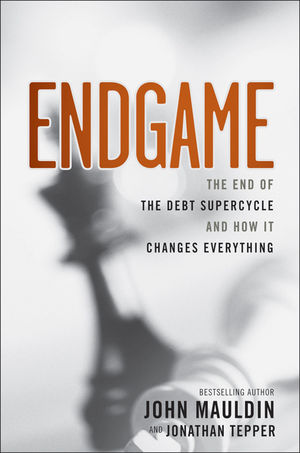
  • Book review: Endgame by John Mauldin

    Book review: Endgame by John Mauldin

    “There are no good choices – only bad ones” could sum up John Mauldin and Jonathan Tepper’s Endgame which looks at how our economies will evolve the end of the late 20th Century debt “supercycle” that has driven the world economy for the last fifty years.

    Endgame examines the choices that confront governments, societies, businesses and investors as the world economy adapts to the realities of the West’s aging populations and excessive debt levels.

    Much of Endgame relies on This Time Is Different by Carmen Reinhart and Kenneth Rogoff which the examined eight centuries of financial crises. While Reinhart’s and Rogoff’s conclusions are that speculative bubbles driven by debt almost always result in a banking crisis and painful economic restructure, each episode does have unique characteristics.

    In each case governments have three basic choices; reforming spending which is rare and maybe impossible given the debt levels in many nations, inflating debts away as Western governments have done since WWII or through outright defaults which have been associated with less developed nations.

    As we see with the convulsions the European Union is currently going through and the massive support given to banks around the world since the 2008 banking crisis, the default option is the one which governments will avoid at all costs.

    While the bulk of the book concentrates on the US, John does dedicate several chapters to the how the debt endgame will play out in other nations including Japan –“a bug in search of a windshield” – the UK, Eastern Europe and Australia, where he finds a massive property bubble that he believes could be the most spectacular endgame scenario of all.

    The clear lesson from Endgame is the post World War II social compact of working taxpayers supporting the aged, the sick and unemployed is over and was only propped up the illusion of wealth generated by loose credit and financial engineering throughout the 1980s, 90s and early 2000s.

    Some are hoping the Chinese economy can provide the global demand that was provided by US consumers. While Endgame doesn’t specifically look at this aspect, it’s unlikely China’s economy can do this.

    With consumers and governments now exhausted by debt and at the limits of what they can spend, the assumptions that have driven the economy along with our investment and consumption patterns of the last fifty years no hold true.

    Endgame is primarily a book for investors and John Mauldin’s emphasis is on where the safest investments will be in at the end of the debt supercycle. His view is it depends on whether governments choose to eliminate their national debts through deflation or inflation.

    For business owners, wage earners and retirees this is an important question too and Endgame describes what the consequences for everyone are under either scenario.

    The message of Endgame isn’t overwhelming negative; John Mauldin also looks at where the opportunities will lie after the credit endgame plays out. “We don’t know where the jobs will come from, but they will come” is another theme of the book.

    Whether you’re an investor or a business affected by the changing economy or building those businesses of the future, this is an important book for understanding the changing economic world in which we live.

    Similar posts:

  • Is it time for Microsoft to make a clean break?

    Is it time for Microsoft to make a clean break?

    Over the weekend Christina Bonnington in Wired magazine looked at how Microsoft is struggling to decide whether to have separate operating systems for their tablet and desktop products – as Apple have – or design one that works on both.

    Creating another version of Windows risks further confusing the marketplace given Microsoft already has between its four different versions of Windows and six flavours of Office.

    Although Apple haven’t suffered at all by having different operating systems. Mac OSX is more popular than ever and iOS dominates its markets.

    Perhaps its time for Microsoft to copy something else Apple did and have a clean break – rework all the Windows code and build a new system.

    Apple did this when they introduced OSX in 2001. Among other things it didn’t support floppy disks, the Apple Device Bus, floppy disks or the networking standards used by the older systems. At the time there were howls of protest from long suffering Apple true believers who had invested a lot into the earlier versions of Mac OS.

    Despite the protests and early hiccups – we sometimes forget that the first version of OSX, named Cheetah, was terrible – Apple’s clean break with the past was a great success.

    Microsoft’s selling point has been backward compatibility; software designed for one version of Windows is expected to work on the next version.

    Backward compatibility is the reason for the spyware epidemic of the early 2000s as Microsoft ignored Windows XP’s security features so that they wouldn’t have to ditch older code in other products like Office.

    Similarly, the contradiction of redesigning the Windows operating system while minimizing disruption to existing users was one of the reasons why Microsoft Vista was such a disaster.

    Perhaps it’s time for Microsoft to bite the bullet and bring Windows into the 21st Century.

    Whatever they decide to do, they better hurry as Apple and Google are carving out dominant positions; waiting until 2013 or 14 for the next version of Windows and Windows Phone may be too late in a market where Microsoft is quickly becoming irrelevant.

    Similar posts: