
Author: Paul Wallbank

  • Is there an entrepreneurial elite?

    Is there an entrepreneurial elite?

    In a recent Atlantic Magazine article Chrystia Freeland charted the rise of the New Global Elite and suggesting “our light-speed, globally connected economy has led to the rise of a new super-elite that consists, to a notable degree, of first- and second-generation wealth. Its members are hardworking, highly educated, jet-setting meritocrats who feel they are the deserving winners of a tough, worldwide economic competition”.

    A few days later The Economist followed up this theme with a discussion on whether we should worry about the rising wealth of the entrepreneurial elite.

    While there’s no doubt there is a global elite, enjoying fine wines at the World Economic Forum at Davos while congratulating themselves on their successes, wisdom and hard work. The question really should be are these people really entrepreneurs?

    Some of the self appointed global elite are highly paid executives. One of the notable aspects of the corporate sector is the majority of managers are not risk takers – in most organisations, public or private, taking risks is going to jeopardise one’s career – instead it’s the risk adverse who are rewarded with the senior management positions.

    However even the managerial classes are outnumbered by the financial wizards. The biggest stimulus to the global elite’s riches was the financial market deregulations of the 1980s and 199os. As our society’s forgot the lessons of previous generations and released the regulatory restraints on banks, a whole new wave of opportunities appeared to make huge fortunes. The loose credit of the early 21st Century leveraged and amplified those fortunes.

    Financial Innovation became the key to wealth, although as former Federal Reserve chief Paul Volker observed “I wish someone would give me one shred of neutral evidence that financial innovation has led to economic growth—one shred of evidence.”

    The killer to the idea is that financial innovation is entrepreneurial are the consequences of the two decades where the financial markets reigned supreme – trillions of dollars in bailouts.

    That the bulk of the global elite relied up bailouts and government stimulus packages gives lie to the concept that most of these people are entrepreneurs; genuine entrepreneurs take real risks and accept the consequences if their venture doesn’t work out.

    While it’s true that some of the “global elite” include individuals who have built up enterprises and taken risks with their personal fortunes and reputations, it would be a mistake to describe this group as being entrepreneurial. The bulk of this global elite are speculators and managers who’ve been richly rewarded by a system setup to guarantee their wealth.

    You’ll find more entrepreneurs running stores in your local mall than you will walking the privileged halls of Davos or any of the other expensive haunts of the global elite.

    Similar posts:

    • No Related Posts
  • Losing faith in the cloud

    Losing faith in the cloud

    Over the last few years, I’ve been a great believer in the benefits of cloud computing but events of the last month have shaken my faith in trusting data to another organisation’s servers.

    The most immediate challenge was a trivial, but irritating, crash last weekend when I lost my monthly client newsletter just before sending. The really frustrating thing was there was over a month’s worth of relevant, interesting web links for clients along with six hours lost work in writing the vanished work.

    While trivial, my little disappointment illustrates the fundamental problem we have with cloud computing – we can’t trust the businesses and governments  who control the net.

    Simply put, the Internet itself isn’t as trustworthy as we’d like.

    Egypt’s closing Internet links, Wikileaks being hounded off the net and the Queensland floods all illustrate this on a far bigger and more important level, we cannot take the cloud or Internet access for granted and when service is interrupted the failure is total.

    Natural disasters like the Queensland floods or the 2009 Victorian bushfires give rise to the trite response that “the Internet is designed to survive a nuclear war.” This is true, but view overlooks the Internet maintains service by finding a detour around the damaged areas

    Which is problematice if you find yourself in a distressed area and the Internet has routed itself around you and your modem, which is something we should keep in mind everytime someone suggests using social media tools for disaster management.

    It doesn’t take natural disaster for you to lose access to your data. The hounding of Wikileaks off the commercial, US operated parts of the web shows how much of the Internet is controlled by corporations enforcing spurious terms and conditions.

    You don’t have to be Julian Assange for this to happen to you, last year a Sydney Jeweller had her Facebook page shut down because her doll showed too much nipple while last week an English healthcare assistant had her account suspended because she had the same name as someone famous.

    Like Julian, both had their access frozen without notice and struggled to receive any sensible answer from their service provider. Unlike Julian, subsequent media embarrassment finally forced Facebook not only to acknowledge their customers’ concerns but also reinstated the services.

    Far more worrying are government controls. Until last month, most of us in Western democracies – this writer included – conveniently ignored how quickly telecommunications companies and Internet Service Providers will accede to the demands of governments.

    Both the Egyptian shutdown and Wikileaks reminded us how wrong we were. Governments of all persuasions can and will shut down Internet services to suit their domestic political agendas.

    Here in Australia there are proposals to filter the Internet or shut down accounts to protect us from what Canberra and various lobby groups deem to be copyright infringement, pornographic material or video games unsuitable for 14 year olds to play.

    Even without the more extreme proposals being introduced we’ve seen the websites of Queensland dentists and political satire sites being blocked or shut down on these grounds. In both  cases the actions were taken without the site owner’s knowledge.

    As our businesses and society in general becomes more dependent upon the Internet, we need to keep in mind there are risks which need to be managed. Cloud computing itself is a great business tool but we need to understand the risks and costs of depending upon other people.

    If you’re looking for cloud services, you’ll need a product that offers a backup to your systems. Business is built on trust and right now there isn’t a lot of it around in the online world.

    Similar posts:

    • No Related Posts
  • Transition effects and changing employment

    Transition effects and changing employment

    On Australia Day, it’s worthwhile considering one group of convicts in the early fleets who stood against an earlier time of economic change.

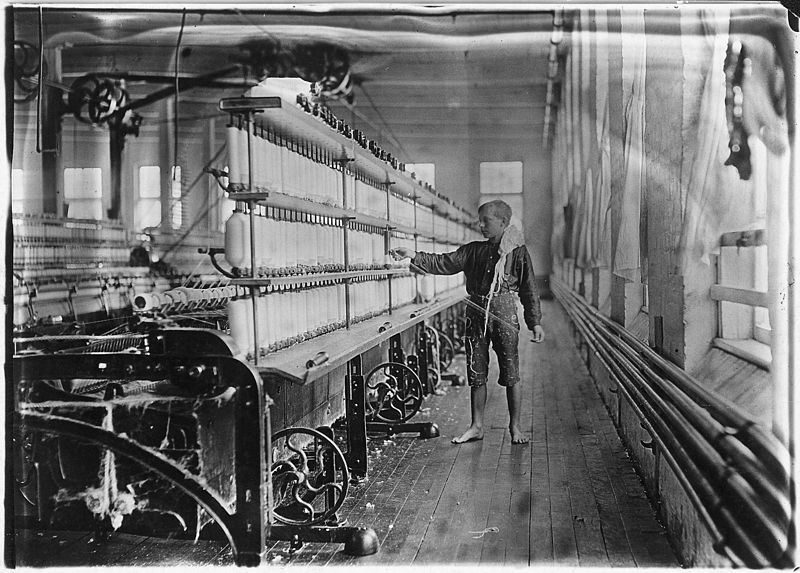
    As the automation of the cloth weaving process accelerated through the 18th Century,  many trades in the English fabric industry, such as Croppers, found their skills in great demand.

    Yet by the early 19th Century, their trades were near extinct as automation reduced the cost of weaving fabric dramatically and labourers replaced skilled workers.

    This massive wave of change and loss of once well paid skilled jobs helped accelerate the Luddite movement, many of whom were transported to Australia for their role in attacking factories using the new technologies.

    We should keep the plight of the croppers and Luddites in mind in today’s period of massive economic and technological change.

    One notable aspect of the workforce when industries are going through major changes is how many high paid skills and business niches pop up for a short time before being overwhelmed by change.

    We shouldn’t consider that many of the services and opportunities in today’s economy are permanent, quite a few businesses and skills that have appeared in the last two decades might not survive this one.

    A good example is the web designer. In 1996, a punk with a little basic HTML knowledge could call them selves a web developer and three years later many of those punks were driving Porsches and Lamborghinis. By the mid-2000s most of those expensive cars were just memories for those who assumed those basic skills set them up for life.

    Today we see the same thing with social media, group buying and cloud computing. Many of the services we see – some of them being valued for billions – are transition effects as markets adjust to changed conditions.

    As we begin to understand the effects of trading our privacy for connections, trusting valuable data to anonymous corporations and mass selling for discounts, we’ll see consumers, governments and business adapt.

    Some of today’s superstars will adjust to those changes and become the next Microsoft or General Motors while many others will fond memories after their reason for existing vanishes.

    We should grab opportunities when we see them – many of the thousands of Groupon clones are doing exactly that ­– but we shouldn’t assume they are permanent and forever.

    A time of change means none of us can assume our livelihoods, skills or assets are safe, just as those 19th Century industrial workers found when they were transported to Australia.

    Mule-spinning room in Chace Cotton Mill in 1909 by Lewis Hine courtesy of Wikimedia

    Similar posts:

  • Tell ’em they’re dreaming!

    Tell ’em they’re dreaming!

    Yahoo!7’s purchase of Australian group buying service Spreets last week is great news for the Sydney startup’s founders and investors, but these deals aren’t so great for our economy, businesses and innovation.

    The mark of the late 1990s tech bubble was the “renovation rescue” model of building start up businesses. Just like keen property speculators, this model involves an angel or venture capital investor putting in enough money for the founders to do enough – either by growing the business or embarking on a PR campaign – to attract the attention of potential buyers.

    For the business founders that can be a lucrative result, but it often distorts the priorities of a new endeavour as the investors are focused on a quick exit instead of building a durable, long term enterprise.

    This has a bigger effect on markets as incumbents buy out young, smart and innovative new entrants. Good examples of this were the buyouts of successful online shopping services by the major retailers in the early 2000s.

    Once purchased, the large corporations let innovation and fresh thinking in the start up business wither and die as the larger business’ bureaucracy and management hubris subsumes the acquisition. Few acquired businesses avoid this fate.

    Which brings us to the buyer in the Spreets transaction. At the press conference announcing the deal Yahoo!7’s CEO Rohan Lund said “we’re seeing social, mobility e-commerce completely changing the way we use the web at the moment.”

    Rohan’s absolutely right on this – location based services are changing advertising and retail – the problem is Yahoo!7 has no local business capacity and relies on News Limited’s True Local directories.

    Perversely if Yahoo!7 are successful in building up their mobile, location based services it’s actually News Limited that will get most of the benefit.

    A similar situation exists with Cudo, the competing joint venture between PBL and Microsoft, which relies on Sensis’ Yellow Pages.

    That Rupert Murdoch and Telstra stand to gain as much, if not more, from the efforts of Yahoo!7, Microsoft and PBL is an indicator of just how fuzzy the thinking is behind many big business acquisitions.

    A bigger threat to these ventures is Google who last week announced their intention to start up their own group buying service. Given Google already have a local business platform that supports coupons, it’s going to make them a tough competitor.

    Assuming big corporations will dominate this space may be flawed as the group buying business relies on hands on, aggressive sales people feeding a pipeline of interesting and compelling offers to the subscribers. Short the daily deals start becoming boring or perceived poor value, subscribers will ignore the emails and take their shopping elsewhere.

    Strangely of all the Australian big businesses in this space Sensis, with their Yellow Pages sales network, and News Limited, through their media selling and classifieds networks, should have the capacity to launch successful competitors.

    Despite Sensis launching their own group buying service it’s hard to think that either Yellow Pages or True Local can succeed in this space. Similarly with Google, the “hands-off” web 2.0 way of doing business simply won’t work in a market that requires a motivated sales team to drive the product.

    Recognising that lack of selling expertise probably drove Google to offer 6 billion dollars to buy the group buying innovator Groupon last year. An offer which Groupon rejected.

    Google’s track record on successfully integrating acquisitions outside of online advertising has been poor and is probably one of the reasons Groupon CEO and founder Andrew Mason rejected the offer.

    Andrew Mason, like Mark Zuckerberg at Facebook and Geoff Bezos at Amazon, rejected the VC ‘renovation rescue’ model and while it’s early days yet for Groupon, there’s many indications they’ll be able to build a game changing, innovative business just like Amazon and Facebook.

    While we should congratulate those like Spreets who do manage a big buyout, we should keep in mind those stories are the exceptions and don’t represent the experience of most business founders.

    New businesses really change our society is when they challenge the incumbents and build new industries. We should keep that in mind.

    Similar posts:

    • No Related Posts
  • Protecting yourself on Facebook

    Protecting yourself on Facebook

    Social networks are great way of keeping in touch with friends, family and colleagues. With 500 million users, none is a more effective tool than Facebook.

    Keeping in touch with friends and relatives though does have a downside, sometimes you might give away more than you intend to. When you share with friends on a social service, everyone in your network can see what you are doing.

    To make things worse, many social media businesses will give away their customers’ private information to make a few dollars as the controversy over Facebook’s recent changes to their privacy settings and the company’s subsequent backdown shows .

    Because this information is valuable, organisations are prepared to pay for it and the bad guys are eager to trick it out of you. Given the risks of identity theft, stalkers or all manner of Internet crazies finding you online, it’s important to guard this information.

    Facebook don’t make it easy to protect yourself, but you can hide key information.

    Take off personal data
    The first, simple step to protecting yourself is to move as much data as possible off your profile – home address, phone number, relationships, sexual orientation, birth year  – are a few things that simply don’t need to be online. Take off everything that could potentially cause problems, you may need to use some judgement on what you’re comfortable sharing with your online contacts.

    Birthdays are a good example of where you should use that judgement. Facebook’s quite a good tool for reminding you of birthdays, but your birth date is also an important part of identity theft. If you do want to share a birthday, never put your birth year in – your relatives and friends have a good idea of how old you are – and you might want to consider putting the date a day or two earlier than the real day.

    To change your Facebook profile information, click on the Profile link on the right hand side of your Facebook home page, you can edit all your details from there as shown below. Remember to click Save Changes after making each change and move between the different categories to ensure you’re only sharing what you’ve comfortable with.

    Changing your Facebook profile informationSet your privacy
    Facebook makes assumptions about what you want to share with your network of friends. This is not always in your interests and you should regularly review what your settings are as Facebook have a habit of changing how the privacy settings work.

    To enter the privacy settings, click Account and Privacy Settings as shown below. Once you’re in the Privacy Settings, click on Custom option and Customise Settings. You can then set your details to only be accessible to you or your friends. The following example shows a recommended configuration which may be suitable for you.

    Facebook Privacy Settings

    Choose your friends
    Many people treat Facebook and other social media services as a competition to gain as many friends, connections or followers as possible. This isn’t the point and on Facebook in particular it opens you up to a number of risks.

    Once someone is your Facebook friend, they are privy to any information you choose to share and much of what your other friends post on your wall. The main risk is that new Internet is not quite as stable or honest as you thought. By accepting friend requests from people you don’t know you increase the risk of letting risky individuals into your life, your family and your group of friends.

    Another danger lies in the Facebook places feature which allows your friends to check you into locations. A malicious “friend” or a practical joke could see you being advertised as having checked into a place you really don’t want to be associated with.

    If you decide that is an acceptable risk, then revise the above recommendations on your profile information. If you are promiscuous in who you befriend online then be very careful about the information  shared with them.

    Be careful which applications can see you
    Facebook applications are one of the reasons for it’s success. These applications – or mini-programs – allow you to play games, enter competitions and sign up with other services quickly.

    The proposed change in January 2011 to the information Facebook gives out to application owners would have allowed a lot of your personal information to be shared with third party developers. As it is quite a few of these applications “scrape” information from the various services you subscribe to. A good example is with Twitter where private, non-public, messages can be seen by some of these services.

    You should only allow applications to use your Facebook connection details if you absolutely trust them; right now, there are few services people can or should trust.

    If you have been allowing Facebook to connect your subscriptions to other websites, then you may want to review who you’ve given trust to. To do this, click Account then select Privacy as shown above. In the Privacy page click Apps and Websites and the page shown below will appear. By clicking Edit Settings you can then delete applications or change what they are allowed to do on your profile.

    Facebook Privacy Settings

    Despite the risks of stalkers, identity theft and various privacy issues, Facebook is a valuable tool for millions of people who want to keep up to date with their friends, relatives and colleagues. By being sensible in choosing your online friends and what you share with them, it is a great website for keeping in touch with people you might otherwise lose track of.

    Similar posts:

    • No Related Posts