Author: Paul Wallbank

  • ABC 702 Weekends: How to run a sustainable computer

    This Sunday Simon and myself will be looking at how to run computers in an evironmentally friendly and sustainable way.

    Tune in at 702 on your AM radio or stream us online from the ABC Website.

    Your comments and questions are welcome so call in on 1300 222 702 or SMS on 19922702.

    More information on our LinkedIn page.

    Similar posts:

    • No Related Posts
  • Has Microsoft learned anything from Vista?

    Has Microsoft learned anything from Vista?

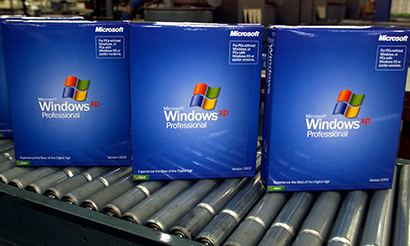
    CNet’s Ina Fried reports Microsoft has set an October 22 release date for Windows 7, their new operating system to replace the flawed and unpopular Windows Vista.

    In an article earlier this year, Ina quoted Microsoft Senior Vice President Bill Veghte that Microsoft has learned important lessons from Vista.

    One lesson they appear not to have learned is how multiple versions of the product confuses the marketplace and tarnishes their brand.

    That we still have FIVE versions of the new system, and that they’ve locked themselves into a release date before the final Release Candidate version, doesn’t bode well for Windows 7.

    As usual, the advice for most computer users will be to sit and wait until the first Service Pack is released. I wonder if Microsoft will repeat the bluff of claiming there will be no service pack which failed so dismally with Vista?

    Let’s see if they’ve actually learned anything from the humiliation that was Vista.

    Similar posts:

    • No Related Posts
  • The Future Summit 2: Artificial divides

    I took a lot from the Melbourne Future Summit, much of it good and some of it worrying.

    One of the worrying aspects was the hostility from the “creative thinkers” towards Engineers and scientists.

    This was apparent in the Innovation Imperative seminar where many of the panel’s and audiences’ comments were notable for their hostility towards Engineers and scientists along with their view it was time for some “creative thinking”.

    Most of questioners from the floor went as far to blame Engineers and scientists for the Global Financial Crisis.

    This is odd as scientists and Engineers are no more responsible for the banking sector’s financial engineering any more than artists are responsible for the bankers’ creative accounting.

    Creating artificial barriers between “creative” and “scientific” thinkers is dangerous and foolish. Our greatest Engineering and scientists are creative thinkers by definition. Many great artists have applied science to their work.

    If we force people into these pigeon holes where an Engineer can’t be creative and an artist can’t use science then we are all the poorer for it and less equipped for the challenges ahead of us.

    Similar posts:

    • No Related Posts
  • ABC Nightlife, 28 May 2009

    abcbanner_localI’ll be doing the May Nightlife with Tony Delroy and Laurel Papworth to discuss the business uses of Social Media.

    Some of the topics we’ll cover are;

    •  how do we make sure that our photos, videos and jokes are seen only by our friends and not by the boss or our mum?
    • If you do lose your job, how can you use social media to get another one?
    • how can businesses use social networks to find staff?
    • explain how business and people can get loans through social networks
    • why workplaces don’t trust these tools and ban them
    • what downsides are there of social media? What are the legal traps and risks to your reputation?

    We’ll be live across Australia on ABC Local Radio. The show starts at 10pm and we’ll be taking questions from around 10.30. Call in early on 1300800222 in Australia or +61 28333 1000 for international callers.

    Tune in through your local ABC station or stream online through the Nightlife website.

    Similar posts:

    • No Related Posts
  • The Australian Future Summit

    The Future Summit 2009 was two days of discussion on Australia’s future challenges and opportunies by the Australian Davos Foundation.

    The idea is terrific – all too often Australia’s political, business and economic discussion is bogged down in soundbites and opportunism. So an event that gets people thinking beyond the next opinion poll or financial report is welcome.

    While it did spark thinking, it was probably not in the way many attendees hoped.

    Twitterer IRLDexter asked Suits,suits,suits… Does the style and conformity reflect the thinking?.

    Sadly, the answer was “yes”.

    The Future Summit showed the Australian establishment is pretty well homogeneous. There’s not a great deal of dissent among the nation’s political, public service, academic or business elites.

    Probably the clearest example of groupthink was in the economic discussions. The various panels’ opinion of the future can be summarised with “Australia’s right mate; once the Chinese get their act together we’ll be back on track to a self funded, negatively geared retirement, powered by nuclear energy and clean coal”.

    That’s nice, but that view really lacks vigour at the very least it’s a lazy view of Australia’s future direction. We need more heretics and more new ideas. 

    On the economics front a few heretics, say a Steve Keen, might have pointed we need a plan B just in case the Chinese economy doesn’t come to our rescue.

    The Future Summit is a great idea and hopefully its going to continue into the future, but to provide some real forward thinking and debate, we’re going to need more outsiders to upset the Australian establishment’s narrow view.

    I look forward to next years summit. Hopefully we’ll have some heretics, entrepreneurs and younger voices to balance the establishment’s complacent conformity.

    Similar posts:
    • No Related Posts