Author: Paul Wallbank

  • ABC Nightlife: Beyond the ideas boom

    ABC Nightlife: Beyond the ideas boom

    While Australia talks about innovation, some of our most exciting tech companies are moving to Silicon Valley. For the May 2016 ABC Nightlife we asked why are they moving and what can we do to encourage them to stay down under?

    Along with discussing why Australian startups are moving to the United States we also looked at some of the announcements out of the recent Google I/O conference. If you missed the show it’s available for download from the ABC website.

    If you’re in Sydney, we’re also debating whether innovation really exists in Australia in a Cloud Crowd debate on June 9. Tickets are free.

    Some of the questions Tony and I looked at included;

    • Who is making the move over the US?
    • What reasons do they have for going over?
    • Why aren’t they going to Europe, the UK or SE Asia?
    • Is Australia having a brain drain?
    • It seems the much vaunted Ideas Boom has been lost in the election, is it over?
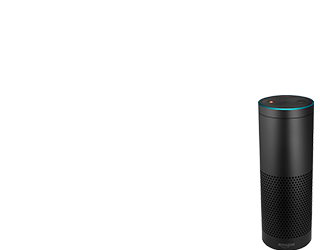
    • One of the things Google announced at Google I/O was their new Google Home device which listens to your spoken commands to control the house. Doesn’t Amazon already have one of these?
    • Another thing Google announced was they are looking at putting intelligence into every device. How far away is that?

    Cloudcrowd innovation debate

    On June 9 in Sydney we’ll be debating whether innovation is a myth in Australia, tickets are free and you can sign up through Eventbrite.

    Join us

    Tune in on your local ABC radio station from 10pm Australian Eastern Summer time or listen online at www.abc.net.au/nightlife.

    We’d love to hear your views so join the conversation with your on-air questions, ideas or comments; phone in on 1300 800 222 within Australia or +61 2 8333 1000 from outside Australia.

    You can SMS Nightlife’s talkback on 19922702, or through twitter to @paulwallbank using the #abcnightlife hashtag or visit the Nightlife Facebook page.

    Similar posts:

    • No Related Posts
  • Rolling out innovation on 5G mobile networks

    Rolling out innovation on 5G mobile networks

    “We’re in the flip phone era of 5G networks, people don’t realise today’s 4G mobile standards were written for the era of the flip phone,” says John Smee, the Senior Director of Engineering at Qualcomm Research

    John was speaking to me at chipset manufacturer Qualcomm’s San Diego head office to discuss the next generation of mobile phone services.

    Putting together communications standards isn’t a simple thing, as John says “what we’re discussing now is what today’s five year olds will be using when they turn fifteen.”

    John sees the new standard as giving the next generation of internet giants their market opening, pointing out companies such as Facebook and Uber benefitted from the rollout of 4G networks and some of today’s startups will get a similar boost from 5G services. “A few clicks and you’ve ordered a ride. That wouldn’t have been possible without 3G connectivity, high powered smartphones and networks that are scalable.”

    “What are going to be some interesting new startups that become huge multibillion dollar industries from 2030,” he asks. “By definition we don’t understand the future.”

    For telco executives being a ‘dumb pipe’ is one of their nightmares and John believes they can avoid that fate in a 5G world by concentrating on their advantages with licensed spectrum. “If they are looking a high reliability and low latency services then the quality of the connectivity they can offer becomes essential,” he says.

    While the standards groups continue to work on the 5G standards, the technologies continue to evolve. John Smee’s message is that these new products are going to offer opportunities for new companies.

    The trick is to figure out which of today’s startup companies will be the Uber or Facebook of 2025.

    Similar posts:

    • No Related Posts
  • Voice technology and the generosity wars

    Voice technology and the generosity wars

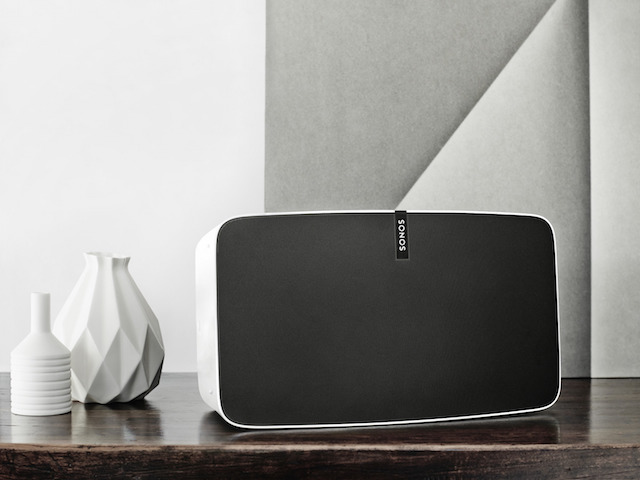
    The winner of the upcoming fight over voice technologies will come down to who is the most open and provides the best utility believes Tad Toulis, VP for design at smart speaker manufacturer Sonos.

    A struggle is looming between the different voice systems believes Tad Toulis, VP of Design at smart speaker manufacturer Sonos.

    We were speaking at Sonos’ Santa Barbara office the day after Google launched its Google Home voice activated hub to compete with Amazon’s and Apple’s Siri systems.

    “There’s a little bit of syntax difference with every device we use, so we’re about to re-enter this environment where we have competing formats.” states Toulis, hinting at the days of competing network types operating systems and file types.

    For Sonos, that fight between formats is an opportunity believes Toulis. “Sonos was very early into this space, so much so that it’s had a few lives. The original proposition was a way to get people who were into music to have access to their digital music and enliven their home with that music.”

    “At a certain point in that arc, that category started to shrink a little bit and streaming started to emerge. Now streaming has become mainstream and we’re facing another cycle.”

    Generous systems

    Voice though is a social thing and that changes how we interact with devices Toulis believes, “we want to talk out loud in generous way to a generous system.”

    “What people want is a supportive, powerful experience that creates good options day to day,” says Toulis. “The technology is fast approaching a tipping point where it’s very human centric.”

    “The promise is to figure who can do that in the most natural way so you’re not thinking about the syntax and more about the experience.”

    Finding a place at the table

    Like most smaller players in the marketplace, Toulis sees Sonos as being a nuetral intermediary between with the various technology empires.

    “Sonos offers a place in that conversation. We also approach it in a different way because it’s not one of our businesses, it is our business.”

    “I assume we’ll do what we’ve done with the music services. We’ve always believed that we do well when there are many players.”

    Winning the voice wars

    When asked who is likely to win the voice wars, Toulis is quite rightly guarded, “what I’ve seen over my career in technology is what wins is what works for people, it’s not always the best technologies that win. What wins is the technology value proposition, here’s a need that hasn’t been satisfied and here’s a way of doing it that is sticky.”

    “The one that creates the solution with the least resistance will win,” says Toulis. “The best solutions are usually pretty obvious. The problem is you have a bunch of specialists looking at it, they can’t see how obvious it is because they are looking past the target. They’re either very close up.”

    While Toulis’ view is attractive, the risk for companies like Sonos is the technology empires find their business models aren’t suited to being open or generous and controlling access to their services is more compelling for their managers and shareholders.

    Hopefully open web and data will prove to be the market’s driving forces and certainly Ted Toulis’ and Sonos’ views are what users would prefer, the giants though may not prove to be so generous.

    Similar posts:

    • No Related Posts
  • Managing the circular firing squad

    Managing the circular firing squad

    Earlier this week I had the opportunity to interview Evan Goldberg, the founder of Netsuite at the company’s Suiteworld conference in San Jose.

    While one of the topics we covered was Goldberg’s support of the BRAC Foundation, I was also keen to discuss the company’s complex senior management and board dynamics.

    Along with being the CTO, Goldberg is also Chairman of the Board which means CEO Zac Nelson answers to him on board matters but the roles are reversed in their executive management roles.

    To make matters even more complex, Chief Operating Officer Jim McGeever is also the board’s President so he also answers to Nelson in executive matters while presiding over both of the others as a director.

    “We call it the circular firing squad,” laughed Goldberg when I asked him about it. “We are all incredibly committed to the company and we get along really well. We get our egos out of the way and we just want to do the right thing.”

    “Humour is a very important part of it,” Goldberg observes. “Fundamentally it has to be the right people for that to work. Three is a good number as you get to vote on the matter.”

    So Goldberg’s view is Netsuite’s arrangement works because the three are friends and leave their egos out of decision making.

    Goldberg’s observation is true of any successful business relationship – like a succesful personal relationship a thriving business partnership relies on respect and the individuals being able to give a little, or a lot, without bruising their egos.

    Ultimately though, it’s interesting to observe how tolerant investors are towards such arrangements. As an independent, outside investor having too many Executive Directors on the board dilutes the critical management supervisory role of the board and that can’t be encouraging for shareholders.

    Tech companies though get some slack from investors given their relative youth and market dynamics so it’s not surprising Netsuite gets away with this. The bond between the senior executives must also count as well.

    Similar posts:

    • No Related Posts
  • Pivoting the business of speakers

    Pivoting the business of speakers

    Today I had the opportunity to tour the Santa Barbara headquarters of smart speaker manufacturer Sonos. I’ll be writing up a some more detailed accounts of some of the interesting things this fascinating company does.

    One thing particularly interesting thing about Sonos is how it was established by four veterans of the original dot com era who had no experience in audio hardware or technology but had a vision of how they would like the stereo system of the future to look like.

    That vision hasn’t come without change for the company, the shift to streaming has meant Sonos itself has had to pivot away from its original business model which entailed layoffs for the fast growing company last year.

    How Sonos is navigating that shift, along with fostering a culture of openness and innovation is an interesting story that I’ll be telling over the next few weeks. In the meantime, my head is spinning from information overload.

    Similar posts: