Category: Australia

  • More National Broadband woes

    More National Broadband woes

    This is not good for the National Broadband Network project; contractor Service Stream announced it was handing back the Northern Territory rollout contracts to the Australian Security Exchange this morning.

    It raises serious questions about the timetable of the project.

    Service Stream advises that Syntheo, a 50/50 joint venture with Lend Lease, has reached agreement with
    NBN Co to hand back the remainder of its design and construction activities in the Northern Territory. Syntheo is committed to working with NBN Co to complete its work in Western Australia and South Australia.
    Given NBNCo abandoned its construction tender in April 2011 amidst hints of price fixing by contractors, this is a worrying development that indicates those ‘overpriced quotes’ may have been closer to the money after all.
    I’ll be writing something up later today for IT News.

    Similar posts:

  • Australia welcomes the multi generational mortgage

    Australia welcomes the multi generational mortgage

    At the height of the Japanese property boom in the 1980s, the hundred year mortgage came into being.

    Pushing payments onto children and grand-children was the only way home prices could continue to rise once they hit levels which the average Japanese worker could ever afford with a more traditional twenty or thirty year mortgage.

    Twenty five years later Australia finds itself in a similar position as parents guarantee their childrens’ mortgages.

    Repeating the Japanese mistake

    While the Japanese looked to sticking their mortgages onto their kids and grandkids, Down Under the kids are fighting back and getting mum and dad to underwrite their unaffordable loans.

    This weekend’s Sydney Morning Herald features in its property section the story of how Sharon and Graeme Bruce guaranteed their son’s and his fiance’s mortgage in Sydney’s inner suburbs.

    While the story isn’t clear on the size of the deposit (which isn’t surprising given the SMH’s shoddy editing), it appears the Bruces’ have guaranteed around $300,000 so his son and future daughter-in-law can grab a five bedroom, 1.45 million dollar mansion.

    One wonders what great businesses Matt and Hannah could build if mum and dad were prepared to stump up a similar amount to invest in a start up?

    Australia’s property obsession

    Sadly we’ll never know – in Australia, the smart money gets a job, pays off a mortgage and accumulates wealth through investment properties. What cows are to African tribesmen, negatively geared units are to the Australian middle class.

    The hundred year strategy hasn’t worked too well for Japan, with a declining population those mortgages entered into a boom level 1980s values now don’t look so attractive and are one large reason for the nation’s lost decades.

    In Australia, things aren’t likely to work so well either. The Baby Boomers and Lucky Generationals – those born from 1930 to 1945 – guaranteeing their kids’ and grandkids’ mortgages are relying on ever increasing property prices.

    This is understandable given that few of them have any experience of long term stagnation, let alone decline, of property values but it leaves them incredibly exposed should the Aussie housing market slump.

    Can an Aussie property decline happen?

    Many Australians, particularly those with vested interests, maintain such a decline can’t happen but the prospects aren’t good as the SMH story shows;

    The couple had attempted to buy a small terrace in Newtown but kept getting pipped at the post by other young professional couples. At a higher price point they had no competition.

    Despite his parents’ generosity he said he would still need to rent out a few of the rooms to help pay for the mortgage.

    So Matt can’t afford the mortgage. That’s not good starting point and one that could cost his parents dearly, which they don’t seem to care about much.

    ”Obviously my dad guaranteeing the loan was the only way we were going to purchase this,” Mr Bruce said. ”You need to have a 20 per cent deposit otherwise the banks want you to pay insurance … it’s a bit of a rort really.”

    It’s fair to call mortgage insurance a rort – as it certainly is – but its purpose is to protect the banks should a mortgagee default and the financiers find themselves out of pocket.

    With Matt’s parents getting him out of paying that insurance his bank has much better default protection, equity in his parents’ property.

    Guaranteeing risk and misery

    I’m not privy to the finances of Sharon and Bruce, but most of their contemporaries can ill afford to lose several hundred thousand dollars in home equity in their later years.

    That is where Australia’s multi-generational mortgages could turn very nasty, very quickly as older Australians find themselves having to deliver on the guarantees they gave on behalf of their over committed offspring.

    In Japan, it’s taken a long time for the population to realise their national wealth has been squandered on twenty years of propping up unsustainable property prices and economic policies.

    One wonders how long it will takes Australians to realise the same has happened to them and what the political reaction will be.

    Similar posts:

  • One street, five networks – the madness of rethinking the NBN

    One street, five networks – the madness of rethinking the NBN

    In Technology Spectator today I write about how Australia is risking repeating the mistakes the colonies made with railway gauges on much more grand scale with telecommunications technologies.

    With talk of re scoping the National Broadband Network project, despite being four years into a ten year undertaking, it’s important to understand just how foolish this would be an what a mess it will create.

    To illustrate this, I’ve gone for a walk along a Sydney street on the Lower North Shore. This suburb is less than 5km from the city’s central business district.

    The pillar at the end of the street

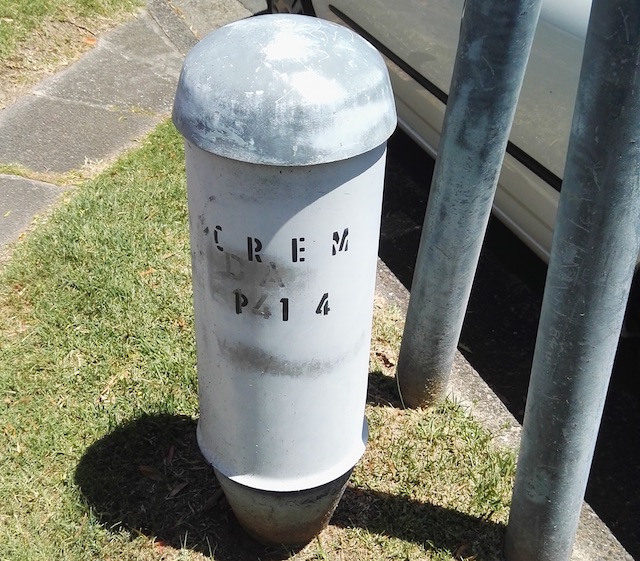
    At the end of this typical suburban street is a little gray, well guarded but battered pillar. This box is important as it contains the connections to the local telephone network and its replacement will house the distribution equipment for a fibre network regardless of what type is installed.


    Interestingly, just the presence of the pillar and the associated manholes nearby indicates there is already fibre in the neighbourhood, one aspect in the NBN debate that’s overlooked is that optical fibre is standard for telco backhaul and distribution networks.

    The only reason fibre hasn’t already been rolled out to homes and businesses is the sunk cost of the copper cables. When it’s necessary to replace an entire copper system as in New York after Hurricane Sandy or in South Brisbane after the local phone exchange was sold, then fibre is what telcos will install as its cheaper to maintain.

    Plain old telephone lines

    Walking down the street we find the first example are those who are going to be stuck with the old copper network under a fibre to the node solution.

    an old telephone pole shows the poor standard of Aussie comms

    What’s notable about that pole is its shocking state – in itself it illustrates just how Australia’s telecommunications networks have been allowed to run down with the underinvestment of the last twenty years.

    There’s a very chance the householders connected to those phone lines won’t be able to sustain a reliable  ADSL or FTTN connection because of the state of the wires.

    Remember, this pole isn’t in some remote part of rural Australia, should you be brave enough to climb it you’d have a wonderful view of the Sydney Harbour Bridge, North Sydney and the city. Its state illustrates that underinvestment is just as much a problem in the suburbs as it is in the bush.

    Using the Pay-TV network

    One the alternatives being touted is using the Pay TV network cables – know as Hybre Fiber Coaxial, or HFC – to carry the broadband signal.

    poor quality HFC Pay TV cable connection

    Here’s an example of the Foxtel installations and the poor work quality stands out immediately. The connection on the left is notable for its rain catching properties which doesn’t bode well for what’s happening to the coax cables in the duct lurking beneath the footpath.

    As an aside, the sort of poor quality workmanship found in the cable rollout is another risk to the NBN as it appears NBNCo is repeating Foxtel’s mistake of screwing the installation contractors into the ground on their rates. The result is really low quality work which won’t stand the test of time.

    Making HFC even less useful is the fact that most Australian properties can’t connect to it.

    In one of the best of examples of the drooling incompetence of Australia’s political ‘elite’, the 1990s Keating government managed to engineer a situation where the two cable companies rolled out their networks to the same places – 30% of the country got two networks while the rest received nothing.

    The real problem though with the HFC network is that most Australians who can get it haven’t bothered – take up rates in the areas cable is available struggle to hit 50%. So an Abbot government would actually have to pay to connect households to a service they’ve never wanted.

    Probably the cruellest part of all with the HFC proposal is the coax network itself is approaching the end of its life and most will be replaced with fibre within a decade. So we’re not saving a cent, just kicking costs down the road.

    Apartment living

    Even if you lived in that thirty percent of the country that did get pay-TV cable along their street, you were out of luck if you lived in an apartment or townhouse as few strata committees were interested in paying Foxtel install cables and Optus was never interested in MDUs – Multi Dwelling Units in telco-speak.

    townhouses-connected-to-telco

    A little way down the street from the houses photographed above are a group of town houses. Under the current NBN plans, this complex will get fibre. Under the coalition’s it will be stuck with copper.

    The worst case scenario is a “fibre to the basement” solution where the fibre is run into the building’s distribution frame and then it’s up to the owners to make the connection using the existing copper phone lines.

    In many cases it will never happen as strata managers and committees would keep putting it off, or they’d choose the lowest cost option which would exacerbate the poor work of the overworked NBN contractors.

    Tower living

    Next door to those townhouses is an eight story apartment block. These people risk being the biggest losers in the new telco environment.

    apartment-tower

    The problem for tower block dwellers is the low quality of the buildings and the lack of space for fibre telco risers. Under the fibre to the premises proposal some of these blocks are going to pose serious challenges to NBNCo.

    Should the fibre to the basement proposal go ahead, many of the notoriously penny pinching owners corporations won’t complete the installation.

    It’s highly likely that many Australian apartment dwellers are going to find themselves on wireless or LTE (mobile phone) connections for the foreseeable future as both the telco policies and poor building standards are going to deny them access to high speed fibre. This is going to have financial consequences for many landlords.

    The risk for businesses

    Most Australian businesses which occupy office buildings or industrial estates and they are going to be affected in the same way as apartment dwellers. The solution proposed by the coalition is that they should pay for their own fibre connections. Some will, many won’t and we’ll end up with another set of connections in our commercial districts.

    One street, five networks

    So just on one suburban street we could have people connecting through the old copper network, the HFC pay TV network, fibre to the basement, wireless and direct fibre for those who can afford it.

    This is madness.

    What’s even greater madness is that we’re four years into the National Broadband Network project and we’re talking about changing the scope for what’s been billed as one of the biggest infrastructure projects in Australian history.

    Praying the luck continues

    The Technology Spectator starts off with a comparison to the railway gauge madness of the 1850s. There’s an interesting parallel today.

    Two weeks ago, the Australian Financial Review reported that millions had been spent on lawyers and consultant fees on Sydney’s North Western railway yet no work has been done.

    On the same day, Business Insider published a story on the extensions to New York’s Long Island Railroad.

    Around the world governments from New York to Nairobi are getting on with building infrastructure. In the meantime Australia struggles with building tram lines.

    When we do decide to build a major project we get four years into it and decide to change our minds.

    The nation dodged a bullet despite having made bad choices with roads and railways in the nineteenth and twentieth Centuries. Australia prospered despite those poor decisions.

    If we can’t get telecommunications right then we better hope the luck continues through the 21st Century.

    Similar posts:
  • Graphs, damn lies and the middle class

    Graphs, damn lies and the middle class

    Graphs are great for illustrating a story, and also excellent at misleading people.

    A good example of where a graph can give an incorrect impression is the Sydney Morning Herald’s story Whatever Happened to the Middle Class.

    The story is a very good explanation of the predicament Australia’s political classes have put themselves into – exacerbated by their 1950s view of dividing the workforce into poorly paid ‘blue collar’ workers and affluent ‘white collar’ office staff – but it suffers from the selective use of headline graphs.

    Viewing the big picture

    The first graph shows how Australians are identifying themselves as middle class and the trend looks staggering,

    Graph of How Australians see themselves as middle class

    Now if we add those who identify themselves as working class, the picture looks even more dramatic with some pretty volatile swings,

    A graph showing How Australians see themselves as middle or working class

    However if we now add in those who identify themselves as rich, or upper class, we get a better perspective as the entire range is now shown,

    Graph showing How Australians see themselves as upper middle or working class

    Selective choosing the Y, or vertical, axis will always give an exaggerated view of a trend or proportion. Once we take the full range in we see the real extent of things. It also has the benefit of showing the trends aren’t as volatile as first appear.

    Middle class perceptions

    When we look at the graph showing the full picture there’s a number of interesting trends and characteristics about Australian society that come out of it which are worthy of some future blog posts.

    Most notably is the identification of Australians being middle class as their property values increased.

    On this point, it’s worthwhile contrasting the Australian experience with the US, here’s a Gallup poll from last year on how Americans see themselves,

    A graph showing how Americans see themselves as upper middle or working class

    While the definitions are different – that Americans differentiate ‘working class’ and ‘lower class’ is interesting in itself – it’s clear that the same trend happened in the US with more people identifying themselves as being members of middle class when their property values were increasing.

    In 2008 and 9 there’s suddenly a sharp increase in Americans identifying themselves as working class as the property downturn bites. The steady increase in those claiming to be ‘lower class’ from 2006 onwards is worth closer examination.

    What this means for Australia

    The implications of the US trends is that any Australian politician intending to dismantle John Howard’s middle class welfare state will have to wait until the property market falls before trying to win any popular support.

    For this year’s Australian election though, what’s clear is that any attempt to stoke the fires of class warfare is going to fail dismally in the outer suburban marginal seats so coveted by both parties.

    We’re going to see a lot more selective graphs during the course of this year, it’s worthwhile taking time to look at them closely. The stories may be different, and a lot more nuanced, than the headlines tell us.

    Similar posts:

  • Australia’s software disadvantage

    Australia’s software disadvantage

    This morning ABC Radio 702 asked me to comment on Adobe, Apple and Microsoft being summonsed to appear before the Federal Parliament’s IT Pricing enquiry.

    As has been widely reported, the committee has asked the software giants to explain why there are such price differentials between Australian and overseas prices.

    By way of example, Adobe Creative Suite 6 is available on the company website for $1299 US which is AUD 1263 on today’s exchange rate. The listed Australian price is AUD 1974 – a mark up of 56%.

    This is not new

    Australia has long been an expensive place to buy things, I remember my parents in the 1970s asking relatives to send over Marks and Spencer underwear as prices in Melbourne were so expensive.

    Books and music have long been overpriced, the publishing industry openly printed the price of books in various countries and the Australian price has always been substantially higher than UK and US charges given prevailing exchange rates.

    The high exchange rate has focused attention on the high prices, while the Aussie dollar was low consumers were tolerant of the rip-off. With the Aussie dollar high, consumers are wondering why the prices of many imported goods, particularly software, has remained so high.

    A lack of competition

    One of the biggest reasons for Australians being overcharged for many items is the lack of competition in the domestic marketplace. Most distribution channels are dominated by one or two players which lends itself to price gouging in areas ranging from technology to food.

    A good example of this is the brewing industry, a revealing Fairfax article examined the Australian beer sector and exposed the failings and lack of competition in the market which results in the multinational duopoly extracting five times the profits of local retailers.

    The conservative nature of Australian consumers is their own worst enemy as locals, including corporations and governments, prefer to buy major brands rather than experiment with local or lesser known providers.

    Where alternatives exist, the price differentials rapidly fall. The price differential for an iPad is far less than the software apps that run on it. The reason for this are the range of alternatives available to the Apple product.

    If Australian buyers were to explore open source alternatives, smaller suppliers or locally developed products then the prices of imported goods would fall.

    Structural weaknesses

    The pricing inquiry illustrates  the structural weakness in the Australian economy where the nation has become a price taker both in the domestic consumer sector and bulk export industries.

    Where Australia finds itself is an expected consequence of a generation of economic policies which favours debt driven consumer spending underpinned by selling assets and raw commodities.

    Hopefully Australians are realising the price of software is just one of the consequences of current policies and start demanding the nation’s political and business leaders have a clear vision for what the country’s role will be in the 21st Century.

    If that vision for Australia is a quarry with a few retirement homes clinging to the edge, then we’re well on the way to achieving that. At least software prices will be the least of anyone’s worries.

    Similar posts: