Category: Australia

  • Building an ecosphere

    Building an ecosphere

    One of the keys to success for a software platform is its ecosphere  the community of developers, consultants and advocates that grow around a service.

    By far the most successful company in building a community around its products is Microsoft, who over the years have attracted hundreds of thousands of developers and partners to support Windows.

    Microsoft’s thousands of partners are the company’s greatest asset in beating back the threat posed by Google, cloud computing and Apple. The sheer size Microsoft’s supporter base gives it a natural buffer against competitors.

    Apple too have that buffer, in the company’s darkest days during the late 1990s it was the true believers who kept the flame burning. The ecosphere that has developed around the iPhone and iPad has now cemented Apple’s iOS as being the dominant mobile platform.

    The same thing happens around various industry software packages, as one company becomes identified as the leader in their sector they develop a following among users in that industry.

    At the Xero conference last weekend, the cloud accounting software company showed how an ecosystem of developers, accountants and bookkeepers are developing around their software platform.

    Companies as diverse as inventory management, point of sale system and document scanning services are plugging into Xero’s accounting data which adds functionality for customers.

    In turn, those third party services makes Xero more attractive to the bookkeepers and accountants looking for ways to make their jobs, and those of their clients, easier.

    Xero’s biggest competitor, MYOB, also has that strength with an army of certified consultants from long being the incumbent in their market.

    The battle between Xero and MYOB for dominance in the business accounting software market will depend upon how well the incumbent can hold onto their existing markets and the effectiveness in the incumbent building a ecosphere that makes the newer product more attractive.

    Disclaimer: Paul travelled to Melbourne and attended the Xero Partner conference courtesy of Xero.
    Similar posts:

  • Are small business owners whingers?

    Are small business owners whingers?

    People of the same trade seldom meet together, even for merriment and diversion, but the conversation sends in a conspiracy against the public, or in some contrivance to raise prices.” Adam Smith – The Wealth of Nations.

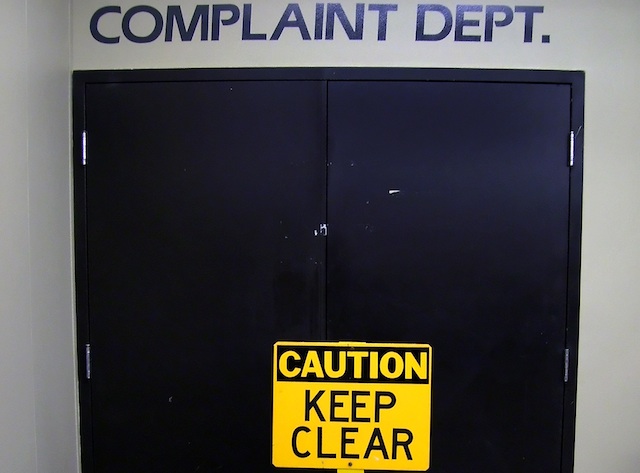
    At a meeting with the state’s Small Business Commission I was once again reminded of Adam Smith’s words – that business owners will try to seek whatever opportunity they can to raise prices and whinge when they can’t.

    Over the last few months I’ve heard business owners complain the government doesn’t do enough to protect the quality of their imports, give them more onstreet dining permits, stop their neighbours from having onstreet dining permits and, my favourite of all, regulating discounts offered on group buying websites.

    Restauranteurs are complaining their customers don’t appreciate the cost of running a business – which is true, but it isn’t the customers problem.

    A spectacular example is the anti-carbon tax propaganda where local businesses are displaying letters from a political party claiming their prices will go up and one franchise chain was dumb enough to even write down their plans to blame price rises on the new tax.

    We also have the ongoing narrative that local councils – particularly those controlled by Green or Independent groups – are “anti-business” and killing commerce through unfairly enforcing parking rules and building bicycle lanes. Something that nicely fits the talking points of the Corporatist political parties that anyone who isn’t endorsed by a major party is “a dangerous radical”.

    The best of all though is the ongoing campaign to eliminate the GST and import duties threshold for overseas purchases, which claims all the problems of the nation’s retailers would be solved if customers were forced to wait a week a pay a couple of hundred dollars in administrative fees.

    Some of these gripes are fair – some councils are unreasonable (interestingly usually in areas where local government is seen as a stronghold a big party), the current tax rules are unfair and there are truly stupid people deeply discounting on group buying sites – but most of them are just excuses.

    Business is always tough, if it wasn’t everybody would be doing it and taking it easy.

    If all you can do is whinge about prices, your council, the government, your competitors, staff or your customers then maybe you should think about getting a job or at least taking a holiday.


    Similar posts:

  • Darling Harbour and the peak of consumerism

    Darling Harbour and the peak of consumerism

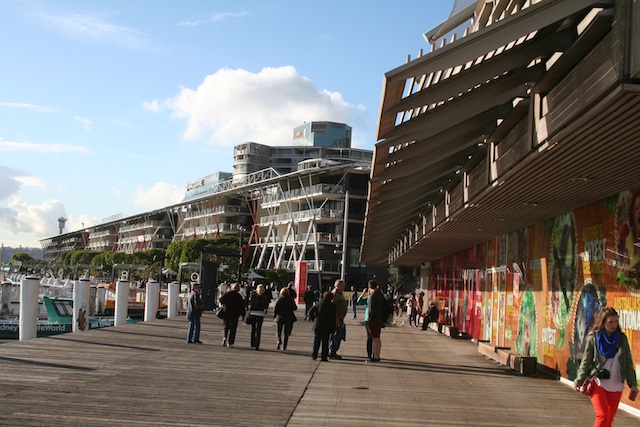
    Sydney’s Darling Harbour was one the centre of the nation’s mercantile economy, from across the country millions of tons of grain, wheat, sugar and other commodities were loaded onto ships and exported to the empire.

    Eventually Darling Harbour fell into disuse, the docks became containerised, bulk goods moved to specifically designed loaders and the new breed of cargo ships were often too big to fit under the Sydney Harbour Bridge.

    What really sealed Darling Harbour’s fate was Australia moved from being a largely export based agricultural export economy to a service based consumerist economy.

    Today Darling Harbour illustrates that change, the docks have become expensive restaurants, hotels and shopping centres. The notorious “hungry mile” of docks is being converted into “Barangaroo” complex of office blocks, apartments and possibly even a casino for “high roller” Chinese gamblers.

    Even the cruise liners are going. The 1980s vision of Darling Harbour as a temple to consumerism and property speculation is complete. In this way, Darling Harbour has become a picture of the Australian economy.

    Just as Australia’s mercantile era peaked just before The Great Depression of the 1930s – the depression of the 1890s was actually far harder on Australia, particularly Melbourne and Victoria – the consumerist era finished with the Global Financial Crisis of 2008.

    It will be interesting to see how Darling Harbour evolves over the next hundred years.

    For a glimpse of the final days of the old Darling Harbour, Island Shunters an ABC documentary from 1977 showed the working lives of railway workers in the goods yards on the Western side of the docks. Today those railyards are the Australian office of Google and Fairfax’s headquarters.

    Similar posts:

  • Refocusing on Asia

    Refocusing on Asia

    One of the interesting things about Australian society and business in the last twenty years is how the nation seems to have turned away from Asia.

    In the 1980s and early 90s, the country was focused on exporting services and building long term relationships in sectors ranging from Malaysian construction, Thai diary farming and legal services in China.

    Twenty years later, Australian businesses and government seem to have given up with the consensus among industry and political leaders now being that all the nation can export is raw minerals, bulk agricultural goods with a sprinkling of third rate educational services.

    Globally focused Australian businesses – particularly those in the startup sector – look to Silicon Valley for funding, inspiration and markets. Only a minority are looking North to Asia rather than across the Pacific.

    ViDM – Ventures in Digital Media – is one of those businesses and CEO Willie Pang of the Sydney based advertising technology startup believes the time is to seize opportunities in growing Asian markets rather than concentrating on Silicon Valley financing and exits.

    “Focus on building a great business. If you have a great business someone will buy you,” says Willie.

    The opportunity ViDM sees is in advertising trading platforms bringing together publishers and advertisers across the digital, print and broadcasting channels. Willie expects this market to be worth eight billion dollars across Asia within five years.

    Many of those opportunities in the Asian market are in business-to-business markets such as advertising platforms which is another difference to the largely consumer focused Silicon Valley model.

    For Australian business, Willie doesn’t see funding as being an issue with money being available for smaller startups and mature companies.

    Like in Silicon Valley the real problem lies for business in the middle stages of their development where they are too big for angels and smaller funds but not interesting for the bigger investors. That grey zone lies between two and ten million dollars.

    For the companies that do raise the funds and go hunting in Asian markets, the rewards can be great. Not only do this economies have great growth rates, the diversities of Asian countries mean there are different opportunities lying in each nation or even provinces.

    Right now, US businesses are focussed domestically or just on a narrow range of opportunities catering to affluent Chinese consumers in Beijing, Shanghai and Guangzhou.

    Willie sees that as another opportunity, while US and European companies are distracted it’s a good time to be entering the Asian markets. But that window of opportunity won’t last forever.

    “We’ll either play in that space or the Americans will do it” says Willie.

    The opportunity is open to us. Will we grab it?

    Similar posts:

  • Can Singapore become a global VC centre?

    Can Singapore become a global VC centre?

    While Silicon Valley grabs most of the headlines about cool new businesses Singapore has been quietly building its own position in the global venture capital industry.

    SingTel, the city state’s main telco operator, setup their own venture capital fund in 2010 with Singtel Innovate investing between S$100,000 and thirty million in various ventures.

    The strategy from SingTel, which is closely aligned with Singapore’s government, is a very canny one – it allows the telco to move beyond being a “dumb pipe” just providing the phone network and fits into the nation state’s aim to be one of the centres in an increasingly Asian centred global finance system.

    Yesterday SingTel launched a new Australian startup venture, the Optus Innov8 Seed fund which offers investments of up to A$250,000 in new start up businesses in return for equity or other stakes.

    To identify the right investments SingTel are partnering with various start up groups and incubators in Sydney and Melbourne which is an interesting way to filter out unsuitable businesses.

    Being funded by a telco, the Optus Innov8 program is naturally focused on the technologies that are going to help their business in an evolving market, the areas they are currently looking at are mobility solutions and digital convergence.

    For Singtel and Optus this is a long term investment as equity stakes in new technologies will position the business well as their industry evolves and margins come under pressure in their core telco market.

    To businesses looking for investments, the Innov8 program is a welcome addition to the funding landscape but Singtel also offer access to Asian markets with operations in India, Indonesia, the Philippines, Thailand, Pakistan and Bangladesh.

    Edgar Hardless, the CEO of SingTel Innov8 says “if you’re looking at going into the Indian market, we can help with introductions. Same with any of our other markets”.

    Those introductions are useful but probably more important is the market intelligence that a partner like SingTel can bring on board. Understanding foreign business conditions is a great advantage for a foreign venture.

    Asian markets can be tough, particularly for Australians who have been bought up with a US centric view of the world, but there are plenty of success stories. There is a successful group of entrepreneurs catering to the massive Indonesian market while companies like Dealize have moved their head office to Hong Kong.

    Dealize was part of the Pollenizer incubator which is one of Innov8’s partners. At the launch, Phil Morle of Pollenizer pointed out that his business has set up a Singapore office to take advantage of the favorable investment conditions there.

    While Innov8’s program is relatively small, it’s a much needed addition to Australia’s start up and venture capital scene and will help some new businesses in the app and mobile space.

    Hopefully a few other corporations are looking at SingTel’s lead and thinking how they can tap into these new industries that may disrupt their own.

    For Singapore, the city state has always had a number of advantages for the finance industry. By expending into new financing new sectors they are securing their own future in the 21st Century.

    Similar posts: