
Category: Big Data

  • Customer lock in as a business asset

    Customer lock in as a business asset

    US booksellers Barnes and Noble has been struggling for years and things aren’t getting better reports the New York Times.

    An important part of the New York Times story is the quote from a Forrester industry analyst,

    “The problem is not whether or not the Nook is good,” said James L. McQuivey, a media analyst for Forrester Research. “What matters is whether you are locked into a Kindle library or an iTunes library or a Nook library. In the end, who holds the content that you value?”

    Locking in customers lies at the heart of the Kindle and iTunes business model. Once users have a substantial investment in their book or music collections on one platform it’s unlikely they will go elsewhere as the costs, and risks, of moving are too great.

    This doesn’t always end well for the customer and it gives online businesses great power which they often misuse.

    Every online business tries to lock their customers into their ecosystem – Google, Amazon, Facebook and Apple are the most successful but every single social media and cloud service tries to make it hard for users take their business elsewhere.

    In some respects this is no different to the phone company or bank which have historically tried to lock customers into their services, but the online social media, cloud computing and e-commerce platforms make a much more ambitious grab for their users’ data and assets like music and book collections.

    The New York Times article illustrates just how critical that user lock in is to the success of online businesses. The question for us as consumers is how much we want to be locked inside the web’s walled gardens.

    Similar posts:

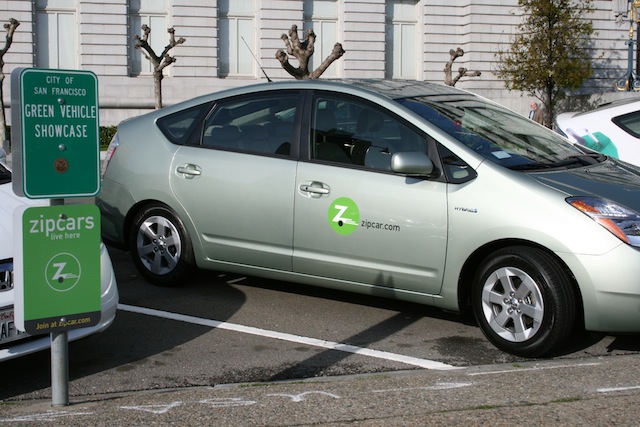
  • Big data, mobile apps and smarter logistics – why Avis is buying Zipcar

    Big data, mobile apps and smarter logistics – why Avis is buying Zipcar

    With no bad press over New Year’s Eve it looks like hire car service Uber avoided the surge pricing traps of 2011 and the good news continues for the online booking industry with the news that Avis is buying car sharing service Zipcar.

    Assuming the acquisition isn’t another example of the greater fool investment model, Avis’ purchase of Zipcar makes good sense in expanding the hire car giant’s footprint into the share car business.

    Regrettably Avis use the 1980s term “synergies” four times in their media release but it does seem the businesses are a good fit both in fleet sharing and improving both company’s services.

    Zipcar’s technology is another asset which Avis can use,  with the car sharing service’s ability to track vehicle locations meaning better fleet management for the hire car business.

    Car sharing logistics

    The logistics angle of car share services is something that’s been highlighted by Uber’s CEO Travis Kalanick at various times, most recently at the service’s Sydney launch last November.

    Another aspect of the car sharing and hire car booking services is their Big Data advantages which the online startups bring.

    Historically, car hire companies have been reasonably good at gathering data on their customers with loyalty schemes, direct mailing and plugging into airline frequent flier programs. However they have been left behind by the Big Data boom in recent years.

    Companies like Zipcar, Uber and taxi hailing apps like GoCatch have big data in their DNA, having been founded in the era of cloud computing and social media they have access to more information and a better ability to use the knowledge they gather.

    Predicting the price surges

    At Uber’s Sydney launch Kalanick described how Uber’s traffic volumes increase in San Francisco when the Giants win a game, the interesting thing is that the surge happens three hours before the match starts.

    Insights like the traffic patterns around football games and holidays are gold to a high inventory business like hire car services. They are also important to the entire logistics industry.

    This latter point is probably the most overlooked part of all with the current rush into social and mobile based apps – the market intelligence that these services gather.

    While it’s tempting to dismiss that market intelligence as just monitoring who likes cats or cheeseburgers, the application of that data is transforming supermarkets, airlines and even concert venues.

    Avis seem to have understood that it will be fascinating to see how they will use Zipcar’s data and whether their competitors will figure out the importance of what these services offer.

    Similar posts:

  • Fiddling the prices

    Fiddling the prices

    Discriminatory pricing is nothing new, a good salesperson or market stallholder can quickly sum up a punter’s ability or willingness to pay and offer the price which will get a sale.

    Anybody who’s travelled in countries like Thailand or China is used to Gwailos and Farang prices being substantially higher even for official charges like entrance fees to national parks and museums.

    The Internet takes the opportunity for discriminatory pricing even further arming online stores armed with a huge amount of customer information which allows them to set prices according to what the algorithm thinks will be the best deal for the seller.

    Recently researchers found that the Orbitz website would offer cheaper deals for people searching for fares on mobile phones and prices would vary depending of which brand of smartphone people would use.

    Writers for the Wall Street Journal did an experiment with buying staplers and found the same thing.

    Interestingly, one of the factors Staples’ seems to take into account is the distance customers live from a competitors’s store – the closer you live to the competition, the lower the price offered.

    There’s also other factors at play; sometimes you don’t want a customer, or you don’t want to sell a particular product and it’s easy to guess the formulas used by Staples and other big retailers do the same thing.

    One of the great promises of the internet was that customers’ access to information would usher in a new era of transparency. In this case it seems the opposite is happening.

    Similar posts:

  • Privacy is not someone else’s problem

    Privacy is not someone else’s problem

    Early this year a storm broke out about privacy in the United States when a computer rental company was caught spying on its customers.

    Technology website Ars Technica has an excellent story describing what the company was doing and the software they were using.

    What the story of PC Rental agent shows is that even small businesses have the tools to run serious surveillance on their customers and some will do so simply because they can.

    The days when privacy could be dismissed as the concern for a few sensitive celebrities, sports people and politicians with something to hide are over – privacy is now your problem.

    Similar posts:

  • Are executives taking privacy seriously?

    Are executives taking privacy seriously?

    In an article for Business Spectator on Lord Justice Leveson’s Sydney speech last week, I looked at the commercial aspects of privacy, an area that was overlooked in the reporting of the two Australian lectures by the British jurist.

    Privacy is a serious issue which is also being overlooked by boardrooms, possibly because it’s often conflated with IT security and so it’s seen as a technology problem and, to be honest, executives see it as being a bit ‘soft’ and airy-fairy.

    Sony’s humiliations in 2011 with a series of embarrassing privacy breaches that left the company’s reputation in tatters show the real and embarrassing risks in not taking privacy seriously.

    The UK prank phone call scandal is another example of poor privacy policies which have real world impacts on both the hospital’s patients and staff, whether the management there is held to account or even learns any lessons remains to be seen.

    In California, the US state with the strongest privacy laws, Delta Airlines is being sued over its smartphone app’s policies however the state itself isn’t immune from serious breaches.

    Giving away social security numbers opens up all sort of identity theft opportunities although any privacy breach exposes the victims to potentially serious consequences, some of that pain is going to be passed onto those who give the information away.

    The worry for businesses is that in the absence of serious action by governments and the private sector, the evolution of privacy law is going to take place in the courts with unpredictable and inconsistent results.

    As we now have the tools to gather, store and process huge amounts of data about our customers and staff, we also have an obligation to protect it. This is something managements need to understand and take seriously.

    Similar posts: