Category: business advice

  • A clear, guiding vision

    A clear, guiding vision

    Two weeks ago the Melbourne fashion store Gasp caused outrage over their attitude to customers and the business’ owners might have been relieved the story was finally pushed off the news pages by Steve Jobs’ passing.

    In a strange way, there’s a similarity between the Gasp stores and Steve Job’s Apple – a vision for their product and low tolerance for those who don’t share their ideals.

    Steve Jobs was notorious for dismissing those who didn’t ‘get’ Apple, famously saying “they have no taste” when asked about his biggest competitor Microsoft and stating “we don’t ship junk” when questioned by a journalist about Apple’s perceived premium status.

    Regardless of your opinion of Apple’s products, philosophy, labour practices or community relations, there was no doubt where they stood in the marketplace.

    A similar thing can be said of the Gasp store, while there’s no question the Gasp folk could have handled their customer relations better, they certainly can’t be accused of not having a clear vision of where their brand sits in the marketplace.

    In a world of bland mission statements where corporations and governments seem intent to paint the world a mediocre beige, having a strong statement on what your business stands for is a genuine competitive advantage.

    What do you stand for?

    Similar posts:

    • No Related Posts
  • Do you really want help from the government?

    Do you really want help from the government?

    Pity the public servant who stands up in front of a room and asks a bunch of business owners, executives or managers what they want from government.

    While there will be plenty of comments about improved procurement, less red tape and reduced fees you can be sure there’ll be plenty of demands that the government ought to subsidise something – anything – that business does.

    It’s notable how free enterprise, small government and low taxation loving business people will  drop their copies of Atlas Shrugged and barge their way to the feeding trough and the slightest scent of taxpayer money wafting in their direction.

    But is government money really good for a business? In many cases it isn’t.

    You run a business, not work in a government department

    “Who pays the piper, calls the tune.” The whole idea of running a business is that you are the boss, so why do you want to answer to a government department?

    If you’re self employed or just opened a startup, one of the main reasons for doing so is because you decided you no longer want to work for the man. A government grant may well open up a whole new world of paperwork that leaves you wondering why you ever left the cubicle.

    The dependency culture

    One of the dangers of government funding is if you are successful, you’ll find yourself hooked on it. Quickly you become better at filling in funding applications than delivering products your customers want. The Aussie film industry is a good example of this.

    Governments are behind the innovation curve

    Public servants are not employed to take risks, this is a good thing as it’s our money they are handling.

    Because governments are risk adverse they’ll only recognise an industry – or a problem – long after it has become established.

    If you find you are on the government’s help list, it might be time to consider an exit from a troubled industry.

    Do you really have a business?

    Many new business owners expect the government should do something to assist them in their start up phase. This is a common complaint from under capitalised proprietors.

    Given the massive subsidises given out to the banks and other big corporations since the start of the great recession, this attitude can almost be excused but we can already see how well that strategy works.

    If you really need a subsidy to run your business, then it’s time to consider whether you should be in business at all.

    This isn’t to say all government funding is bad; well thought out programs help viable businesses with things like export assistance, skills development and employing young or disabled workers. There are many of these although the process of identifying what a viable business is usually eliminates the newest and smallest enterprises.

    What is notable with the successful government programs is they address a specific need, they don’t have onerous paperwork and they are no substitute for a healthy, living cashflow and profit.

    Overall though, if you really want government money then take a job with the public service. It’s a lot easier than scrabbling for grants.

    Similar posts:

  • The reverse ambush

    The reverse ambush

    As the Apple faithful starting queuing outside stores to buy the latest version of the iPhone, in Sydney electronics manufacturer Samsung set up an outlet a few doors up the street and offering $2 Samsung Galaxy phones.

    Some in the press portrayed this as “ambush marketing” by Samsung, claiming that the Korean company has stolen coverage from Apple.

    In reality, all the stunt has done is emphasise the different market positions of the companies; Samsung have people camping out for $2 phones while a few doors up the street there’s a bigger line for an $800 Apple product.

    The message is clear; Apple’s products are more desirable than Samsung’s at even 400 times the price.

    Whatever Steve Jobs was reincarnated as – a Bogong Moth or the next Dalai Lama – he’s laughing right now.

    Similar posts:

  • Survivor Bias – the danger of learning the wrong lessons

    Survivor Bias – the danger of learning the wrong lessons

    A recent blog post by Chris Guillebeau on his terrrific Art of Non-Conformity site looked at the value of qualifications.

    Chris’ post is a great read and it’s obviously worked for him, though we always should keep in mind with these stories that we’re reading about someone who has managed to make it work.

    We all have a lot to learn from Chris and other success stories however the winners’ tales are only half the story; that for every success who dropped out, started a business or travelled the world and did well there are many more who – for whatever reason – didn’t.

    That’s part of the equation of risk, that for every success there are failures. For risking failure, the successes are rewarded – despite the best efforts of our political and corporate leaders to engineer away the risks and leave only the rewards for those best connected or placed to take them.

    For every winner, it’s also worthwhile listening to those who didn’t quite succeed. The lessons from “failure” are probably stronger and just as enlightening.

    Taking a jump, quitting your job, starting a business, becoming a freelancer or travelling the world isn’t for everybody. Many of us are happy staying in the cubicle or the workshop or the village and leading a comfortable, secure and safe life.

    Societies need a balance of the risk taking adventurers and the anchors of solid, secure working people. Neither is wrong, neither is bad and a balance of the two is essential for a healthy, prosperous and sustainable society.

    It’s not to say we shouldn’t take risks, just understand the dangers are there and your appetite for living with uncertainty before making a big step into business, travel or whatever it is where you see the opportunity.

    Similar posts:

  • The mobile payments revolution

    The mobile payments revolution

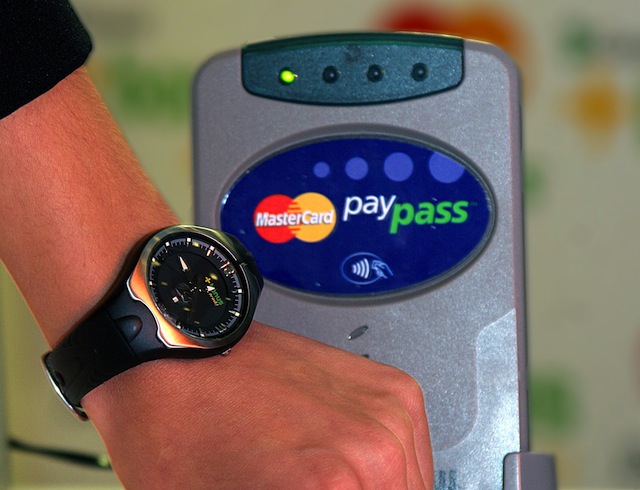
    Ten years ago when I was running a computer support business we spent a lot of time trying to find an mobile payment service for our on-site technicians to process payments.

    At the time there were plenty of options but they were all expensive, asking 6% in merchant fees at a time when our bank merchant facility charged us 2.75% to accept Mastercard, Visa and Bankcard. Interestingly, the cut the mobile providers wanted to take which was the same commission as American Express and Diners Club.

    We’d long before decided Diners and Amex were too expensive and it was easy to make the same decision about mobile payments. The technicians were given a manual card swipe to carry around and they phoned through authorisations. It was messy and time consuming but a lot cheaper than the then high tech alternatives.

    Given that history, I was keen to get along to the Australian Information Industry Association’s “Mobile Payments – Cooperate, Collaborate, or Abdicate” breakfast panel held in Sydney last week to see what has changed in the mobile payments space.

    The rise of smartphones – and the developing SoLoMo trend among consumers which brings together social, local and mobile technologies – should have meant the era of online payments should have arrived and it’s puzzling why it hasn’t happened.

    It isn’t for a shortage of operators; one of the panel members, Oliver Weidlich of Sydney’s Mobile Experience mentioned a number of the services such as Square, developed by one of Twitter’s founders that are changing mobile payment overseas.

    Interestingly it was the audience questions that gave the answers to why online payments haven’t taken off in Australia. The key question from the floor was “which authority handles disputes should a phone be lost or stolen”.

    As a customer, one hopes it’s the bank that takes responsibility as the idea of a telco – particularly their mobile phone divisions with their attitude towards billing customers – having control over your credit card or bank account would make most consumers’ blood run cold.

    The point was well made though as it saw the panel’s bank, telco and credit card representatives all ruminating over the question of ‘who owns the customer’.

    Oddly, while they argue about whose property the customer is, all of them may lose out. While services like Square and built in payment features on social media and mobile apps such as Foursquare or Red Laser may take a slice of the market, there is a bigger competitor already making huge inroads.

    The day before the AIIA event, Internet payment giant PayPal announced a series of deals with various group buying sites and online applications. Their press release pointed out PayPal’s mobile payments, or mCommerce as they call it, is growing at over 400% a year

    While it might not be correct to say PayPal were the elephant in the room at the online payments breakfast, it isn’t unfair to say Big Ears was just outside scoffing the morning tea while the incumbents argued about who would have first dibs on clipping the tickets of both merchants and customers.

    It’s too early to say the banks, or the telcos, have lost the market but players like PayPal, Google with their wallet service and possibly even Apple – should a Near Field Communication (NFC) equipped iPhone appear in the near future – are going to make the mobile payment sector far more interesting and competitive.

    For businesses, we need to keep a close eye on the mobile payments market as it is promising to offer a lot more options in banking and transactions that what we’ve been used to in recent years. The days of 6% merchant fees are well and truly over.

    Similar posts: