Category: business advice

  • Trusting online reviews

    Trusting online reviews

    Review sites where customers can post their experiences are changing consumer behaviour and bringing a new level of accountability to businesses, but how do we trust the comments on which appear online?

    Travel review site Tripadvisor is a good example of how consumers are able to spread the word about their good and bad business experiences, much to the displeasure of the UK hotel industry and its media friends. To make things worse, many of those reviews are further spread by social media services like Twitter and Facebook.

    While the travel industry complains about fake reviews from competitors and disaffected customers, the majority of fake reviews are from hoteliers themselves pumping up their own business. It’s always interesting how many gushing reviews are from anonymous posters with only one or two reviews to their name.

    Should any of the threatened court cases actually make it before a judge, there may be a few hoteliers finding themselves in an uncomfortable position, a classic case of being careful about what you wish for.

    That’s not to say Tripadvisor doesn’t have a problem, the comments in a recent Telegraph story about the service show they have the web 2.0 problem of lousy customer support which comes from a low cost, user generated business model.

    A more serious point which is overlooked by most of the critics is that Tripadvisor, like most travel sites, is linked to certain booking services. If you attempt to use the site to book a property that isn’t aligned with the site, it may well falsely report there are “no rooms available”, which is deceptive and will almost certainly fall foul of competition laws in most countries.

    For users of sites, it means we have to be careful with what the reviews and the sites themselves tell us. So what should we watch for?

    Spotting dodgy reviews

    The obvious thing is the planted review. The easiest way to spot this is by the number of reviews submitted by the commenter.

    If a commenter only has one or two reviews then it’s almost certain they either have an axe to grind or they have been submitted by the establishment or it’s staff as most rational people don’t have the energy or time to build a comprehensive profile of reviews just to shaft one place.

    Another useful tactic is to look at the reviews around it, do others disagree with that reviewer or are they consistent? Outlier bad reviews can indicate a plant, a grudge or simply a bad day in the kitchen.

    Dealing with bad reviews

    As we’ve pointed out before, consistent bad reviews on these sites usually indicate a structural problem in the business however if you suspect a fake or planted review, most services have a “flag as inappropriate” option or a dispute mechanism.

    Be careful using these however as flagging a legitimate complaint as malicious or fake may antagonise the poster and give the poor review more publicity than you would like.

    The social aspects of the web, such as review sites and social media services like Twitter and Facebook, are going to become more important over the next few years as internet users use them to help sift through the massive amount of information on the net.

    All businesses, whether in hospitality or other industries, need to take these sites and the reviews on them seriously.


    Similar posts:

    • No Related Posts
  • A Capital Question

    A Capital Question

    How do you raise funding for new venture? Business coach Lindy Asimus asked over the weekend. It’s a question that perplexes many people starting out a new enterprise or trying to grow an existing one.

    The real question though is “how much capital do you need?” Being undercapitalised will often stunt a venture’s growth and is probably the reason why many otherwise excellent business ideas fail to achieve their potential.

    How much money do you need?

    While business plans are often disparaged, one of the great advantages of doing one is the budding entrepreneur gets an idea of the capital required along with the cash flow required to service any debts. Even if the business plan itself is filed away and never looked at again, understanding the upfront cash requirements can help avoid some nasty mistakes.

    The other key factor is the business itself, if you’re buying a fast food franchise, setting up a store or fitting out a restaurant then there’s going to be some big upfront capital costs involved before you start trading but there is more to it than just the immediate cash needs.

    What is the type of business?

    A business’ capital needs are going to vary with the type of business and the objectives of the owners, not just in size but also in type. As business writer and educator Steve Blank says, there are six types of startups and for certain types an equity investment from say an angle investor or venture capital company will be more appropriate than a bank loan.

    For small businesses, the type that Steve Blank describes as “work to feed the family” businesses, a bank loan that can be paid back out of cashflow is going to be the most obvious way to fund an enterprise while it would be rare a venture capital investor would even answer a phone call from such a business.

    On the other hand, a family member or friend might be interested in taking equity in such a business, the old “families, friends and fools” is a time honoured way of setting up a venture.

    Government grants

    In these times of rampant corporate welfare for big banks and major corporations, it’s tempting to think the government may be able to help the small businessperson. Sadly most of the grants available are small sums for specific purposes like export programs or hiring trainees, they aren’t designed or intended to provide entrepreneurial capital.

    Bootstrapping and “sweat capital”

    Most businesses though are best served by “bootstrapping” and “sweat capital” for most, particularly in the service sectors, funding your business out of cashflow and the hard work of the founders is the way to grow a viable enterprise.

    The term “sweat capital” refers to the founders working hard and capitalising their businesses from the sweat of their brows while  scrimping and saving every penny. Most founders of successful businesses have stories of spending years expending that “sweat capital” while living on cheap pizzas or packet noodles.

    Bootstrapping, funding your business through sales, is the other great capital source. In many ways, this is the best form of capital in that it proves a business is viable and doesn’t involve signing over assets to banks or giving equity away to investment partners. Again a well thought out business plan quickly shows whether this is feasible.

    So the question of capital is complex, but having enough is always the biggest struggle for those starting a business.

    Of course it is possible to have too much capital and we might talk about that in another blog post.

    Similar posts:

  • Online tools to turbocharge your business

    Online tools to turbocharge your business

    Flying Solo’s 2011 Independents Day conference featured our Online Tools to Turbocharge your Business.

    We looked at some of the most popular cloud computing, social media, productivity and collaboration tools that can help a business make more money and grow faster.

    Most importantly, it shows how business owners can free up some of their most valuable asset – their time.

    Some of the tools we discussed include the popular social media platforms like Facebook, LinkedIn and how they can be used for customer service and market intelligence on top of being marketing services.

    We also looked at how collaborative and cloud computing services can help small businesses work together and improve the ways consultants can work with big business clients. In many ways, collaborative tools like Google Apps, Zoho and Dropbox help build team and deliver projects more effectively.

    The Online Tools to Turbocharge Your Business presentation itself is available on Slideshare and if you subscribe to our newsletter, you’ll receive a free copy of the accompanying Online Business Essentials e-book.

    Similar posts:

  • Apple after Steve Jobs: ABC Weekend computers

    Apple after Steve Jobs: ABC Weekend computers

    The September 11 ABC 702 Sydney Weekends segment discussed what Steve Jobs’ stepping down as Apple CEO means for Mac users.

    Simon Marnie and Paul Wallbank looked at why Steve Jobs was important to Apple, who will be taking over and whether this affects whether you should buy an Mac computer, iPhone or iPad.

    Listeners’ Questions

    As usual, we had plenty of great questions from listeners and some of them we promised to get back to, these included the following.

    Removing Mackeeper

    Cheryl called about MacKeeper warnings that keep popping up on her Apple computer.

    MacKeeper, and other variants like MacProtector and MacSecurity, are known as malware – software designed for malicious reasons – which has been the bane of Windows computer users for years.

    Removing Mackeeper is relatively easy and Apple has released a security patch to fix it. Details and download are available at the Apple Support website.

    Wiping an old computer

    The most valuable thing on a computer is the data, so it’s important to wipe any system before disposing of it. Deborah asked how to wipe her old Mac system before she left it out for her council’s e-waste collection.

    If you have an OS X or OS 9 disk, you can completely wipe and “zero” the disk to make it extremely difficult for someone to recover any data from the old computer. Apple have detailed instructions on this at their How To Zero All Data On A Disk page.

    Warning! Before following these instructions, make sure you have backed up all important and valuable data.

    How to disable automatic Windows Updates

    Updating your computer, whether you have a Windows or Mac computer, is very important as new security bugs are found all the time. Gary though was finding his system automatically installing Windows Updates often disrupts his work.

    It isn’t a good idea to totally disable the Windows Update service as those updates and patches are important, but you can change the settings so they are downloaded but not installed until you choose to do so.

    Microsoft’s Knowledge Base describes how to change the Windows Update Settings, we recommend the download updates but let me choose when to install them option.

    Next 702 Weekends tech spot

    Our next Weekends spot is scheduled for 23rd October when we’ll be discussing how to backup your valuable data. Check the Events Page or subscribe to our newsletter for any changes to the 702 Sydney programs and any other upcoming radio shows.

    Similar posts:

  • Microsoft’s lost decade

    Microsoft’s lost decade

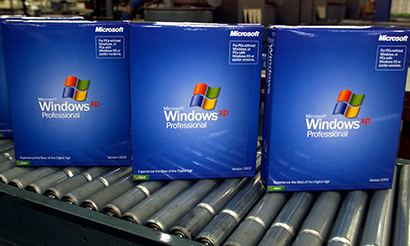
    Amid the discussion of Steve Jobs standing down as Apple CEO last week, a quiet milestone was passed. Ten years ago last Wednesday, Microsoft released to manufacturers their latest operating system, Windows XP.

    Windows XP turned out to be the most successful computer operating system ever and probably marked the peak of the personal computer era.

    The glitz and glamour of the Windows XP launch showed the power of Microsoft at the time – their products dominated the desktop markets, Apple were crawling their way back to profitability and relevance with the iMac while mobile phones were barely capable of sending anything more than SMS messages.

    In 2001 the business model of Microsoft was built upon the perpetual upgrade cycle, as computers were expected to last three to five years which would then be replaced by new systems requiring an updated operating system with the latest office software.

    Ensuring maximum revenue from the upgrade cycle, Microsoft encouraged retailers to sell XP systems with bundled software locked to the individual computer, these “deals” made sure users would have to buy new programs when the existing machines were replaced.

    The three year upgrade coupled with the need to buy new software every time made Microsoft’s model seemingly unstoppable in 2001, but problems were already developing for this strategy.

    A major part of breaking the “upgrade every few years” mentality was the late running of Longhorn, Windows XP’s successor, which was released as Vista three years behind schedule and the product’s poor quality meant customers were reluctant to upgrade.

    Unfortunately the market rejection of Vista and the wait for the next version of Windows saw the rise of reliable and affordable cloud based services, that ran on web browsers which made the need to upgrade less pressing. Today many people are quite happily running seven and eight year old computers that meet their needs adequately.

    It would be foolish to write Microsoft completely as their revenue is still strong and in the past they have seen off major threats like Netscape and the web in 1995 and the rise of cheap Linux based netbooks in 2007. Google’s takeover of Motorola and HP’s abandonment of WebOS may open new opportunities for Microsoft on tablets and mobile phones.

    For businesses, the immediate lesson is to look closely at upgrading options however for managers and owners there’s a much bigger lesson when looking at how Microsoft lost its way in the last decade despite a seemingly untouchable and lucrative business model.

    Similar posts: