Category: business advice

  • Michael Dell’s struggle to transform his business

    Michael Dell’s struggle to transform his business

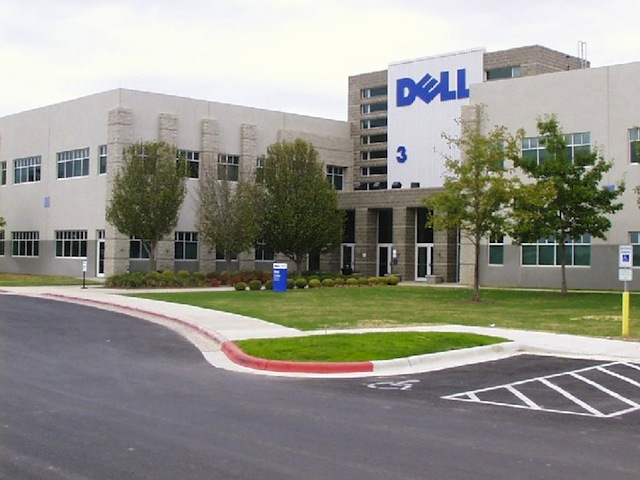
    Michael Dell continues to press on with his buy out bid for the computer manufacturing giant he created with a presentation to shareholders stating his case why Dell Computers would have a better future as a private company.

    Dell’s assertion is the company has to move from being a PC manufacturer to a Enterprise Solutions and Services business (ESS) as computer manufacturing margins collapse in the face of a changing market and more nimble, low cost, competitors.

    What’s telling in Dell’s presentation is just how fast these changes have happened, here’s some key bullet points from the slide deck.

    • Dell’s transformation from a PC-focused business to an Enterprise Solutions and Services (ESS) -focused business is critical to its future success, especially as the PC market is changing faster than anticipated.
    • The transition to the “New Dell” is highly dependent on challenged “Core Dell”performance.
    • The speed of transformation is critical, yet “Core Dell” operating income is declining faster than the growth of “New Dell” operating income.
    • Dell’s rate of transformation is being outpaced by the rapid market shift to cloud.

    The market is shifting quickly against Dell’s core PC manufacturing and sales business and the company’s founder is under no illusions just how serious the problem is.

    Should Michael Dell succeed, the challenge in transforming his business is going to be immense – Dell Computing was one of the 1990s businesses that reinvented both the PC industry and the vast, precise logistics chain that supports it.

    It was PC companies like Dell and Gateway who showed the dot com industry how to deliver goods quickly and profitably to customers around the world. Businesses like Amazon built their models upon the sophisticated logistics systems and relationships the computer manufacturers created.

    A lesson though for all of those companies that followed Dell and Gateway is that those supply chains may turn around and bite you in the future, as Michael says in his presentation;

    Within the PC market, Dell faces increasingly aggressive competition from low cost competitors around the world and shifts in product demand to segments where Dell has historically been weaker.

    Those low cost competitors were many of Dell’s suppliers as over time the company’s Chinese manufacturers, Filipino call centres and Malaysian assemblers have developed the management skills to compete with the US retailers rather than just be their contractors.

    Something that’s being missed in the debate about globalisation at present is that its not just low value work that can be done offshore – increasingly sales, marketing and legal are moving offshore along with programmers and engineers. Now the same thing is happening with management.

    The same thing is also happening with corporations as Asian giants like Samsung, Huawei, Wipro and others displace US and European incumbents.

    Dell Computing has been a much a victim of that move as it has been of the decline in the PC market which means its more than one battle Michael Dell has to fight.

    It may well be that Dell can survive, but we shouldn’t underestimate just how great the challenge is as the company faces major changes to its markets and the global economy.
    Similar posts:

  • How tech savvy are our corporate CEOs?

    How tech savvy are our corporate CEOs?

    Yesterday I asked are executives out of touch with IT industry trends.

    To figure out the answer to that question, I had a look at the backgrounds of the ASX20‘s CEOs. It’s difficult to draw a conclusion from the results.

    ASX 20  CEO backgrounds
    Company CEO Industry background Degree
    AMP Craig Dunn Financial services BComm
    ANZ Bank Michael Smith Financial services Economist
    BHP Billiton Andrew MacKenzie Mining Phd in Chemistry
    Brambles Tom Gorman Finance Economist
    Commonwealth Bank Ian Narev Consulting Law Degree
    CSL Brian McNamee Medicine surgeon
    Macquarie Group Ltd Nicholas Moore Investment banking lawyer
    National Australia Bank Ltd Cameron Clyne investment banking arts/economics
    Newcrest Mining Ltd Greg Robinson finance BSci Geology
    Origin Energy Grant A. King Energy industry Civil Engineer
    QBE Insurance Group Ltd John Neal finance
    Rio Tinto Ltd Sam Walsh mining BComm
    Santos Ltd David Knox Oil and Gas BEng (mech)
    Suncorp Group Ltd Patrick Snowball Finance industry Law, LLD
    Telstra Corp Ltd David Thodey IT/Telecoms BA (anthropology)
    Wesfarmers Ltd Richard Goyder Diversified industrial BComm
    Westfield Group Peter & Stephen Lowy Investment banking BComm
    Westpac Banking Corp Gail Kelly Financial services BA
    Woodside Petroleum Ltd Peter J Coleman? Oil and Gas BEng
    Woolworths Ltd Grant O’Brien Retail Accountant

    What stands out from the list is the dominance of executives from a financial services and commerce background, although that’s hardly surprising given the weight of the banking sector in the Australian stock market.

    An encouraging trend in the mining sector, the other sector highly represented in the index, is how the industry’s CEOs tend to be from a scientific or Engineering background.

    Coming from a science background would tend to indicate the CEOs are probably more across technology trends than we’d think, although the compositions of the boards would probably tell us a little more about the net saviness of the corprorate sector.

    That might be an exercise for the weekend.

    Similar posts:

    • No Related Posts
  • Are executives out of touch with IT trends?

    Are executives out of touch with IT trends?

    Yesterday was media briefing day with a number of vendor events, including a very nice lunch with IBM, on the state of the technology industry.

    One thing that was particularly striking with IBM Truth Behind The Trends survey was just how out of touch many of the executives quoted in the report seem to be with responses on topics like malware and Bring Your Own Device being firmly behind the curve.

    This was borne out at the earlier media roundtable with online security company Websense where they described some of the challenges facing Chief Information Officers in making company boards and senior managers aware of technology security risks.

    What surprised most of the journalists in the earlier briefing was just how clueless many of the executives seem to be about online business risks, those who went along to the following IBM briefing realised why – managers genuinely don’t understand how the internet and business technology is evolving.

    That should worry investors as markets are changing rapidly and managers who don’t recognise, let alone understand, the shifts happening are jeopardizing the their business’ futures.

    Why exactly business leaders are so out of touch is something we look at tomorrow where we examine the background of Australia’s CEOs.

    Similar posts:

  • Startups and stress

    Startups and stress

    An article in Business Insider describes how staff morale has collapsed at recommendation service Foursqure as the company struggles to maintain its relevance and solvency.

    Something that’s missed in the current startup mania is that building a business from scratch is hard work for everyone from the founders to the staff – not to mention the investors.

    While many people working in safe jobs for big organisation wax lyrical about the romance of startups, the reality is most corporate employees would be found under their desks weeping after a couple of weeks at a new business.

    That stress should be something anyone considering starting or joining a start up should give deep thought about, along with all the other factors.

    Similar posts:

  • Australia’s economic rigor mortis

    Australia’s economic rigor mortis

    This is worth watching, Dow Chemical CEO Andrew Liveris and Australian Business Council chief Tony Shepherd spoke on Sunday with Alan Kohler on the ABC’s Inside Business.

    At 5.40 Andrew Liveris says Australia is suffering a state of economic rigor mortis – “we’ve lost the ability to innovate” – with no plans and a great complacency. It’s something all Aussies should reflect upon, although don’t expect these blokes to be any help.


    Similar posts: