Category: business advice

  • Big data’s big truths

    Big data’s big truths

    One thing former Obama 2012 campaign CTO Harper Reed cannot be accused of is subtlety so his statement at the Sydney CeBIT conference last week that Big Data is Bullshit wasn’t wholly surprising.

    Reed has a good point – like all IT industry buzzwords there is a fair degree of hype and BS around Big Data although his referring to it as a storage problem misses the point.

    Data storage is a problem largely solved; when we’re talking about Big Data today, we’re talking more about analysing the information and managing the life cycle of an organisation’s data.

    Not that these issues are new, the tech industry has been dealing with the challenges of storing, managing and analysing data since computers first appeared. In fact, that’s the reason computers were invented.

    An excellent NY Times Bits blog post expands on Harper’s views and rebuts many of the myths and hype around big data.

    Most important is the point that big data is not the truth, we can torture those bits and bytes to tell us anything we like.

    Claims that Big Data can tell us everything or that it will conquer discrimination and make cities smarter are fanciful. It all depends on how we choose to use the data.

    There are downsides with Big Data too — we live in an age where it’s easier to let the algorithm do the work and if the computer says ‘no’, then we can shrug and say “sorry it’s beyond our control.”

    Letting the algorithms run our lives is one of many risks, but it doesn’t change the opportunities for businesses, governments and communities Big Data presents. If we can understand our world better, we can do smarter things.

    That’s the real opportunity with Big Data and we don’t need the hype to tell us that.
    Similar posts:

  • And your message is? How Silicon Valley wrote its own history

    And your message is? How Silicon Valley wrote its own history

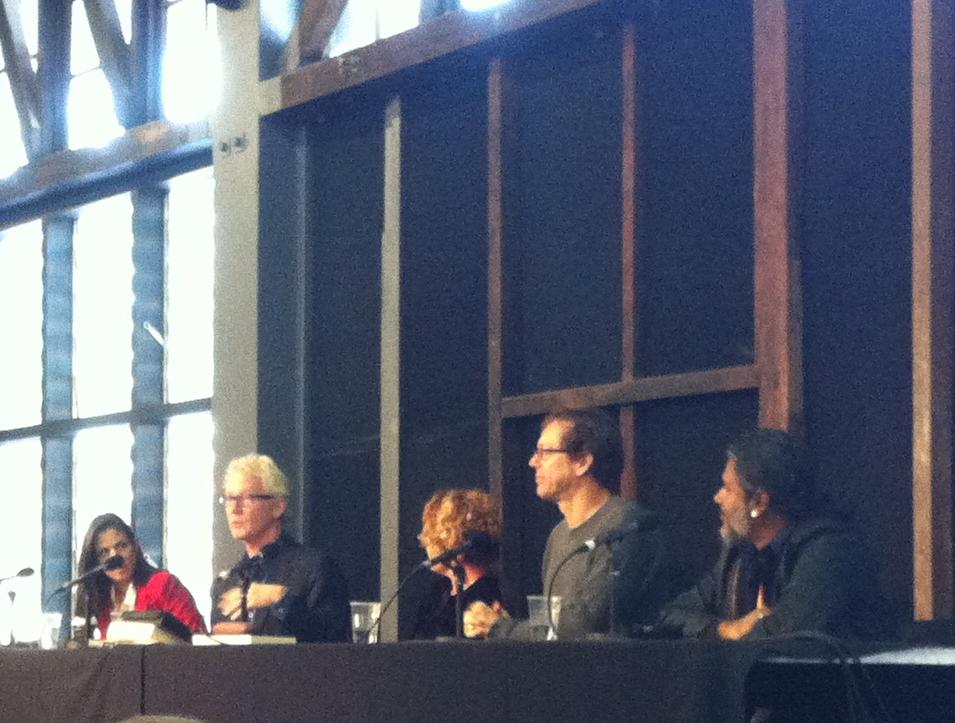
    Sitting in on the Storytelling and Business panel of the Sydney Writers’ Festival it occurred to me how well Silicon Valley and the tech startup community have crafted an image for their times.

    Author of What’s Mine Is Yours, Rachel Botsman focused on the need of businesses to articulate the organisation’s sense of purpose. While this begs the question of what’s the message if the business’ purpose is to enrich their senior management, it is an a good point.

    What is a business’ purpose and how do you articulate it? More so, what is the purpose of your industry?

    One group of businesses that has done very well in articulating their message is the Silicon Valley tech community who’ve portrayed themselves – regardless of the reality – as being driven by the altruistic aim of changing the world.

    Steve Jobs was one of the leaders of this and, while we shouldn’t overlook his talents, he was a ruthless, driven businessman.

    On the panel advertising industry elder Neil Lawrence raised Jobs’ ability to articulate Apple’s mission, telling the story of when the Apple CEO was challenged on the ‘Thing Different’ slogan not being good English, he replied “it’s Californian.”

    Apple’s success in branding itself as a visionary, creative company – and Google’s image of ‘Don’t Do Evil’ – show how it’s possible to create an image for an organisation, an industry or even an entire industry.

    In reality, Silicon Valley and the tech industry are as full of snake oil salesmen, mercanaries and paper clip counting corporate bureaucrats as any other sector, but legends have been built, and continue to be built, on the myth of  selfless entrepreneurs sacrifice all to make the world a better place.

    Contrasting Silicon Valley’s success with the Australian experience was interesting, Botsman was scathing about the ability of Aussie managers in telling the story about their businesses finding most of them have lost her by the second slide of their Powerpoint presentation.

    We shouldn’t get too hung up though about the nobility of telling a business’ story, Shehan Karunatilaka, former copy writer and author made the major point about business communications “story telling in business is about shifting product.”

    He went on to describe the tragic career path of the advertising copy writer who comes into the ad industry believing they are a world changing artist and ends up being burned out.

    “you are not an artist – you are a mouthpiece for businesses” said Shehan.

    The truth is most of us in business are not artists, some parts of our work may involve creative skills – like copy writing, design or financial engineering – in reality most of us are there to make a decent living, if not a fortune.

    Silicon Valley’s mythmaking shows how you can cover the mundane truth with a noble, a constant narrative which has  allowed ruthless businessmen like Steve Jobs and Mark Zuckerberg to portray themselves as selfless visionaries rather than the modern equivalents of  John Rockerfeller, Cornelius Vanderbilt and other 19th Century robber barons.

    This is possibly the greatest message of all in business communications – history is written by the victors.

    When you’re winning in your industry, you get to write the story.

    Similar posts:

  • Rethinking the middle class

    Rethinking the middle class

    Technologist Jaron Lanier says the internet has destroyed the middle classes.

    He’s probably right, a similar process that put a class of mill workers out of a job in the Eighteenth Century is at work across many industries today.

    Those loom workers in 18th Century Nottingham were the middle class of the day – wages were good and work was plentiful. Then technology took their jobs.

    Modern technology has taken the global economy through three waves of structural change over the past thirty years, the first wave was manufacturing moving from the first world to emerging economies as global logistic chains became more efficient.

    The second wave, which we’re midway through at the moment, is moving service industry jobs and middleman roles onto the net which destroys the basis of many local businesses.

    Many local service businesses thrived because they were the only print shop, secretarial service or lawyer in their town or suburb. The net has destroyed that model of scarcity.

    The creative classes – people like writers, photographers and musicians – are suffering from the samee changed economics of scarcity.

    Until now, occupations like manual trades such a builders, truckdrivers and plumbers were thought to be immune from the changes that are affecting many service industries.

    The third wave of change lead by robotics and automation will hurt many of those fields that were assumed to be immune to technological forces.

    One good example are Australia’s legendary $200,000 mining truck drivers. Almost all their jobs will be automated by the end of the decade. The days of of relatively unskilled workers making huge sums in the mines has almost certainly come to an end.

    So where will the jobs come from to replace those occupations we are losing? Finance writer John Mauldin believes the jobs will come, we just can’t see them right now.

    He’s almost certainly right – to the displaced loom worker or stagecoach driver it would have been difficult to see where the next wave of jobs would come from, but they did.

    But maybe we also have to change the definition of what is middle class and accept the late 20th Century idea of a plasma TV in every room of a six bedroom, dual car garage house in the suburbs was an historical aberration.

    Just like the loom weavers of the 18th Century, it could well be the middle class incomes of the post World War II west were a passing phase.

    If so, businesses and politicians who cater to the whims and the prejudices of the late Twentieth Century middle classes will find they have to change their message.

    Similar posts:

  • Exploiting the weak points

    Exploiting the weak points

    The Great ATM Heist, where a crime gang subverted the credit card system, could well be the digital equivalent of the Great Train Robbery of the 1960s.

    While the logistics of the operation are impressive with hundreds of accomplices across twenty countries, the real moral from the story comes from how the gang targeted outsourced credit card processing companies to adjust cash limits.

    Again we see the risks of throwing your problems over the fence, a system is only as reliable or secure as the weakest link and, regardless of how tight commercial contracts are, outsourced services can’t be treated as someone else’s concern.

    No doubt banks around the world will be having a close look at their systems and how they can trust other organisations’ outsourced operations.

    Similar posts:

  • Disrupting the incumbents

    Disrupting the incumbents

    One of the truisms of modern business is that no incumbent is safe, Microsoft, Nokia and Hauwei are good examples of just how businesses that five years ago dominated their industries are now struggling with changed marketplaces.

    In the last two days there’s been a number of stories on how the smartphone and computer markets are changing.

    According to the Wall Street Journal’s tech blog, PC manufacturers are hoping Microsoft’s changes to Windows 8 reinvigorates the computer market.

    Those hopes are desperate and somewhat touching in the face of a structural shift in the marketplace. These big vendors can wait for the Big White Hope to arrive but really they have only themselves to blame for their constant mis-steps in the tablet and smartphone markets.

    Now they are left behind as more nimble competitors like Apple, Samsung and the rising wave of Chinese manufacturers deliver the products consumers want.

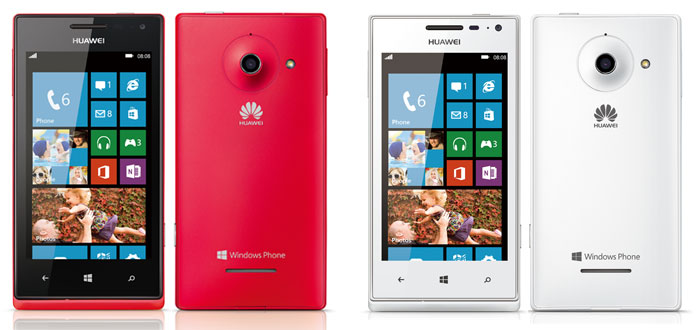
    All is not lost for Microsoft though as Chinese telecoms giant Hauwei launches a Windows Phone for the US markets which will be available through Walmart.

    Hauwei’s launch in the United States is not good news though for another failing incumbent – Nokia.

    Nokia’s relationship with Microsoft seems increasingly troubled and the Finnish company is struggling to retain leadership even in the emerging markets which until recently had been the only bright spot in the organisation’s global decline.

    Yesterday in India, Nokia launched a $99 smartphone to shore up its failing market position on the subcontinent.

    For the three months to March, Nokia had a 23 percent share of mobile phone sales in India, the world’s second-biggest cellular market by customers, Strategy Analytics estimates. Three years ago it controlled more than half the Indian market.

    India isn’t the only market where Nokia is threatened – in February Hauwei launched their 4Afrika Windows Phone aimed at phone users in Egypt, Nigeria, Kenya, Ivory Coast, Angola, Morocco and South Africa.

    The smartphone market is instructive on how many industries are changing, almost overnight the iPhone changed the cell phone sector and three years later Apple repeated the trick with the iPad, in both cases incumbents like Motorola, Nokia and Microsoft found themselves flat footed.

    As barriers are falling with cheaper manufacturing, faster prototyping and more accessible design tools, many other industries are facing the same disruption.

    The question for every incumbent should be where the next disruption is coming from.

    In fact, we all need to ask that question as those disruptions are changing our own jobs and communities.

    Similar posts: