Category: business advice

  • To save the community, we had to destroy it.

    To save the community, we had to destroy it.

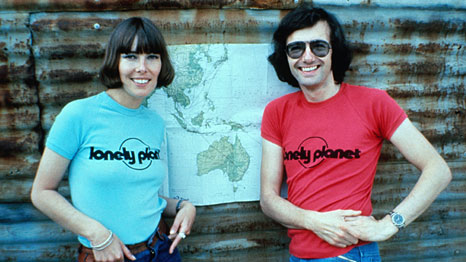
    When the BBC bought a 75% of travel guide publisher Lonely Planet in 2007, many people were puzzled at what the travel guide added to the publicly owned broadcaster’s mandate.

    In 2011 the BBC bought out the rest of the founders’ stakes and just over a year later management mistakes threaten to destroy the brand.

    Lonely Planet is one of the most powerful internet media properties in the English speaking world having become the dominant travel guide in the 1980s and then successfully making the jump into the online world with its website and mobile apps.

    In 2012, the site boasted of four million visitors a month with most under 35 years old.

    Key to Lonely Planet’s online success has been its community. The Thorn Tree forum provided the bulk of the site’s traffic as thousands of members discussed exotic destinations and asked or answered travel questions.

    The Thorn Tree also turns out to be the BBC’s undoing as management struggled to control members’ comments.

    At the end of 2012, inappropriate content was bought to management’s attention, with the Jimmy Savile scandal still reverberating around the corridors of the BBC, the organisation’s management panicked and announced a temporary closure of the Thorn Tree.

    Two months later, the site is back up again with strict pre-moderation of posts which has left many long time users upset and going elsewhere, if they didn’t already do so during the closure.

    Online communities are a strong assets but they are surprisingly fragile, as many popular sites have found in the past.

    For Lonely Planet users, there’s no shortage of other travel sites online and it’s going to be challenging for the site to recover.

    The Thorn Tree saga raises the question of whether risk adverse, public sector organisations like the BBC have the risk appetite to run online forums and build communities.

    By definition successful online communities are diverse and sometimes skate close to the boundaries of good taste for a careerist executive in a managerial organisation like the BBC, such risks are intolerable and have to be eliminated.

    If this means shutting down the Thorn Tree forums or neutering them, then that will be done. Management careers come before the good of the organisation.

    Time will tell whether Lonely Planet will continue to thrive under the BBC and its management, but the portents aren’t good.


    Similar posts:

  • Smelling digital garbage

    Smelling digital garbage

    Excel spreadsheets lie at the core of business computing, but what happens when they go wrong?

    James Kwak writing in the Baseline Scenario blog describes how Excel spreadsheets have an important role in the banking industry and their key role in one of the industry’s most embarrassing recent scandals.

    In the early days of the personal computer spreadsheets; it was company accountants and bookkeeping clerks who bought the early PCs into offices to help them do their jobs in the late 1980s .

    From the accounts department, desktop computers spread through the businesses world and the PC industry took off.

    Over time, Microsoft Excel displaced competitors like Excel 1-2-3 and the earliest spreadsheet of all, VisiCalc, and became the industry standard.

    With the widespread adoption of Excel and millions of people creating spreadsheets to help do their jobs came a new set of unique business risks.

    The weakness with Excel isn’t with the program itself, it’s that the formulas in many spreadsheets aren’t properly tested and often incorrect data is put into the wrong fields.

    In his story Kwak cites the JP Morgan spreadsheets that miscalculated the firms Value-At-Risk (VAR) calculations for synthetic derivatives. The result was the London Whale debacle where traders were allowed to take positions – some would call them bets – exposing the bank to huge potential losses.

    It turns out that faulty spreadsheets had a key role as traders cut and paste data between various spreadsheets and the formulas that made the calculations had basic errors.

    That a bank would have such slapdash procedures is surprising but not shocking, almost every organisation has a similar setup and it gets worse as a project becomes more complex and bigger numbers become involved. The construction industry is particularly bad for this.

    Often, a spreadsheet will show out a bunch of numbers which simply aren’t correct. Someone made a mistake entering some data or one of the formulas has an error.

    The business risk lies in not picking up those errors, JP Morgan fell for this and probably every business has, thankfully to less disastrous results.

    My own personal experience was with a major construction project in Thailand. One sheet of calculations had been missed and the entire budget for lights – not a trivial amount in a 35 storey five star hotel – hadn’t been included in the contractor’s price.

    This confirmed in my mind that most competitive construction tenders are won by the contractor who made the most costly errors in calculating their price. Little has convinced me otherwise since.

    In the computer industry there’s a saying that “garbage in equals garbage out” which is true. However if the computer program itself is flawed, then good data becomes garbage.

    Excel’s real flaw is that it can make impressive looking garbage that appears credible if it isn’t checked and treated with suspicion. The responsibility lies with us to notice the smell when the computer spits out bad figures.

    Spreadsheet image courtesy of mmagallan through sxc.hu

    Similar posts:

  • 15 years of radio and technology

    15 years of radio and technology

    I used to be a cranky radio listener.

    One morning in early 1998 I was listening to my local ABC station, then 2BL, when stand in breakfast host Bob Hughes was interviewing a “Y2K expert” who had the standard spiel designed to scare people into buying expensive consulting services.

    Irritated by the expert’s shoddy advice, I dashed off a quick “with respect” fax to the radio station – the ABC didn’t have publicly facing email addresses at that time – and expected it would be ignored.

    A few weeks later Bob Hughes invited me on his regular Sunday spot to talk about Y2K and computers in general. He didn’t mention we’d spend most of the time taking listeners’ calls.

    After a few minutes of ‘umming’ and ‘aaahing’ with lots of bluffing, Bob finished with “we’ll see you next month Paul.”

    So it began.

    Over time the segments moved from 702 Weekend on Sunday mornings to regional spots and the national Tony Delroy nightlife segment

    Looking at the sadly neglected PC Rescue website, the programs have ranged from the mundane to the mad, bad and ugly.

    At the ugly side, the Windows virus epidemic of the early 2000s looms large. At one stage almost every caller had a virus problem, the only ones that were didn’t were Mac users calling in to crow about their not having this problem.

    We enjoyed the various platform wars as Microsoft consolidated its strength and then saw it ebb away as first Firefox started chipping away at its browser dominance, Google at its Internet strategy and then Apple came roaring back into relevance.

    The radio shows track the rise of the web as we started talking about the various online services that were changing computing.

    One of the critical things, which still hasn’t changed, was billing problems.

    Through the early 2000s Australian telcos had shocking charges for data and mobile services. Calls from listeners distressed at big bills was common and the TIOs contact details would be among our most frequent answer.

    It was Telstra’s decision to stop stunting Australian internet growth and offer reasonably priced plans, albeit with criminally tiny data allowances, that kick started consumer adoption of broadband plans.

    Today the questions revolve around social media, online security and the merits of Android versus Apple smartphones and tablets, it’s quite notable at how Microsoft has moved from dominating the program to being almost irrelevant.

    How the next 15 years will pan out are anyone’s  guess, although one suspects pervasive computing, the cloud and the internet of machines will be among the trends we’ll see.

    Last week Tim Berners-Lee said that innovation is only just beginning, it’s going to be an interesting, wild ride.

    I’m still a cranky radio listener, but these days I have a lot more sympathy for producers and announcers.

    Similar posts:

  • Will going private save Dell?

    Will going private save Dell?

    Now Michael Dell and a team of private equity investors are going ahead with taking the company he founded private, the question is will this make any difference to the technology company.

    Turning around Dell is going to be a massive task as the company has lost the advantages that made it the world’s biggest PC manufacturer. At the same time, the industry itself is shrinking as corporate and consumer customers move from personal computers and servers to tablets and cloud services.

    The triumph of logistics

    Dell’s real success lay in logistics. In the early 1990s the company – along with its competitor Gateway – developed a global just-in-time assembly network which took advantage of cheap Asian suppliers, efficient air courier networks and call centres.

    Bringing these together meant Dell and Gateway could deliver a custom made computer to a customer in just over a week without the hassle of holding warehouses of stock, employing sales staff or renting stores.

    Price was the ultimate advantage and these companies could undercut competitors with their efficient networks, lack of inventory and no retail overheads.

    Losing an advantage

    Unfortunately for Dell, competitors caught up and by the early 2000s most PC manufacturers were using similar manufacturing methods and were able to match their price points.

    By 2006, HP overtook Dell as the world’s biggest PC manufacturer.

    Worse yet, Apple adapted Dell’s logistic systems to corner the high end of the PC market and then expand into consumer devices.

    Dell’s reaction was to compete solely on price and to do so they cut component costs and outsourced support to lowest cost providers.

    This backfired horribly and the poor quality products coupled with execrable after sales support deeply damaged Dell’s brand with the Dell Hell debacle being the public face of widespread customer unhappiness.

    Dell in the post PC world

    Making matters worse for Dell is that the market has shifted away from personal computers.

    Dell has a tragic track record of diversifying out of the PC markets, all of its attempts to move into consumer electronics with PDAs, smartphones, tablet computers and entertainment devices have been, at best, embarrassing.

    Enterprise computing has been more successful but even here Dell has shown little innovation and most of their entries into the corporate markets has been through acquiring specialist companies rather than doing anything different.

    Part of this to failure to diversify has been because of Dell’s relationship with Microsoft. The various versions of Windows intended to be used on PDAs and tablet computers turned out to be wholly unsatisfactory and left the market open to Apple with the iPhone and iPad.

    Going private

    That Microsoft is going to have a financial interest in the privatised Dell is not encouraging for the company’s prospects.

    Neither is the continued presence of Michael Dell. His return as the company’s CEO in 2007 has not solved the company’s problems.

    It’s difficult to see where the problem was being a public company, Dell’s woes were not because of troublesome board members or activist shareholders.

    Going private might allow Michael Dell and his team to experiment without the accountability of quarterly reporting, but that barely seems worth 26 billion dollars.

    Dell could surprise us all by reinventing its business and claiming a role in the post-PC world, but right now its hard to see how.

    Similar posts:

  • Who will build the next Barnes and Noble?

    Who will build the next Barnes and Noble?

    As US bookseller Barnes and Noble shrinks its store network, Mark Athitakis has a tribute to the once ubiquitous chain in The New Republic.

    Barnes and Noble was never popular among US independent booksellers because of the perception, probably true, that the chain drove locally owned stores out of business.

    What it offered though was a safe, comfortable place for booklovers to gather in suburban shopping malls. As Mark points out, it created a community.

    Its stores were designed to keep people parked for a while, for children’s story time, for coffee klatches, for sitting around and browsing. That was a business decision—more time spent in the store, more money spent when you left it—but it had a cultural effect. It brought literary culture to pockets of the country that lacked them.

    In recent years that community moved to coffee shops, in the United States B&N’s role was taken by Starbucks, at the same time our reading habits changed and the business of selling books and magazines became tougher.

    Now that community is changing again, as the online societies like blogs, Facebook and Twitter become important, the coffee shops have responded with free wi-fi which is a perfect example of how the online and offline world come together.

    That need to create communities, either physically or online, is a driving human urge.

    Online that role is being catered to with social media platforms and sites like food, mommy or tech blogs where like minded people can gather.

    Down at the mall, Barnes and Noble catered for that need in the 1980s and Starbucks in the 1990s. What will follow them may be the next big success in the retail or hospitality industry.

    Image courtesy of Brenda76 on SXC

    Similar posts: