Category: cloud computing

  • Business and the workforce in an app driven world

    Business and the workforce in an app driven world

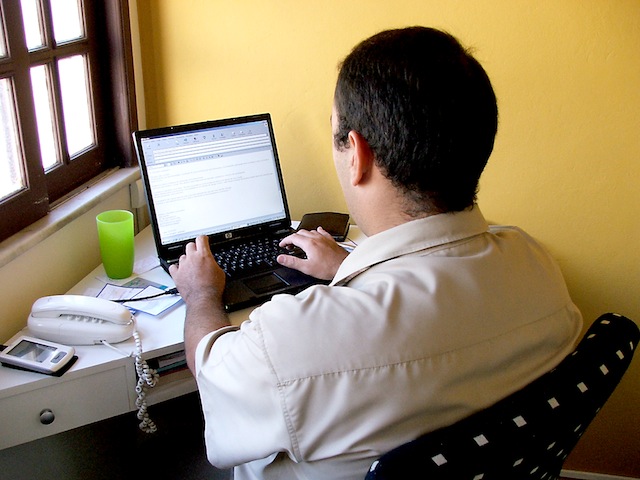
    One of the things we know about the future is the workplace will be very different. Just as the Personal Computer changed offices in the 1990s, the smartphone and tablet computer are changing today’s.

    Part of that change though is being driven by the change in generations. While this blog tries to avoid falling into the trap of generalising about different age cohorts – and contends the entire concept of baby boomers as an economic group is flawed – there are undoubtedly differences between the world of the PC generation of workers and that of the new mobile breed.

    The key difference is the idea that work devices are different to those at home. Those of us bought up with the idea that the office computers would be tightly locked workstations – in the 1990s we also had the quaint idea corporate desktops were generally more powerful than what we had at home – are now seeing that way of working being abandoned.

    For the next generation of office workers, accessing corporate resources through an app connected to a cloud service will be as normal as opening Windows NT to access the shared corporate drive was 15 years ago.

    Along with the technology and generational change driving businesses into the cloud-app computing world there’s also the needs of a much more fluid and mobile workforce. The shift to casualisation began well before PCs arrived on desktops but the process is accelerating as we see crowdsourcing and the ‘uberization’ of industries.

    Older workers will adapt as well, many came through the evolution of business computing from ‘green screen’ displays – if their businesses had any at all – through to the server based systems of recent years. For them the shift to smartphones might be troublesome for those with fading eyesight, but it won’t be the first change.

    For businesses this shift means they have to start planning for the mobile services that will change workforces and industries. The shift is already well underway – accounting software company Intuit estimates small businesses already use an average of 18 apps to run their business.

    We all have to start thinking about how these apps can be used to manage our staff and workforces.

    Similar posts:

  • Mimecast and the future of email

    Mimecast and the future of email

    Email remains the biggest business app in the world says Peter Bauer, the CEO and co-founder of mail management service Mimecast.

    Boston based, South African born Bauer founded his company to “make email safer for business” and after launching in his home country and attracting 14,000 customers and spoke in Sydney about his company and how email is changing in the world of the cloud.

    In many respects email is one of those applications – like SMS – that happened by accident. In it’s early days no-one intended or expected those messaging systems to become key communications services.

    “I started my IT career in the mid-1990s as an e-mail systems engineer and if you think back to the mid 90s no business cared much about email at all,” says Bauer who believes the experience gave him a unique perspective to how the service evolved into a key business application.

    Over the next ten years Bauer saw how email became the personal filing systems for most workers and put systems under pressure as companies had to manage large file stores with the associated compliance and discovery risks.

    The security risks too were huge as email became the preferred malware delivery system as virus and spyware writers used infected messages to get onto users’ systems, a problem that has become worse as ransomware and phishing attacks have become common.

    “Because business operations and process became dependent upon email, it became necessary to make the service highly available,” says Bauer in emphasising how important it has become to most large and small enterprises.

    Even with the shift to the cloud, most companies have remained with email with companies moving to Microsoft’s Office365 – Bauer claims the take up has doubled in the last twelve months. Google’s Apps are gaining traction in the small end of the industry but the enterprises are really wedded to the Microsoft platform.

    Bauer sees that shift to cloud based services as changing the risk profile for businesses and this is another opportunity for his business.

    Email faces a number of challenges as social media and instant messaging apps become preferred communications tools for younger groups while some businesses are banning email.

    For the moment though, it looks like the service is safe as companies remain wedded to email as the preferred form of business communication.

    Similar posts:

    • No Related Posts
  • Subscribing to disruption – Zuora founder Tien Tzuo

    Subscribing to disruption – Zuora founder Tien Tzuo

    “This is a customer driven revolution,” says Zuora co-founder and CEO, Tien Tzuo, of the business shift to a subscription payment model.

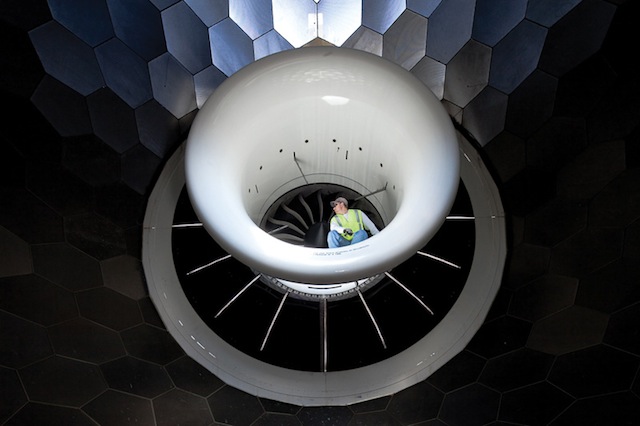
    While the cloud computing business has been one of the leaders in the shift to the subscription model, the move is happening in industries as diverse as jet engines, agricultural machinery and music.

    Zuora is one of the businesses providing the tools to manage customer subscriptions and Tien Tzuo shares with Decoding the New Economy how he sees the subscription economy changing industries.

    Tien, who was an early Salesforce employee, describes some of the forces he sees driving this shift and where the opportunities lie for business owners, managers and entrepreneurs.

    “We looked at companies like Netflix which at the time it was DVD rental service and Zipcar and saw the same payment challenges we had at Salesforce,” says Tien. “The leap for us was looking at the transformation of companies like Zipcar into a subscription model.”

    There are few industries that won’t be affected to the shift to a subscription model, Tien believes, and he sees this radically changing many sectors with Internet of Things providing a huge push towards pay-as-you-go services.

    Similar posts:

  • Engineering for change – the ethics of the new economy

    Engineering for change – the ethics of the new economy

    Technologies like the internet of things, cloud computing, 3D printing and big data are changing our industries and society. At the ACI Connect event today, I gave a presentation on some of the opportunities, risks and ethical issues facing technologists and engineers in the connected economy.

    While many of the engineering principles underlying these technologies aren’t new, their scale and the power they give businesses and governments means there are serious ethical, security and societal issues we have to consider.

    This presentation explores some of those issues and the technologies and trends driving them.

    Entering the Data era

    A conceit among technologists is that we’re in an unprecedented era of change. This is not true.

    The Twentieth Century saw massive restructuring of our society as the telephone, mains electricity, the motor car and television changed our society. Many of today’s settled industries came out of the huge technological steps forward over the last hundred years.

    Just as cheap energy – delivered to us through the motor car and mains electricity – defined the Twentieth Century, this century will be defined by easily accessible and abundant information.

    Those changes over the last hundred years give us some hint as to where we are going; the shifts that saw coal carters, newspaper sellers and night soil men eventually become extinct, along with a shift from a largely agricultural workforce to industrialised employment, is going to be repeated this century as information becomes abundant.

    Harnessing the Internet of bees

    Cheap and small sensors mean it’s easier to put a chip on something. In this case we have a CSIRO project tracking bee activity where Tasmanian scientists have put tracking devices on bees.

    Those tracking devices would have weighed several hundred grams and cost hundreds of dollars ten years ago but today they are small and cheap enough to fit onto the backs of bees.

    Being able to deploy these sensors means we can fit them to things we couldn’t have imagined a few years ago and the data they generate is going to give us insights into patterns and behaviours we couldn’t have contemplated.

    However not all of this data is useful or necessary and some may even be damaging to individuals and groups. One ethical question we have to ask ourselves is whether it is in the community’s interests to collect this information.

    Another aspect of connecting devices, or even animals and people, to the Internet or a network is it opens the possibility of hacking, as we’ve seen in the recent Jeep case where engineers showed they could control a vehicle remotely. The security and privacy aspects of the IoT are critical and something designers and product engineers can’t overlook.

    Decoding the data

    It’s often said that Data is the New Oil. In truth it isn’t, data is increasingly cheap and easy to access. Being able to analyse that information is where the power lies.

    Data analytics is probably going to be one of the most important fields in an information rich economy and already we’re seeing companies springing up to help farmers estimate crop yields, truck drivers plan their routes and even organisations like the Royal Flying Doctor Service using cloud services to better plan their operations.

    Again these services plan a lot but there’s also downsides as inappropriate data matching risks breaching consumers’ privacy and even drawing false conclusions from confusing correlation with causation. A good example of this is Facebook being used to judge credit worthiness.

    Removing the human element

    Automation – whether it’s through robotics, machine learning or algorithms – will change many industries and the workforces employed by them.

    One understated field is management where many white collar supervisor jobs are at risk from business automation. It may be that the executive suites are the next sector to be decimated by computers and robots.

    Similarly, many services industry jobs such as taxi drivers and baristas are at risk from robotics while large scale 3D printing of buildings threatens to put many building trades under pressure.

    No more truck drivers

    Driverless vehicles have a whole range of applications, in logistics were seeing them put forklift drivers out of work while mining companies are rolling out massive dump trucks in their new mines that don’t require $200,000 a year drivers.

    One study estimates that half the police workforce in the United States would become redundant as law abiding driverless cars become common.

    Similarly electric cars will have a massive impact on government revenues. Currently Australian governments raise $17bn a year from fuel excise and has ramifications for businesses involved in the supply chain for service stations.

    Once driverless vehicles become commonplace we may well see them changing industries like daycare, public transport and couriers as it becomes possible to summon an autonomous vehicle, put the kids or the luggage into it and then send it off to its destination. If you’re worried, you can track the progress on an app.

    The effects of the driverless car show how we have to think laterally about the effects of new technologies on our businesses, sometimes the effects of a new way of doing things could indirectly hurt our business or create new opportunities.

    Squeezing out inefficiencies

    One of the great promises for the IoT, Big Data and business automation is to remove inefficiencies from industry. Cisco believe that up to 14% of the Oil and Gas industry’s costs could be stripped away with today’s technologies. That in itself is worth over a 100 billion dollars a year in cost savings.

    GE are deploying their technologies into a diverse range of industrial equipment ranging from jet engines to railway locomotives and wind turbines with spectacular results in reducing costs and improving productivity.

    The effect of these improvements means less downtime and maintenance costs which are good news for customers and shareholder of these companies, but bad news if you’re a maintenance business. It also means the speed of change in business is accelerating.

    Skilling the future workforce

    In summary the skills needed today are very different to those of 1915 and 1965 and those of the next fifty years will be even different.

    As a society we have to decide what skills we are going to give not our children but those currently still in the workforce who are going to be working longer and later into their lives as the workforce ages.

    We also have to consider what sort of ethical compass we have. While the technology we have today is powerful and capable of great things, it’s also capable of great harm. We need to have an understanding of what the effects and limits are of our actions with the Internet of Things, Big Data and analytics.

    Ultimately we need to ask what value we as individuals can add to our communities and society.

    Similar posts:

  • Businesses and the Windows 10 upgrade

    Businesses and the Windows 10 upgrade

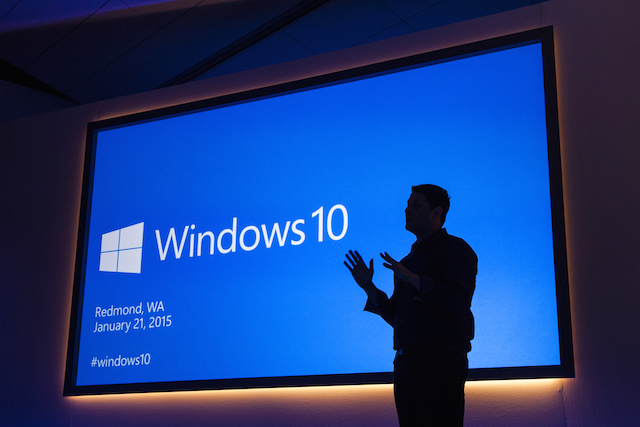
    Last night Microsoft formally launched Windows 10, the company’s latest desktop operating system.

    A decade ago a new Microsoft operating system would have had people queuing at computer shops all night but today, in a world of cloud computing, what software runs on a computer has become less important to users.

    To entice users onto the new operating system, Microsoft are making the upgrade to Windows 10 free for the next year to those using the earlier versions 8 and 7 and many will have noticed the messages appearing on their computers over the past few weeks.

    Windows 10 is a good system, Microsoft has learned from the user unfriendly missteps of Windows 8 and added features that make the system smoother and takes advantage of the desktop computers’ power.

    Microsoft have also continued with their philosophy of providing a system that works on all sizes of devices from smartphones to large monitor PCs and Windows 10 adapts to the needs and use patterns of the different screens.

    That Windows 10 works on smartphones is less of a pressing matter given Microsoft’s attempts to crack the mobile market have been unsuccessfully and Windows phones languish with a tiny market share.

    For business users, the question is whether to take advantage of the upgrade. The short answer is maybe if use cloud based services in your company and wait if you have desktop applications that rely on Windows.

    Should you have applications that run on desktops and servers in your office then it’s essential to wait and see if your software runs properly on Windows 10. You’ll need to talk to the program’s supplier and your IT support person. Generally the advice is to wait a few months to iron out any bugs.

    If you’re using cloud services then the operating system running on your computer is largely irrelevant as long as you have a modern web browser. Microsoft’s new Edge web browser that’s built into Windows 10 so far appears to be a fast and capable piece of software that’s an improvement on the much maligned Internet Explorer that still lurks on the system for backwards compatibly reasons.

    Upgrading though isn’t without its risks, sometimes things go wrong and even the best planned transition doesn’t always work out and generally most cautious IT advisors will take the attitude “if it ain’t broke, don’t fix it.”

    One other potential trap is in hardware. It may be that some printers, cameras and other hardware doesn’t have the right drivers for the new system so while the software upgrade is free, you may end up having to stump up a few hundred dollars for new peripherals.

    For businesses users, if things ain’t broke and the existing computers are working well then the upgrade to Windows 10 is adding unnecessary complexity to the office and it’s probably best to hold off the transition until new computers are needed.

    Similar posts: