Category: computers

  • Creating a Silicon Brain

    Creating a Silicon Brain

    Should we be rethinking how computers are designed? The co-founder and CEO of chip designer Nervana, Naveen Rao, believes so as artificial intelligence applications change the way systems work.

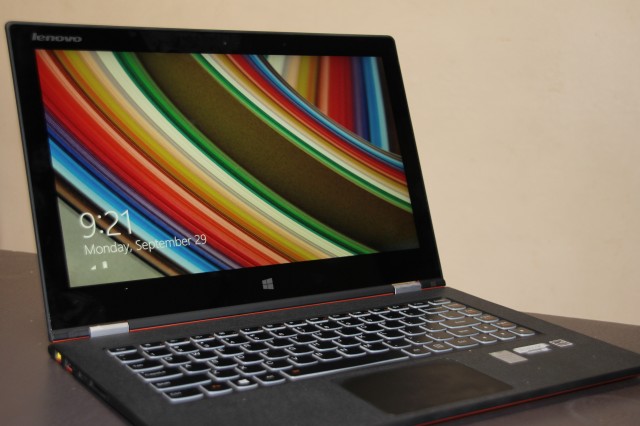
    “A brain only uses 20 watts of power to do far more than a laptop,” observes Naveen Rao at a breakfast following Intel’s Artificial Intelligence Day in San Francisco last week.

    “Presumably the brain is doing more computation than your laptop,” he continues. “What are we missing? Why is there such a big difference between what a computer can do and a brain can do. Let’s try to understand that and maybe what we learn can change how we design computers.”

    A lifetime passion

    Rao, whose company was acquired by Intel for over four hundred million dollars last August, was discussing the quest to make computers operate more like brains and less like adding machines.

    For Rao this has been a lifetime passion, having graduated as an electrical engineer and spending most of his career designing computer chips at Sun Microsystems and various startups he quit his job to do a PhD in neuroscience, “after ten years, I wanted to return to my passion of trying to use biology to better understand computers.”

    From that combination of study and experience Nervana was founded in 2014 and raised twenty million dollars from investors before being acquired by Intel.

    Replicating the bird, not the feathers

    The key part in creating a computer that acts more like a brain is to get the individual CPUs to be working together in a network similar to the mind’s neural paths, “look at a bird compared to a plane.” Rao says,” we don’t replicate the feathers, but we do the function.”

    Doing this meant rethinking how processors are designed, “there are tried are true methods of chip architecture that we basically questioned.”

    “We don’t need high levels of generality. We don’t need this to work on energy or weather simulations. We removed some of that baggage.”

    Paring back the processor

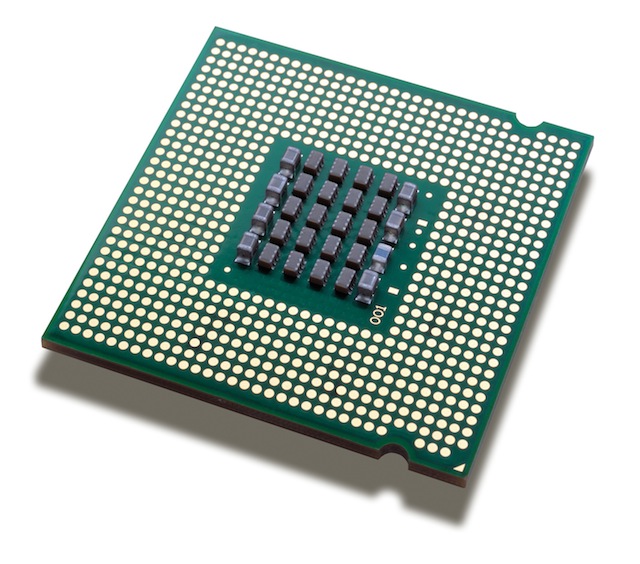
    So the Nervana team stripped down the individual processor and removed many functions, such as a cache, that are built into today’s advanced CPUs. Those lighter weight, and less power hungry, units can then be combined into neural networks more suited to artificial intelligence functions than today’s computers.

    “Nvidea, this sort of fell into their laps,” observes Rao of Intel’s key competitor in the AI, graphics and gaming space. “It just so happens the graphics functions on their chips are suited to Artificial Intelligence applications.”

    Without the more complex functions of modern CPUs, Rao and the Nervana team see the opportunity to build more flexible computers better suited to artificial intelligence applications.

    Intel focuses on AI

    That focus on AI has seen Intel branding its AI initiatives under the Nervana brand name as the iconic Silicon Valley company tries to move ahead with more nimble competitors like Qualcomm and NVidea.

    For the computer industry, artificial intelligence promises to be the next major advance, something necessary if we are ever going to make sense of the masses of data being collected by smart devices and the reason why Microsoft, Google, Amazon and Facebook are all making massive investments in the field.

    Regardless of whether Intel and Nervana are successful in the AI marketplace, Rao sees the entire field of neural computing as a great opportunity. “It’s exciting, there’s lots of chances to innovate.”

    Paul travelled to San Francisco as a guest of Intel
     

    Similar posts:

    • No Related Posts
  • Ditching the old tech – Lessons for the iPhone from the Apple iMac

    Ditching the old tech – Lessons for the iPhone from the Apple iMac

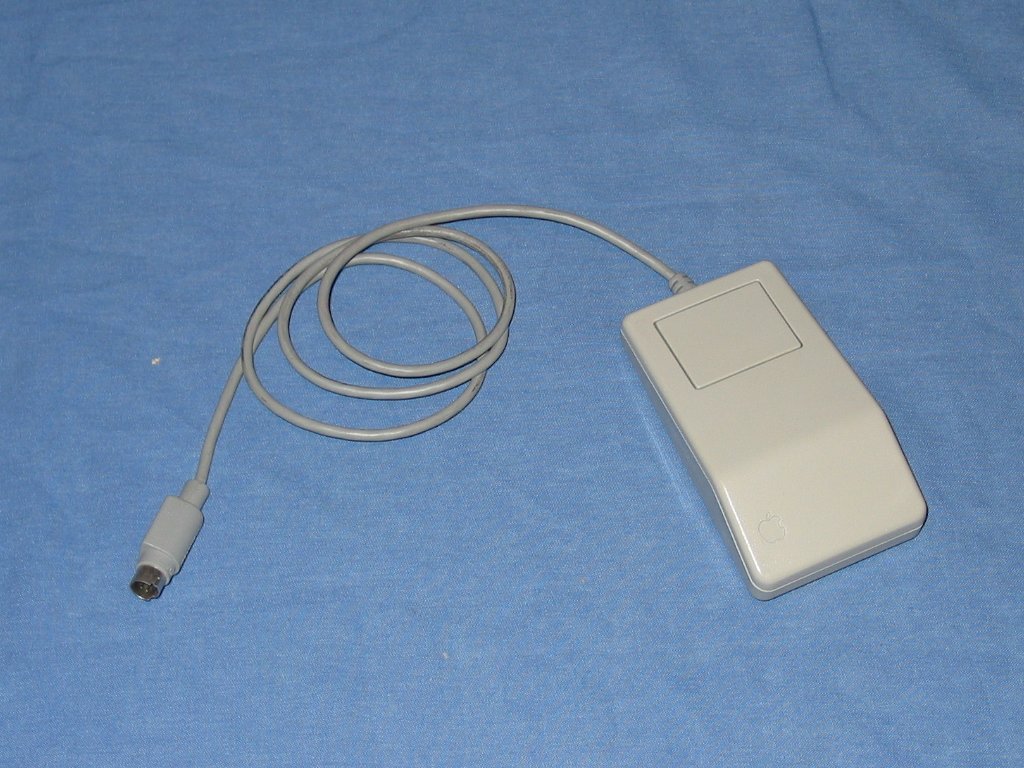
    “I’ve been betrayed, I’ll never buy another Apple product again!” was the cry in 1998 when the company announced their new range of iMacs and portables wouldn’t support the long standing Apple Development Bus (ADB) system and floppy disks.

    At the time Apple had been in decline, only the year before Microsoft had bailed the company out with a few conditions that had deeply irritated the company’s loyal customer base.

    Many of those customers – mainly in education and graphic design – had invested deeply in ADB compatible equipment and their irritation at abandoning that investment for USB based kit was understandable.

    Today we’re seeing similar protests about the rumoured dropping headphone jacks from the upcoming Apple 7 device, customers aren’t happy about the possibility being forced from a well established standard to a less reliable and likely more expensive system.

    Unlike the computer world of 1998 today’s marketplace is very different, Apple is no longer a quirky and niche product but the most profitable of the tech industry’s giants – as Microsoft was back when Steve Jobs swallowed his pride and accepted Bill Gates’ bailout.

    However most of Apple’s profits come from one product line, the iPhone. While the iPhone is probably the only truly consistently profitable smartphone, it competes in a fiercely fought for consumer market.

    Already in China, one of the company’s most profitable markets, the iPhone’s market share is falling in the face of good quality but slightly cheaper Chinese and Korean devices.

    Should Apple push those consumers too far by shifting the iPhone to a more expensive or proprietary system then the competing Android devices may well pick up market share and dent Apple’s fat profits.

    However history shows that these hardware shifts do happen and older technologies are supplanted by more expensive, but better, inventions regardless of how much users have spent on the status quo. A century ago the automobile started replacing a millenia of investment in horse drawn technologies.

    In the case of Apple abandoning the ADB back in 1998, it was the spur to adopt the USB standard which up until then had been buggy and unwanted as Bill Gates himself had found.

    As history shows, Apple thrived after ditching the old technology despite the complaints at the time and if the company resists the temptation to lock users into a proprietary system there is no reason to think the same can’t happen again.

    Apple mouse (with ADB connector) courtesy of Wikipedia

    Similar posts:

    • No Related Posts
  • Goodbye Moto

    Goodbye Moto

    It appears faded mobile phone brand Motorola has proved disappointing for Chinese computer giant Lenovo reports TechCrunch.

    For Lenovo, this is concern as the company explores ways to diversify away from the shrinking PC and tablet marketplaces although the smartphone market which itself suffers from poor  margins doesn’t seem to be the opportunity the company is looking for.

    It does however show that Google is often right in casting off companies it doesn’t see a future in.

    Similar posts:

    • No Related Posts
  • Cracking open the black box

    Cracking open the black box

    One of the things confronting technology vendors in the past five years has been the commoditization of hardware and the opening up of standards. As software has eaten the computer hardware industry, those companies are being forced to make their systems more open.

    In that world of open systems, it’s the ecosystem of developers and products around platforms that drives success. The best example being the iPhone where the range of third party apps available made Apple’s product the most compelling on the market.

    At Cisco Live in Melbourne last week Susie Wee, the company’s Vice President in charge of the company’s DevNet developer relations program, described how the networking company is opening their systems with Application Program Interfaces (APIs) to build an ecosystem.

    “What we want to do is help people with this transition,” says Susie. “With the network, with the infrastructure and with the cloud we want people to get more out of it.”

    Cisco, like most hardware companies, are finding the shift to opening their data streams to be wrenching. The business model of a decade ago involved mysterious black boxes running on proprietary software with the data dished out sparingly.

    While the the ‘black boxes’ still remain, becoming a ‘platform’ and making data available to all comers is very much a cultural shift for once dominant hardware companies like Cisco.

    The question for IT hardware companies is how long they can defend their proprietary software systems – the hardware side is already slowly declining as software defined equipment takes over – while establishing dominance with their software and data feeds.

    Users too need to be treading carefully as those APIs and the data being fed through them is subject to the business imperatives of the

    Cisco hopes they can achieve this through their current market power and business networks, it is a hard ask for them though. For the entire tech industry, the shift to an API driven marketplace is going to be testing.

    Paul travelled to Cisco Live in Melbourne as a guest of Cisco

    Similar posts:

    • No Related Posts
  • Coming to the end of Moore’s law

    Coming to the end of Moore’s law

    One constant in the modern computer industry is Moore’s law, the rule described by Intel co-founder Gordon Moore that the number of transistors on a microprocessor will double every two years.

    Nature magazine reports chip makers are now about to abandon Moore’s law as they reach the physical limits of etching an ever increasing number of transistors onto silicon.

    This doesn’t mean the microprocessor industry is about to stagnate however as the demand for more mobile and energy efficient chips is expected to boom as the Internet of Things evolves and wearable technologies become commonplace.


    Similar posts:

    • No Related Posts