Category: computers

  • Hurtling into the post PC era

    Hurtling into the post PC era

    Consulting firm IDC quarterly report on PC shipment figures this quarter shows a stunning 14% drop of global computer sales. On those numbers, the PC era is definately over.

    Across the board the figures are horrible with double digit declines across the board. Market leader HP reported PC sales had fallen by nearly a quarter yet they retained their market lead as all of their competitors reported similar falls.

    What’s also notable is the PC industry’s ultrabook attempt to wean consumers off cheap nebooks has backfired terrible, as the analysts note;

    Fading Mini Notebook shipments have taken a big chunk out of the low-end market while tablets and smartphones continue to divert consumer spending.

    Instead of buying higher priced ultabooks, consumers have abandoned portable PCs altogether and gone to smartphones or tablet computers.

    The PC manufacturers must be rueing how they let the tablet computer market slip through their fingers during the 2000s.

    Failing to ship decent tablet computers is symptomatic of a bigger problem for the PC manufacturers – their inability to innovate.

    The PC industry is struggling to identify innovations that differentiate PCs from other products and inspire consumers to buy, and instead is meeting significant resistance to changes perceived as cumbersome or costly.

    As IDC point out, even if they do introduce new products, consumers are wary that any “innovation” is going to be cumbersome. Basically the PC manufacturers have lost their customers’ trust.

    How this affects Dell’s proposed buy out remains to be seen; it’s hard to see how investors would not be concerns at a 10% fall in sales, although Dell was one of the better performers.

    For Microsoft, this news should further accelerate their moving products and customers to their cloud and enterprise products. For their Windows division it looks like there are tough times ahead.

    The decline of the PC market is itself a study in product and innovation cycles. It could well be that the personal computer is going the way of the fax machine.

    For some businesses that will be tragedy, but the market – and the opportunities – move on.

    Similar posts:

  • Three screens, one screen

    Three screens, one screen

    One of the points that came out of Blackberry’s Z10 launch last week was CEO Thorsten Heins’ talking about the company’s ‘one screen’ strategy.

    Blackberry sees the smartphone as being the centre of people’s computer usage with them replacing personal computers and tablets as the main computing tool.

    This is at odds with the rest of the phone and computer industries who are struggling with managing the three or four devices that most people use.

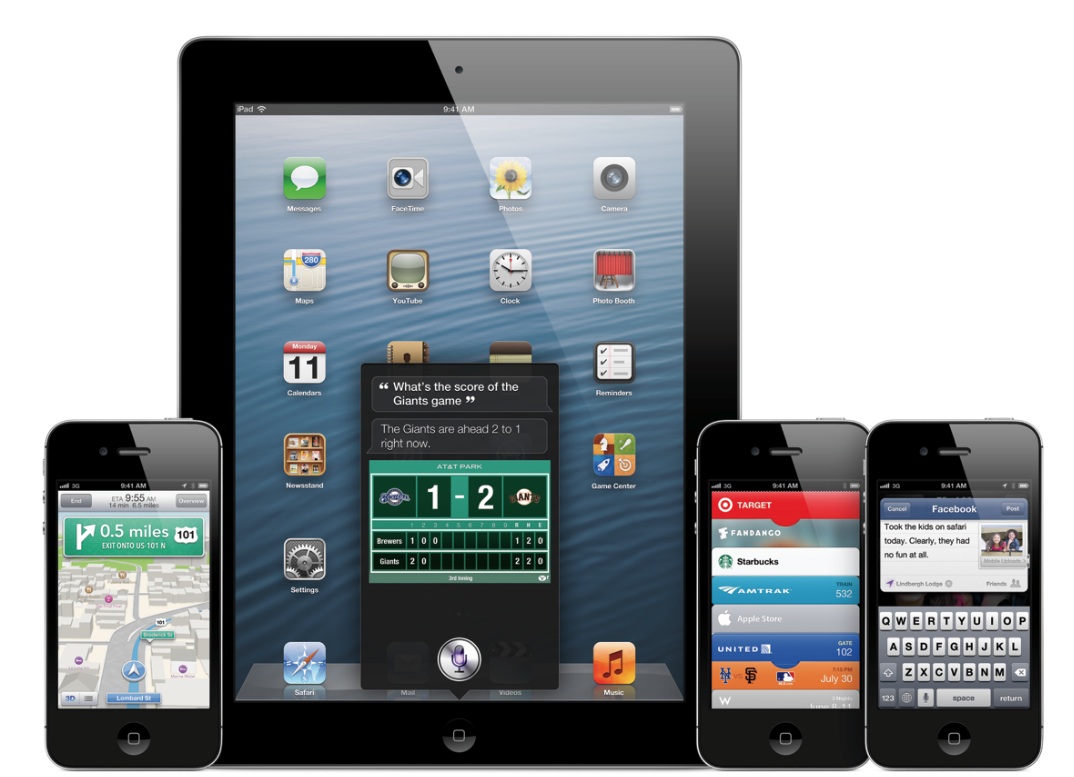
    Apple overcame this by having different operating systems – OS X and iOS – and even then the mobile iOS is subtly forked for the different ways people use tablets versus  smartphones.

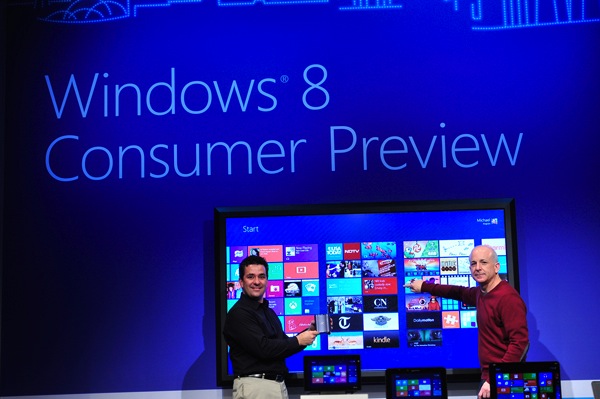
    With Windows 8, Microsoft chose to go the opposite way with an operating system which works on all devices. Sadly it doesn’t seem to have worked.

    Blackberry’s strategy is to assume smartphones will be their main communications device. It’s a big bet which doesn’t align with what seems to be experience of most people.

    Over the last few years Blackberry’s smartphone market share has collapsed from 40% to 4%, so it’s the time for brave bets although its hard to see that customers will use smartphones instead of PCs or tablets is the right call.

    It’s an interesting question though – can you see your smartphone being your main computer?

    Similar posts:

  • Smelling digital garbage

    Smelling digital garbage

    Excel spreadsheets lie at the core of business computing, but what happens when they go wrong?

    James Kwak writing in the Baseline Scenario blog describes how Excel spreadsheets have an important role in the banking industry and their key role in one of the industry’s most embarrassing recent scandals.

    In the early days of the personal computer spreadsheets; it was company accountants and bookkeeping clerks who bought the early PCs into offices to help them do their jobs in the late 1980s .

    From the accounts department, desktop computers spread through the businesses world and the PC industry took off.

    Over time, Microsoft Excel displaced competitors like Excel 1-2-3 and the earliest spreadsheet of all, VisiCalc, and became the industry standard.

    With the widespread adoption of Excel and millions of people creating spreadsheets to help do their jobs came a new set of unique business risks.

    The weakness with Excel isn’t with the program itself, it’s that the formulas in many spreadsheets aren’t properly tested and often incorrect data is put into the wrong fields.

    In his story Kwak cites the JP Morgan spreadsheets that miscalculated the firms Value-At-Risk (VAR) calculations for synthetic derivatives. The result was the London Whale debacle where traders were allowed to take positions – some would call them bets – exposing the bank to huge potential losses.

    It turns out that faulty spreadsheets had a key role as traders cut and paste data between various spreadsheets and the formulas that made the calculations had basic errors.

    That a bank would have such slapdash procedures is surprising but not shocking, almost every organisation has a similar setup and it gets worse as a project becomes more complex and bigger numbers become involved. The construction industry is particularly bad for this.

    Often, a spreadsheet will show out a bunch of numbers which simply aren’t correct. Someone made a mistake entering some data or one of the formulas has an error.

    The business risk lies in not picking up those errors, JP Morgan fell for this and probably every business has, thankfully to less disastrous results.

    My own personal experience was with a major construction project in Thailand. One sheet of calculations had been missed and the entire budget for lights – not a trivial amount in a 35 storey five star hotel – hadn’t been included in the contractor’s price.

    This confirmed in my mind that most competitive construction tenders are won by the contractor who made the most costly errors in calculating their price. Little has convinced me otherwise since.

    In the computer industry there’s a saying that “garbage in equals garbage out” which is true. However if the computer program itself is flawed, then good data becomes garbage.

    Excel’s real flaw is that it can make impressive looking garbage that appears credible if it isn’t checked and treated with suspicion. The responsibility lies with us to notice the smell when the computer spits out bad figures.

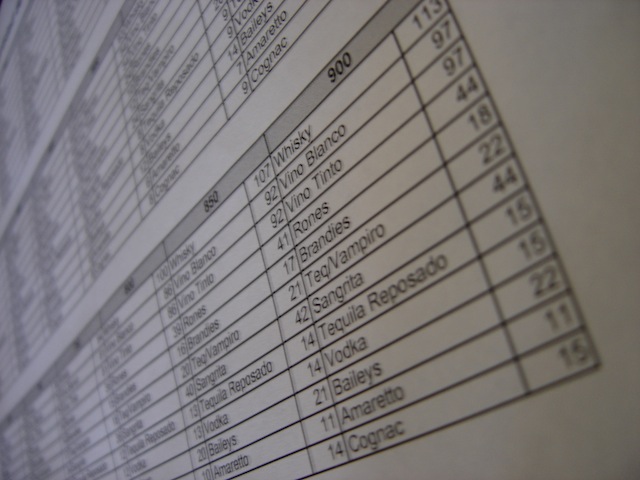
    Spreadsheet image courtesy of mmagallan through sxc.hu

    Similar posts:

  • Will going private save Dell?

    Will going private save Dell?

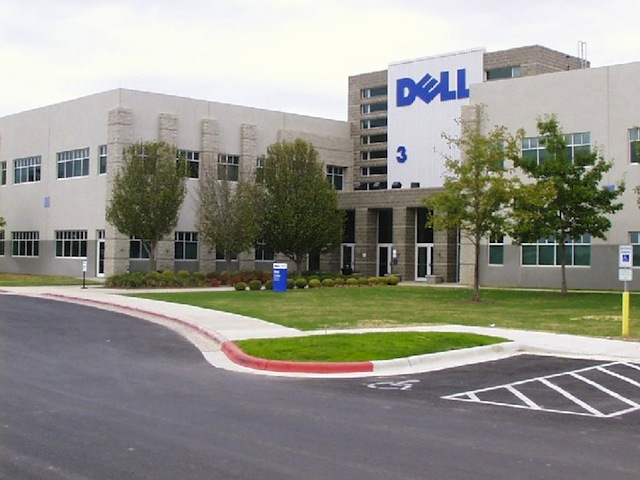
    Now Michael Dell and a team of private equity investors are going ahead with taking the company he founded private, the question is will this make any difference to the technology company.

    Turning around Dell is going to be a massive task as the company has lost the advantages that made it the world’s biggest PC manufacturer. At the same time, the industry itself is shrinking as corporate and consumer customers move from personal computers and servers to tablets and cloud services.

    The triumph of logistics

    Dell’s real success lay in logistics. In the early 1990s the company – along with its competitor Gateway – developed a global just-in-time assembly network which took advantage of cheap Asian suppliers, efficient air courier networks and call centres.

    Bringing these together meant Dell and Gateway could deliver a custom made computer to a customer in just over a week without the hassle of holding warehouses of stock, employing sales staff or renting stores.

    Price was the ultimate advantage and these companies could undercut competitors with their efficient networks, lack of inventory and no retail overheads.

    Losing an advantage

    Unfortunately for Dell, competitors caught up and by the early 2000s most PC manufacturers were using similar manufacturing methods and were able to match their price points.

    By 2006, HP overtook Dell as the world’s biggest PC manufacturer.

    Worse yet, Apple adapted Dell’s logistic systems to corner the high end of the PC market and then expand into consumer devices.

    Dell’s reaction was to compete solely on price and to do so they cut component costs and outsourced support to lowest cost providers.

    This backfired horribly and the poor quality products coupled with execrable after sales support deeply damaged Dell’s brand with the Dell Hell debacle being the public face of widespread customer unhappiness.

    Dell in the post PC world

    Making matters worse for Dell is that the market has shifted away from personal computers.

    Dell has a tragic track record of diversifying out of the PC markets, all of its attempts to move into consumer electronics with PDAs, smartphones, tablet computers and entertainment devices have been, at best, embarrassing.

    Enterprise computing has been more successful but even here Dell has shown little innovation and most of their entries into the corporate markets has been through acquiring specialist companies rather than doing anything different.

    Part of this to failure to diversify has been because of Dell’s relationship with Microsoft. The various versions of Windows intended to be used on PDAs and tablet computers turned out to be wholly unsatisfactory and left the market open to Apple with the iPhone and iPad.

    Going private

    That Microsoft is going to have a financial interest in the privatised Dell is not encouraging for the company’s prospects.

    Neither is the continued presence of Michael Dell. His return as the company’s CEO in 2007 has not solved the company’s problems.

    It’s difficult to see where the problem was being a public company, Dell’s woes were not because of troublesome board members or activist shareholders.

    Going private might allow Michael Dell and his team to experiment without the accountability of quarterly reporting, but that barely seems worth 26 billion dollars.

    Dell could surprise us all by reinventing its business and claiming a role in the post-PC world, but right now its hard to see how.

    Similar posts:

  • Was the netbook the Trabant or Model T of the computer world?

    Was the netbook the Trabant or Model T of the computer world?

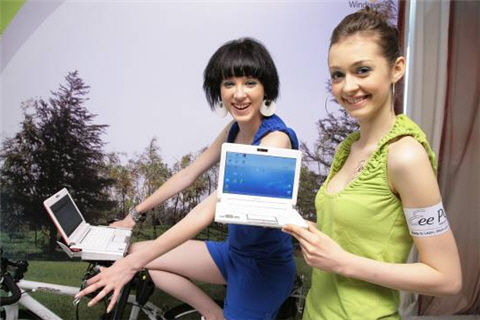
    Taiwanese technology website Digitimes reports Asustek have shipped their last eeePC netbooks, bringing to an end a product that promised to change the computing world when they were first released in 2007.

    At the time the eeePC netbook picked up on a number of trends – cheap hardware, the maturity of the open source Linux operating system, affordable wireless access and, most importantly, the accessibility of cloud computing services.

    There’d been a pent up demand for usable portable computers for years but Microsoft and their hardware partners consistently released clunky, overpriced tablet computers that simply didn’t deliver on their promises.

    For users wanting a cheap, fairly robust portable computer then netbooks were a good choice, at the price you could even risk having one eaten by lions.

    into the lions den with an Asus eeePC netbook

    Unfortunately for netbook a few things went against the idea.

    Customers don’t like Linux

    An early blow to the eeePC was that retail users don’t like Linux. Most computer users are happy with Windows and MacOS and weaning them off what they know is a very hard sell.

    Sadly on this topic I have first hand knowledge having suffered the pain of co-founding a business in the mid 2000s that tried to sell Linux to small businesses.

    Asustek discovered this when they found customers preferred the more expensive Windows XP version over the original Linux equipped devices.

    Unfortunately Microsoft’s licenses damaged the economics of the netbook and held the manufacturers hostage to Microsoft who, at the time, wasn’t particularly inclined to encourage customers to use cloud services.

    Manufacturer resistance

    Microsoft weren’t the only supplier unhappy with netbooks. Harry McCracken at Time Tech describes how chip supplier Intel worked against the products.

    For manufacturers, the netbooks were bad news as they crushed margins in an industry already struggling with tiny profits. However all of them couldn’t ignore the sales volumes and released their own netbooks which cannabilised their own low end laptop and desktop ranges.

    In turn this irritated the army of PC resellers who found their commissions and margins were falling due to the lower ticket prices of netbooks.

    The rise of the tablet

    The one computer manufacturer who stayed aloof from the rush into low margin netbooks was Apple who had no reason to rush down the commodity computing rabbit hole. It was Steve Jobs who launched the product that made netbooks irrelevant.

    “Netbooks aren’t better at anything… they are just cheaper, they are just cheap laptops” Jobs said at the iPad launch in January 2010.

    Immediately the iPad redefined the computer market; those who’d been waiting a decade for a decent tablet computer scooped the devices up.

    Executives who wouldn’t have dreamt of replacing their Blackberries with an iPhone, let alone using an Apple computer proudly showed off their shiny iPads.

    The arrival of the iPad in boardrooms and executive suites also had the side effect of kick starting the Bring Your Own Device movement as CIOs and IT managers found that their policy of Just Say No was a career limiting move when the Managing Director wanted to connect her iPad to the corporate network.

    Rebuilding PC margins

    Around the time of the iPad’s released the major PC manufacturers declared a detente over netbooks and joined Intel in developing the Ultrabook specification.

    Intel designed the Ultrabook portable computer specification

    The aim of the Ultrabook was to de-commodify the PC laptop market by offering higher quality machines with better margins.

    While the Ultrabook has worked to a point, competition from tablet computers and the demands of consumers who’ve been trained to look for sub $500 portables means the more expensive systems are gradually coming down to the netbook’s price points.

    Today’s Ultrabook will be next month’s netbook.

    For the PC manufacturers, the lesson is that computers have been a commodity item for nearly a decade and only savvy marketing and product development – both of which have been Apple’s strengths – is the only way for long term success in the marketplace.

    Those US based manufacturers who haven’t figured this out are only go to find that Chinese manufacturers – led by companies like Taiwan’s Asustek – will increasingly take the bottom end of the market from them.

    The car industry is a good comparison to personal computers in commoditisation – with the passing of the netbook, the question is whether we’ll remember the eeePC  as a Trabant, Model T Ford or a Volkswagen Beatle.

    Similar posts: