Category: consumer

  • Tech’s tough days

    Tech’s tough days

    Today sees another tough day for tech stocks with both Apple and Amazon missing their projected earnings which again finds Microsoft being stood up at their own party.

    For Amazon, along with the costs involved with a new range of Kindles, there’s a huge write down in their Living Social investment, another indicator that the group buying bubble has passed into history alongside tulips, 19th Century Argentinian railway bonds and South Sea investments.

    It’s worrying that while Amazon’s quarterly sales have increased by 23% over last year’s figures to $11.546 billion dollars, their cost of sales has also gone up 23% from $8.325 to $10.319 billion. This is a trend to watch closely over the next few quarters.

    Unlike Amazon, Apple still made a fat profit with income going up to $8.2 billion for the quarter, an increase of 24%. This missed many Wall Street analysts’ estimates.

    Apple’s missed earnings were put down to supply chain constraints and development costs, but what jumps out looking at the cash flow is the six billion turnaround in the company’s Accounts Receivable. One assumes this is the value of pending invoices on the new ranges of iPhones, iMacs and iPads sent out to their sales channel.

    If that’s right, Apple are looking at a big boost in their cashflow next month, although there’s few companies who would like to have five billion dollars in outstanding invoices in today’s economic climate.

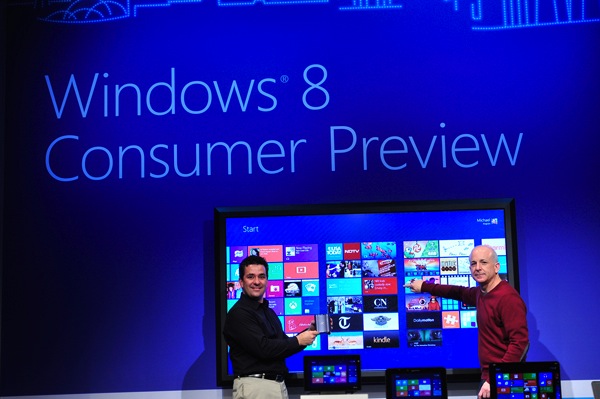
    Once again though, Apple have managed to steal Microsoft’s thunder. Despite the glitz and glamour of the Windows 8 launch in New York, Microsoft’s announcement has been muted by the tech and business press’ reaction to the earnings reports.

    What is clear from all three companies though is that hand held devices – the Apple iPad, Amazon Kindle and Microsoft Surface – are going dominate the tech and financial coverage of all three companies for the rest of the year.

    Similar posts:

  • Amazon and the Soviet customer service model

    Amazon and the Soviet customer service model

    We all value our collections of CDs, books and photos, but what happens when we completely lose the digital equivalents?

    The story of Linn, a Norwegian lady who had her account terminated by Amazon, demonstrates the dangers of being locked into one Internet company’s empire. Get cut off and you lose everything related to them.

    A little understood part of the cloud computing and app world is that you, the customer or user – which isn’t necessarily the same thing – don’t really own anything. The money you spend on ebooks, mobile apps or web storage are for licenses to use the services, not the products themselves.

    Should the supplier decide they no longer want to provide you with their service, then you lose your account and everything with it.

    This is what happened to Linn when Amazon’s algorithm decided her account was in some way breaching their terms and conditions.

    We have found your account is directly related to another which has been previously closed for abuse of our policies. As such, your Amazon.co.uk account has been closed and any open orders have been cancelled.

    Per our Conditions of Use which state in part: Amazon.co.uk and its affiliates reserve the right to refuse service, terminate accounts, remove or edit content, or cancel orders at their sole discretion.

    “At their sole discretion” is the key point here. This is a standard term in most online contracts and reflects the legal realities of the physical world where a shopping mall manager or bar owner can ask you to leave their property without having to tell you why.

    When you use a virtual service, which includes e-books and cloud computing software, you are on someone’s virtual property and they can ask you to leave any time they feel.

    Of course those rights are subject to any contract you might have with that e-book seller, cloud computing service or shopping centre but you have to be in a position to enforce them – not an easy task when you’re in Norway and their lawyers are in Connecticut.

    Even if you want to enforce the agreement you believe these services have entered into, the grossly biased contracts attempt to put all obligations on users or customers while freeing the vendor of the distraction of being responsible for anything.

    The real problem though is the lack of notice and fairness – this blog’s previously looked at how PayPal, Facebook and Google will shut down business sites without any warning or due process.

    It’s one thing to get thrown out of a shopping mall but it’s another matter when your car and week’s groceries are still in there.

    Even more worrying in Linn’s case is how ebooks and music purchased with Digital Rights Management (DRM) controls can be erased by companies like Amazon. Which is like walking home from the shopping mall you’ve been banned from to find the manager has called by to confiscate the toaster and TV you bought last week.

    What’s particularly notable in all of these stories though is the Soviet customer service model, the Amazon”Executive Customer Relations” representative Linn dealt with refused to tell her what she’d done wrong or what rules she broke.

    The only thing “Michael Murphy” would tell her was she was effectively banned for being linked to a blocked account and stated;

    “Please know that any attempt to open a new account will meet with the same action.”

    No notice, no appeal, no rights. The computer says no and the bureaucrat cannot help you further.

    Trust lies at the core of all business and this is even more true when buying services like e-books and cloud computing products. If you can’t trust a vendor to provide a service, or to act openly and honest with you when a problem occurs, then it’s unlikely you’ll use that service.

    A lack of trust is what web 2.0 companies like Amazon and eBay risk with hostile, Soviet style customer service. This is the weak point of the entire online business model.

    For individuals and businesses it’s important to understand that those e-book, cloud storage or social media services may appear to be a bargain, but there are risks lurking in the fine print.

    The new Soviets might be doing well at the moment, but their days are numbered just as the USSR’s were.

    Similar posts:

  • Can Microsoft beat the PC marketplace’s structural decline?

    Can Microsoft beat the PC marketplace’s structural decline?

    In New York on Thursday Microsoft will have a marathon launch of their Windows 8 system and the futures of many of their hardware partners lie on the success of the new system.

    For Microsoft, Windows 8 could be the last throw of the dice for the desktop operating system that has sustained the company for thirty years.

    The figures aren’t good for Windows as Microsoft’s 2012 profit and loss shows, here are the figures broken out by operating unit segment from the company’s annual report.

    Year Ended June 30, 2012 2011 2010
    Revenue  bn $  bn $  bn $
    Windows & Windows Live Division 18,818 18,787 18,789
    Operating Income (Loss)
    Windows & Windows Live Division 11,908 11,971 12,193

    The core Windows & Windows Live Division has stagnant revenues and a slowly declining profit margin. We’ll leave the huge losses in the online division for a future post.

    Since the days of the first MS-DOS deal with IBM, Microsoft’s core business has been the licensing of operating systems to PC manufacturers and now that model is in trouble.

    For instance Dell had an 8% drop in revenue resulting in a worrying 22% drop in operating profit, their PC dominated consumer division suffered a fat 22% drop in sales and recorded a miniscule .5% profit margin. Similarly Asus had 25% drop in sales to record a 2011 loss.

    The pain being suffered by PC manufacturers’ sales and margins will almost certainly be shared by Microsoft as companies like Dell, HP and Asus simply can’t afford to pay the licensing fees which have sustained the Redmond business model for so long.

    Microsoft and their partners hope – or pray – that the PC decline is a temporary hiccup in computer sales similar to the traditional lull seen before the release of a new system.

    History’s not on their side with research company Asymco expecting sales of tablet computers to overtake PCs sometime in late 2013.

    This is not a cyclical trend – the PC industry is in structural decline; the traditional Windows upgrade cycle is dead and Google are running interference with their Chromebook networked laptops.

    Moving onto tablets and smartphones in this light makes sense for Microsoft and given the PC manufacturers have failed dismally to deliver decent tablet computers or phones over the last 15 years so it’s understandable the software giant wanted to develop their own hardware or team up with a struggling company like Nokia.

    The declining margins in personal computers means we’re seeing the end of the Windows desktop ecosystem. With the rise of the web and cloud computing the type of operating system we use is like arguing between Toyota and BMW drivers; one might be more prestigious but both will get you where you want to go.

    For Microsoft the challenge is to replace those Windows licensing rivers of gold with similar revenue streams through their phone and tablet products but with Apple and Google already dominating those fields, is it too late for the company that dominated personal computing? The next six months will tell us.

    Similar posts:

  • Walking the floor

    Walking the floor

    “He walks the site three times a day,” said awed contractors about a construction project manager – who we’ll call Rob – that I encountered as a cadet Engineer in the building industry. Getting out of his site office and seeing what was going on made sure dodgy contractors or inexperienced trainees like me couldn’t slow down his projects.

    Slate Magazine’s story of how the Wendy’s hamburger chain changed the US fast food industry recalls how Rob would successfully run his projects and the importance of hands on management.

    Jim Near was recruited as president by his friend and Wendy’s founder Dave Thomas to get the business on track after over-extending in the mid 1980s. Slate says of Jim’s hands-on management style;

    Near liked to stalk through the dining areas of his stores examining people’s trays. If customers were leaving fries, he’d go harass the fryers: Were they serving the potatoes too hot? Too cold? Not using enough shortening? And he would sit in his car in the parking lot, surveilling the activity at the drive-thru window.

    That obsession sounds like Steve Jobs and its no-coincidence; Jobs, Jim Near and Rob the project manager gave a damn about the product that was being delivered. Rather than sitting in an office obsessing over paperwork and meeting artificial KPIs, these effective leaders got out and saw what the realities were in their business.

    Probably the best example of this “management by walking the floor” ethos was Bob Ansett who built up the Australian Budget Rent-A-Car business in the 1970s. Every senior manager was required to spend a couple of days a month working on one of Budget’s rental desk dealing with customers.

    That policy forced Budget’s executives to understand the business, just as Jim Near was described as ““a ketchup-in-his-veins type of guy” through working at every level in the fast food industry.

    One of the many conceits in modern management is the idea that everything – from building high rise towers, running car rental companies or operating a hamburger chain – is like selling soap. This philosophy ignores that every industry has its own characteristics and even selling soap has its own unique challenges in different markets.

    It’s easy to think everything works as described in a 1980s business school textbook when you have artificially constructed KPIs and layers of managers to deflect responsibility.

    Over the last quarter of the Twentieth Century we saw customer service become disdained in the Corporatist business culture which favours accountants and lawyers as managers who rely on marketing people and lobbyists to protect them from the reality that they aren’t really very good at running their companies.

    Now that era has come to an end and the times now suit those who listen to customers and the marketplace. Walking the floor and paying attention to what the public are saying about us on new media are competitive advantages.

    While the corporatists lobby their friends in government for subsidies and protection, entrepreneurs and genuine business builders like Dave Thomas, Jim Near, Steve Jobs and Bob Ansett have the opportunity to seize the markets that are being neglected.

    There’s never been an excuse for not listening to the customer and today it’s more important than ever.

    Similar posts:

  • Group buying: A boom gone bust?

    Group buying: A boom gone bust?

    I’d forgotten I had appeared in this segment on India’s Economic Times about the end of the group buying boom.

    While the group buying boom may have come to an end, it’s still a useful tool. Hopefully we’ll see businesses using it cleverly rather than offering silly and suicidal deals.

    Similar posts: