
Category: Disruption

  • You’re going to need a bigger app

    You’re going to need a bigger app

    “It has to be disruptive technology,” bleated the consulting firm facilitator at the Future Transport Summit in Sydney earlier this week.

    The hapless, but well paid, consultant — a depressingly frequent feature of Australia’s current ‘ideas boom’ — was protesting when one of the participants at his ‘ideation session’ had raised topics such as integrated timetables and changing commuting habits.

    Mr Consultant’s running orders for his ‘ideation session’ were to focus on ‘digital disruption’ and his employer;s cluelessness illustrates a danger for business leaders and policy makers.

    Selling the snake oil

    Digital disruption is real however it’s not just the only factor facing governments and industries. Demographics, economics, politics and climate change will have greater influences on business and society.

    Uber, the favourite lovechild of those spruiking digital disruption snake oil, is a very good case in point. While the service certainly has disrupted the taxi and motor vehicle industries, these sectors were facing major challenges as governments enacted policies to reduce carbon emissions, voters became tired of cartel like taxi companies and the Western world’s young and wealthy moved back to the cities and away from owning motor vehicles.

    If anything, Uber was the result of GenY entrepreneurs like Travis Kalanick finding existing services didn’t meet their needs rather than the result of technology desperately looking for a problem to solve finding a niche.

    Complex changes

    While the smartphone was critical in Uber’s success in disrupting the global taxi industry, technology was only one facet of a much more complex set of changes.

    The motor industry is a good example of the complexity of change. A hundred years ago it was clear the transport industry was about to be disrupted by the automobile, it was by no means obvious access to affordable personal transport would allow urban sprawl and the suburbanisation of western society.

    Coupled with the motor car and truck, the availabilty of mains electricity meant refrigeration also became accessible which lead to the rise of supermarkets after World War II. This disrupted the local corner store in ways shopkeepers could never have foreseen in the interwar years.

    Shifting demographics

    Now, the opposite is happening as the young and affluent reject long commuting times from distant suburbs and city densities start increasing.

    The social and economic factors that drove Uber are affecting public transport usage patterns and it’s no coincidence that the cities where ride sharing services have most successful, such as Sydney, also have underfunded public transport systems that are struggling to meet their population’s demands.

    Which brings us back to the foolishness of discussing the future of transport only in relation to technology. Smartphones, apps, big data and the internet of things will all be critical parts of future transportation but the social and economic factors will shape how people use the networks.

    Focusing on technology while ignoring the other big influences is a folly that will cost businesses and government dearly. Although one suspects the management consultancies will do well regardless of how well change is managed.

    Similar posts:

  • The responsibility of choices

    The responsibility of choices

    “Making rich people richer is not disruption, it’s the same old bullshit” says design guru Mike Monteiro in a speech given last June at the USI Conference in Paris.

    Monteiro’s point is telling at a time when much of the tech industry’s business model is based upon solving the problems of rich white men, attracting investments from funds run by rich white men and then selling the venture to a corporation run by rich white men — what this blog calls the Silicon Valley Greater Fool model.

    “How Designers Destroyed the World”, is Monteiro’s call to arms for the design industry. In it, he lays out four fundamental responsibilties that should guide how designers work; a responsibility for the world we live in, a responsiblity to the craft of design, a responsiblity to clients and, the most important of all, a responsibility to yourself.

    “The work you do defines you,” says Monteiro about that responsibility to yourself. “I found when I started saying ‘no’, the clients listened. When I lost a bad job, a good job appeared.”

    Monteiro’s view is designers are in a position of power. In truth though, we may all have a small degree of power in what we choose to do and choose not what to do.

    “Responsibility is not a burden for you to carry, it’s a privilege.” Monteiro states. The presentation is well worth watching not just for designers, but for everyone.

    Similar posts:

    • No Related Posts
  • London’s black cabs fight back against Uber

    London’s black cabs fight back against Uber

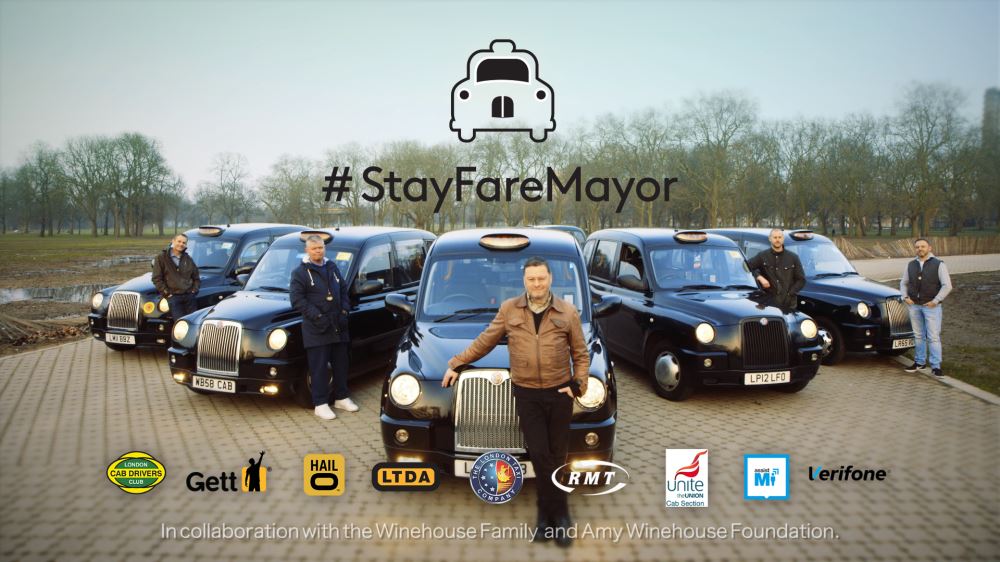
    Like many cities’ incumbent taxi industries, London’s iconic black cabs are suffering from the ris of Uber.

    Now a consortium of operators, drivers groups and the manufacturer of black cabs have devised an action plan to attract Londoners back to their services.

    The proposals include fast Wi-Fi, better integration with tube and bus services, access to bus lanes and – depressingly – tighter restrictions on more lightly regulated minicabs.

    London’s black cabs are unique in having high standards for both driver and vehicles which results in them being ludicrously expensive, the reason why many locals use minicabs.

    Those high standards though should be an advantage against Uber, however some of the tight regulation and the industry’s culture put the black cabs at a disadvantage.

    Uber’s supporter and advocates of the gig economy would, correctly, cite the black cabs raising their game as the main benefit of disrupting the market although the advantage of ignoring many of the rules that apply to the incumbents is a big advantage as well.

    Londoners will be happy with the improved services, but for the black cabs this is a fight for protecting their industry against a worldwide disruption. Regulations will probably not be enough to protect them.

    Similar posts:

    • No Related Posts
  • Telecommunication’s lost tribes

    Telecommunication’s lost tribes

    This week saw Australia’s telecommunications industry gather for the annual Comms Day Summit at Sydney’s Westin Hotel.

    A constant in the telco industry is change and new technology – few industries have had to reinvent themselves in the same telephone companies have had to over the last 30 years.

    For telcos, that period of change has been immensely profitable as the switch to mobile networks proved to be a river of gold for the industry as consumers enthusiastically moved away from fixed line networks and into lucrative products like SMS services.

    Missing the passion

    So it was notable how the Comms Day summit was missing a sense of excitement or vision about the approaching opportunities such as 5G networks, the Internet of Things and other new markets. Much of the conversations were mainly focused on the dysfunctional Australian industry and the flawed regulations that got it to where it is.

    As an Australian event it’s not surprising that much of the focus would be on domestic failings – thirty years of misguided policy, political opportunism and schoolboy ideologies have left the nation facing the prospect of the “world’s most expensive broadband”  in the words of Megaport founder Bevan Slattery – however the stasis in the telecoms sector betrays a far deeper uncertainty in the global industry.

    That uncertainty was on show at this year’s Mobile World Congress in Barcelona where most of the conference’s buzz was around virtual reality headsets and connected cars, areas where telecommunications providers are, at best, a ‘dumb pipe’.

    We are not a utility

    Being relegated to being a ‘mere utility’ is the fear of every telecommunications executive, which is why they spend so much on abortive Pay-TV, online and sports rights acquisitions. In the Australian context, Telstra’s acquisition of PacNet and Slattery’s own East Asian ventures are possibly the most interesting developments in the local industry yet they were barely mentioned at the Comms Day event.

    While the Comms Day Summit told us much about the insular nature of modern Australian business – and the depressing mess three decades of poor regulation has left the local telecommunication industry – the bigger message is the global communications industry is struggling in a world of commoditised bandwidth where the opportunities to make huge profits is not immediately obvious.

    It’s hard to see how telcos can be completely disrupted in the way media companies have been given how regulated their markets are – although the same was being said of the taxi industry five years ago – but it is clear their managements are struggling to find new business models.

    Similar posts:

  • BlackBerry and the transition effect

    BlackBerry and the transition effect

    Three months ago this site speculated if BlackBerry had shipped their last smartphone with the Android based Priv handset.

    Yesterday BlackBerry announced disappointing sales of the Priv in their latest quarterly financial report, so things aren’t looking good for the company’s hardware business.

    It looks like BlackBerry is a great example of a transition effect  where a product, occupation or business has a brief period of success as an industry changes before being rendered obsolete by those same forces.

    The need for executives to access their emails on mobile devices was the reason for BlackBerry’s success so when the iPhone recast the definition of the smartphone and included email as a standard feature of the device, the reason for BlackBerry handsets existing evaporated.

    In many respects, BlackBerry are the perfect example of a disruptor being disrupted.

    BlackBerry’s hope to remain a stand alone company lies in the security software and services space, a field where management have been investing heavily in recent years. How well they travel will depend now on how quickly they can jettison old business ideas.

    Similar posts:

    • No Related Posts