Category: Disruption

  • Transforming a dysfunctional company

    Transforming a dysfunctional company

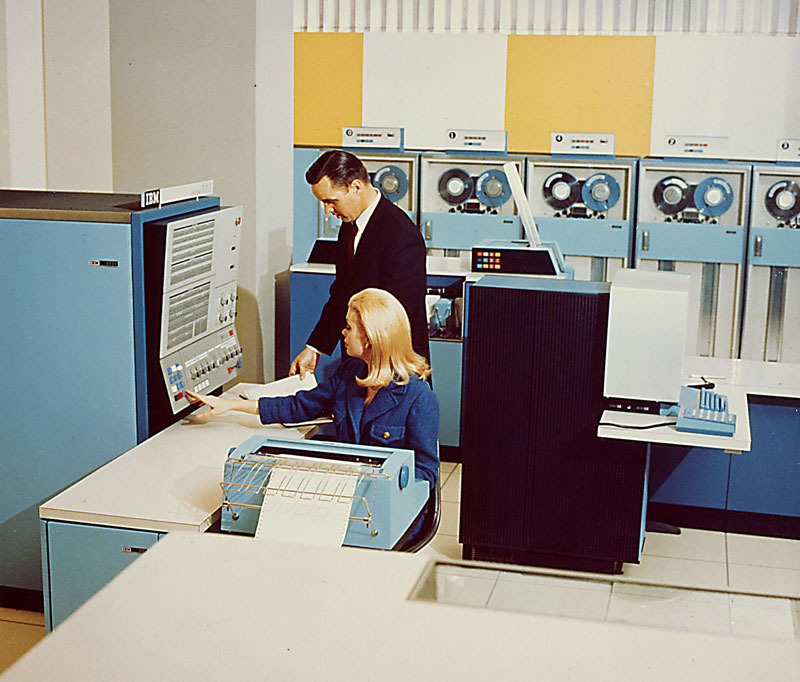
    Once dominant IBM is facing another major market transition, do they have the management skills the navigate that change?

    Robert X. Cringely writes a depressing account of the company’s tactics in cutting its head count but the main thrust is how IBM are cobbling together a bunch of disparate products under umbrella brand names as a bloated, bureaucratic management puzzles with a marketplace change.

    At the heart of everything is the question of what IBM’s customers really want, as Cringely points out.

    The lesson in all this — a lesson certainly lost on Ginni Rometty and on Sam Palmisano before her — is that companies exist for customers, not Wall Street.  The customer buys products and services, not Wall Street.

    While investors are important, businesses only exist if customers want to pay for their wares. If a company can’t convince people to buy their products, or find a way to subsidise it like the media industry did for most of the Twentieth Century, then there is no reason for the venture, or its industry, to exist.

    For many technology companies this is the situation they are facing right now, many other industries aren’t far behind.

    Similar posts:

    • No Related Posts
  • Cracking open the black box

    Cracking open the black box

    One of the things confronting technology vendors in the past five years has been the commoditization of hardware and the opening up of standards. As software has eaten the computer hardware industry, those companies are being forced to make their systems more open.

    In that world of open systems, it’s the ecosystem of developers and products around platforms that drives success. The best example being the iPhone where the range of third party apps available made Apple’s product the most compelling on the market.

    At Cisco Live in Melbourne last week Susie Wee, the company’s Vice President in charge of the company’s DevNet developer relations program, described how the networking company is opening their systems with Application Program Interfaces (APIs) to build an ecosystem.

    “What we want to do is help people with this transition,” says Susie. “With the network, with the infrastructure and with the cloud we want people to get more out of it.”

    Cisco, like most hardware companies, are finding the shift to opening their data streams to be wrenching. The business model of a decade ago involved mysterious black boxes running on proprietary software with the data dished out sparingly.

    While the the ‘black boxes’ still remain, becoming a ‘platform’ and making data available to all comers is very much a cultural shift for once dominant hardware companies like Cisco.

    The question for IT hardware companies is how long they can defend their proprietary software systems – the hardware side is already slowly declining as software defined equipment takes over – while establishing dominance with their software and data feeds.

    Users too need to be treading carefully as those APIs and the data being fed through them is subject to the business imperatives of the

    Cisco hopes they can achieve this through their current market power and business networks, it is a hard ask for them though. For the entire tech industry, the shift to an API driven marketplace is going to be testing.

    Paul travelled to Cisco Live in Melbourne as a guest of Cisco

    Similar posts:

    • No Related Posts
  • The state of Australian technology – and journalism

    The state of Australian technology – and journalism

    Today I’m heading to the Blue Mountains just outside Sydney for the annual Tech Leaders conference.

    With the conference bringing together tech industry vendors, public relations representatives and journalists, it’s an interesting snapshot of an industry in transition.

    Technology vendors are dealing with the shift to cloud computing which destroys what were very comfortable and profitable business models.

    Needless to say the journalists are the most disrupted group of all with most of the dwindling number now being freelancers and the few remaining staff reporters working under tough deadlines with few resources.

    This leaves the Public Relations folk in the middle, as the traditional media channels decline they are having to work harder in getting their clients’ stories into the public domain. At the same time, the compressed margins for cloud affected vendors are cutting into PR budgets.

    So Tech Leaders is interesting to see how three very different groups are dealing with their changing industries. I might also get to hear about some new technologies as well.

    Similar posts:

    • No Related Posts
  • When software ate the network

    When software ate the network

    I’m attending the Asia Pacific Cisco Live in Melbourne Australia this week which is starkley illustrating the shift in communications technologies and the business models around them.

    To kick off the press program Cisco made a joint announcement with Australian incumbent telco Telstra on the rollout of a smart software defined networking product.

    Software Defined Networking uses basic computer hardware, basically glorified personal computers, to do the jobs of the expensive routers, switches and network appliances that were insanely profitable for companies like Cisco a few years ago.

    It wasn’t so long ago when Cisco executives were taking technology journalists out to earnestly explain how Software Defined Networking (SDN) was feasible.

    Today, SDN is defining both the telco and communications industries as companies like Telstra look at bundling IT networking and software services into their offerings to prop up their falling margins. India’s Reliance Communications are a good example of how providers are trying to shift into new marketplaces.

    For telcos, communications vendors  and IT hardware sellers the changing technologies illustrate what Silicon Valley entrepreneur Marc Andreesen meant when he described how “software will eat the world.’

    Software is eating the IT hardware industry and telcos are seeing – hoping – it’s another lucrative opportunity. Businesses in other sectors should be thinking about how software is going to change their world.

    Paul travelled to Melbourne for Cisco Live as a guest of Cisco

    Similar posts:

    • No Related Posts
  • The cost of media disruption

    The cost of media disruption

    What happens to journalists when no one wants to print their words anymore?

    The Bill Moyers website has striking accounts of sexism, ageism and exploitation of younger journalists as the industry deals with its Twentieth Century business model collapsing.

    Much of the dislocation Dale Maharidge describes could have been written about factory workers twenty years ago and will be probably written about a whole range of white collar occupations over the next two decades. The disruption being felt by journalists is not unique to the media industry.

    While the media industry struggles to find the 21st Century’s David Sarnoff, the human cost is real. The price workers pay when an industry is disrupted shouldn’t be understated.


    Similar posts: