Category: economy

  • Now may not be a good time to buy Melbourne property

    Now may not be a good time to buy Melbourne property

    There’s plenty of indicators that can be used to predict the health of an economy

    While my favourite is the mini-skirt index, the most reliable is when rich folk start building huge skyscrapers.

    Whenever developers propose a hundred storey building it marks the top of the property cycle. Should they get to actually build the thing, you can be guaranteed a nasty economic downturn is about to hit.

    The Skyscraper Index’s historical record

    This track record was set with the very first megatower – the Empire State building was started just before the 1929 stock market crash and completed as the great depression tightened its hold on the United States.

    Forty years later New York’s ill-fated World Trade Center opened just in time to welcome the 1973 oil shock and subsequent recession.

    A more recent example is Dubai’s Burj Khalifa, the world’s tallest building which was topped out in time for the city’s property crash and economic rescue by neighbouring Abu Dhabi.

    In Australia, the most notable downfall was 1980s entrepreneur Alan Bond who planned to build a 140 storey tower on the World Square site opposite Sydney’s Town Hall.

    The site was excavated but Bond went broke before work started and the hole remained for over a decade until a more modest 40 storey tower was built on the site.

    Australia 108

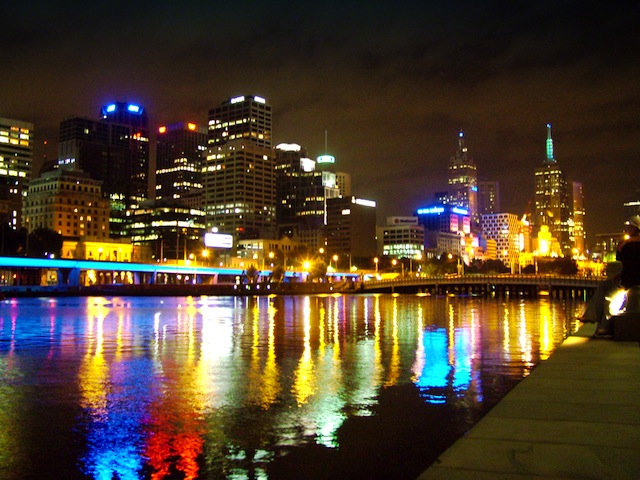
    So the news that property developers want to build a 108 storey tower on Melbourne’s Southbank should worry the Victorian government and unsettle the state’s property owners.

    What’s always notable about these super skyscrapers is the garishness of the project. While Australia 108 won’t match the Burj for sheer Las Vegas gaudiness, it will feature the ‘Star burst’, a star-shaped Sky Lobby and hotel at the top of the tower.

    Why the Skyscraper index works

    The reason why 100 storey buildings are such a reliable economic indicator is because they illustrate there’s too much dumb money in the economy. It rarely makes sense to build such tall buildings.

    Designing and building high rise buildings is complex and expensive – the higher you go, the more construction challenges there are as this Popular Mechanics article describes.

    Skyscrapers are subject to the law of diminishing returns as the taller the building is, the more space that’s needed for services like elevators, air conditioning, water supplies and fire protection which reduces the landlord’s rentable floorspace on the lower levels.

    When a building reaches a hundred storeys, there’s little space available on the lower floors for paying tenants. So the economics don’t add up.

    Builders, property developers and financiers know this so when they start proposing projects that don’t make commercial sense it’s a fair indication the locals are gripped with irrational exuberance and Adam Smith’s invisible hand is going to deliver a short, sharp slap to the back of the economy’s head.

    Does it matter to Australia?

    And so it is in Melbourne, which is going to be interesting to watch as South East Queensland is the only Australian metropolitan area to suffer a prolonged property downturn in the last twenty years.

    Hopefully Melbourne’s woes won’t affect the rest of the Australian economy but given how much the nation has invested in property and the stratospheric debt levels to service that speculation, it may well be that the rest of the country will follow Victoria.

    Winning the next election might not be a good thing for Tony Abbot and his followers who genuinely believe a Liberal government will deliver a magic pudding to the home of every dinky-di Working Australian.
    Similar posts:

  • Graphs, damn lies and the middle class

    Graphs, damn lies and the middle class

    Graphs are great for illustrating a story, and also excellent at misleading people.

    A good example of where a graph can give an incorrect impression is the Sydney Morning Herald’s story Whatever Happened to the Middle Class.

    The story is a very good explanation of the predicament Australia’s political classes have put themselves into – exacerbated by their 1950s view of dividing the workforce into poorly paid ‘blue collar’ workers and affluent ‘white collar’ office staff – but it suffers from the selective use of headline graphs.

    Viewing the big picture

    The first graph shows how Australians are identifying themselves as middle class and the trend looks staggering,

    Graph of How Australians see themselves as middle class

    Now if we add those who identify themselves as working class, the picture looks even more dramatic with some pretty volatile swings,

    A graph showing How Australians see themselves as middle or working class

    However if we now add in those who identify themselves as rich, or upper class, we get a better perspective as the entire range is now shown,

    Graph showing How Australians see themselves as upper middle or working class

    Selective choosing the Y, or vertical, axis will always give an exaggerated view of a trend or proportion. Once we take the full range in we see the real extent of things. It also has the benefit of showing the trends aren’t as volatile as first appear.

    Middle class perceptions

    When we look at the graph showing the full picture there’s a number of interesting trends and characteristics about Australian society that come out of it which are worthy of some future blog posts.

    Most notably is the identification of Australians being middle class as their property values increased.

    On this point, it’s worthwhile contrasting the Australian experience with the US, here’s a Gallup poll from last year on how Americans see themselves,

    A graph showing how Americans see themselves as upper middle or working class

    While the definitions are different – that Americans differentiate ‘working class’ and ‘lower class’ is interesting in itself – it’s clear that the same trend happened in the US with more people identifying themselves as being members of middle class when their property values were increasing.

    In 2008 and 9 there’s suddenly a sharp increase in Americans identifying themselves as working class as the property downturn bites. The steady increase in those claiming to be ‘lower class’ from 2006 onwards is worth closer examination.

    What this means for Australia

    The implications of the US trends is that any Australian politician intending to dismantle John Howard’s middle class welfare state will have to wait until the property market falls before trying to win any popular support.

    For this year’s Australian election though, what’s clear is that any attempt to stoke the fires of class warfare is going to fail dismally in the outer suburban marginal seats so coveted by both parties.

    We’re going to see a lot more selective graphs during the course of this year, it’s worthwhile taking time to look at them closely. The stories may be different, and a lot more nuanced, than the headlines tell us.

    Similar posts:

  • New York celebrates its entrepreneurs with Made in NY

    New York celebrates its entrepreneurs with Made in NY

    Part of a thriving industrial hub is having the business and skills that support the sector. If you’ve got them, you need to tell the world you’re open for business.

    Somebody who is doing this well is New York City’s Office of Media and Entertainment which runs the Made In NY program.

    While much of the focus of the program is on attracting film production, Made in NY recently branched out into promoting the city’s tech community boasting successful businesses like video sharing site Vimeo, tutor matching service Tutorspree and stock photography supplier Shutterstock.

    Towards the end of the Shutterstock clip one of the staff mentions ‘drop bears’ – a little bit of Sydney argot creeps into the story.

    It’s the Sydney connection that makes the Made In NY campaign so bittersweet, I was involved in setting up the Digital Sydney project for the New South Wales government.

    While Sydney doesn’t have the size of New York’s or London’s tech industries it does share the advantage of being one of the most diverse cities in the world. The work of organisations like ICE in Parramatta is important in realising some of that potential.

    That potential is huge – having sizeable communities of East and South Asian language speakers gives Sydney a real opportunity in the Asian Century.

    Unfortunately most of those communities live in Sydney’s West and while lip service is given to the needs of that region most economic development work focuses on corporate welfare for established interests and supporting inner city stuff that white folks like.

    When I started at what was then the Department of State and Regional Development in 2009 I was told that many in the agency believed NSW stood for “North Sydney to Wooloomoolloo”, something that largely turned out to be true. The west of Sydney, like most of the state, took second place behind the wants of big business.

    This is what’s encouraging about the Made In New York campaign, it promotes smaller business – although they all seem based in lower Manhattan staffed largely by a middle class monoculture, which seems to be a problem when you buy into hipster chic.

    Hipster chic is one of New York’s strengths and that’s what every city and country needs to be doing in a global connected economy.

    If you can’t define and articulate what it is you add to the economy, then you’re locked into the low value, small margin commodity end of the marketplace and that is a tough place to be.

    The question for all of us, on a personal and a national basis, is do we want to be price taking commodity producers or do we want to develop the high value, growth business of the 21st Century.

    New York City has made its choice, we have to make ours.

    Similar posts:

  • Have we come to the end of the middle class era?

    Have we come to the end of the middle class era?

    Technology has transformed workplaces over the last century, drove huge income growth and moved many into the middle classes. Are we now seeing computers and robots displacing those middle class jobs?

    At Tech Crunch Jon Evans warns Get Ready To Lose Your Job  as “this time it’s different” – unlike earlier periods of industrialisation where jobs shifted to the new technologies such coach builders became car makers – robots and computers are making humans redundant.

    So I see no mystical Singularity on the horizon. Instead I see decades of drastic nonlinear changes, upheaval, transformation, and mass unemployment. Which, remember, is ultimately a good thing. But not in the short term.

    In The Observer John Naughton, professor of the public understanding of technology at the Open University, says Digital Capitalism Produces Few Winners.

    Professor Naughton’s view is that high volume, low margin businesses like Amazon mean there’s fewer well paid jobs available and many of the lower positions will be soon replaced by robots.

    At the other end of the digital marketplace, the high margin businesses like Apple, Google and Salesforce don’t need many staff to generate their profits, so wealth is concentrated among a small group of managers and owners.

    While the low paid and manufacturing workers have been squeezed for decades in the West, it’s now the turn of the middle classes to feel the pain of automation, outsourcing and restructuring.

    There’s two ways we can look at these changes, the optimistic is that our economy is going through a transition to a different structure; those out of work coachbuilders a hundred years ago didn’t immediately get jobs building cars and the same adjustments are happening again.

    A more pessimistic view is that the Twentieth Century was an aberration.

    It may be that Western world’s steady climb into middle class prosperity was itself a transition effect and we’re returning to the economic structures of the pre-industrialised age where the vast majority of people have a precarious income and only the fortunate few can afford middle class luxuries.

    The next decade will give us some clues, but the portents aren’t good for the optimistic case, the Pew Research Centre shows America’s middle classes has been shrinking for forty years.

    For those Americans still in the middle class, the Pew research shows their incomes have been falling for a decade.

    Regardless of which scenario is true, the dislocation is with us. As individuals we have to be prepared for changes to our jobs, however safe they look today. As a society we have to accept we are going through a period of economic and social upheaval with uncertain long term consequences.

    What’s particularly notable is how today’s political and business leaders seem oblivious to these changes and are locked in the ‘old normal’ of thirty or fifty years ago.

    One wonders what it will take to wake them up to the changes happening around them and what will happen when reality does bite them.

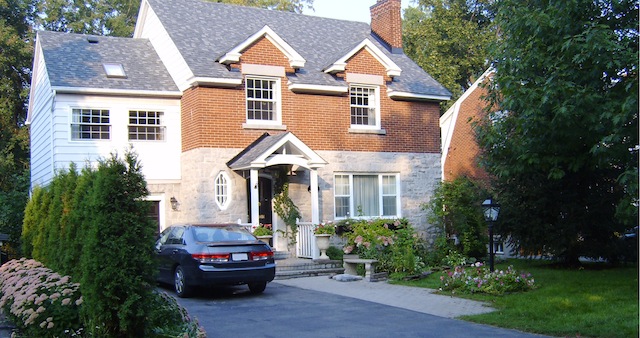
    Picture of a nice, middle class house by Strev via sxc.hu

    Similar posts:

  • High cost politics – how the Australian election will fail business

    High cost politics – how the Australian election will fail business

    “Running costs have gone crazy” complains Sydney restauranteur Jared Ingersoll at the same time the Australian events industry warns it’s being crushed by a higher dollar.

    While the closure of an inner city cafe doesn’t mean that much, a bigger warning about Australian costs comes from Royal Dutch Shell who have put their gas investments on hold due to project blowouts.

    Natural gas investments are the core of Australia’s economic policies with the country’s Asian Century report identifying energy exports as being the country’s main revenue earner over the next quarter century.

    Costs of doing business in Australia have been steadily on the increase since the Howard government introduced the GST which triggered Australia’s transition to a high cost country.

    It didn’t have to be that way but Howard’s addiction to middle class welfare meant what should have been a opportunity to reform the economy during the mid 2000s was squandered with gifts handed out by one of the highest spending governments in Australian history.

    While Whitlam at least spent money on bringing sewers to the suburbs, Howard spent his on subsidies to rich schools and parking permits to self-funded retirees.

    It would take a brave government to undo Howard’s work which isn’t something we can expect from the populist and cowardly Australian Labor Party that lacks any of the honesty or strength required to confront the whining middle classes about their unsustainable entitlements.

    Which makes the election announced last week interesting. In her election announcement the Prime Minister made a mention of dealing with the high Australian dollar, which at least shows the Labor Party sees there’s a problem – although they certainly don’t have the stomach to make the tough decisions required.

    On the other side of politics though it’s all unicorns and magic puddings. Tony Abbot and his friends are partying like it’s 1999.

    The Liberal Party policy paper released last week is notable for not acknowledging the global financial crisis and maintaining that taxes can be cut while Howard’s middle class welfare state can be expanded.

    The best example of the Liberal’s addiction to middle class welfare is their promise to introduce a parental leave scheme. As their Strong Australia policy document explains;

    Paid parental leave ought to be paid at a person’s wage rate, like holiday pay and like sick pay, because it is a workplace entitlement, not a government benefit.

    Not only does the Liberal Party believe that high paid workers should get subsidies for their nannies, but that employers should pick up the bill, just like holiday and sick pay.

    Middle class welfare and a massive business cost increase to boot.

    In a Smart Company poll last week, the small business readers overwhelming endorsed the Liberal Party.

    They should be careful what they wish for.

    For those worried about getting Australia’s high cost base down there are serious debates to be had about our tax and welfare systems along with tackling issues like high property prices, over-regulation, aging population and workforce skills.

    Most importantly, we have to define what Australia wants to be in the 21st Century.

    Little, if anything about these issues will be discussed before September and in the meantime the Dutch disease will slowly strangle Australian business. We need better.

    Similar posts: