Category: economy

  • Are the Olympics a curse for the host city?

    Are the Olympics a curse for the host city?

    With just over two months until the start of the London Olympics, the inevitable cold feet about the wisdom of the project have started. Vanity Fair details the convoluted bidding process while Business Insider gives the 32 reasons why they think the 2012 Olympics will be a disaster.

    Conventional wisdom is the Olympics leaves the host city – and often the nation – in a collective emotional, if not economic, depression.

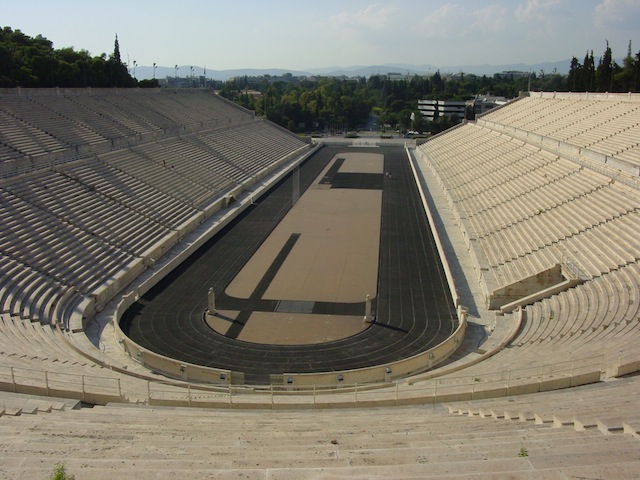
    In the case of Athens it may even be an economic depression, although it would be drawing a long bow to suggest the 2004 Olympics are responsible for the economic predicament Greece finds itself in today.

    But is true that the Olympics are “cursed”? Or is the truth more complex than that?

    For cities hosting the Olympics, the core problem is the size of the event with the 2012 games expecting 10,000 athletes from 182 countries in over 300 competitions. The Olympics are several orders of magnitude bigger than any other comparable sporting event such as the FIFA World Cup.

    Given the size, it’s not surprising host cities suffer an Olympic hangover – there is no way any country, even China, can sustain the frantic hyperactivity a host city goes through in the years of preparation.

    China is a good example of an economy that didn’t suffer after the Olympics and the event was more a proclamation that the country had arrived as a global power.

    This is common with successful Olympics – Spain in 1992, South Korea in 1988, Japan in 1960 and arguably Australia in 1956 – were all turning points for those countries and the games announced their new position in the world.

    Australia though is an interesting case with the two Olymipcs they have hosted,while the 1956 Olympics did change Melbourne, and Australia’s, self image the story is different for the 2000 Sydney event.

    In the run up to the 2000 Olympics Sydneysiders, like myself, were sceptical. The city couldn’t run a decent railway for crying out loud, so how could we expect to run a decent Olympic games?

    All the scepticism vanished on the weekend of 20th August, 2000 when the blue line marking the marathon route appeared across the city. It was as if a switch had been flipped; the few remaining doubters skipped town and everyone else had a party.

    The optimism in Sydney and Australia at the end of the games was clear; the country could pull off the world’s biggest event and the opportunities were boundless.

    But Sydney and Australia squibbed it – rather than building on the Olympic success and the preceding decade of reform, the nation looked inwards, decided to invest in new kitchens and today the country is more dependent on mineral exports than any time since the 1850s gold rush.

    Much of the blame for this can be put on Australia’s political establishment, specifically two men – Prime Minister John Howard and NSW Premier Bob Carr.

    Both men were, or are, very effective tactical politicians who were good at winning elections but were by no means visionaries or nation builders was not their thing. So the opportunities presented to Australia in the early 2000s were squandered on Carr’s short term opportunism and Howard building his middle class welfare state.

    There’s no reason why there should be an Olympic curse, for some cities it’s a timing issue. For Athens the economic cycle was against them while politics damaged the Olympics of the 1970s and 80s.

    On the other hand for cities like Seoul, Tokyo and Barcelona the Olympics were a coming of age for a growing country.

    The challenge for Boris Johnson and David Cameron is to translate London’s Olympics into building Britain’s confidence. While the economic tide seems to be against them, much of their political legacy will be judged against on how well they do.


    Similar posts:

  • Could Australia follow the Greek path?

    Could Australia follow the Greek path?

    Business Spectator’s Robert Gottliebsen today describes how Australia has caught the Greek disease of low productivity and an overvalued currency.

    This is interesting as just last week Robert was bleating on behalf of Australia’s middle class welfare state.

    Australia’s productivity has stagnated over the last 15 years, but unlike Greece the ten years before that was a period of massive reform to both employment practices and government spending.

    The structure of the Australian economy is very different, not least in its openness, to that of Greece.

    What’s more Australia has a floating currency which will eventually correct itself unlike the Euro that Greece finds itself trapped in.

    That’s not to say Australians won’t be hurt when that currency correction happens. The failure of the nation’s political, business and media elites in failing to recognise and plan for this is an indictment on all of them – including Robert Gottliebsen.

    Australia’s real similarity with Greece is the entitlement culture that both nations have developed.

    Over those last 15 years of poor productivity growth, Australia has seen a massive explosion of middle class welfare under the Howard Liberal government which has been institutionalised by the subsequent Rudd and Gillard Labor governments.

    Today middle class Australians believe they have a right to generous government benefits subsidising their superannuation, school fees and self funded retirements.

    For all the sneering of Australian triumphalists about Greek hairdressers getting lavish government benefits, Australia isn’t far behind Greece in believing these entitlements are a birthright.

    A middle class entitlement culture is the real similarity between Australia and Greece. It’s unsustainable in every country that harbours these illusions.

    Unlike Greece, Australia doesn’t have sugar daddies in Brussels, Paris and Berlin desperate to prop up the illusion of the European Union. Australia is own its own when the consequences of magic pudding economics become apparent.

    Australia’s day of reckoning may arrive much quicker than that of Greece. Then we’ll see the test of how Australians and their politicians are different from our Greek friends.

    Similar posts:

  • No exit

    No exit

    The men’s hairdresser down the road from me has hung up his scissors after twenty-four years.

    The sign on his shop window apologizes and the shop itself is up for lease. Shortly there won’t be any evidence a long standing local business was once there.

    Roy had no exit from his business and he sell the operation as a going concern.

    For Roy his retirement will be funded solely out of his savings. If he’s lucky he’ll have saved enough of his income from the business for a comfortable retirement – unfortunately many small business owners they’ll eke out the rest of their lives on the pension.

    Even for those who have planned for an exit, many of their plans have fallen over in the aftermath of the 2008 financial crisis.

    It’s always been questionable whether Gen X and Y entrepreneurs could afford to pay the sums for the affluent retirement of Baby Boomer business owners but now the post 2008 contraction in lending means it’s even less likely retiring business owners like Roy will find someone to buy their businesses.

    While the focus is on twenty something app developers selling their businesses for a billion dollars, the truth is that wealth for most business owners lies in the local newsagent, hairdresser or coffee shop owner being able to sell their operation for a reasonable return.

    For many baby boomer business owners it’s going to mean working more years than they intended and sharply reduced retirement expectations.

    Property values too are difficult. Many boomer businesses had the sensible model of buying the property their business occupies as a retirement nest egg.

    Again those properties are too expensive for the new generation and the deleveraging economy means the outlook for property values isn’t good.

    On every level, things are going to be tough for those wanting to sell businesses over the next decade.

    Those who do get good prices for their businesses are going to be those doing something exceptional to gain attention with income and profits that make them stand out from the cloud.

    Just being the best hairdresser in the neighbourhood or having a popular cafe isn’t going to be enough.

    Hopefully Roy The Barber managed to stash away enough for a well deserved comfortable retirement.

    Similar posts:

  • When taxpayers hearts sink

    When taxpayers hearts sink

    Nothing is sadder than a government or business that believes it will gain huge savings through outsourcing.

    Part of the 1980s management mindset is that outsiders can do a job better and cheaper than existing staff. Almost always this is proved to be expensively wrong.

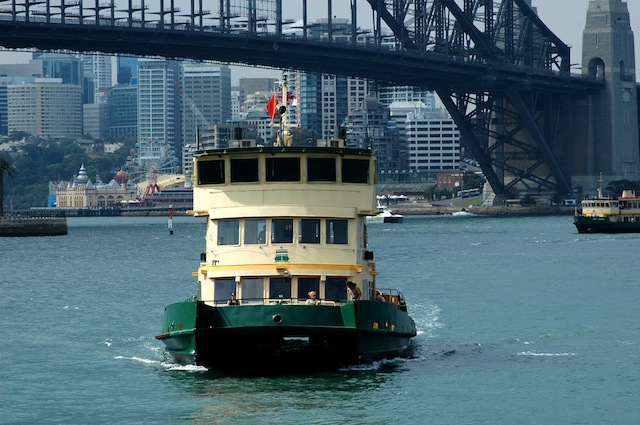
    The announcement the New South Wales Government will outsource Sydney Ferries is a good example of this. Media reports claim the “government is hoping to save hundreds of millions of dollars over the next decade.”

    Good luck with that. As the people of Melbourne found when the Victorian government outsourced operations of suburban trains and trams the levels of service remained poor, subsidies increased and new level of bureaucracy developed to manage the disconnect between a private operator running a service accountable to the public.

    Advocates of outsourcing always overlook the cost, time and skills involved in supervising contractors.

    This is something the banks found in the early days of offshoring services as the claimed massive labour cost savings by moving operations to the developing world were offset by higher supervision costs.

    Governments have a bigger problem with outsourcing as the public service generally lacks the contractual and project management skills to effectively specify and supervise major service outsourcing contracts.

    A good example of this is the Royal North Shore Cleaning contract where the hospital has seen a fall in hygiene levelsas the contractor attempt to meet their KPIs under an agreement that has been designed primarily to save the area health service money.

    Focusing on cost savings when outsourcing is almost always a recipe for failure. In both business and government its rare that a function or operating unit is so badly managed that savings offset the increased management expenses.

    This isn’t to say outsourcing isn’t always appropriate. Sometimes those savings are achievable – albeit not as often as proponents claim – and outsourcing can deliver skills that the parent organisation lacks.

    Which is another concern about the Sydney Ferries outsourcing. The Sydney Morning Herald article referred to above says the following about the CEO of the winning consortium.

    Mr Faurby, who has more than 20 years maritime experience, has never run a passenger service before. But he said he understood what it would take to improve Sydney’s ferries.

    ”It doesn’t really matter very much if it is a towage, tug company, or a container shipping company, or for that matter a ferry company … what matters is that you have the competencies to run it in an efficient, safe and effective manner.”

    Um no. That’s 1980s management school thinking where every business – from airlines to software – can be reduced to selling soap.

    Not having experience in running a passenger service with all the customer service issues that come when you’re dealing with the public is a concern. One hopes, prays even, that Mr Faurby and his employers have the wisdom to support the CEO with managers who do have a customer service ethos.

    Then there’s the black hole of Australian public transport – ticketing.

    While it’s impossible to quantify just how poor Australian governments have proved themselves to be with ticketing systems; Sydney’s convoluted, complex, siloed and passenger unfriendly public transport system adds another layer of complexity that the new management of Sydney Ferries is going to have to deal with.

    There’s no doubt though that Sydney Ferries need reform; its management was incompetent and, beyond the usual cheerful deckhands, the staff were surly with little concept of customer service.

    Done well, outsourcing Sydney Ferries could be for the better; but the emphasis on cost savings and what appears to be naive management expectations should make taxpayers’ hearts sink.

    Similar posts:

  • Cargo cults and your business

    Cargo cults and your business

    “We need an interest rate cut” thunders the business media.

    “Give us GST relief” plea the big retailers.

    “China will boom forever” assert the government economists.

    “Big corporations will buy us out for a billion dollars” pray the hot new start ups.

    “I’ll win the lottery this week” thinks the overworked cleaner.

    We’re all waiting for the big saviour that’s going to rescue us, our business or the economy.

    It could be a big win, a big client or a big government spending program to rescue us.

    Sadly, should we lucky enough for that saviour to arrive, it may not turn out to be all we expected.

    There’s many lottery winners who curse their win while many disaffected founders who watch their startup baby fade away neglectful new owners.

    For a lumbering department store, tax changes will do little to save them from market changes their managements are incapable of comprehending.

    Interest rate cuts are great for business when customers are prepared to take on more debt but in a period where consumers are deleveraging a rates cut will do little to stimulate demand.

    The clamour for interest rate cuts are a classic case of 1980s thinking; what worked in 1982, 1992 or 2002 isn’t going to work the same way in 2012.

    What’s more, the Zero Interest Rate Policies – ZIRP – of the United States and Japan are a vain attempt to recapitalise zombie banks saddled with overvalued assets rather than an effort to help the wider economy.

    China is more complex and there’s no doubt the country and its people are becoming wealthier and there are great opportunities.

    The worry is most of what we read today could have been the wishful thinking written about Japan thirty years ago. Lazily selling commodities to the Chinese while they create the real value is not a path to long term prosperity.

    In business we have a choice, we can pray for luck or we can make our own luck.

    Some choose to join the cargo cult and pray, or demand, that someone else does something. Others get out and do it.

    John Frum gravesite image by Tim Ross through Wikimedia Commons

    Similar posts: