Category: economy

  • Milking the dead cow

    Milking the dead cow

    Many big Australian businesses seem untouchable as they dominate their markets to degree almost unknown in most other developed countries. As the story of Sensis shows, Australia’s big duopolies may not be as strong as they appear.

    The last few months have been tough for Sensis; revenues last year fell nearly 25%, the once strong business was folded into the latest incarnation of Telstra Digital Media and now the CEO Bruce Akhurst has departed after seven years.

    What could have been a dynamic business is now shriveling away, what went wrong?

    Milking the revenue cow

    Bruce did a good job of keeping revenue coming in during a period that the then owners, the Federal government, wanted to maximise the book value of Telstra before its sale.

    Year upon year Sensis could be relied upon to squeeze more money out of the businesses advertising in it.

    Management were focused on extracting revenue from the existing client base rather than responding to the obvious threat from online search.

    Expensive distractions

    When senior management decided to respond to the online world, they were sucked into unnecessary and expensive distractions; the most notable being the 2005 launch of Sensis Search where the then Telstra CEO – the disastrous Sol Trujillo – famously sneered “Google Schmoogle”.

    Three years and hundreds of millions of dollars later, Sensis admitted defeat. By then the small business advertisers who were the life blood of the directory market had woken up to the reality their customers weren’t using the Yellow Pages anymore. Sensis had missed the boat.

    Clunky processes

    Whenever I spoke to small businesses about Sensis through the 2000s there was the same complaint, “I don’t have time to deal with their sales people, just let me tick a box on a web page or send a fax!”

    Purchasing space was difficult for customers, their 1950s Willy Loman sales model should have been automated in the 1990s and never was.

    Instead Sensis was locked into a high cost sales model and added friction for advertisers which they shouldn’t need, not only were they expensive but they actually made it difficult for their customers to place orders.

    Should Sensis have been sold?

    At its peak in 2005, Sensis was valued at between 8 and 10 billion dollars as a stand alone company.

    Many, including myself, believe that breaking Sensis away would have been the best result given Telstra were at the time focused on protecting their fixed line copper wire monopoly and the directories business was not getting the management attention or capital investment it needed.

    History shows though that we might be wrong.

    Commander Communications was spun off from Telstra in 2000 and like Sensis had inherited an almost monopoly position in the small business communications market.

    By 2007 Commander was out of business thanks to a combination of incompetence, management greed and an inability to recognise the changing communications marketplace.

    The Australian disease

    Commander’s biggest problem was it saw its customers as cash cows, just as Sensis did. This exposes a much deeper problem in Australian industry and management culture.

    Over the last thirty years Australian government policies have seen duopolies develop in almost every key sector of the economy.

    All of these duopolies share the same “customer as a milk cow” philosophy which, along with the rampaging Australian dollar, has dragged Australia into being a high cost economy.

    The banking industry, while not a duopoly for the moment, is an even more debilitating example of the cash cow syndrome where small business has been crippled by excessive interest rates and fees – particularly since the 2008 crisis.

    Sensis’ demise is systemic of a culture that fixates on extracting maximum revenue from customers; concepts like innovation, R&D or adapting to market trends don’t have a role in this mentality.

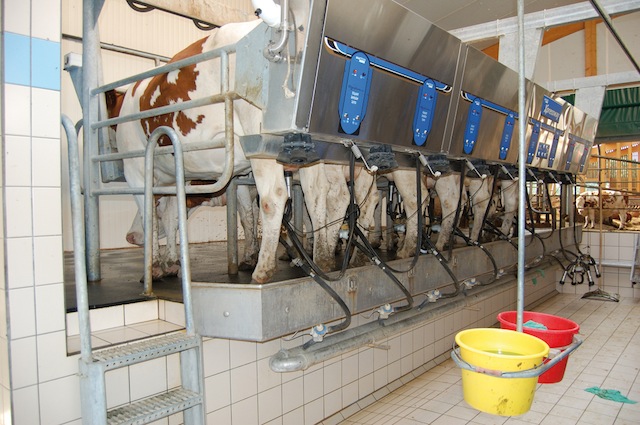
    Milking cows is a fine business, but sometimes you have to think about the health of the herd.

    Similar posts:

  • Overselling technology

    Overselling technology

    “We’d like to allow remote band members – say a violinist in the Australian outback – be able to participate in an orchestra as if they were there. We hope the NBN will be able to do this.”

    When the band organiser said this at a business roundtable all the technologists, myself included, choked.

    There are many things the Australian National Broadband Network will deliver but the ability to teleport a violinist from the outback to downtown Sydney or Melbourne isn’t one of them.

    One of the problems with technology is we tend to oversell the immediate effects; as Bill Gates famously said “The impact of all new technologies is overestimated in the short term but under estimated in the long term.”

    Because we tend to sell the immediate sizzle, customers are disappointed when our promises don’t eventuate. In the decade it takes to win them back, those initial benefits we didn’t deliver in six months have become commonplace.

    This is probably one of the reasons why businesses are reluctant to invest in new technology or online services; they’ve heard the promises before and they don’t trust what they can hear.

    In the late 1990s businesses spent tens of thousands – sometimes millions – establishing websites that didn’t work. Those financial scars still hurt when they hear talk, some of them are still paying off those sites. So it’s barely surprising they are reluctant to return to a sector that has now matured.

    Perhaps it’s best to underpromise; instead of cloud computer vendors committing themselves to 80% savings and social media experts promising millions of customers from their new viral video, it may be better to be more realistic with the expectations.

    Customers have become deaf to wonderful promises, they are expecting us to deliver. Promising the world is no longer a business strategy.

    Similar posts:

  • Irrelevance and the media

    Irrelevance and the media

    It’s a shame we weren’t around when dinosaurs became extinct. Then again, maybe we are.

    News Limited business commentator Terry McCrann writes about the “Bleakest of views from the shopfronts” in his Sunday column describing the problems of retail.

    All of the problems Terry cited are from big retailers – Woolworths, Dick Smith, Harvey Norman and JB HiFi. To make it clear he was talking about corporate issues there’s even a reference to General Motors.

    Nowhere does Terry talk about smaller businesses or those challenging the big guys, folk like Ruslan Kogan or the Catch of the Day team. It’s all about the big end of town.

    Terry’s article illustrates the problem of relying on incumbent mainstream media commentary; that it is Big Media talking about Big Business and Big Government.

    “Small”, “ordinary” or “average” has no place in their conversation, if you can call the pronouncement of mainstream media commentators a conversation at all.

    We can understand this – for a journalist, it’s good for the ego and career to look like a “heavy hitter” in big business. For the politician, small business and community groups can’t pay the speaking and consulting fees paid by corporations to supplement their meagre retirement benefits.

    Increasingly what happens in the corporate board rooms or the once smoke filled rooms of political caucuses is out of touch with the real world.

    This has become particularly acute since the responses to the 2008 crash proved to the management classes that their bonuses and perks will be protected by government bailouts regardless of how many billions of shareholder wealth they manage to destroy.

    In the United States we see this in political controversies being focused on contraception – an issue settled forty years ago – while the country faces fundamental challenges to its economic base and the basic welfare of its citizens and industries.

    While in Australia the media ‘insiders’ rabbit on about pointless internal party politics and soothing articles on how everything else is fine, we just need to be more optimistic. Yet the real questions about how we take advantage of the country’s greatest export boom, position the economy for the next 50 years and the nation’s dependence on the Chinese economy are being ignored.

    Terry McCrann’s story is emblematic of just how out of touch Big Media, and their friends in Big Business and Big Government, are with the real world.

    All we can do is let them get on with it and not take them too seriously.

    Similar posts:

  • Why we should give Gerry Harvey a break

    Why we should give Gerry Harvey a break

    Gerry Harvey’s been having a bad year. This time last year he was moaning about the Internet stealing his business and now his profits are down.

    In Mark Fletcher’s Newsagency Blog, Gerry gets a serve for dragging the entire retail channel down.

    Mark quite rightly points out that Gerry’s problems are of his own making and his chain’s difficulties aren’t necessarily those of the rest of the industry or even shared by individual franchises within the Harvey Norman group.

    While I’ve been as critical of Gerry as anybody else, maybe it’s time to give him a break.

    It’s worth considering how Gerry made his billions. When he started in business in the late 1950s, it was tough for the average person to get credit. At best working families could get something put aside at the local store or enter into an Encyclopedia Britannica style subscription plan.

    Gerry and his generation of retailers changed that. They made credit available to the masses who could suddenly afford to buy household appliances and electrical goods without years of savings.

    I remember my parents buying things from Norman Ross, Waltons or the ACTU’s Burke Street store (Bob Hawke once stepped on my mum’s foot while she was shopping for a sofe) because working class people could get credit there.

    Gerry was at the beginning of the consumer revolution that defined the second half of the Twentieth Century.

    In the late 1980s financial deregulation changed the game again and Gerry’s business took off as credit became even easier to get with new providers entering the market. First we saw three month interest free offers and by the mid-2000s six year interest free deals were available.

    These deals were so good that Harvey Norman franchisees often made more money selling the credit deals than on the actually product that the ‘no interest’ loan had been taken out to buy.

    For Gerry, this was insanely lucrative as his business was able to clip the ticket at almost every level of the retail and distribution chain while moving much of the risk and capital cost onto franchisees and landlords hungry for high traffic anchor tenants.

    In 2008 this entire model changed as the credit boom came to a crashing halt and consumer spending with it.

    Business models based on cheap credit now have to find something else that works and this is what Gerry Harvey is now struggling with.

    To complicate matters, the Internet has changed the distribution model that worked for Harvey Norman and other bricks and mortar retailers. All of them are now having to make a major shift in the sales cultures.

    Adapting to this new world is tough for everybody and we should have some sympathy for Gerry Harvey as our businesses and jobs are being affected by exactly the same forces.

    How Gerry adapts, or doesn’t, could be a bellwether for our own industries.

    Similar posts:

  • Competing in a high cost world

    Competing in a high cost world

    It’s often said that Australian businesses can’t compete and the nation can no longer can support manufacturing or high tech industries.

    With the high Australian dollar, many economists, business leaders and politicians have said industries have to adapt to being an expensive economy. Interestingly, few of these experts explain how businesses should, or can, adapt.

    At the recent Kickstart forum I had the opportunity to meet two Australian companies succeeding with high tech products and using the high dollar to their advantage.

    David Jackman of Pronto Software, a thirty year old business intelligence company, is proud of the fact the business he leads does most of its development in Australia. As business owned by it’s employees – Pronto had  an employee buy out in the late 1990s – he sees his role as building the business to last centuries like some European businesses.

    Linus Chang developed his Melbourne based business, Backup Assist, when he discovered the data backup tools built into Microsoft Windows weren’t very good. Taking the basic Microsoft products, he added the features that made these tools usuable at a fraction of the cost of bigger companies’ data backup software.

    Today Backup Assist is sold in 124 countries with the US as the biggest market.

    Both Backup Assist and Pronto find keeping the bulk of the software development in house in Australia makes sure they are producing high quality, effective products.

    Software development isn’t the only sector dealing with the high cost evironment, David Jackman says Pronto has many customers in the Australian manufacturing industry who have adapted to a high cost environment with niche and high value added products.

    Identifying these opportunities is where the challenge lies; what do our businesses do well that customers in international markets are prepared to pay for?

    We also have an advantage in being a relatively open economy with first world standards. This is another reason why investment in new infrastructure like the National Broadband Network is important.

    One thing is for sure, selling low priced commodity products with small margins is not where the future lies, even if the Aussie dollar collapses.

    We have success stories and businesses adapting to being a high cost economy, it’s a matter of understanding how our industries can add value while  do this.

    Similar posts: