
Category: entrepreneurs

  • Can Yahoo! disrupt the disruptors?

    Can Yahoo! disrupt the disruptors?

    Yahoo! CEO Marissa Mayer packed out the room for her interview at the World Economic Forum this week where she spoke about some of the challenges her and the company face.

    One of the areas she sees for Yahoo! is in collaborating with other tech industry giants.

    Mayer also is making a point of collaborating with companies such as Apple Inc., Google and Facebook, instead of competing.

    “It ultimately means there’s really an opportunity for strong partnerships,” she said.

    The problem for Yahoo! is that it doesn’t have a lot to offer companies like Apple, Google or Facebook – they are steaming along on their own and have moved ahead of the areas which Yahoo! dominated a decade ago.

    Generally in the tech industry partnerships are more the result of the sector’s also-ran coming together in the hope that their combined might will overcome the leader’s advantages.

    It’s the same philosophy that thinks tying the third and fourth placed runners legs together will make them faster than the winner.

    A good example of this is Microsoft’s tie up with Nokia over the Windows Phone. If anything, the net effect has put Windows Phone and Nokia even further behind Apple and Google in the handset market.

    Even when two tech companies have united to exploit their individual strengths, the results usually end in tears. Probably the best example of this was the IBM and Microsoft joint venture to develop the OS/2 operating system which eventually sank under IBM’s bureaucrat incompetence and Microsoft’s disingenuous management.

    Those two examples show how partnerships only work when each party has something valuable to contribute and all sides are committed to the venture.

    Marissa Mayer’s task is to find Yahoo!’s strengths and build on them, then she’ll be in a position to enter partnerships on an equal basis.

    Whether its worth entering into partnerships with the big players though is another question. It may well be that Yahoo! has more to offer smaller businesses and disruptive startups.

    Entering into a desperate alliance with Apple or Facebook could possibly be the worst thing Yahoo! could do, the company is no longer a leader and now needs to be a challenger or a disruptor.

    Facebook’s locking competitors out of data feeds is an example of how complacent the big four internet giants are becoming, Yahoo! are in the position to upset that comfortable club.

    The value of partnerships is that we all have weaknesses and strengths, a properly thought out venture builds on the various parties’ strengths and covers their weak spots. Right now Yahoo! has more weaknesses than strengths.

    Similar posts:

  • Silicon Valley and the virtues of going private

    Silicon Valley and the virtues of going private

    Last week there were a pair of interesting stories about the tech industry’s investment models.

    The biggest story was the rumours that PC manufacturer Dell may go back to being a private company and the other was Survey Monkey’s raising of $800 million through debt and private capital.

    Not your usual VC play

    Polling company Survey Monkey’s capital raising is notable because it’s very different to the standard VC equity models used by Silicon Valley companies of this size.

    Adding to the unusual nature of Survey Monkey’s behaviour is the declaration that they have no intention of becoming a public company. By ruling out an obvious way for investors to cash out of the business, they are making a clear statement that those putting money into the venture are doing so for the long term.

    That Survey Monkey is also taking on debt indicates management believe they are going to have the cash flow to service payments. Not playing to the Greater Fool business model makes the online polling company very different to most of its contemporaries in Silicon Valley.

    Dell going private

    Survey Monkey’s $800 million is dwarfed by Dell’s market cap of 22 billion dollars so the talk of the PC manufacturer buying out its stock market shareholders and becoming a private company is big news indeed.

    The New York Times Dealbook has a close look at the of the idea of taking Dell private and comes to the conclusion it’s not likely to happen.

    While there are challenges, there is merit to the idea. Richard Branson delisted Virgin from the London Stock Market in 1988 after becoming frustrated with the short term objectives of his shareholders and there’s a possibility of Michael Dell may feel the same way.

    For Dell, the challenge lies in moving away from the commodity PC sector. The Dell Hell debacle showed the company’s management has struggled with the realities of the low margin computer market and things aren’t getting better.

    Dell themselves are steadily moving away from PCs with bigger investments in services and other computer hardware sectors.

    Project Ophelia, a USB stick sized computer running Google’s Android operating system was one of Dell’s announcements at the Consumer Electronics Show and could mark where the company is going in the post-PC environment.

    Given portable and desktop PCs represent over half of Dell’s income moving away from those markets is going to be a major change in direction for the company.

    A change is though what the company needs with revenues down 11% on last year which saw profits nearly halved.

    Whether going private or staying public will allow Dell to recover its profitability remains to been seen, but management could probably do without the distraction of answering to stock markets while dealing with a complex, challenging task.

    Both Dell and Survey Monkey are showing that there isn’t one path to raising funds for technology companies, in fact there’s plenty of businesses raising money privately without the razzamatazz of high profile venture capital investments.

    It may well be though that we’re seeing private companies coming back into fashion as individual investors see the advantages in businesses with good cash flows rather then the hyped loss leaders which have dominated Silicon Valley’s headlines.

    Image of Wall Street courtesy of Linder6580 on SXC.HU


    Similar posts:

  • Big data, mobile apps and smarter logistics – why Avis is buying Zipcar

    Big data, mobile apps and smarter logistics – why Avis is buying Zipcar

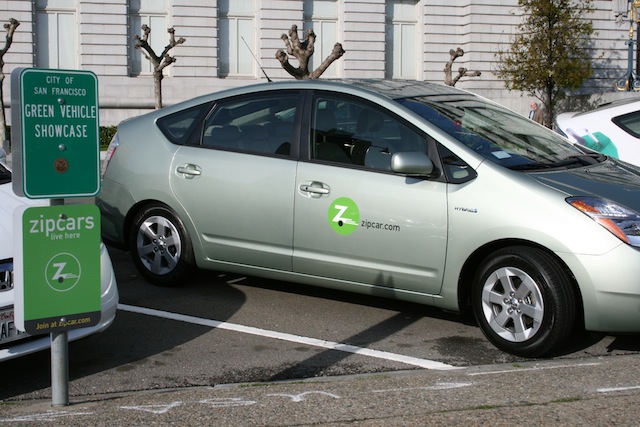
    With no bad press over New Year’s Eve it looks like hire car service Uber avoided the surge pricing traps of 2011 and the good news continues for the online booking industry with the news that Avis is buying car sharing service Zipcar.

    Assuming the acquisition isn’t another example of the greater fool investment model, Avis’ purchase of Zipcar makes good sense in expanding the hire car giant’s footprint into the share car business.

    Regrettably Avis use the 1980s term “synergies” four times in their media release but it does seem the businesses are a good fit both in fleet sharing and improving both company’s services.

    Zipcar’s technology is another asset which Avis can use,  with the car sharing service’s ability to track vehicle locations meaning better fleet management for the hire car business.

    Car sharing logistics

    The logistics angle of car share services is something that’s been highlighted by Uber’s CEO Travis Kalanick at various times, most recently at the service’s Sydney launch last November.

    Another aspect of the car sharing and hire car booking services is their Big Data advantages which the online startups bring.

    Historically, car hire companies have been reasonably good at gathering data on their customers with loyalty schemes, direct mailing and plugging into airline frequent flier programs. However they have been left behind by the Big Data boom in recent years.

    Companies like Zipcar, Uber and taxi hailing apps like GoCatch have big data in their DNA, having been founded in the era of cloud computing and social media they have access to more information and a better ability to use the knowledge they gather.

    Predicting the price surges

    At Uber’s Sydney launch Kalanick described how Uber’s traffic volumes increase in San Francisco when the Giants win a game, the interesting thing is that the surge happens three hours before the match starts.

    Insights like the traffic patterns around football games and holidays are gold to a high inventory business like hire car services. They are also important to the entire logistics industry.

    This latter point is probably the most overlooked part of all with the current rush into social and mobile based apps – the market intelligence that these services gather.

    While it’s tempting to dismiss that market intelligence as just monitoring who likes cats or cheeseburgers, the application of that data is transforming supermarkets, airlines and even concert venues.

    Avis seem to have understood that it will be fascinating to see how they will use Zipcar’s data and whether their competitors will figure out the importance of what these services offer.

    Similar posts:

  • Disrupting the disrupters

    Disrupting the disrupters

    Two days ago, iconic venture capital investor Fred Wilson, wrote about the changing nature of the tech industry’s VC investments.

    Fred puts the changes down to three factors; maturing markets where big players increasingly dominate, the move to mobile which Cristina Cordova examines in more detail and the shift in focus from the consumer market to the enterprise sector.

    The last factor bears more examination as consumer and enterprise are very different and there’s no guarantee that businesses built around thousands of people downloading apps or accessing websites can pivot into selling into corporations and government agencies.

    Probably the biggest problem is the consumer or small business freemium model doesn’t cut it in the enterprises who are prepared to pay big sums for highly reliable and secure services.

    Similarly the enterprise model of fat sales commissions paid for by big implementation costs and expensive support contracts doesn’t quite fly either for these start up business. There’s also a good argument that high margin enterprise model is doomed anyway as cloud services displace costly in-house installations.

    In the transition from consumer to enterprise is difficult and most companies have struggled to make the jump, even Google Docs has been a hard sell into the corporate sector.

    At the enterprise end, cloud services are cutting margins as IBM and Oracle are finding. Both companies are moving across to cloud products and now a lot of salespeople and consultants in those organisations are looking at a substantial drop in their standards of living.

    More importantly for the startup and VC communities, the “greater fool” model doesn’t work in the enterprise space. Hyping a business which has barely made a cent in revenue but does have a million users is very different to building a stable corporate platform.

    It may well be the move to the enterprise by Silicon Valley is because the consumer model has run out of “greater fools” who’ll buy overhyped photo sharing apps or social media platforms of dubious value.

    This change in investment behaviour also has lessons for governments trying to copy Silicon Valley. The puck moves fast in the investment community while governments, by definition, are slow.

    By the time governments have setup their programs, the markets have moved on and many of the hot technologies of two years prior are now old hat. This is exactly what we’re seeing in the apps world.

    We often hear about technology causing disruption, often though we forget that those disruptive technologies can be ephemeral as they are disrupted themselves.

    As these industries evolve, we’ll see how well the disrupters deal with being disrupted.

    Similar posts:

  • Newly normal in the English Midlands

    Newly normal in the English Midlands

    On their metal, a story from BBC Radio’s In Business program looked at how the English Midlands is dealing with the toughest economic conditions the beleaguered region has suffered for decades.

    Once the centre of the industrial revolution, The Midlands have had a tough time of the last fifty years as the region caught the brunt of Britain’s de-industrialisation and the loss of thousands of engineering jobs.

    Today, the surviving engineering companies are struggling to find new markets as orders from Europe dry up and many Midlands workers find they are confronting the ‘New Normal’.

    The ‘New Normal’ for British industry is described by Mark Smith, Regional Chairman, Price Waterhouse Coopers Birmingham who points out that UK industries have to sell to the fast growing economies.

    Interestingly this is similar, but very different in practice, to the Australian belief – where the Asian Century report sees Australia continuing being a price-taking quarry for Asia rather than selling much of real value – the Brits see some virtue in adding value to what they sell to Asia’s growing economies.

    The British experience though shows the realities of the ‘New Normal’ for Western economies – the cafe owner featured in story now offers no dish over £3 and the idea of overpriced five quid tapas are long gone. The customers can’t afford it.

    Part of this is because of the casualisation of the workforce as people find salaried jobs are no longer available and become freelancers or self-employed. One could argue this is the prime reason why unemployment hasn’t soared in the UK and US since the global financial crisis.

    That ‘new normal’ features the precariat – the modern army of informal white and blue collar workers who have more in common with their grandparents who worked for day wages at the docks and factories in the 1930s than their parents who had safe, stable jobs through the 1950s and 60s.

    For the precariat, the idea of sick leave, paid holidays or a stable career started to vanish after the 1970s oil shock and accelerated in the 1990s. The new normal is the old normal for them, there just happens to be more of them after the 2008 crash.

    With a workforce increasingly working for casual wages without security of income, the 1980s consumerist business model built around ever increasing consumption starts to look damaged.

    The same too applies to the banking industry which grew fat on providing the credit that unpinned the late 20th Century consumer binge.

    When the 2008 financial crisis signalled the end of the 20th Century credit binge, the banks were caught out. Which is why governments had to step in to help the financial system rebuild its reserves.

    The effects of that reserve building also affected businesses as bank credit dried up. Early in the BBC program Stuart Fell, the Chairman of Birmingham’s Metal Assemblies Ltd described how his bank decided to cut his line of credit from £800,000 to £300,000 which forced the management to find half a million pounds in a hurry.

    That experience has been repeated across the world as banks have used their government support and easy money policies to recapitalise their damaged accounts rather than lend money to entrepreneurial customers to build businesses.

    Businesses are now looking at other sources to find capital from organisations like the Black Country Reinvestment Society which is profiled in the story that raises money from local investors to provide small businesses with working capital.

    Communities helping themselves and each other is the real ‘New Normal’ – waiting for the banks to lend money or hoping that surplus obsessed governments will save businesses or provide adequate safety will only end in disappointment as the real austerity of our era starts to be felt.

    The New Normal is declining income for most people in the Western world and we need to think of how we can help our neighbours as most of us can be sure we’re going to need their help.

    Just as the English Midlands lead the world into the industrial revolution, it may be that the region is giving us a view of what much of the Western world will be like for the next fifty years.

    Similar posts: