Category: future

  • Disrupting the incumbents

    Disrupting the incumbents

    One of the truisms of modern business is that no incumbent is safe, Microsoft, Nokia and Hauwei are good examples of just how businesses that five years ago dominated their industries are now struggling with changed marketplaces.

    In the last two days there’s been a number of stories on how the smartphone and computer markets are changing.

    According to the Wall Street Journal’s tech blog, PC manufacturers are hoping Microsoft’s changes to Windows 8 reinvigorates the computer market.

    Those hopes are desperate and somewhat touching in the face of a structural shift in the marketplace. These big vendors can wait for the Big White Hope to arrive but really they have only themselves to blame for their constant mis-steps in the tablet and smartphone markets.

    Now they are left behind as more nimble competitors like Apple, Samsung and the rising wave of Chinese manufacturers deliver the products consumers want.

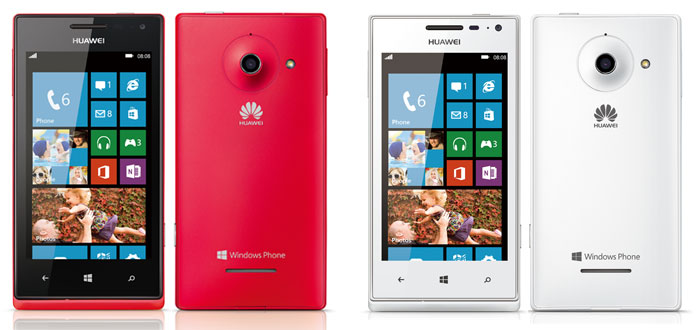
    All is not lost for Microsoft though as Chinese telecoms giant Hauwei launches a Windows Phone for the US markets which will be available through Walmart.

    Hauwei’s launch in the United States is not good news though for another failing incumbent – Nokia.

    Nokia’s relationship with Microsoft seems increasingly troubled and the Finnish company is struggling to retain leadership even in the emerging markets which until recently had been the only bright spot in the organisation’s global decline.

    Yesterday in India, Nokia launched a $99 smartphone to shore up its failing market position on the subcontinent.

    For the three months to March, Nokia had a 23 percent share of mobile phone sales in India, the world’s second-biggest cellular market by customers, Strategy Analytics estimates. Three years ago it controlled more than half the Indian market.

    India isn’t the only market where Nokia is threatened – in February Hauwei launched their 4Afrika Windows Phone aimed at phone users in Egypt, Nigeria, Kenya, Ivory Coast, Angola, Morocco and South Africa.

    The smartphone market is instructive on how many industries are changing, almost overnight the iPhone changed the cell phone sector and three years later Apple repeated the trick with the iPad, in both cases incumbents like Motorola, Nokia and Microsoft found themselves flat footed.

    As barriers are falling with cheaper manufacturing, faster prototyping and more accessible design tools, many other industries are facing the same disruption.

    The question for every incumbent should be where the next disruption is coming from.

    In fact, we all need to ask that question as those disruptions are changing our own jobs and communities.
    Similar posts:

  • 3D printing comes of age

    3D printing comes of age

    It may well be that a technology has reached mainstream acceptance when the media starts writing scare stories and politicians demand that something must be done.

    Should that be the case, then 3D printing has come of age with the story of the first gun being fabricated and demands that legislation be passed preventing people manufacturing their own firearms.

    The story does raise a range of issues about community safety that 3D printing is going to present. When anybody can design and manufacture a piece of equipment, how can we be sure it is safe – or legal – to use?

    We’re going to be facing these issues very soon as retail 3D printers have started appearing.

    At $1299, the Cube 3D printer isn’t quite affordable for most households or offices but we can expect prices to fall as more devices come onto the market.

    At the more advanced end of the 3D printing market, The University of Wollongong’s Centre for Electromaterials Science has opened a research unit at Melbourne’s St Vincent’s Hospital to create tissue material with biological 3D printers  with the scientists beginning animal trials to reproduce skin, cartilage, arteries and heart valves.

    So at one end of the spectrum we have hackers making plastic guns that freak politicians and scaremongering journalists out, while at the other there are scientists pushing the barriers of medical science.

    We live in interesting times – and 3D printing is making things even more exciting.

    Similar posts:

  • Cheap coffee and the changing service sector

    Cheap coffee and the changing service sector

    I noticed the queues one morning when calling into the local service station to grab a carton of milk at 5am.

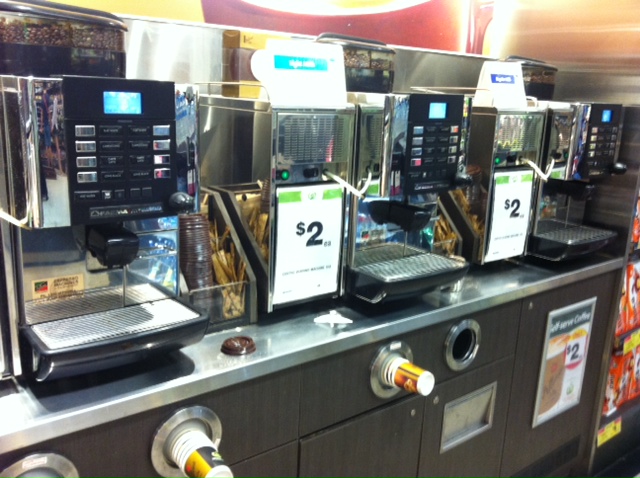
    There was a line of tradesmen out the door waiting to buy a $1 self serve coffee. Freshly ground with your choice of espresso, latte or cappuccino.

    No messing around, no being patronised by snobby barista – just a cheap, decent quality cup of coffee.

    For the last few years these machines have been popping up in convenience stores and service stations, freshly grinding beans to order and delivering a reasonable cup of coffee for a dollar or two.

    7-11-cheap-coffee.jpg
    Cheap coffee at the local convenience store

    None of the machine made cups will beat a coffee made by a good barista, but are half or a third of the price being charged by many cafes whose product often isn’t much better (and sometimes worse) than that made by the machines.

    With the rise of the service economy in the 1970s it was assumed employment would move from factories to jobs like baristas and serving in cafes, now we’re seeing automation taking over those jobs as well.

    The 1970s assumption that the service industries would become the mainstay of the economy turned out to be true with over two thirds of the workforces in countries like the US, UK and Australian employed in them them by the end of the Twentieth Century.

    Now industries are restructuring again and the assumptions that worked well for the last fifty years are being challenged by automation and increased outsourcing.

    The idea we could build an economy based upon us all making coffee and waiting tables for each other was always problematic and so it is proving to be.

    It’s worth thinking about the opportunities this presents for your business.

    Similar posts:

  • Australia and the Chinese Mexican stand off

    Australia and the Chinese Mexican stand off

    Twenty years ago visitors to Sanya on the south coast of China’s Hainan Island could find themselves staying at the town’s infectious diseases clinic, converted into a backpackers hostel by a group of enterprising doctors.

    The Prime Ministers and Presidents attending of Boao Asia Forum this week won’t get the privilege of staying at the infectious diseases hospital as Sanya’s hotel industry has boomed, bust and boomed again following the island being declared a tourism zone in 1999.

    Instead, their focus is on the pecking order of nations and for the Australians the news is not good. As the Australian Financial Review reports, the Aussies have been seated well below the salt by their Chinese hosts.

    On the Boao list, Australia is outranked by Brunei, Kazakhstan, Myanmar, Zambia, Mexico, and Cambodia – even New Zealand Prime Minister John Key gets higher billing.

    Central and South East Asian countries make sense as countries like Myanmar and Kazakhstan are China’s  neighbours with strong trade ties.

    That the Kiwis have been given priority over the Aussies by the Chinese government is not surprising in light of this.

    An unspoken aspect for the Australian attendees to the Baoa conference is how long Canberra’s political classes can continue their forelock tugging fealty to the US without offending the nation’s most important trading partner.

    Mexico’s entry on that list could be one of the most important with consequences for Australia and the world.

    During the 1992 US Presidential campaign candidate Ross Perot coined the phrase “the great sucking sound” in his opposition to the North American Free Trade Agreement and the risk of losing jobs to lower cost Mexico.

    As it turned out, the giant sucking sound was China – it turned out China’s admission into the World Trade Organisation had far greater consequences for the United States and Mexico than NAFTA.

    Mexican manufacturing was one of the greatest victims of China’s rise as US companies found it easier to subcontract work to Chinese factories rather than setup their own plants in Mexico.

    Now China is finding its own costs creeping up and labor shortages developing and Mexico is attractive once again. The Chinese and Mexican governments have been working on their relationships for some time.

    As manufacturing moves out of China, the shifts in world trade we’ve seen in the last two decades are going to be repeated, this time with Chinese moving up the value chain the lower level work moving to Mexico and other nations.

    The leaders at the Baoa conference have their work cut out for them in dealing with another decade of global change.

    Similar posts:

  • Latently obvious – the importance of data networks

    Latently obvious – the importance of data networks

    One of the big buzz phrases of 2013 is going to be “the internet of everything” – where machines, homes and even clothes are connected to each other.

    In the near future, we’re going to be more surprised when things when things like cars, washing machines and home automation system aren’t connected each other.

    To get all these things talking to each other requires reliable communications with low latency – quick response times – so technology vendors are seeing big opportunities in this area.

    Last night Blackberry launched its new platform and the beleaguered handset company’s CEO Thorsten Heins was adamant in his intention to focus his business on the internet of machines where he sees connected cars and health care as being two promising areas.

    Blackberry isn’t alone in this with the major communications providers and telcos all seeing the same opportunities.

    Cisco has been leading with their role in ‘the internet of things’ and much of their Cisco Live conference in Melbourne two weeks was spent looking at the technologies behind this. The company estimates the “internet of everything” will be worth 144 trillion in ten years.

    Rival communications provider Ericsson sees the revenue from this sector being worth $200 billion by 2017, so it’s not surprising everyone in the telecommunications industry want to get a slice of it.

    The question is though how to make money from this? Most of these communications aren’t data heavy so metering traffic isn’t going to be the deliver the revenues many of these companies expect.

    If offering priority services with low latency is the answer, then we hit the problem of ‘net neutrality’ which has been controversial in the past.

    Whichever way it goes, businesses will want to be paying a premium to make sure their data is exchanged quickly and reliably. For many organisations data coverage and ping speeds are going to be the deal breakers when choosing providers.

    The ‘machine to machine’, or M2M, internet market is something we’re going to hear more about this year. It’s clear quite a few executives are staking their bonuses on it.

    Similar posts: