Category: Investment

  • Taxing the internet

    Taxing the internet

    On Friday the US Senate passed a motion supporting the rights of states to collect sales taxes on internet sales.

    While not a binding vote or a law, this is the latest blow in the fight to control, and tax, online commerce.

    The stakes are high, companies like Amazon have built their business models on basing themselves in low tax jurisdictions while many bricks-and-mortar retailers have complained they are at a disadvantage compared to out-of-state or international suppliers.

    For consumers a few dollars in avoided tax isn’t the main reason they shop online, most internet shoppers cite a better range, convenience and, in many cases, superior service as the reasons they buy over the web.

    But it is clear the online retailers do get an advantage over local stores.

    While provincial governments cite protecting employment in their regions as part of the motivation for trying to tax online sales, the bigger issue is the desperate search for sources of revenue to balance cash strapped state and local budgets.

    Those budget requirements aren’t going to ease – the global economy is restructuring in a way that doesn’t favour 19th Century levies like sales tax or stamp duty, while aging populations and declining incomes are increasing demands on government services.

    With governments caught in a pincer of rising costs and falling revenues, it’s not surprising they are trying to find ways to get more money.

    It’s not clear though they’ll win this battle though, the Senate vote is a symbolic gesture and the difficulties of being able to tax all forms of internet commerce can’t be underestimated.

    The struggle ahead for local governments also can’t be understated, the public demands more services while administrators have to deal with rising infrastructure costs and the pension liabilities of retired public servants, teachers, firefighters and police.

    Even the bravest politician struggles to find the political capital needed to deal with that challenge.

    How we tax the internet is going to be a task that will define our governments and society in the first half of this century. We’re going to have to think very carefully about the choices we have ahead.

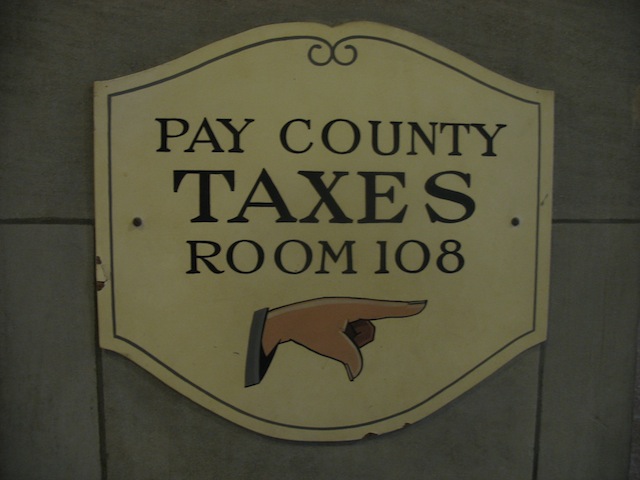
    Tax image courtesy of ctoocheck through sxc.hu

    Similar posts:

  • Does Google have corporate Attention Deficit Disorder?

    Does Google have corporate Attention Deficit Disorder?

    The news that Google were releasing a service called Keep designed to store things you find on the web for future reference received a hostile response yesterday.

    It seems the company’s dropping Google Reader into the deadpool proved the final straw for many of the tech early adopters who’d invested too much time building their feeds and other digital assets only to find services taken away from them.

    This isn’t just Google Reader, various other services are suffering; Google Alerts has become functionally useless while the Frommers guide book franchise is slowly dying after the company bought it from John Wileys.

    Corporate Attention Deficit Disorder

    Google are suffering corporate Attention Deficit Disorder (ADD) where management find a bright shiny thing, play with it for a while then get bored and wander off.

    This is trait particularly common amongst cashed up tech companies. In the past Microsoft and Yahoo! were the best examples, but today Google is the clear leader in the Corporate ADD stakes.

    Corporate ADD requires a number of factors – the main thing is a big cash flow to fund acquisitions.

    In companies with this luxury, bored managers find themselves looking for things to do with all the money flowing through the door and when a hot new product or market sector appears those executives want to be part of it.

    So a company gets acquired or a project is set up and the advocate drives it relentlessesly within the corporation, usually with lots of PR and write ups in the industry press.

    Then something happens.

    Usually the advocate – the manager or founder who drives the project – gets bored, promoted or sacked and the project loses its driving force within the organisation.

    Without that driving force the service stagnates as we saw with Google Alerts or Reader and eventually company closes it down.

    This has unfortunate effects on the marketplace, users invest a lot of time in the company’s service while  innovators in the affected market struggle to get funding as the investors say “we can’t compete with Google’.

    A changed perspective

    What’s interesting now though is the sea-change in the attitude towards Google’s Keep announcement – rather than dozens of articles describing how competing services like Evernote are doomed in the face of the search engine giant entering their market, most are saying this validates the existing startups’ investment and vision.

    More importantly, most commentators are saying they are going to stick with the services they already use because they no longer trust Google to maintain the product.

    This is what happens when you lose the trust and confidence of the market place.

    One of the mantras of the startup community is “focus” – focus on your product and the problem you want it to fix. That large businesses lack that focus shows how far from being a lean startup they have become.

    Google’s real challenge is to regain that focus. Right now they have rivers of cash flowing through their doors but in an age of disruption, it may well be that they could dry up if no-one pays attention.

    Ritalin image courtesy of Adam on Wiki Images

    Similar posts:

  • The high cost of new media experiments

    The high cost of new media experiments

    The BBC yesterday sold Lonely Planet to US media company NC2 Media. Their £80 million loss on the venture puts them in good company as established media struggle to find new online channels and revenue streams.

    While the losses aren’t trivial, they are not quite in the league of News Corporation $545 million loss on MySpace or Time Warner’s billion dollar adventure with AOL.

    All three stories show how tough it is for ‘old media’ adapting to a new landscape.

    The problem is there for ‘new media’ as well, most ventures struggle to make money and many of the success stories like Huffington Post rely on a combination of free content and a greater fool buying them.

    No-one has really figured out what the new media revenue models are; not the established publishers or the online upstarts.

    Lonely Planet’s online success was due to their forums which, like most web discussion boards, can feature discussions politely described as “robust”.

    This was always going to a problem for the BBC’s public service management culture and it resulted in the shutdown of the Lonely Planet Thorn Tree forums over Christmas.

    So it’s not surprising that the BBC has decided to end its experiment and now the corporation’s management is dealing with the criticism of those losses.

    While it’s easy to criticise the BBC for the deal, at least the broadcaster was attempting something different online, doing nothing is probably a poorer strategy than buying MySpace or Lonely Planet.

    Over time, we’re going to see a lot more experiments and many will be public embarrassments like those the BBC and News Corporation have suffered, but there will be successes.

    Someone will crack the code and they will be the Randolph Hearsts of this century. It could one of the Murdoch heirs, it could be the owners of NC2 Media or it could be some young, hot shot developer working in a Rio favela or the slums of Kolkata.

    But it will be someone.

    It’s an exciting time to be in business.

    Similar posts:

  • You call that a graph?

    You call that a graph?

    One way to illustrate a story is with charts. All too often though misleading graphs are used to make an incorrect point.

    A Verge story on Groupon shows how to get graphs right – clear, simple and tells the story of how the group buying service’s valuation soared and then plunged while it has never really been profitable.

    The vertical axis is the key to getting a graph right, cutting off most of the y-axis’ range is an easy way to mislead people with graphs. In this case you can see just the extent of Groupon’s valuation, profit and loss over the company’s short but troubled history.

    Since its inception, The Verge has been showing other sites how to tell stories online, their Scamworld story exposing the world of affiliate internet marketing sets the bar.

    Using graphs well is another area where The Verge is showing the rest of the media – including newspapers – how to do things well.

    For Groupon, things don’t look so good. As The Verge story points out, the company’s income largely tracked its workforce which grew from 126 at the start of 2010 to over 5,000 by April of 2011. Which illustrates how the business was tied into sales teams generating turnover.

    The spectacular growth of Groupon and other copycat businesses couldn’t last and hasn’t. The challenge for Groupon’s managers is to now build a sustainable business.

    For investors, those graphs of Groupon’s growth were a compelling story. Which is another reason why we all need to take care with what we think the charts tell us.

    Graph image courtesy of Striker_72 on SXC.HU

    Similar posts:

  • Risky business – is crowd funding too rich for investors and innovators

    Risky business – is crowd funding too rich for investors and innovators

    It’s sad when a Kickstarter project fails to meet its promises and the story of the Collusion Pen, a stylus designed for iPads, is a salutary lesson of how many people don’t understand when they buy into or set up a crowdfunding proposal.

    The idea behind crowdfunding sites like Kickstarter is that artists, designers and inventors can publicise their projects, interested supporters can pledge funds in return for benefits like advanced previews, a signed book or an early version of version of the product.

    For the Collusion pen, it’s the early version that’s upset supporters who’ve complained that the device is unusable in its current form.

    Not getting the product when it was promised is standard for Kickstarter projects, late last year CNN Money reported how 84% of the site’s top listed ventures missed their target delivery dates.

    The reason for Kickstarter’s apparent failures is that ideas are risky. Often, entrepreneurs and artists overestimate their skills and underestimate the scale of the task they’ve given themselves.

    Added to this, Kickstarter is an expensive way to raise capital. When another Australian startup Moore’s Cloud went onto Kickstarter to fund their internet connected light, they found that to cover the $285,000 development costs they had to win pledges worth $700,000.

    Moore’s Cloud missed their target and have gone on to raising money independently.

    Apart from the those risks we set our expectations too high – we believe the first versions will be perfect out of the box and every idea will make the founder a billion.

    In his article The Fake Church of Entrepreneurship, US business founder Francisco Dao discussed how much of the start up community is based up on religious beliefs about the sanctity of founders and that everyone can become rich by selling their idea to a greater fool.

    The sad thing is that ideas are like armpits – most of us have a couple and almost all of them stink.

    Not that people shouldn’t have a go; having a hare brained idea and making it a reality is the foundation of human progress. It’s just that most ideas don’t work out.

    Making matters worse is our inability to evaluate risk; notable in the Sydney Morning Herald story are the consumer and investor protection angles.

    If someone isn’t getting what they thought they had been promised, then “the government aught to do something.”

    The biggest risk of all to Kickstarter and other crowdfunding sites is that governments will regulate them either as stores or as investments.

    As investments crowdfunding projects will be hiring lawyers and bankers to draft densely worded product disclosure statements which will see ventures like Moore’s cloud having to raise a couple of million more to cover their legal costs.

    Should crowdfunding be considered as a consumer issue, then projects will have be expected to deliver or face action from consumer protection agencies which would make most nonviable.

    The stories of crowdfunding successes have to be considered in the same way as most artistic and entrepreneurial ventures; we hear about the winners, but we don’t hear so much about those who didn’t ‘succeed’.

    While we – as consumers, investors and entrepreneurs – don’t think through those risks, we’ll be disappointed in tools like crowdsourcing which would be a shame as its a good way for some ideas to get a healthy start.

    Failure image courtesy of cobrasoft on sxc.hu

    Similar posts: