Category: Internet of Things

Posts relating to the internet of things, IoT and M2M technologies

  • Exploring the internet of everything

    Exploring the internet of everything

    As part of the Decoding the New Economy video series, I had the opportunity of interviewing Ken Boal, the head of Cisco Australia and New Zealand, about the Internet of Everything and how it will change business.

    “The internet of everything is about things, it’s about people, process and it’s about data,” says Ken. “Compounding together to create new capabilities and drive opportunities for nations, enterprises, government and right down to consumers.”

    “It’s a huge transition in the internet’s evolution.”

    Reducing the road toll

    A previous Cisco presentation looked at some of the ways the internet of everything can reduce road deaths, Ken sees this both private and public sector benefits of the connected economy flowing to consumers and the community.

    “When you think about things like traffic congestion, health care and how education is delivered we know there’s huge opportunities for greater efficiency,” says Ken.

    “Just on road safety, when we’ve got all the vehicles and trucks connected, when the traffic lights and traffic control systems are all connected,” suggests Ken, “then consumers are going be better informed about what is the most efficient route to work.”

    “Cars will be communicating with each other to reduce fatalities and collisions in the future as well.”

    Bringing together industrial, consumer  and public safety technologies creates a grid of connected devices, including cars, that improve public safety while making industries more efficient.

    Of course these connected services come with risks to privacy, particularly when multiple points of data can triangulated despite each individual item being anonymous on their own.

    What Ken finds is particularly important is the current value of these technologies with Cisco predicting $1.4 billion in productivity gains through the internet of everything this year, half of which are available for businesses.

    A warning for Australia

    For Australia, the concern is that business and the economy in general is falling behind, Cisco’s recent Internet of Everything Value Index rated Australia among the BRIC countries in adopting the new technologies.

    “We’ve always counted Aussies as fairly innovative and leading edge,” says Ken. “Australia is ranked tenth out of the twelve largest economies in the adoption of internet of everything capablities.”

    The countries leading – such as Japan, Germany and the United States – have had a solid record of investing in technology, “in Australia, we’ve had that in the past but we’ve lost our mojo.” Ken says, “IT has been viewed more as a problem – a cost to business – rather than a provider of productivity for the long term.”

    How business can adapt

    For businesses, the question is how can they take advantage of the internet of everything? “You don’t have to start from scratch,” says Ken. “There are a whole heap of use cases for every vertical.”

    “Start to drive some innovation. Think about your business processes at the front end where you touch your customers, look at your supply chains and your back office arrangements driving workforce productivity and how fast can you deliver new innovations to the market.”

    “Internet of everything themes can address a whole host of these different processes in different parts of your business.”

    Similar posts:

    • No Related Posts
  • Security and the hackable baby monitor

    Security and the hackable baby monitor

    Imagine a baby monitor that can be hacked, that’s the story that Forbes magazine tells about the Foscam baby monitors that can be owned by anybody using the Shodan search engine to find unsecured video devices.

    Like all similar stories, the Foscam monitors’ weaknesses are born out of good intentions, the idea is parents can keep an eye on their children across the internet.

    The problem, as always, is convenience and ease of use trumped security with Foscam making it easy for parents to by having trivial, if any, security on their devices.

    It’s a lesson that should have been learned a million times, yet manufacturers continue to disregard the risks of poor security on internet connected devices.

    As these internet connected devices become critical to business and public safety, this lack of security won’t be acceptable.

    Slowly, companies like Foscam are being forced to take security seriously — hopefully consumers will accelerate the process by voting with their wallets.

    In the meantime, it might be a good idea to make sure your home or business router has a good firewall before setting up internet connected devices.

    Similar posts:

  • Reducing the road toll through the internet of everything

    Reducing the road toll through the internet of everything

    How can modern computer technology cut the road toll?

    Transport for NSW’s John Wall spoke last week at Cisco’s Internet of Everything presentation in Sydney about some of the ways the connected motor car can reduce accidents.

    John’s presentation comes from personal experience, having being a volunteer for nearly thirty years at his local State Emergency Service brigade where he was often among the first responders to local vehicle accidents.

    Some of the improvements in technology see the road toll falling as people travel less because of remote working, teleconference and business automation. Many of the applications though are built into the vehicles, street signs and the roads themselves.

    Finding the safest route

    John’s first suggestion for improving driver safety is having navigation systems sourcing traffic, weather and other information to suggest the best route for the driver. An intelligent system may also modify the recommended journey based on the experience of the driver and state of the vehicle, such as the tyre conditions.

    Watching the eyes

    Fatigue kills and all of us have driven when we were really too tired to be behind the wheel.

    The first in car technology John discussed is facial recognition technology that detects when drivers are fatigued. Tying this feature into the vehicle’s entertainment system with a stern aviation style “PULL OVER – YOU ARE TIRED” warning could well save hundreds of lives a year on his own.

    Connected road signs

    One of the underpinning factors of the internet of everything is cheap computers and transmitters embedded into almost anything. Road signs and sensors talking to cars could help reduce driver errors such as entering curves too fast.

    Those signs can also be plugged into weather conditions so if there’s ice, fog or rain then the car can be told of the hazards ahead.

    Going on the grid

    Signs are not the only devices that could be talking to each other, vehicles themselves could be talking to each other. Should one car hit a slippery or soft patch on the road, it could tell following vehicles that there’s a problem ahead and respond accordingly.

    That technology too could help traffic planners and road authorities, as data on traffic speeds and road conditions feed into their databases it becomes easier to identify black spots or road design problems before lives are lost.

    Helping the first responders

    A wrecked car or roadside sensor can also help those first responders attending an accident. The vehicle itself could transmit the damage and give rescuers valuable, time saving information, on the state of the occupants.

    Similarly, the system could also warn emergency services such as hospitals and ambulances of the injuries likely and what’s needed to treat the injuries on site, in transit and at the casualty ward.

    Importantly, a smart vehicle can also warn those first responders of potential risks such as live air bag gas cylinders, car body reinforcements or high voltage cables as they attempt to free trapped occupant from a wreck.

    The rescuers themselves may be wearing technologies like Google Glass that help them see this information in real time.

    Bringing together the technology

    As Kate Carruthers points out, the internet of everything is the bringing together of many different technologies – wireless internet, cloud computing, grid networks and embedded devices all come together to create a virtual safety net for drivers.

    By the end of this decade that we will all be relying on these technologies to help us drive. Which means we might find our licenses start to be endorsed for the level of technology in our vehicles, just as we used to have to get qualified to drive a car with a manual transmission.

    Concluding his presentation, John Wall told the story of Jason, a cyclist from his town who was killed in a road accident and left a young family. In his slide he showed Harry, Jason’s young son, playing with the flowers on his father’s memorial.

    “I hope for Harry is that when Harry learns to drive that things will be different on our roads and things will be different because we are all connected,” said John.

    It’s a strong reminder of the real human opportunities and costs when we adopt new technologies.

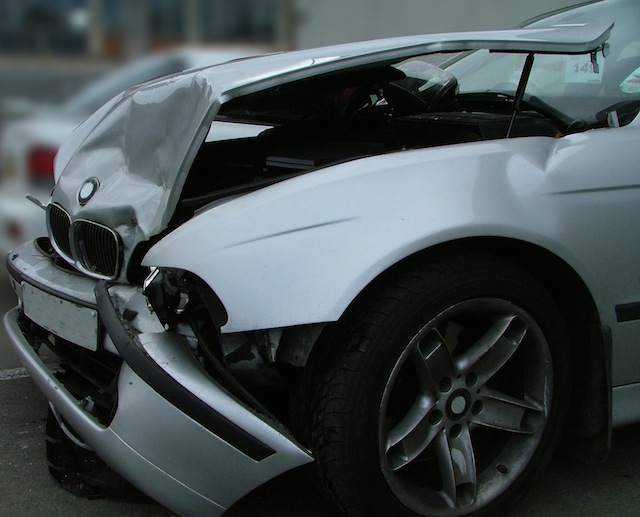
    Car crash image courtesy of jazz111 through SXC.HU

    Similar posts:

  • Realising value from the internet of everything

    Realising value from the internet of everything

    How much opportunity does connecting all our machines to the internet really offer businesses and society?

    Cisco’s Internet of Everything index released last week looks at one of the great opportunities facing today’s managers in realising business value in these new technologies .

    On Cisco’s calculations, the internet of everything is worth over $14.4 trillion to the world economy and nearly half the business benefits are going wasted.

    Germany and Japan lead the pack and, as discussed yesterday, Australia wallows between China and Russia.

    Cisco comparison of countries
    Cisco comparison of countries

    Despite German businesses being the leaders, Cisco estimates $33bn, or nearly 40% of the potential gains, isn’t being realised even in that country.

    How different industries are using the internet of machines is notable as well, with Cisco claiming the biggest benefits currently being realised by the IT industry while the greatest potential lies in the service, logistics and manufacturing industries.

    cisco-internet-of-everything-value-index-by-industry
    Internet of everything value by industry

    If anything, these projections could be on the conservative side with Cisco estimating fifty billion devices connected to the net by 2020. Given the rate of smartphone being sold and everything from vending machines to clothing being online, it may well be ten or even a hundred times that number.

    The real challenge for businesses in all these projections is how individual organisations can realise this value in their operations.

    For some businesses, there’s plenty of existing opportunities with well established services in areas like field services and logistics tracking the locations of staff and packages. These are relatively simple to incorporate into existing operations.

    In other applications, businesses will find things more complex as the connected devices will tie into analytics and Big Data plays. These won’t be simple.

    One particularly important area for the workforce as a whole in business process automation where many tasks currently done by humans can be carried out by machines talking to each other.

    This is already happening in fields like fast moving consumer goods and hospitality where stock levels can be automatically monitored and replacement stock ordered in without staff being involved. As the technology becomes more widespread this will threaten the roles of many previously well paid managers.

    Many of those managers though will be challenged anyway unless they’re prepared to deal with the changes that internet of things is bringing to their businesses.

    How do you think the internet of everything will change your business?

    Similar posts:

  • Is Australia falling behind on the internet of everything?

    Is Australia falling behind on the internet of everything?

    Last Friday Cisco Systems presented their Internet of Everything index in Sydney looking at how connected machines are changing business and society.

    Cisco Australia CEO Ken Boal gave the company’s vision of how a connected society might work in the near future with alarm clocks synchronising with calendars, traffic lights adapting to weather and road conditions while the local coffee shop has your favourite brew waiting for as the barista knows exactly when you will arrive.

    While that vision is somewhat spooky, Boal had some important points for business, primarily that in Cisco’s view there is $14 trillion dollars in value to be realised from utilising the internet of machines.

    Much of that value is “being left on the table” in Boal’s words with nearly 50% of businesses not taking advantage of the new technologies.

    Boal was particularly worried about Australian businesses with Cisco lumping the country into ‘beginner’ status in adopting internet of everything technologies along with Mexico and Russia, with all three lagging far behind Germany, Japan and France.

    cisco-country-capabilities-internet-of-everything

    In Boal’s view, Australian management’s failure is due to “the focus on streamlining costs has come at the cost of innovation.”

    This something worth thinking about; in a business environment where most industries only have two dominant players and the corporate mindset is focused on maximising profits and staying a percentage point or two ahead of the other incumbent, being an innovator itsn’t a priority – it might even be a disadvantage.

    For Australian business, and society, that complacency is a threat which leaves the nation exposed to the massive changes our world is undergoing.

    Similar posts: