
Category: Internet of Things

Posts relating to the internet of things, IoT and M2M technologies

  • Take ten engineers and the internet of everything

    Take ten engineers and the internet of everything

    It seems a far jump from running a gaming platform to a remote access software company with a focus on the internet of machines, but that’s the journey remote access company LogMeIn and its CEO Michael Simon has travelled.

    “Anything that could be connected will be connected in the next decade.” Micheal told me in Sydney last week and it’s where he sees the next step for the company he has led since its founding in 2003.

    LogMeIn grew out of a team that formerly worked for uproar.com, an online gaming company sold to a division of Vivendi Universal for $140 million in 2001.

    Two years after the sale Michael, who had been CEO of Uproar, and a team of ten engineers who formerly worked for the company thought they could solve the complexities of accessing computers remotely.

    For geeks and big business, accessing your computer across the internet in 2003 wasn’t much a problem however it involved configuring software, punching holes in firewalls and configuring routers.

    The LogMeIn team wanted to find a way to make this technology cheap and easy for small businesses and homes to use.

    A decade later they employ 650 staff, half of whom are engineers, and have twenty million users of their product.

    Building the freemium model

    The vast majority of those users are using LogMeIn’s free services – Simon estimates that over 95% of users are using the free version.

    In this, LogMeIn is one of the leading examples of the freemium business model – offering a free version of a software product and premium paid for edition with more advanced features.

    One leader of the freemium movement was the Zone Alarm firewall, a product which earned its stripes in the early 2000s at the peak of the Windows malware epidemic.

    Today one of Zone Alarm’s veterans, Irfan Salim, sits on the LogMeIn board along with two former executives of Symantec, the company whose PC Anywhere and Norton Internet Security products competed with both Zone Alarm and LogMeIn.

    While LogMeIn has done well over the last ten years, the market today is very different to that of a decade ago with cloud computing technologies taking much of the need for remote access software

    Mike Simon sees these changes as an opportunity with the computer industry having gone through three phases – the PC centric era, the mobile wave and now we’re entering the internet of things.

    To cater for the mobile wave LogMeIn has released Cubby, a cloud based storage system that competes with Dropbox, Google Drive and Microsoft’s Skydrive, but Simon has his eye on the next major shift.

    Controlling the internet of machines

    The internet of things is a crowded market, but Simon believes companies like LogMeIn have an advantage over the telco and networking vendors as businesses with freemium and startup cultures look for ‘pennies per year’ rather than the ‘dollars per device’ larger corporation hope to make.

    It’s a big brave call, but with the market promises to be huge – General Electric claimed last year nearly half the global economy or $32.3 trillion in global output can benefit from the Industrial Internet.

    That’s a pretty big ticket to clip.

    Whether Michael Simon and LogMeIn can achieve their vision of being integral part of the Internet of things remains to be seen, but so far they do have success on their side.

    Similar posts:

  • Connecting the household to the internet of everything

    Connecting the household to the internet of everything

    The development of intelligent household appliances like lights is changing our lives in subtle ways, Australian startup Moore’s Cloud is a good example of how cheap computing, accessible internet and open applications are coming together.

    One of the frontiers of technology right now is the internet of things, where machines connect directly to each other, cutting out the requirement for people to monitor them.

    Good examples of these devices is the internet connected fridge – which was the poster child for pointless connectivity during tech wreck in the early 2000s but is now standard equipment in hotels, restaurants and hospitals where monitoring stock levels has become wholly automated.

    Cheap hardware has driven this trend, as processor prices have tumbled it’s become cost effective to incorporate intelligent systems into almost every household device. Everything from the kettle to the washing machine now has some sort of CPU in it.

    Moore’s Cloud is a good example of how the internet of machines is coming together. A simple cube shaped device has the electronic smarts to connect with other lights and be controlled by software apps.

    Being able to create is important as the software interfaces – the APIs – are open which people to write programs that take advantage of the light’s features. A video from the Moore’s Cloud builders showcases twelve of the apps which have been developed so far which include weather forecasting, night lights and changing moods.

    Having an ‘ecosystem’ of apps is now driving innovation in consumer electronics. The iPhone started the app revolution and now everything from stereo systems to lights are being controlled by them. Devices that don’t have open APIs are at risk of being left behind.

    With systems being open to interested designers, anybody can create their own way of controlling device which opens the way for some innovative, left of field ideas.

    In many respects, Moore’s Cloud is one of the early wave of smart features we’re going to see in the next generation of household appliances that will change how we use these tools.

    The team behind Moore’s Cloud is still raising money for the project through Kickstarter, their campaign finishes this Friday. Hopefully they’ll meet their targets and take the project further.

    Similar posts:

  • Towards the social media enabled jet engine

    Towards the social media enabled jet engine

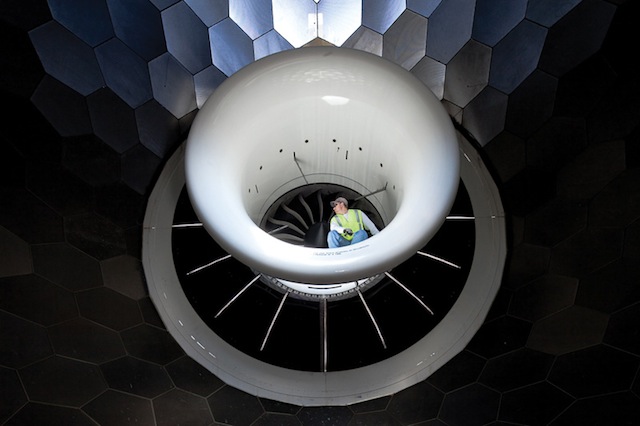
    “What if my jet engine could talk to me and what would it say?” Asked Beth Comstock, General Electric’s Chief Marketing Officer, at the Dreamforce 2012 conference.

    The idea of social media connected jet engine is strange, but the idea that a key piece of technology can talk to engineers, pilots, salespeople and management makes sense.

    At the Dreamforce conference, Salesforce.com were showing how their Chatter social communications tool can be applied to more than just salesteams, in GE’s case by giving their new GEnx engine the opportunity to talk to its support teams.

    In flight telemetry is nothing new to the aviation industry, ACARS – Aircraft Communications Addressing and Reporting Systems – have allowed airlines to monitor the performance of their aircraft over high frequency radio or satellite links during flight since 1978.

    The difference today is the sheer amount of data that can be collected and who it can be shared with. If relevant data is being shared with the right people it makes managing these complex systems far easier.

    More importantly, it helps teams collaborate. The GEnx engine is a new design that’s fitted to Boeing’s latest airlines including the troubled and late Dreamliner 787 so streamlining the design process of a new, high performance piece of technology pays dividends quickly.

    Although things can still go wrong – one wonders what the final tweet from this engine would have been.

    We’ve been talking for a long time about how social media and cloud computing services improve collaboration in a work place, the GEnx jet engine illustrates just how fundamental the changes these technologies are bringing to organisations.

    If an industrial jet engine can be using social media it begs the question why service based companies and workforces aren’t. It’s where the customers and staff are.

    These tools are radically changing the way we work right now – the question is are we, and the organisations we work for, prepared for these changes?

    Paul travelled to Dreamforce 2012 courtesy of Salesforce.com

    Similar posts: