Category: management

  • Here’s where the fees go

    Here’s where the fees go

    Becoming a partner of Goldman Sachs is a path to riches and is admission into the highest elites of the Western World’s corporatist society.

    The Guardian looks at the process of becoming a Goldman Sachs partner from joining the company as an ‘analyst’ or ‘associate’ through to achieving the highest partner level.

    What’s notable about the story are the layers of management and their grandiose titles; the position of “vice-president” being a case in point where it is the next step up for associates and analysts rather than the seat of power such a title suggests.

    The sheer number of these vice-presidents and Managing Directors, estimated in the hundreds by the Guardian, is another notable point. The fact there are nearly 500 partner positions in the firm indicates just how fat the fees must be to pay these people.

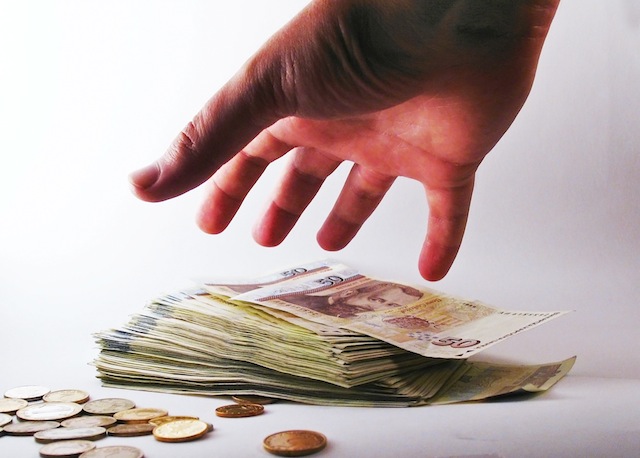
    If Goldman Sachs and their clients were private companies their fees and remuneration would be their own business. Since the Global Financial Crisis, Goldman Sachs and its too-big-to-fail competitors now are explicitly underwritten by the world’s taxpayers.

    That should make us all concerned at just how much our grandchildren are going to have to pay for the generous lifestyles of today’s banking elites.

    Similar posts:

  • Beware the business trolls

    Beware the business trolls

    “A psychopath will enter everyone’s lives at one time. When yours arrives, your job is to get them out of your life as quickly as possible.”

    That little gem was handed down to me before the internet gave everyone a global megaphone to entertain themselves with. Today it’s likely a dozen psychopaths a week could enter your life through the web or social media.

    One of the manifestations of this ability for anyone to post to the web regardless of merit or sanity has given rise to the phenomenon of “trolling”, of which there has been much recent media attention.

    At its most basic, trolling is about getting attention. The troll hopes to get a reaction from something outrageous they’ve said or done. In that respect they aren’t too different to radio talk back hosts or SmartCompany editors.

    Business has its own types of trolls: the ‘squeaky wheel’ who hopes that by making a complete pain of themselves you’ll succumb to their unreasonable demands; the perennial tyre kicker who wastes your sales staff’s time; or the late payer who enjoys toying with you and your accounts people but has no intention of ever paying the bill.

    The effects of these business trolls can be just as debilitating as an online troll, with the added bonus that they distract you and your employees from getting work done.

    Sometimes the business owner makes the mistake of taking things personally. This often happens when a bad debtor upsets us so much we make it our life mission to get what we deserve to be paid.

    Hundreds of hours and thousands of dollars later we surrender and accept we were never really going to get that relatively trivial sum.

    The worst of all the business trolls is the recreational debtor. These business psychopaths take delight in ringing up debts they have no intention of paying and then treating your attempts to get the money back as a type of game where they will thoroughly mess with your mind.

    These are the people to get out of your life as quickly as possible. It could be writing off the debt, giving them the refund or just kicking them out of the store.

    So beware of the business trolls, they are as likely to appear in your outstandings file as on your Facebook page.

    Similar posts:

  • What business are newspapers in?

    What business are newspapers in?

    The problems of The Guardian and other newspaper groups around the world raises the question of what business they are actually in – news or advertising?

    “Going digital only is not an option” was an agenda item for a meeting of Guardian executives claims the Financial Times.

    Digital only however is the option most of the readers are taking with the Guardian’s online channels attracting 9.5 million UK readers a month compared to a print circulation of 6.5 million. The Guardian’s total global online audience is 65 million, ten times the size of the print edition.

    Making matters worse is the trend, according to the UK Audit Bureau of Circulations (ABC), newspaper sales are declining at 16% per year while online readership is growing 14%.

    As the Guardian readership figures show, the number of readers isn’t the problem and the same is true for the New York Times or the Sydney Morning Herald. More people are reading these publications than ever before, but the advertising has gone elsewhere.

    Essentially a newspaper was an advertising platform, the cover price barely covered the costs of printing and distribution while the classified and display advertising provided the “rivers of gold” that made the business so lucrative through most of the Twentieth Century.

    Most of those rivers have been diverted as dedicated employment, real estate, travel and motoring websites have stolen much of the advertising revenue that sustained newspapers.

    As classified advertising platforms, newspapers have reached their use by date and now they have to build a model that is more focused on online display advertising and getting readers to pay for content.

    Getting readers to pay is difficult when the market has been trained to expect news for free or pennies a day, a problem not helped by some newspapers chasing online eyeballs with low quality content.

    Equally difficult is training sales teams to sell digital advertising, too many sales teams have grown fat and complacent over decades of flogging lucrative and easy real estate print ads.

    The challenge for newspaper managements around the world is figuring out how to get the advertisers onto their online platforms and providing a product which readers value and are prepared to pay for.

    It may well be that The Guardian’s management are right, that print does have a role in the newspaper’s future but first they are going to have to define what their company is and what it does.

    Similar posts:

  • Running out of luck

    Running out of luck

    Last week I was lucky to get along to Digital Australia and Emergent Asia panel held at PwC’s Sydney office where the panel looked at how Australia’s industries are adapting to the digital economy and evolving Australian markets.

    The outlook from the panel was generally downbeat about the ability of Australia’s business leaders and politicians to adapt to the changes in the global economy although there were some optimistic points about the resilience and flexibility of the nation.

    I did a write up for it on Technology Spectator which is online at It’s Not Good Enough To Be Clever

    The challenge is on for Australia’s business leaders – let’s see if they are up to it.

    Similar posts:

  • Double guessing the boss

    Double guessing the boss

    Two interesting articles, one from English media writer Nick Cohen and the other from American journalist Eveline Chao, show how effective fear is for driving self censorship.

    Eveline’s story, Me and My Censor, tells of her relationship with the Chinese Government censor appointed to monitor the publication she worked for in Beijing.

    As well as having to avoid the 3Ts – Taiwan, Tibet, and Tiananmen – there were also a range of other delicate issues an active writer could find themselves being censored for as she relates in this conversation with her censor Snow;

    We couldn’t use the cover image I had picked out for a feature on the rise of chain restaurants, because it was of an empty bowl, and, Snow told me, it would make people think of being hungry and remind them of the Great Famine (a period from 1958 to 1961 when tens of millions of Chinese starved to death, discussion of which is still suppressed). Even our Chinese designers began to roll their eyes when I related this change to them, and set them to work looking for images of bowls overflowing with meat.

    Snow had learned the hard way about the power of imagery to upset the party functionaries. Snow explained why when she urged Eveline didn’t illustrate a story with a graphic showing stars;

    I once published, in a newspaper, a picture of a book put out by the German embassy, introducing China and Germany’s investment cooperation. The book’s cover had a big stream on it, half of it the colors of the German flag, half of it red with yellow stars. I decided since it wasn’t a flag it was okay, and sent it to print. Our newspaper office was slapped with a fine of 180,000 yuan [today, around $28,000] and I had to write a self-criticism and take a big salary cut.

    Self criticism and big salary cut – the things that middle managers fears regardless of whether they work in the Chinese Communist Party, the BBC or a bank.

    The same fear of upsetting those in power is discussed in Nick Cohen’s article on the BBC’s disastrous and scandalous decision to pull a documentary exposing Jimmy Savile as a child abuser. Cohen quotes an interview where George Entwhistle, the executive responsible for pulling the program, was interviewed on the matter.

    When Entwistle implied that the editor of Newsnight had no need to worry about his bosses circling over him like glassy-eyed crows, Evan Davis did what any sensible person would have done and burst out laughing.

    Nick Cohen’s point was emphasised to me during the week when a former bank worker mentioned an executive had been disciplined for letting slip the bank was running several instances of a cloud computing service. Apparently the press and regulators could have been in the room where he discussed this.

    Another example is a big organisation I’ve been regularly writing on where staff members regularly say “this is not a place where you question management.” An acquaintance that recently started there had to agree that they wouldn’t mention anything about the organisation, ever.

    The problem with this self-censorship is that it quickly becomes destructive. In the United Airlines dead dog case, staff  subject to arbitrary whims and discipline of management  avoid taking decisions which often escalates situations where common sense would quickly find a simple solution.

    It also means people jump to conclusions. Eviline relates the story of the tourist story;

    One month, we ran a short news brief with figures on the number of mainland Chinese tourists that had visited the United States in 2007, and Snow flagged the number for deletion. We wondered what dirt we had unwittingly stumbled upon. Which government bureau oversaw tourism figures? What were they hiding? Finally, I called Snow, and learned that the numbers we had cited were for the number of Chinese tourists worldwide, not just in the United States.

    So much for the would-be plot. Chagrined, I had to announce to my colleagues that we’d made a mistake.

    A culture of secrecy also creates an atmosphere of distrust with every decision being analysed by staff, customers and outsiders for what nefarious motives lie behind even the most innocuous management decision.

    Eventually those organisations become insular and inward looking with only those perceived as being ‘safe’ allowed to move into responsible positions which further entrenches the culture of secrecy and blame.

    This is not healthy, but it’s where many of our government departments, political parties, sporting organisations and business are today including the BBC, Chinese media organisations and Australian banks.

    For the disrupters, this is another competitive advantage.

    Similar posts: